Reported Simon Daniel Yusuph l journalist at wengglobal
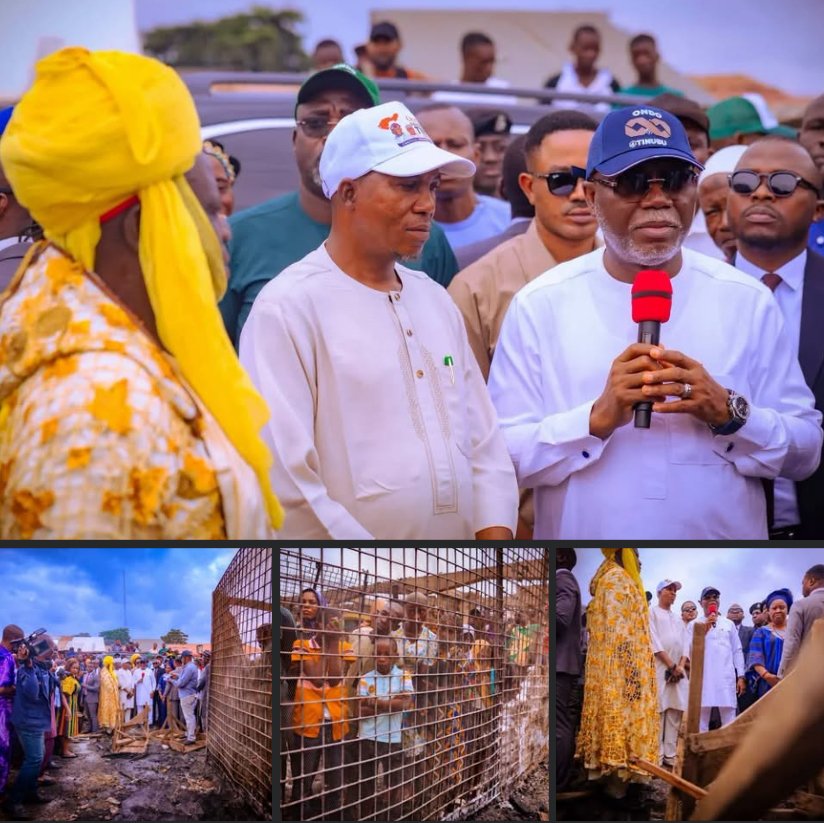
Governor Lucky Orimisan Aiyedatiwa of Ondo State has inspected the aftermath of a devastating fire outbreak at Sabo Market in Ore, Odigbo Local Government Area, as affected traders continue to count their losses and appeal for urgent assistance.
The governor’s visit to the market comes amid growing concerns over the economic impact of the incident on traders whose shops, merchandise and business capital were reportedly destroyed in the inferno.
Aiyedatiwa, who visited the affected section of the market to assess the extent of the destruction, was expected to receive first-hand accounts from traders and other stakeholders as authorities work towards determining the circumstances surrounding the outbreak and the level of intervention required.
Sabo Market is one of the major commercial centres serving Ore and surrounding communities in southern Ondo State. The market attracts traders and customers from different parts of the state and neighbouring areas, making any major disruption to commercial activities significant for the local economy.
The fire has consequently raised concerns about the immediate livelihood challenges facing affected traders, particularly small business owners who depend on daily trading activities to support their families and maintain their businesses.
Traders seek government intervention
Following the incident, affected traders have been calling for assistance to enable them recover from the losses and restart their businesses.
For many of the victims, the destruction of merchandise represents more than the loss of physical goods. It also means the loss of working capital, income and, in some cases, years of accumulated investment.
Market fires in Nigeria have repeatedly demonstrated how vulnerable informal and semi-formal commercial centres can be to sudden economic shocks. The consequences often extend beyond the immediate victims to transport operators, wholesalers, suppliers, artisans, employees and consumers who depend on the affected markets.
The visit by Governor Aiyedatiwa therefore places attention on both immediate relief and the longer-term question of how markets across Ondo State can be made safer and more resilient.
While details of the precise value of goods destroyed at Sabo Market were not immediately available, a proper assessment of individual losses will be important in determining the scale and structure of any government intervention.
Such an assessment would also help distinguish verified losses from unsubstantiated claims, ensuring that any relief programme reaches genuine victims.
Cause of fire remains a critical question
Authorities are also expected to establish the cause of the Ore market fire as part of efforts to prevent a recurrence.
Determining the origin of a market fire is particularly important because commercial centres contain large quantities of combustible materials and often have complex electrical installations. Poor wiring, overloaded connections, power surges, inadequate access routes and difficulties faced by emergency responders have frequently featured in investigations into market fires across Nigeria.
However, the cause of the Sabo Market incident should be established by the relevant authorities rather than through speculation.
A transparent investigation would provide clarity to traders, market managers, residents and the government while helping identify specific safety measures that need to be introduced.
Beyond determining the immediate cause, authorities may also need to examine the availability and accessibility of firefighting equipment, emergency exits, water sources, electrical safety systems and access routes for emergency vehicles.
Market fires remain a recurring economic threat
The Ore incident comes against the backdrop of several market fires recorded across Nigeria, many of which have destroyed large quantities of goods and wiped out the capital of traders.
In February 2026, a major fire at Singer Market in Kano destroyed sections of the commercial centre and left thousands of traders facing substantial losses. The Federal Government subsequently announced a ₦5 billion intervention for affected traders, while APC governors pledged an additional ₦3 billion. (Premium Times Nigeria)
The Kano experience also highlighted the importance of proper verification and transparent distribution of relief. The state government later established a committee to assess the losses and oversee the distribution of the combined intervention to genuine victims. (Premium Times Nigeria)
Similarly, in February, the Governor of Yobe State, Mai Mala Buni, directed the State Emergency Management Agency to provide immediate support and assess losses suffered by traders following a fire at Fika Market. (Punch Newspapers)
These incidents underline the broader economic vulnerability of traders whose businesses operate in densely populated commercial environments.
Need for long-term market safety measures
For Ondo State, the Sabo Market incident presents an opportunity to strengthen fire prevention and emergency preparedness across major markets.
Immediate assistance remains essential, but sustainable intervention should go beyond financial relief. Authorities and market associations could work together to improve electrical installations, enforce safety regulations, maintain clear emergency corridors and ensure that firefighting equipment is available and functional.
Regular fire-safety inspections could also help identify dangerous electrical connections and other hazards before they result in major losses.
Market leaders have an important role to play in ensuring compliance with safety standards, while traders can contribute by avoiding unsafe electrical practices, overloading sockets and storing highly flammable materials close to ignition sources.
The experience of other Nigerian markets shows that preventing a fire from spreading can significantly reduce casualties and property losses. In July 2026, for instance, emergency responders in Lagos contained a fire at Sabo Market in Ikorodu after 17 shops were affected. Authorities said the fire started in one shop and spread to adjoining stalls, with investigations launched to determine its cause. (Channels TV)
The incident demonstrates the importance of rapid emergency response in densely packed commercial environments.
A test of recovery and accountability
Governor Aiyedatiwa’s assessment of the Sabo Market damage will now be closely watched by affected traders and residents, particularly regarding the nature and scale of assistance that may follow.
Any government intervention will need to balance urgency with accountability. A credible process for documenting losses, identifying legitimate beneficiaries and distributing support would help build confidence among traders while ensuring that limited public resources are effectively deployed.
For the victims, however, the priority is immediate recovery.
Many traders are likely to require assistance not only to replace destroyed goods but also to restore their working capital and resume commercial activity. Without timely intervention, the economic consequences of the fire could continue long after the flames have been extinguished.
The incident also reinforces the need for government, market associations and emergency agencies to treat fire prevention as an ongoing public-safety responsibility rather than a response that begins only after disaster strikes.
As the assessment of the Sabo Market damage progresses, the central challenge for the Ondo State Government will be to translate the governor’s visit into practical support while addressing the structural vulnerabilities that could expose traders to similar disasters in the future.
For the affected traders, recovery will ultimately depend on a combination of verified assistance, access to capital, restoration of trading facilities and stronger safeguards against another devastating fire.
The Sabo Market incident is therefore not only a story about destroyed shops and goods. It is also a reminder of the fragile economic foundation on which thousands of small businesses depend and the responsibility of authorities to protect commercial spaces that are vital to livelihoods and local economic activity.
Sources
- Premium Times — Reports on government intervention following the 2026 Singer Market fire in Kano. (Premium Times Nigeria)
- BusinessDay — Report on the Federal Government and APC governors’ ₦8 billion intervention for Kano market fire victims. (Business Day)
- The Guardian Nigeria — Report on the assessment and proposed relief process for Singer Market victims. (The Guardian Nigeria)
- The PUNCH — Reports on market fire incidents and government responses in Nigeria. (Punch Newspapers)
- Channels Television — Report on the Sabo Market fire in Ikorodu and emergency response. (Channels TV)