Reported Simon Daniel Yusuph l journalist at wengglobal
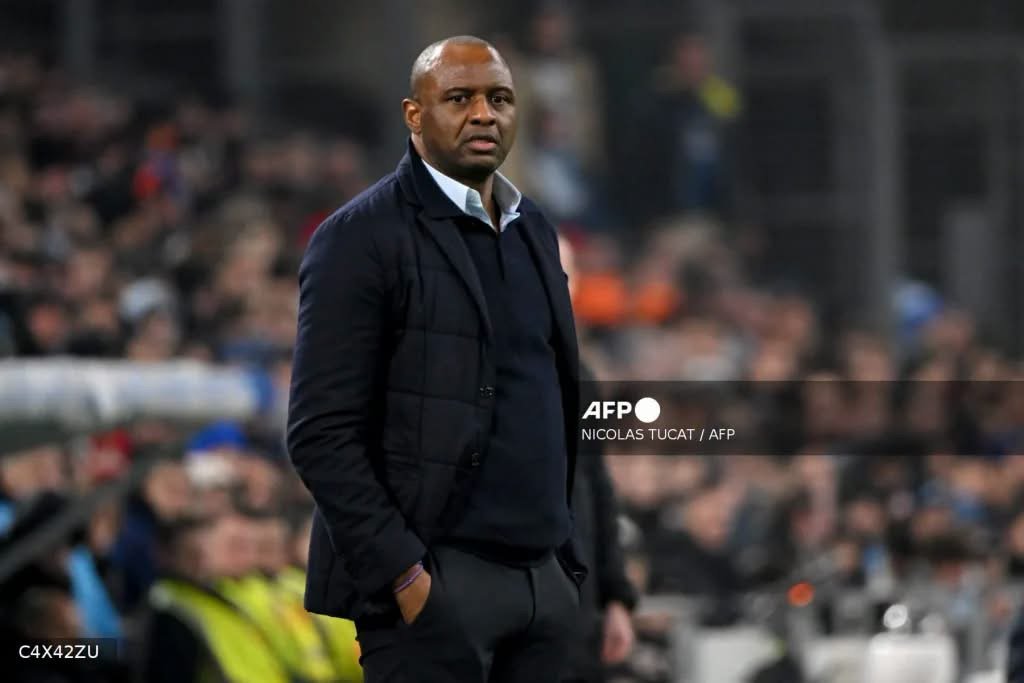
DAKAR, Senegal — Senegal has appointed former France international and 1998 FIFA World Cup winner Patrick Vieira as the new head coach of its senior national team, handing the Dakar-born manager the responsibility of rebuilding the Lions of Teranga after a disappointing campaign at the 2026 World Cup.
The Senegalese Football Federation (FSF) confirmed Vieira’s appointment on Tuesday, August 18, 2026, ending weeks of uncertainty over the team’s technical leadership following the departure of Pape Thiaw.
Vieira, 50, becomes the first Senegalese-born coach to take charge of the national team at senior level with such an extensive career as both a player and European club manager. Born in Dakar before moving to France as a child, he brings an unusual combination of Senegalese roots, World Cup-winning experience and coaching experience in some of Europe’s major leagues.
Reuters confirmed the appointment, reporting that Vieira will begin his tenure during the next international window as Senegal prepares for the 2027 Africa Cup of Nations qualifying campaign.
The appointment represents a significant change of direction for a team that entered the 2026 World Cup with high expectations after winning the Africa Cup of Nations in January.
Vieira arrives after World Cup disappointment
Senegal’s decision to change coaches followed a World Cup campaign that fell considerably short of expectations.
Pape Thiaw had guided the national team into the 2026 tournament following his elevation to the head-coach position in December 2024. His tenure included the team’s successful run to the 2025 Africa Cup of Nations final, which Senegal initially won on the field before the result was later awarded to Morocco following a disciplinary decision.
The World Cup, however, proved far more difficult.
Senegal lost its opening two group matches, suffering defeats against France and Norway. The team recovered with a comprehensive victory over Iraq to advance to the knockout phase, but its campaign ended dramatically against Belgium.
Senegal appeared to be heading for the last 16 when it established a 2-0 lead over Belgium with only minutes remaining in normal time. Belgium mounted a late comeback, however, scoring twice before eventually winning 3-2 in extra time.
FIFA recorded Senegal’s elimination at the round-of-32 stage, while the Senegalese federation subsequently announced the departure of Thiaw and his technical staff.
The result was particularly disappointing because Senegal had been regarded as one of Africa’s strongest teams entering the tournament.
Why Vieira was chosen
Vieira’s appointment had been anticipated since the immediate aftermath of Senegal’s World Cup exit.
French sports newspaper L’Équipe reported in July that Vieira was among the names being considered by Senegalese football authorities following Thiaw’s departure.
The eventual decision gives Senegal a coach whose playing career is closely associated with some of the most successful periods in French and European football.
Vieira was a key member of France’s 1998 World Cup-winning side and also helped the country win the European Championship in 2000.
At club level, he became particularly identified with Arsenal, where he made more than 400 appearances and won three Premier League titles. He also played for AC Milan, Juventus and Inter Milan, among other clubs, and won further major honours during his career.
Reuters noted that Vieira’s playing achievements include three Premier League titles with Arsenal and a distinguished spell at Inter Milan.
His international experience is expected to provide credibility as Senegal begins another rebuilding phase.
A new chapter in Vieira’s coaching career
Vieira’s managerial career has been considerably more challenging than his playing career.
He began developing his coaching credentials within Manchester City’s youth structure before moving into senior management with New York City FC in Major League Soccer.
He subsequently managed French club Nice, English Premier League side Crystal Palace, Strasbourg and Italian club Genoa.
His appointment in Senegal represents his first opportunity to manage a national team.
That transition could prove significant.
Managing a national side differs substantially from club football because coaches have limited time with players and must build systems around a group assembled only during international windows.
Vieira will therefore need to quickly establish his tactical identity, communication structure and relationship with senior members of the Senegal squad.
His familiarity with European football could also be valuable given that many of Senegal’s leading players operate in Europe’s major leagues.
Senegal expects more from a talented generation
Vieira inherits a squad that remains rich in talent.
Senegal has established itself as one of Africa’s most competitive national teams over the past decade, reaching the 2018 and 2022 World Cups and winning the Africa Cup of Nations.
The team also boasts experienced players who have competed at the highest levels of European football.
That strength partly explains the disappointment surrounding the 2026 World Cup campaign.
Senegal’s early elimination was not simply a consequence of difficult opposition. The team had opportunities to advance further but struggled to convert its potential into consistent results.
The collapse against Belgium, in particular, is likely to remain a reference point as Vieira begins his tenure.
For the new coach, the challenge will be to ensure that Senegal’s considerable individual talent is translated into a more balanced and resilient collective performance.
Thiaw’s departure reflected wider concerns
The decision to remove Thiaw was not based solely on the result against Belgium.
The Senegalese Football Federation said its decision followed an assessment of the team’s World Cup results and its future prospects.
Reports also pointed to organisational issues surrounding the national team during the tournament.
Le Monde reported that questions had emerged over Thiaw’s contract, players’ bonuses and other organisational matters surrounding Senegal’s World Cup preparations. The newspaper quoted Senegalese federation secretary-general Abdoulaye Saydou Sow as acknowledging administrative shortcomings.
Those issues suggest that Vieira’s task will not be limited to tactics on the pitch.
The new coach will need to operate within a football structure that itself is facing expectations of greater organisation and stability.
His ability to work effectively with the federation, players and support staff could therefore be as important as his tactical decisions.
The 2027 AFCON provides Vieira’s first major target
Vieira’s immediate competitive priority will be the 2027 Africa Cup of Nations qualification campaign.
Qualifiers are scheduled to begin in September, meaning the new coach has limited time to prepare for his first matches.
Reuters reported that Vieira’s tenure will begin during the next international window as Senegal turns its attention towards the continental tournament.
The AFCON will provide an early opportunity for Vieira to establish his credentials in international football.
Senegal’s status as African champions means expectations will be high.
The team will not merely be expected to qualify. Supporters will likely demand performances consistent with the country’s position among Africa’s leading football nations.
A coach with a personal connection to Senegal
Vieira’s appointment also carries a strong symbolic dimension because of his birthplace.
Although he represented France throughout his international playing career and was part of the French team that won the 1998 World Cup, Vieira was born in Dakar.
That connection could make his appointment particularly significant to Senegalese supporters.
It also provides an opportunity for the federation to present the appointment as part of a broader effort to reconnect the national team with its identity and heritage while retaining the benefits of international experience.
Vieira’s personal history means that he understands both sides of the relationship between African football and the European football system.
However, his background should not be allowed to overshadow the professional demands of the job.
Ultimately, Senegal’s supporters will judge him by results, tactical improvement and the team’s ability to compete for major honours.
Managing expectations will be crucial
The new coach arrives at a time when Senegal’s football expectations are unusually high.
The country has developed a winning culture at continental level and has produced a generation of players capable of competing against elite international opposition.
The 2026 World Cup therefore represented an opportunity to advance beyond the team’s previous achievements.
Instead, Senegal exited earlier than expected.
Vieira now has to rebuild confidence while avoiding unnecessary disruption.
That may involve introducing younger players, refining tactical systems and maintaining the influence of experienced figures within the squad.
It will also require him to address the psychological consequences of the World Cup collapse.
A team that surrendered a two-goal advantage in the closing stages of a knockout match must develop greater composure when protecting leads under pressure.
Senegal’s football identity at a crossroads
The appointment also raises questions about the direction of Senegalese football.
Under Aliou Cissé, Senegal developed a reputation for physical strength, defensive organisation and tactical discipline. Thiaw inherited much of that structure while attempting to introduce his own ideas.
Vieira now has an opportunity to shape the next phase.
Whether he retains elements of the existing system or introduces a more possession-oriented and flexible approach will become clearer during the upcoming qualifiers.
His European coaching experience could encourage tactical experimentation, but the process will need to be carefully managed.
International football offers little time for training, and major tactical changes can be difficult to implement quickly.
A demanding first assignment
Vieira’s first months will provide an early indication of whether Senegal’s decision to appoint him can deliver the desired transformation.
The 2027 AFCON qualifiers will offer limited room for error.
Beyond qualification, the federation will want the team to regain the confidence it enjoyed before the World Cup.
The new coach must also establish a strong relationship with senior players, integrate emerging talent and create a stable environment around the national team.
His experience as a World Cup winner gives him authority, but coaching success cannot be inherited from playing achievements.
The Senegal job will require Vieira to prove himself in a completely different capacity.
A significant opportunity for Vieira
For Vieira personally, the appointment represents a major opportunity to redefine his coaching career.
His club-management spells produced mixed results, and his last position was a short tenure at Genoa.
Taking charge of Senegal provides him with the chance to work with a talented squad and compete for major international honours.
It is also an opportunity to lead the national team of the country where he was born.
That combination makes the appointment one of the most intriguing coaching developments in African football this year.
For Senegal, meanwhile, Vieira represents an attempt to turn the disappointment of the 2026 World Cup into a foundation for a stronger future.
The country’s football authorities have effectively placed their confidence in a coach with elite playing credentials, international experience and a personal connection to Senegal.
Whether those qualities translate into success on the touchline will now be determined by results.
The road ahead
The Lions of Teranga enter a new era with Vieira at the helm.
The immediate objective is straightforward: stabilise the team, qualify for the 2027 Africa Cup of Nations and restore confidence after a disappointing World Cup campaign.
The longer-term ambition will be considerably greater.
Senegal wants to remain a dominant force in African football while becoming more competitive on the global stage.
Vieira’s appointment is therefore more than a change of coach. It is an attempt to recalibrate a national team that has already reached the summit of African football but now needs to demonstrate that its success can be sustained.
The former France captain will have to blend his European coaching experience with the specific demands and expectations of Senegalese football.
His first international assignment will test whether the qualities that made him an elite midfielder — leadership, tactical intelligence, physical authority and composure — can be successfully transferred from the pitch to the dugout.
For now, Senegal has made its choice.
After the disappointment of 2026, the country is betting on a World Cup winner born in Dakar to help write the next chapter of the Lions of Teranga.
Sources
- Reuters — Vieira takes charge of Senegal national team — Report confirming Vieira’s appointment and outlining his coaching and playing background.
- FIFA — Pape Thiaw leaves Senegal post after World Cup exit — Official tournament report on Thiaw’s departure and Senegal’s 2026 World Cup campaign.
- Senegalese Football Federation — Official statement on Pape Thiaw’s departure — Federation announcement explaining the decision following the World Cup.
- Al Jazeera — Pape Thiaw fired as Senegal coach after disappointing FIFA World Cup — Background on Senegal’s World Cup performance and coaching change.
- L’Équipe — Senegal considers Patrick Vieira after World Cup elimination — Earlier reporting on Vieira’s emergence as a leading candidate.
- Le Monde — Senegal dismisses Pape Thiaw after World Cup failure — Additional context on the team’s World Cup campaign and organisational issues.
- Channel NewsAsia — Senegal fire coach Thiaw after disappointing World Cup — Reuters-sourced report on Thiaw’s departure and Vieira’s candidacy.