Reported by Simon yusuph, | Journalist at wengglobal
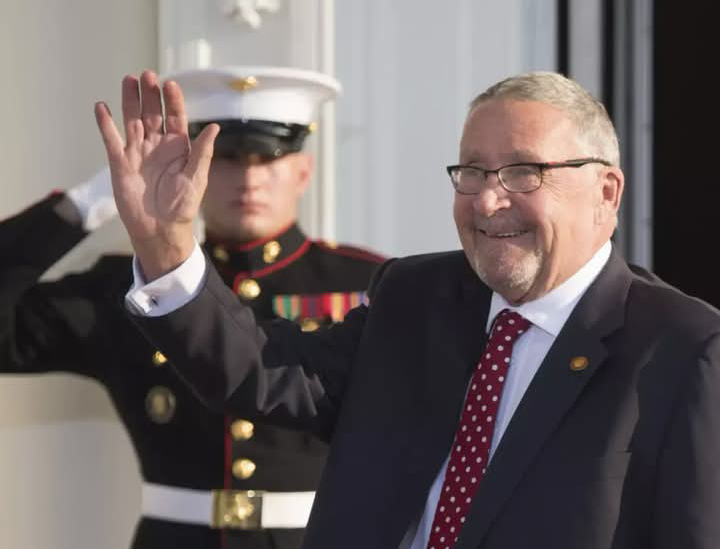
Zambia is mourning the passing of former Vice President Guy Lindsay Scott, a veteran politician, economist, and farmer who made history as the only white leader to serve as Africa’s head of state in the post-colonial era. Scott died at the age of 82, marking the end of a political career that spanned decades and left a distinctive imprint on Zambia’s democratic evolution.
Scott, who briefly served as Zambia’s acting president following the death of President Michael Sata in October 2014, was widely regarded as a pragmatic statesman whose leadership during a politically sensitive transition helped preserve constitutional order in one of Africa’s most stable democracies.
His death has prompted tributes from political leaders, civil society groups, and citizens across Zambia and beyond, many of whom have remembered him as an outspoken advocate for democratic governance, constitutionalism, and national unity.
A Historic Figure in African Politics
Born on June 1, 1944, in Livingstone, then Northern Rhodesia under British colonial rule, Guy Scott was the son of Scottish immigrants who settled in Zambia as commercial farmers. Despite his European ancestry, Scott identified strongly as Zambian and dedicated much of his public life to the country’s political and economic development.
He studied economics at Trinity Hall, University of Cambridge, before furthering his education at the University of Sussex. His academic background later influenced his contributions to agriculture, rural development, and economic policy.
Scott entered frontline politics after Zambia embraced multi-party democracy in the early 1990s. He served in various ministerial positions, including Minister of Agriculture, where he championed reforms aimed at improving agricultural productivity and food security.
His reputation as an intellectual with a direct communication style made him one of Zambia’s most recognizable political figures.
Rise to the Vice Presidency
Scott became vice president in 2011 after the victory of Michael Sata and the Patriotic Front (PF) in Zambia’s presidential election.
As Sata’s deputy, he played a key role in implementing government policies focused on infrastructure, social services, and economic transformation. Although his blunt public remarks occasionally generated controversy, Scott remained one of the administration’s most influential policymakers.
His relationship with President Sata was widely viewed as one built on mutual trust and political loyalty, positioning him as one of the country’s most senior government officials.
Acting President During a National Transition
Scott assumed the role of acting president on October 29, 2014, after President Michael Sata died while receiving medical treatment in London.
The transition attracted international attention because Scott became Africa’s only white head of state at the time—an extraordinary milestone in a continent where political leadership has overwhelmingly reflected indigenous African populations since independence.
However, Zambia’s Constitution prevented him from contesting the subsequent presidential election because both of his parents were born outside Zambia, despite Scott himself having been born in the country.
His constitutional ineligibility underscored ongoing debates surrounding citizenship requirements for presidential candidates in Zambia.
Nevertheless, political observers credited Scott with overseeing a peaceful transition of power, ensuring government continuity and safeguarding institutional stability until presidential elections were held.
His conduct during the transition earned praise from constitutional scholars and international observers who viewed Zambia as an example of democratic resilience in Africa.
Champion of Democratic Values
Throughout his political life, Scott remained an outspoken defender of democratic governance.
Even after leaving office, he frequently commented on national issues, governance reforms, electoral transparency, and economic policy. His willingness to criticize both allies and opponents distinguished him as an independent political voice.
Scott also maintained a strong interest in agriculture and rural development, often advocating for policies designed to improve farmers’ livelihoods while promoting sustainable agricultural practices.
His experience as both an economist and commercial farmer allowed him to engage in policy debates from practical and academic perspectives.
Tributes Across Zambia
News of Scott’s death has generated widespread condolences from political leaders, former colleagues, diplomats, academics, and ordinary Zambians.
Many have described him as a patriotic leader whose commitment to constitutional governance helped strengthen Zambia’s democratic institutions during one of the country’s most delicate political moments.
Observers have also highlighted his willingness to engage critics openly and his reputation for speaking candidly on national issues.
Political analysts say Scott’s legacy extends beyond the symbolic distinction of being Africa’s only white head of state. Instead, they argue that his greatest contribution lies in demonstrating respect for constitutional processes during periods of uncertainty.
His stewardship following President Sata’s death remains one of the defining moments of Zambia’s democratic history.
A Unique Place in African History
Scott occupies a unique position in Africa’s political history.
Although white political leaders governed several African territories during colonial rule and apartheid-era South Africa, Scott was the first—and remains the only—white individual to serve as head of state in an independent sub-Saharan African nation through constitutional succession.
His tenure reflected Zambia’s relatively stable political institutions rather than racial politics, illustrating the country’s commitment to constitutional governance.
Analysts have often cited Zambia’s peaceful transition in 2014 as evidence of democratic maturity, particularly at a time when several African nations were experiencing constitutional crises or disputed transfers of power.
Legacy Beyond Politics
Beyond government service, Guy Scott was known for his intellectual curiosity, humour, and frank public engagements.
He authored books and frequently participated in public discussions on African politics, economics, and governance. Friends and political associates often described him as an unconventional politician who valued ideas over political expediency.
His influence also extended to agricultural development, where he continued advocating evidence-based policies to improve productivity and rural livelihoods.
For many younger Zambians, Scott represented a generation of leaders who navigated the country’s transition from one-party rule to a competitive democratic system.
His career reflected both the opportunities and complexities of Zambia’s post-independence political evolution.
Looking Ahead
As Zambia reflects on Guy Scott’s life and public service, historians are likely to remember him not merely for the rarity of his racial identity in African leadership but for his role in safeguarding constitutional governance during a critical period.
His calm stewardship following the death of President Michael Sata reinforced Zambia’s reputation as one of Africa’s more stable democracies and demonstrated the importance of institutional continuity over political uncertainty.
Scott’s passing closes an important chapter in Zambia’s political history, but his contributions to democracy, agriculture, governance, and national development will remain part of the country’s enduring legacy.
Sources
- Reuters
- BBC News
- Associated Press (AP)
- Al Jazeera
- Zambia Daily Mail
- The Mast (Zambia)