Reported by Weng Patrick Atokor l Journalist at Weng Global
Trump urges Republican supporters to turn out for November elections
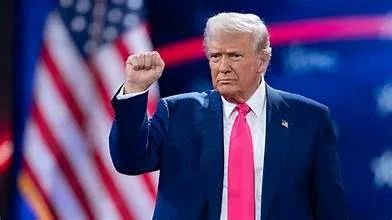
US President Donald Trump has sparked controversy after leading supporters at a Republican midterm convention in Dallas, Texas, in a voting pledge that included a remark about trying to “cheat like hell” in the November elections.
Trump made the comments on Thursday, September 10, 2026, while closing the Republican Party’s midterm convention in Dallas, where he sought to energise his political base ahead of the November 3 congressional elections.
The president encouraged supporters to vote, bring their families and friends to polling places and treat the midterm elections as a major test for his administration and the Republican Party.
During the pledge, Trump referred to voting regardless of whether he was registered and said he would try to “cheat like hell,” while also repeating his longstanding, unsubstantiated claims that Democrats have engaged in election cheating.
The remarks were reported by multiple US news organisations, including PBS, ABC News and The Washington Post. A transcript of Trump’s closing remarks also records the statement.
Trump turns election turnout into personal appeal
The Dallas event marked an unusually personal intervention by Trump in a midterm election.
Rather than presenting the November vote solely as a contest between individual Republican and Democratic candidates, Trump repeatedly positioned himself at the centre of the political mobilisation effort.
He asked members of the audience to raise their right hands and participate in a pledge to vote in the November election. He also urged them to bring relatives and friends to the polls.
According to reports of the event, Trump told supporters that they should vote on November 3 or vote early and encouraged them to behave as though he himself were on the ballot.
The president is constitutionally barred from seeking a third presidential term, meaning he will not appear as a candidate for president in the 2026 midterm elections. However, his influence over Republican voters remains a central feature of the party’s campaign strategy.
The Guardian reported that Trump told supporters to “pretend that I’m on the ballot,” reflecting his effort to make the midterm election a referendum on his leadership and political agenda.
What Trump said about voting
Trump’s comments about cheating came within a broader appeal for Republican turnout.
According to the transcript of his remarks, Trump told supporters that he would go out with family and friends to vote and then referred to voting even if he were not registered.
The wording has drawn particular attention because voting eligibility and registration are governed by state election laws in the United States.
The Washington Post reported that Trump’s comments appeared to reference his repeated, unsubstantiated allegations that widespread voter fraud had affected elections in favour of Democrats.
PBS also reported on the incident, noting that Trump had first spoken about wanting honesty in elections before making the controversial remark during the pledge.
The contrast between calling for election honesty and subsequently using language about trying to cheat has become a central point of criticism surrounding the episode.
Trump also warned supporters about not voting
The president’s message was not limited to the controversial remark.
Trump repeatedly emphasised the importance of turnout and warned supporters about the consequences of failing to vote.
Reports from the event said Trump told the audience that people who did not vote would “go to hell.”
He also encouraged supporters to bring family members and friends to the polls, reinforcing the importance his political operation places on turnout ahead of the November elections.
The strategy reflects the importance of voter participation in US midterm elections, where turnout is generally lower than during presidential elections.
For Republicans, maintaining control of Congress would be important for Trump’s ability to advance his legislative agenda during the remainder of his presidency.
Republican convention places Trump at centre of midterm campaign
The Republican gathering in Dallas was notable because it was held specifically to energise the party ahead of the 2026 midterm elections.
Reuters reported that the convention also highlighted Vice President JD Vance, who delivered a major speech as Republicans began discussions about the party’s future beyond Trump.
The event therefore served two purposes: mobilising Republican voters for the immediate congressional elections while also demonstrating Trump’s continuing influence over the party.
Trump’s prominence at the convention was particularly significant because the Republican Party will be defending its congressional position at a time when control of the House and Senate will have major implications for the administration.
A strong Republican performance would make it easier for Trump to advance legislation, approve priorities and maintain political momentum.
A poor performance could strengthen opposition from Democrats and increase pressure within the Republican Party over its political direction.
Trump links election to broader Republican agenda
The voting pledge was also part of a wider political message delivered by Trump during the Dallas convention.
Among his other announcements, Trump proposed a $5,000 payment to American adults if Republicans retain control of both chambers of Congress.
Reuters reported that Trump described the proposed payment as a dividend tied to the country’s economic performance, although details on how the programme would be funded and implemented were not provided.
The Associated Press reported that the proposal could cost more than $1 trillion and would require congressional approval.
Vice President JD Vance subsequently suggested that the proposal might not apply equally to wealthier Americans and discussed tariff revenue as a possible source of funding.
The combination of the financial proposal and Trump’s aggressive turnout appeal demonstrates the extent to which the Republican leadership is attempting to motivate its supporters ahead of the November vote.
Election claims remain a sensitive issue
Trump’s remarks also revive a broader and highly contentious debate about election integrity in the United States.
Trump has repeatedly alleged that elections have been affected by widespread fraud. Such claims have remained politically influential among parts of his support base but have also been challenged by election officials, courts and fact-checkers.
In the latest incident, the controversy does not stem simply from Trump’s encouragement to vote. It stems from the language he used while asking supporters to participate in the election.
The distinction is important.
Encouraging citizens to vote is a normal part of democratic political campaigning. However, suggesting that people should vote despite registration requirements or “cheat” raises questions about compliance with election laws and the responsibilities of political leaders.
Weng Global has not independently interpreted Trump’s comments beyond the wording reported and recorded from his remarks. The article does not suggest that Trump instructed supporters to commit a specific illegal act beyond what was contained in his own statement.
Why the remarks matter
The controversy is significant beyond the immediate Republican gathering because the United States remains one of the world’s most influential democracies.
Statements by a sitting US president about elections can attract international attention because they can influence public confidence in electoral institutions and shape political behaviour.
The United States also has a decentralised election system, with states playing major roles in administering elections and determining registration and voting procedures.
For that reason, voters are generally required to comply with the applicable rules in their jurisdiction.
Trump’s comments therefore carry particular political weight because they came from the country’s highest elected office during an active election campaign.
They also come at a time when the Republican Party is attempting to maintain control of Congress and strengthen support for Trump’s agenda.
The November 3 midterm elections
The 2026 US midterm elections are scheduled for November 3.
The elections will determine control of Congress and will include contests for seats in the US House of Representatives and Senate, alongside state and local races across the country.
The outcome will shape the political environment for the remainder of Trump’s current presidential term.
If Republicans retain control of Congress, Trump would have a stronger political position for pursuing his legislative priorities.
If Democrats gain control of one or both chambers, the administration could face greater resistance to its proposals and increased congressional scrutiny.
That political reality helps explain why Trump has increasingly focused his public appearances on turnout and Republican unity.
What happens next
The immediate focus will shift from the Dallas convention to the Republican Party’s campaign efforts across individual states and congressional districts.
Republican candidates will attempt to translate Trump’s national popularity among the party’s core supporters into votes in competitive races.
Democrats, meanwhile, are likely to use Trump’s comments as part of their argument that the president and Republican leadership pose a threat to democratic norms and electoral integrity.
Trump’s remarks are also likely to continue generating debate among election officials, political analysts and voters.
For voters, however, the central issue remains participation within the rules established by their respective states.
The November 3 election will ultimately determine whether Trump’s Republican Party maintains its congressional position and how much political room the president has to pursue his agenda.
A broader test for American politics
The Dallas episode illustrates the increasingly personal nature of American electoral politics.
Trump’s decision to place himself at the centre of the Republican midterm mobilisation campaign demonstrates that his political influence remains important even though he is not seeking another presidential term in 2026.
At the same time, the controversy surrounding his “cheat like hell” remark highlights the continuing sensitivity surrounding election-related rhetoric in the United States.
For a country whose elections are closely watched around the world, the credibility of political leaders’ statements about voting remains significant.
The November election will therefore be about more than congressional seats. It will also provide another test of voter confidence, political mobilisation and the continuing influence of Donald Trump over the Republican Party.
Weng Global will continue to monitor developments surrounding the 2026 US midterm elections and report confirmed developments as they emerge.
Weng Global – Stories beyond borders
Sources
- PBS NewsHour — reporting on Trump’s voting pledge and “cheat like hell” remark.
- ABC News — coverage of the Republican midterm convention in Dallas.
- The Washington Post — report on Trump’s voting pledge and remarks about cheating.
- Reuters — coverage of the Republican convention and Trump’s political strategy.
- Reuters — report on Trump’s proposed $5,000 payment to US adults.
- Associated Press — analysis of Trump’s $5,000 proposal and its potential cost.
- The Guardian — coverage of Trump’s appeal to Republican voters ahead of the midterms.
- Roll Call/Factbase — transcript of Trump’s September 10, 2026 closing remarks.