Reported by Weng Patrick Atokor l Journalist at Weng Global
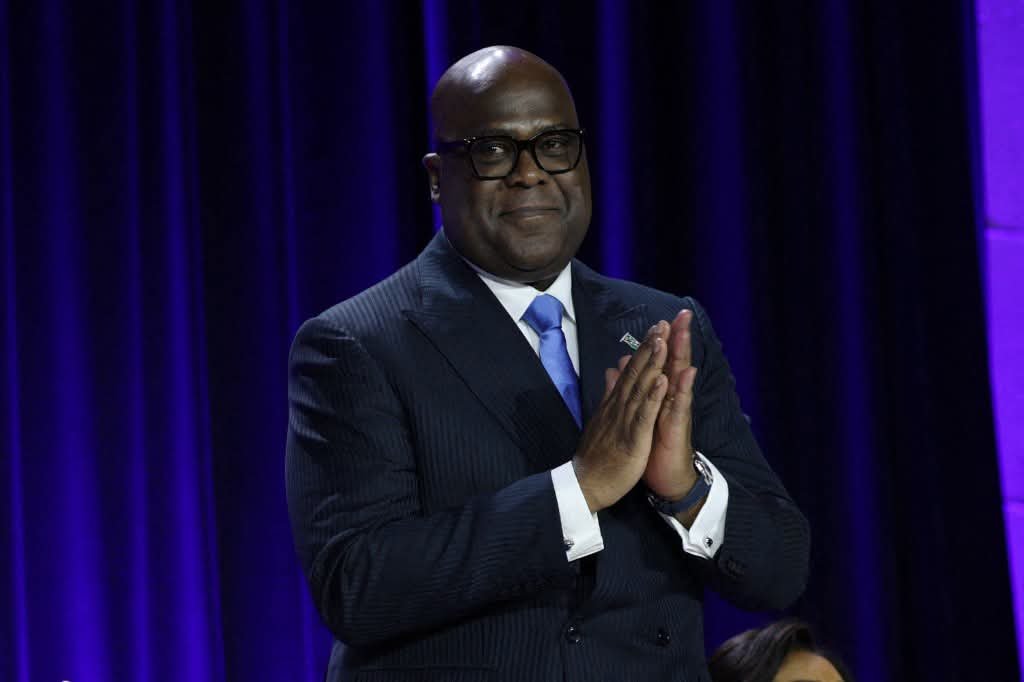
The Democratic Republic of the Congo (DR Congo) has appealed to Russia to support diplomatic efforts to end the prolonged conflict in its eastern region, as President Félix Tshisekedi seeks greater international pressure on Rwanda over its alleged backing of the M23 rebel group.
Tshisekedi made the appeal during a meeting with Russian President Vladimir Putin in Moscow on Friday, October 30, 2026, at the conclusion of the third Russia-Africa Summit.
The Congolese president called on Russia, a permanent member of the United Nations Security Council (UNSC), to use its diplomatic influence to support peace initiatives and the implementation of international resolutions addressing the conflict.
The appeal comes amid continued fighting in eastern DR Congo despite previous diplomatic agreements involving Kinshasa and Kigali, raising fresh questions about the effectiveness of international mediation efforts.
Tshisekedi Calls for Russian Intervention
During discussions with Putin, Tshisekedi expressed his country’s desire for Russia to play a more active role in efforts to resolve tensions between DR Congo and neighbouring Rwanda.
According to reports from the summit, the Congolese leader also called on Moscow to support the implementation of UN Security Council resolutions concerning the security situation in eastern DR Congo.
In his address at the summit, Tshisekedi specifically referred to Resolutions 2773 and 2808, which address the conflict and outline obligations relating to the cessation of hostilities, the withdrawal of armed forces and the ending of support for armed groups.
He argued that Russia, as a permanent member of the Security Council, has a responsibility to support resolutions adopted by the international body.
The Congolese government wants the M23 fighters to withdraw from occupied territories and demands an end to Rwanda’s alleged military support for the group.
Tshisekedi also emphasised the importance of protecting civilians, ensuring humanitarian access and facilitating the safe and voluntary return of displaced people and refugees.
DR Congo Accuses Rwanda of Supporting M23
The conflict in eastern DR Congo has remained one of Africa’s most persistent security crises, with armed groups, regional tensions and competition over natural resources contributing to decades of instability.
The M23 rebel movement has emerged as a major challenge to the Congolese government, particularly since its renewed offensive in 2021.
Kinshasa has repeatedly accused Rwanda of providing military assistance to the group, including support that has enabled its operations in eastern Congo.
Kigali has consistently denied supporting the rebels, maintaining that its security concerns are linked to armed groups operating from Congolese territory, particularly the Democratic Forces for the Liberation of Rwanda (FDLR).
UN experts have reported evidence of Rwandan military involvement alongside M23, although Rwanda disputes accusations of backing the rebellion.
The FDLR, meanwhile, is an armed group formed by individuals associated with the former Rwandan regime involved in the 1994 genocide against the Tutsi. Its continued presence in eastern DR Congo remains a major security concern for Rwanda.
The competing security demands have complicated diplomatic efforts to resolve the conflict, with both governments accusing each other of failing to address the underlying causes of instability.
Washington Peace Agreement Faces Implementation Challenges
Tshisekedi’s appeal to Moscow comes as previous diplomatic efforts have struggled to produce lasting security improvements in eastern DR Congo.
In December 2025, the Congolese and Rwandan presidents signed a United States-mediated peace agreement in Washington, witnessed by US President Donald Trump.
The agreement was intended to address the security crisis through commitments by both countries, including ending support for armed groups and addressing the security threats posed by the FDLR.
Rwanda committed to withdrawing its forces from eastern DR Congo, while Kinshasa was expected to take action against the FDLR.
However, the agreement has not stopped the fighting.
Both governments continue to disagree over the implementation of their commitments. Rwanda maintains that the Congolese government has not fulfilled its obligations concerning the FDLR, while DR Congo insists that Rwandan forces must leave its territory and stop supporting M23.
Tshisekedi has also reaffirmed his commitment to the Washington and Doha diplomatic processes, alongside mediation efforts supported by the African Union.
He has argued that diplomatic progress must translate into measurable improvements on the ground rather than remaining at the level of political agreements and international declarations. Actualite.cd +1
US Sanctions Increase Pressure on Rwanda
The Congolese president’s request for Russian support follows a significant development in the international response to the conflict.
On October 28, 2026, the United States announced sanctions against Rwanda’s Ministry of Defence over its alleged involvement in the fighting in eastern DR Congo.
According to Reuters and the US Treasury Department, Washington accused the ministry of directing thousands of Rwandan troops into North and South Kivu provinces, where they allegedly operated alongside M23 fighters and provided military equipment and other assistance.
The United States also sanctioned Zigama Credit and Savings Society, a Rwandan financial institution accused of facilitating financial transactions connected to support for the armed group.
US Treasury Secretary Scott Bessent called on Rwanda to end its alleged support for M23 and withdraw its troops from Congolese territory.
Rwanda rejected the accusations and maintained that it remained prepared to implement the Washington agreement, provided DR Congo also fulfilled its commitments.
The Congolese government welcomed the American sanctions, describing them as an important step towards holding Rwanda accountable.
The measures represent additional international pressure on Kigali, although their impact on the military situation remains uncertain. Reuters +1
Russia’s Position Could Influence International Diplomacy
Russia’s involvement is significant because Moscow holds a permanent seat on the UN Security Council, giving it considerable influence over international decisions concerning peace and security.
Tshisekedi wants Russia to support the implementation of the relevant Security Council resolutions and strengthen diplomatic efforts aimed at ending the fighting.
The Congolese president also sought Moscow’s support for the renewal of the mandate of the United Nations Organization Stabilization Mission in the Democratic Republic of the Congo (MONUSCO), whose mandate is due to expire in December 2026.
MONUSCO has operated in DR Congo for years, with responsibilities that include protecting civilians and supporting efforts to stabilise conflict-affected areas.
The future of the mission remains important to Kinshasa as the country continues to face security challenges in its eastern provinces.
Russia’s response to Tshisekedi’s appeal could therefore become an important factor in discussions at the Security Council.
However, seeking Moscow’s diplomatic backing does not automatically mean Russia will become a direct mediator in the conflict or that its involvement will produce an immediate breakthrough. Punch Newspapers +1
Eastern DR Congo’s Humanitarian Crisis
Beyond the diplomatic disagreement, the conflict continues to have serious consequences for civilians.
Eastern DR Congo has experienced decades of armed violence involving numerous rebel movements, local militias and regional security interests.
The renewed M23 offensive has intensified instability, particularly in North Kivu and South Kivu, where the armed group has captured strategically important areas.
The fighting has contributed to widespread displacement, disrupted economic activities and limited access to essential services.
The region is also important because of its mineral resources, including gold, tin, tantalum and other minerals used in international manufacturing and technology supply chains.
Competition over natural resources, illegal mineral exploitation and the financing of armed groups have complicated efforts to establish lasting peace.
The United Nations and humanitarian organisations have repeatedly raised concerns about the impact of the violence on civilians, including displacement and restrictions on humanitarian access.
For millions of people affected by the crisis, the central concern is not which international power gains diplomatic influence but whether the fighting will end and whether communities can safely return to their homes. Global Conflict Tracker +1
Why Tshisekedi’s Appeal Matters
The decision to seek Russian support reflects Kinshasa’s effort to widen its diplomatic engagement beyond existing Western and regional mediation initiatives.
The United States has been involved in efforts to negotiate peace between DR Congo and Rwanda, while Qatar and the African Union have also supported diplomatic initiatives.
By approaching Putin, Tshisekedi is seeking the involvement of another influential international actor whose position at the Security Council could help strengthen pressure for compliance with existing resolutions.
The move also highlights the growing importance of international partnerships in addressing African security challenges.
For Russia, engagement with the Congolese government offers another opportunity to strengthen its diplomatic relationships across Africa.
Nevertheless, the effectiveness of additional international involvement will depend on whether the parties to the conflict accept and implement agreed commitments.
What Happens Next?
The immediate challenge remains the implementation of existing peace commitments and the enforcement of relevant UN Security Council resolutions.
DR Congo continues to demand the withdrawal of Rwandan forces, an end to alleged military support for M23 and the restoration of government authority in areas controlled by armed groups.
Rwanda, meanwhile, insists that the FDLR threat must be addressed as part of any sustainable security arrangement.
The continuation of the Washington and Doha processes, together with African Union mediation, will remain important to diplomatic efforts.
Russia’s position at the Security Council could also influence discussions surrounding the conflict and the renewal of MONUSCO’s mandate in December.
However, there is no confirmed indication that Tshisekedi’s appeal has produced a new peace agreement or secured a specific Russian commitment to resolve the crisis.
For now, eastern DR Congo remains caught between continuing military confrontation and diplomatic efforts that have yet to deliver lasting peace.
The success of these initiatives will ultimately be measured by whether armed groups stop fighting, foreign forces withdraw, civilians regain security and displaced communities can return home safely.
Weng Global – Stories beyond borders
Sources
- Radio Okapi – Tshisekedi calls on Russia to support UN resolutions on eastern DR Congo.
- Anadolu Agency – DR Congo urges Russia to back UN demand for Rwanda to withdraw troops.
- Reuters – US imposes sanctions on Rwanda’s Defence Ministry over Congo conflict.
- Associated Press – US sanctions Rwandan Defence Ministry over involvement in eastern Congo conflict.
- Actualité.cd – Tshisekedi reaffirms commitment to Washington and Doha peace processes.
- Punch Newspapers / AFP – DR Congo seeks Russia’s help to end Rwanda conflict.