Reported by Weng Patrick Atokor l Journalist at Weng Global
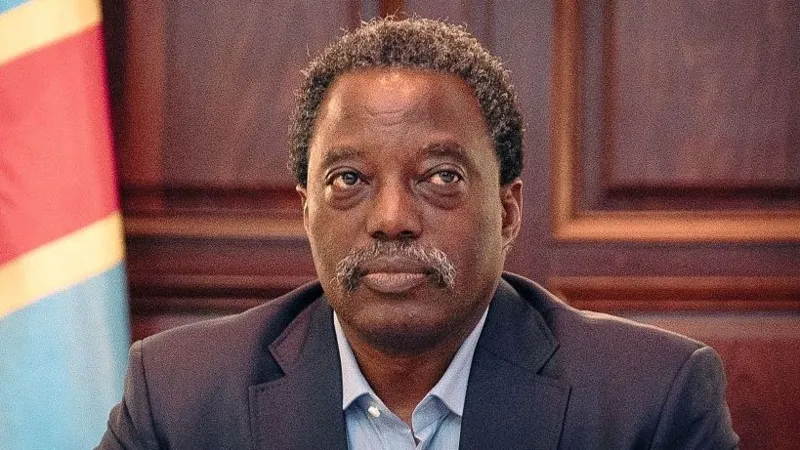
Former Democratic Republic of the Congo (DR Congo) President Joseph Kabila has been named the leader of a new political and military coalition that includes the M23 rebel group and aims to remove President Félix Tshisekedi’s government, raising fresh concerns about the security situation in eastern Congo.
The coalition, known as the Front for the Refoundation of the Nation (FRN), was unveiled on Monday, October 12, 2026, at a press conference at Kabila’s residence in Goma, a major city in eastern DR Congo that has been under the control of M23 rebels since January 2025.
The announcement marks a significant development in the country’s prolonged conflict, bringing the former president into a more direct leadership role within a political-military alliance that includes armed groups fighting government forces.
According to reporting by the BBC, Associated Press and Al Jazeera, the new coalition intends to coordinate opposition forces against Tshisekedi’s administration. Its representatives have said they are prepared to pursue their objectives through various means, including force.
Kabila’s New Political-Military Coalition
The FRN brings together groups previously associated with the Congo River Alliance (AFC), the political umbrella linked to the M23 rebellion in eastern DR Congo.
Kabila’s leadership was announced by Claude Ibalanky, an adviser to the coalition, during the launch in Goma. The new structure includes several prominent figures associated with the AFC-M23 alliance.
Corneille Nangaa, the former head of the Congo River Alliance, was named one of the coalition’s vice presidents. Other deputies include Bertrand Bisimwa, Freddy Kaniki and Sultani Makenga, the M23 military commander.
The coalition says it wants to bring together resistance forces to challenge what it describes as tyranny in the country. However, its inclusion of armed groups and its stated willingness to use force have raised questions about whether the announcement could lead to an escalation of fighting.
The DR Congo government had not issued an immediate response to the coalition’s unveiling, according to reports published by international media.
A Major Shift in Kabila’s Position
Kabila served as president of DR Congo from 2001 until January 2019, when Tshisekedi took office following the 2018 election.
For years, Kabila remained an influential political figure even after leaving the presidency. His relationship with Tshisekedi deteriorated as political disagreements and disputes over power intensified.
The former president has previously denied having links to the M23 rebel movement. His decision to lead the FRN, which includes M23 and its political allies, therefore represents a major development in his public involvement in the country’s current conflict.
According to the BBC and Associated Press, Kabila was sentenced to death in absentia in 2025 after a Congolese military court convicted him in connection with allegations involving treason and support for the rebellion. Kabila has rejected accusations of wrongdoing and has described the case against him as politically motivated, according to previous reporting.
His appointment as head of the new coalition could further deepen the political confrontation between his supporters and Tshisekedi’s government.
It also places the former president at the centre of a movement whose activities extend beyond conventional political opposition into an armed conflict that has displaced civilians and destabilised communities across eastern Congo.
M23’s Control of Eastern DR Congo
The emergence of the FRN comes amid continuing instability in eastern DR Congo, particularly in North Kivu and South Kivu, where armed groups have fought government forces for years.
M23 made major territorial advances in 2025, capturing Goma and Bukavu, two important urban centres in the east. The group’s expansion has weakened government control over parts of the region and intensified tensions between Kinshasa and neighbouring Rwanda.
The Congolese government and United Nations officials have accused Rwanda of supporting M23. Rwanda has disputed accusations concerning its role in the conflict, while security developments in the region have continued to fuel diplomatic tensions.
Eastern DR Congo is strategically important because of its mineral resources, including deposits used in global supply chains. The conflict has disrupted civilian life, trade and economic activity while forcing many residents to flee their homes.
The region’s instability also has implications for neighbouring countries, particularly Rwanda and Uganda, because of cross-border security concerns, refugee movements and regional trade.
The creation of the FRN adds another political and military dimension to this already complicated conflict. Rather than operating solely through the existing AFC-M23 structure, the new coalition seeks to unite a broader collection of forces under Kabila’s leadership.
Whether the alliance can expand its influence beyond areas already controlled by rebel groups remains uncertain.
What the Coalition Says It Wants
The FRN has presented itself as a movement intended to coordinate resistance forces and challenge the current government.
Coalition adviser Claude Ibalanky said the movement sought to end what its members describe as tyranny, indicating that it would pursue its objectives through all available means, including force.
Such statements point to a confrontation that could extend beyond political negotiations if the coalition attempts to achieve its stated goals through military action.
However, the coalition’s declared objectives should be distinguished from independently established facts about its plans, public support and capacity to challenge the government across the country.
The announcement alone does not establish how many fighters or political organisations will join the movement, whether it can maintain unity among its constituent groups or how it intends to govern areas under its influence.
Those questions are likely to become central to assessing the coalition’s significance in the coming weeks.
Implications for Peace Efforts
Kabila’s emergence as the leader of a new political-military alliance could complicate efforts to resolve the conflict through diplomacy.
Regional and international initiatives have sought to reduce hostilities and encourage negotiations between the Congolese government and rebel representatives. The fighting, however, has persisted despite diplomatic engagement.
The new coalition introduces another factor into these efforts because it brings a former head of state into a more prominent role within an alliance that includes M23.
Any peace process will have to contend with the interests of the government, the armed groups, their political representatives and regional actors whose relations have been strained by the conflict.
The FRN’s formation could also influence how the government approaches negotiations, particularly if Kinshasa views the coalition as a broader challenge to its authority rather than a reorganisation of existing opposition groups.
There is not yet sufficient evidence to determine whether the new alliance will strengthen the bargaining position of rebel groups or make a negotiated settlement more difficult. Its impact will depend partly on its military capabilities, internal cohesion and willingness to participate in credible peace efforts.
Why the Development Matters to Africa
The political and military developments in DR Congo carry consequences beyond the country’s borders.
Prolonged instability threatens civilian safety, disrupts regional commerce and increases pressure on neighbouring states. It also creates challenges for African diplomatic institutions seeking to prevent conflicts from spreading and to support political solutions to armed confrontations.
The conflict has wider international significance because eastern Congo’s mineral resources are linked to global industries, including electronics and other manufacturing sectors. Continued fighting can disrupt mining, transport and supply chains while worsening the humanitarian situation.
For African governments and regional organisations, the FRN announcement raises difficult questions about how to address armed opposition movements, maintain state authority and secure lasting peace without worsening civilian suffering.
For Congolese citizens, the immediate concern remains whether the latest political development will lead to further fighting, displacement and restrictions on access to essential services.
What Happens Next?
The next steps will depend on how the FRN organises itself, whether additional groups join the coalition and how the Tshisekedi government responds.
Developments on the battlefield and the position taken by regional mediators will also help determine whether the announcement leads to an intensification of hostilities or changes the dynamics of negotiations.
As of the coalition’s unveiling, the Congolese government had not issued an immediate public response, and the longer-term military and political consequences remained uncertain.
The formation of the FRN nevertheless signals a new phase in the struggle over political authority in DR Congo. With Kabila at its head and M23 among its constituent groups, the coalition presents a fresh challenge to Tshisekedi’s administration at a time when large parts of eastern Congo remain outside government control.
The central question is whether the new alliance will open another front in the conflict or become part of a political process capable of ending years of violence.
Weng Global – Stories beyond borders
Sources
- BBC Africa — Reporting on Joseph Kabila’s appointment as leader of the new rebel coalition, October 13, 2026.
- Associated Press — Reporting on the launch of the Front for the Refoundation of the Nation in Goma, October 12–13, 2026.
- Al Jazeera — Reporting on Kabila’s alliance with M23 and the implications for the conflict in eastern DR Congo, October 13, 2026.
- Reuters — Reporting on Kabila’s formation of a new political-military group to replace the AFC-M23 alliance, October 12, 2026.
- Deutsche Welle — Analysis of Kabila’s new coalition and the implications for peace efforts in DR Congo, October 13, 2026.