Reported by Weng Patrick Atokor l Journalist at Weng Global
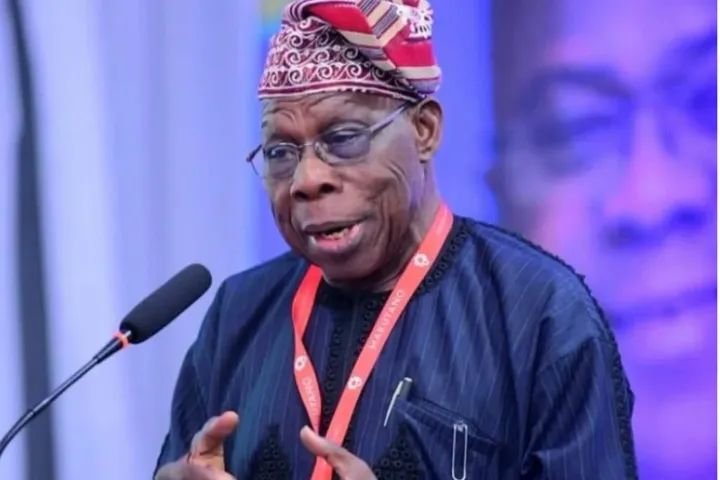
Former Nigerian President Olusegun Obasanjo has criticised President Bola Tinubu’s position on government borrowing, warning that excessive public debt could place an unfair financial burden on future generations.
Obasanjo described debt as being “worse than leprosy”, arguing that its consequences extend beyond individuals and can affect entire generations. His remarks have renewed debate over Nigeria’s borrowing policy, the management of public finances and the country’s ability to finance development without accumulating unsustainable debt.
The former president made the comments on Friday, October 30, 2026, while speaking at the Ajibosin Platform, a public forum held in Abeokuta, Ogun State.
The event focused on leveraging artificial intelligence to address grassroots challenges and accelerate national development.
His comments came amid renewed public attention on the Federal Government’s borrowing plans, following President Tinubu’s request for legislative approval for additional external loans to finance projects across key sectors of the Nigerian economy.
Obasanjo Disagrees With Tinubu Over Borrowing
Obasanjo’s criticism directly challenges a position Tinubu expressed in April 2026, when the President defended his administration’s decision to borrow money to finance government programmes.
Speaking at the State House on April 29, during a meeting with Plateau State leaders led by Governor Caleb Mutfwang and All Progressives Congress (APC) National Chairman Nentawe Yilwatda, Tinubu maintained that borrowing should not automatically be regarded as a negative economic decision.
“If we have to borrow, we borrow. Borrowing is not leprosy, we just have to work hard to be able to pay for it,” the President said.
Tinubu’s argument was that borrowing could be justified when the government had the capacity and intention to repay the loans.
However, Obasanjo rejected that comparison, arguing that the consequences of accumulating national debt could affect people who were not involved in the decisions that created the obligations.
The former president said the impact of debt extended beyond the immediate government and could become a burden for generations that would inherit the country’s financial obligations.
His criticism has brought renewed attention to the debate over whether Nigeria’s borrowing is translating into sufficient economic development and whether the country can sustainably meet its repayment commitments. Punch Newspapers +2
Nigeria’s Public Debt Reaches ₦166.79 Trillion
The disagreement comes against the background of Nigeria’s expanding public debt profile.
Data released by the Debt Management Office (DMO) show that Nigeria’s total public debt stood at ₦166.79 trillion as of June 30, 2026.
The figure represented an increase of ₦7.44 trillion from the ₦159.35 trillion recorded at the end of March 2026.
The debt portfolio consisted of ₦91.59 trillion in domestic debt and ₦75.20 trillion in external debt.
Domestic obligations accounted for approximately 54.91 per cent of the total, while external debt represented 45.09 per cent.
The Federal Government accounted for ₦152.77 trillion of the overall debt stock, with state governments and the Federal Capital Territory accounting for the remaining ₦14.01 trillion.
The figures highlight the scale of Nigeria’s borrowing obligations and the importance of managing both domestic and foreign debt.
However, an increase in the naira value of public debt does not necessarily represent new borrowing alone. Exchange-rate movements can also increase the naira value of foreign-currency obligations when they are converted into local currency.
Nigeria’s total public debt was ₦87.38 trillion in June 2023, according to figures cited from the DMO’s historical debt records. The increase to ₦166.79 trillion by June 2026 reflects a substantial rise in the reported debt stock, although currency valuation changes are also relevant when assessing the movement. Debt Management Office Nigeria +3
Tinubu Seeks Additional $20.52 Billion and €1.045 Billion Loans
The debate has become more significant following Tinubu’s latest request for legislative approval of additional external borrowing.
On Tuesday, October 27, 2026, the President asked the National Assembly to approve a supplementary external borrowing plan involving $20.52 billion and €1.045 billion for the 2026–2027 fiscal period.
The request was conveyed in a letter read by Senate President Godswill Akpabio during plenary.
According to the proposal, the loans would support projects and programmes covering several sectors, including:
- Infrastructure development.
- Agriculture and food security.
- Healthcare.
- Education.
- Water supply.
- National security.
- Employment generation.
- Financial management reforms.
Tinubu said the proposed financing was necessary to address Nigeria’s infrastructure deficit and close funding gaps affecting development projects.
The President also maintained that the proposed investments had undergone technical and economic assessments and were expected to contribute to national development.
He argued that the projects could support employment creation, entrepreneurship, poverty reduction, skills development and improved economic opportunities.
Following the presentation of the request, Akpabio referred the proposal to the Senate Committee on Local and Foreign Debts for consideration, alongside the relevant legislative committees.
The Senate subsequently gave the committee one week to report on its examination of the proposal.
The request is not yet equivalent to a completed loan disbursement. Legislative consideration and the applicable approval processes remain important steps before the proposed financing can proceed. Premium Times Nigeria +3
Obasanjo Questions Nigeria’s Economic Performance
Beyond his criticism of borrowing, Obasanjo also questioned Nigeria’s economic performance over several decades, particularly the depreciation of the naira against the United States dollar.
Recounting his experience as a farmer, the former president said the exchange rate was significantly different when he established his farm approximately 47 years ago.
He recalled that the naira exchanged at one naira to $1.85 at the time.
Comparing that experience with the exchange rate he cited at the forum, Obasanjo questioned the country’s economic management and the progress made over the intervening decades.
He asked what Nigeria had achieved economically to move from the exchange-rate position he remembered to approximately ₦1,500 to the dollar.
His remarks reflected broader concerns about the purchasing power of the naira, the cost of imports, inflation and the pressure currency depreciation places on households and businesses.
However, exchange-rate comparisons across several decades need to be understood within the context of changing monetary policies, economic structures, inflation and foreign-exchange arrangements.
The naira’s depreciation has been one of Nigeria’s major economic challenges, affecting the cost of imported goods, production inputs and foreign-currency obligations.
Obasanjo’s comments therefore extended beyond the immediate disagreement with Tinubu, raising questions about the country’s long-term economic direction and the effectiveness of successive governments.
Former President Criticises Dependence on World Bank and IMF
Obasanjo also questioned Nigeria’s reliance on international financial institutions, particularly the World Bank and the International Monetary Fund (IMF).
He argued that the institutions were established before Nigeria gained independence and questioned whether their economic prescriptions adequately reflected the country’s circumstances.
The former president challenged Nigerian leaders to examine the country’s dependence on external economic institutions and consider whether their recommendations sufficiently addressed domestic priorities.
His comments raised a wider debate about economic sovereignty, policy independence and Africa’s ability to develop solutions suited to its own economic realities.
The World Bank and IMF play significant roles in international development financing, economic assistance and policy discussions. Their involvement in developing economies has also generated debate over the conditions attached to financial support and the suitability of certain policy recommendations.
Obasanjo’s position reflects his concern that Nigeria should strengthen its capacity to determine its economic priorities rather than depend excessively on external institutions.
His remarks also connect with a broader African discussion about domestic resource mobilisation, industrial development, technology investment and the continent’s ability to influence its own economic future. Punch Newspapers +2
Why the Debt Debate Matters to Nigerians
The disagreement between Obasanjo and Tinubu raises an important question about the relationship between government borrowing and economic development.
Borrowing is not necessarily harmful to an economy. Governments across the world obtain loans to finance infrastructure, support economic activity and fund projects that may not be affordable through immediate revenue.
However, the long-term value of borrowing depends on how effectively the money is used, the economic returns generated and the government’s ability to meet repayment obligations.
For Nigeria, the central concern is whether borrowed funds will translate into infrastructure, improved public services, employment opportunities and stronger productive capacity.
When loans finance projects that generate economic activity and improve government revenue, they can contribute to long-term development.
On the other hand, poorly managed borrowing can increase debt-servicing obligations, restrict future government spending and leave succeeding administrations with limited financial flexibility.
Debt servicing is particularly important because money used to repay interest and principal cannot simultaneously be spent on other public priorities.
For ordinary Nigerians, the consequences of poor debt management could become visible through pressure on public services, reduced development spending and increased fiscal constraints.
The debate is therefore not simply about whether Nigeria should borrow. It is also about transparency, accountability, project selection, implementation and measurable results.
Obasanjo’s warning focuses on the potential intergenerational consequences of excessive debt, while Tinubu’s defence centres on the need to obtain financing for development and repay the obligations.
Both positions highlight an important issue facing Nigeria: how to finance national development without compromising future economic stability.
What Happens Next?
The immediate development to watch is the National Assembly’s consideration of Tinubu’s proposed external borrowing plan.
The Senate committee’s examination will be important in determining the details of the proposed financing and the legislative steps required before the government can proceed.
The Federal Government will also face the responsibility of demonstrating how borrowed funds will be allocated, monitored and translated into completed projects.
For Nigeria, the broader challenge will be ensuring that additional borrowing contributes to productive investment rather than creating financial obligations without corresponding economic benefits.
Obasanjo’s intervention has added another prominent voice to the national debate over borrowing, economic management and the country’s long-term financial future.
Ultimately, the question facing Nigeria is whether its borrowing decisions will deliver sufficient economic value to justify the obligations being passed on to future generations.
Weng Global – Stories beyond borders
Sources
- Punch Newspapers – Debt worse than leprosy, Obasanjo counters Tinubu.
- Vanguard – Obasanjo criticises Tinubu’s borrowing policy.
- Debt Management Office – Nigeria’s Total Public Debt as at June 30, 2026.
- Voice of Nigeria – Tinubu seeks Senate approval for $20.52bn and €1.05bn loans.
- Reuters – Nigeria’s president seeks parliament approval for about $21.7 billion borrowing.
- TheCable – Tinubu says borrowing is not leprosy.