Reported by Simon Daniel Yusuph l Journalist at Weng Global
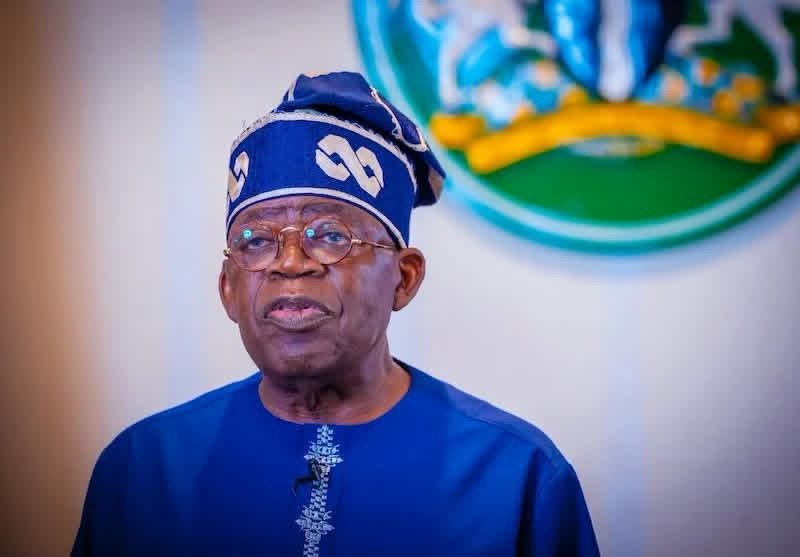
President Bola Ahmed Tinubu says the recent operationalisation of new Nigerian Army formations in Zamfara, Kebbi, Oyo and Osun states will strengthen the military’s ability to respond more quickly to insecurity and bring troops closer to communities facing security threats.
The President made the statement on Sunday, October 4, 2026, while highlighting measures being taken by his administration to improve the operational capacity and welfare of the Armed Forces.
Tinubu said the new formations were designed to improve the military’s ability to respond when communities come under threat, while also pointing to additional investments in barracks, depots and the welfare of military personnel.
The development is part of a broader restructuring of the Nigerian Army that has expanded its divisional structure from eight to 12 divisions and introduced additional formations across different parts of the country.
Tinubu links new formations to faster security response
According to the President, the operationalisation of the formations in Zamfara, Kebbi, Oyo and Osun is intended to reduce the distance between troops and communities considered vulnerable to attacks.
Tinubu said the Nigerian Army had operationalised new formations in the four states during the week and that the deployments would strengthen the military’s ability to respond swiftly to threats against civilians.
The President also said the Federal Government was accelerating construction of new barracks and depots in Abuja, Ekiti, Ebonyi and Kogi, while facilities in Osun State had already been completed.
He argued that improving military infrastructure was necessary as the government placed greater operational demands on the Armed Forces.
“As we demand more from our men and women in uniform, we must do more to support them and their families,” Tinubu said, according to a report by Punch.
The President further said a recent increase in the pay of members of the Armed Forces was making a difference to personnel and their families.
He also acknowledged the wider sacrifices made by military families, noting that deployments affect not only soldiers.
New formations already taking shape across four states
The announcement comes as the Nigerian Army has moved to establish and operationalise new formations in areas facing different security pressures.
In Zamfara State, the Army operationalised three infantry battalions: the 12 Infantry Battalion in Bakura, the 23 Infantry Battalion in Kaura Namoda and the 28 Infantry Battalion in Anka.
The Army said the new units were established to expand operational coverage, improve rapid response and secure their respective areas of responsibility.
During the ceremonies, Colonel Joseph Umaru, who represented the General Officer Commanding 8 Division, Major General Bemgba Paul Koughna, urged residents to provide security agencies with timely and credible intelligence.
He also charged the newly deployed troops to maintain discipline, professionalism and operational vigilance in accordance with established rules of engagement.
The deployment has also received support from traditional rulers in the affected Zamfara communities. The Emirs of Bakura, Anka and Kaura Namoda commended the establishment of the additional battalions and pledged cooperation through community mobilisation and information sharing.
Kebbi receives armoured, tank and artillery formations
In Kebbi State, the Nigerian Army has operationalised the 28 Armoured Brigade and Garrison in Birnin Kebbi, alongside the 281 Tank Battalion in Yauri and the 381 Artillery Regiment in Kaoje.
The formations were established as part of efforts to expand the Army’s operational footprint, strengthen command and control and improve response times to security threats in the North-West.
Major General Koughna said the new formations would enhance the Army’s operational capacity in Kebbi.
The 28 Armoured Brigade is also expected to provide additional fire-support capabilities within its area of responsibility, while personnel have been directed to work with other security agencies and stakeholders.
The Army leadership has stressed that troops must comply with rules of engagement and protect law-abiding citizens while carrying out their constitutional responsibilities.
The deployment comes against a difficult security environment in parts of the North-West, where communities have faced threats from banditry, kidnapping and other forms of organised criminal activity.
The practical significance of the new formations will therefore depend not simply on their establishment but on whether they can translate additional military presence into faster intelligence-led responses and sustained protection for communities.
Oyo and Osun formations expand military presence in South-West
The restructuring is also being implemented in the South-West, where new formations have been established in Oyo and Osun states.
The General Officer Commanding 2 Division, Major General Auwalu Mahmuda, inspected the newly established Headquarters 7 Brigade in Oyo town and 137 Battalion in Ile-Ife, Osun State, on October 1.
The inspection was intended to assess the locations, operational readiness and smooth take-off of the formations.
Mahmuda directed troops to remain disciplined, professional and proactive and warned against conduct capable of damaging the reputation of the Nigerian Army.
He also stressed the importance of maintaining effective civil-military relations with host communities.
In Ile-Ife, community leaders led by Sooko Adegboyega Ogunwusi, Sooko Laukun of Ife, welcomed the establishment of the 137 Battalion and commended the Army leadership for increasing its presence in the town.
The development gives the military additional permanent operational presence in parts of Oyo and Osun, potentially allowing troops to respond more directly to security incidents within their areas of responsibility.
It also places greater emphasis on cooperation between military personnel and civilian communities, particularly because effective local intelligence can be critical to preventing kidnappings and other attacks before they occur.
Wider Nigerian Army restructuring
The latest deployments form part of a much broader restructuring approved by President Tinubu in July.
The Federal Government approved an expansion of the Nigerian Army structure from eight to 12 divisions, alongside the recruitment of 28,000 additional personnel, acquisition of military platforms and equipment and improvements in troop welfare.
Under the revised structure, 2 Division is headquartered in Ibadan and has responsibility for Oyo, Osun, Ekiti and Ondo states.
The 8 Division, headquartered in Sokoto, retains responsibility for Sokoto, Kebbi and Zamfara states.
Other divisions have also been reorganised across the North-Central, North-East, South-East, South-South and other regions.
The Army said the restructuring was intended to strengthen its force structure, expand its operational footprint, improve command and control and increase its ability to respond to Nigeria’s evolving security challenges.
The implementation has been planned in phases. The first phase covers the establishment of the 5, 9 and 10 Divisions and the reorganisation of existing formations, while the second phase includes the establishment of the 83 Division and further restructuring.
The Army said newly established divisions would progressively move from initial operational capability towards full operational capability.
Why the restructuring matters
Nigeria’s security challenges are spread across a large territory and differ considerably from one region to another.
In the North-West, communities in states such as Zamfara and Kebbi have faced banditry, kidnapping and armed attacks. In the South-West, authorities have increasingly focused on kidnapping, criminal activity and threats associated with difficult forest terrain and rural communities.
A central challenge for security agencies has been the ability to move personnel rapidly from established bases to locations where incidents occur.
The government’s decision to establish additional formations is intended to address part of that problem by distributing military resources more widely.
The establishment of formations closer to vulnerable communities can potentially reduce response times, improve surveillance and strengthen cooperation between troops and local residents.
However, the creation of additional formations alone does not guarantee improved security.
Their effectiveness will depend on adequate personnel, equipment, logistics, intelligence, mobility, communications, infrastructure and sustained coordination with the police and other security agencies.
The experience of communities across Nigeria also shows that security operations require more than military deployments. Local intelligence, effective policing, functioning justice systems and cooperation between government institutions and communities remain important components of long-term security.
Troop welfare becomes part of the security strategy
Tinubu’s latest remarks also placed military welfare alongside operational expansion.
The President said the government was increasing support for military personnel and their families as the Armed Forces faced growing demands.
His comments come after the government approved measures aimed at increasing military capacity, including additional recruitment and equipment as part of the Army’s wider restructuring.
The welfare component is significant because sustained military operations require personnel to remain adequately supported, trained and equipped.
For families of deployed personnel, the demands of prolonged military service can also create social and economic pressures.
Tinubu said the recent pay increase had begun making a difference to servicemen and women and their families, while acknowledging that military deployment represents a sacrifice shared by soldiers’ relatives.
Reactions and community expectations
The response from communities and traditional institutions has generally reflected expectations that the additional military presence will translate into greater safety.
In Zamfara, traditional rulers welcomed the new infantry battalions and pledged to support security agencies through mobilisation and information sharing.
In Ile-Ife, community leaders similarly welcomed the 137 Battalion and commended the Army for establishing the unit in the city.
Such cooperation could become increasingly important as the Army expands its footprint.
Military commanders have repeatedly emphasised the need for residents to provide credible and timely information about criminal activity. At the same time, troops operating among civilian populations are expected to maintain discipline and respect established rules of engagement.
The balance between effective security operations and strong relations with communities will therefore remain an important measure of the success of the new formations.
What happens next
The immediate focus will be on ensuring that the newly established formations become fully operational and capable of performing their assigned responsibilities.
In Oyo and Osun, the 2 Division leadership is assessing the new locations and ensuring that personnel settle into their areas of responsibility.
In Zamfara and Kebbi, the newly deployed units are expected to strengthen ongoing security operations and improve the military’s ability to respond to emerging threats.
At the national level, the Army will continue implementing the wider restructuring from eight to 12 divisions, including the remaining phases of the reorganisation.
The Federal Government is also expected to continue investments in military infrastructure, equipment and personnel welfare as part of the broader security strategy.
For residents, the central test will be whether the expanded military presence results in faster responses to attacks, stronger deterrence and improved protection of vulnerable communities.
For the government and military leadership, the challenge will be turning the new organisational structure and additional formations into sustained improvements in security without compromising professionalism, accountability and civilian protection.
Weng Global – stories beyond borders
Sources
- The State House, Abuja
- Nigerian Army
- Channels Television
- Voice of Nigeria
- Punch Newspapers