Reported by Weng Patrick Atokor l Journalist at Weng Global
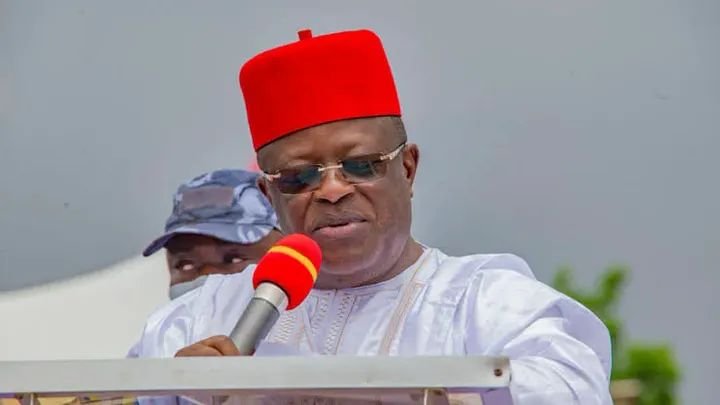
Nigeria’s Minister of Works, David Umahi, has declared that President Bola Tinubu has ended the marginalisation of the South-East, citing federal appointments, political inclusion and ongoing infrastructure projects as evidence of the administration’s commitment to the region.
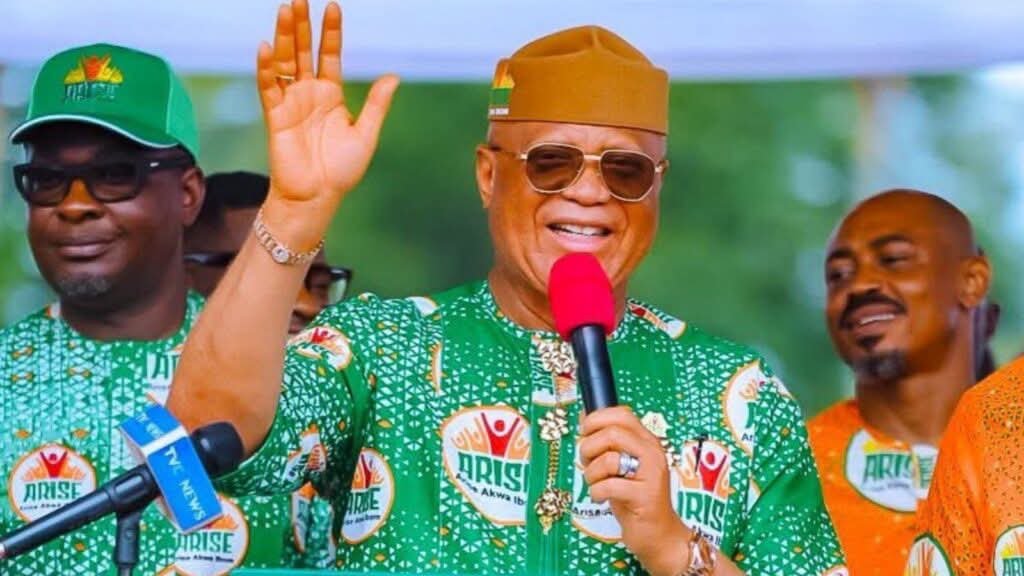
Umahi made the remarks on Thursday, November 19, 2026, during the All Progressives Congress (APC) presidential campaign rally in Anambra State, where he urged residents of the state and the wider South-East to support Tinubu’s re-election bid in the 2027 general elections.
The minister, a former governor of Ebonyi State, argued that the region had experienced greater recognition under the Tinubu administration and should not remain politically isolated from the rest of the country.
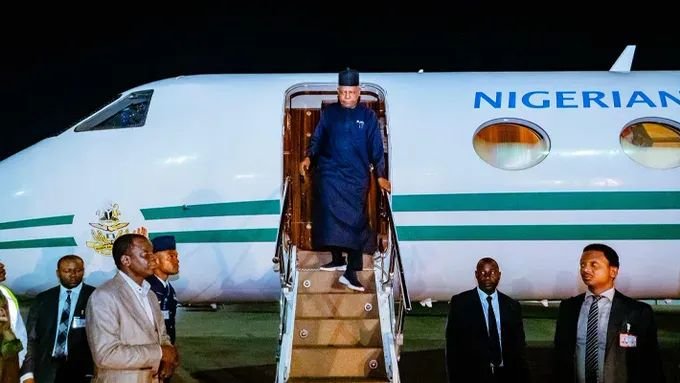
According to a report by TVC News, Tinubu was represented at the rally by Vice-President Kashim Shettima.
Umahi maintained that the South-East had previously been overlooked in the distribution of political positions and federal development projects, but said the current administration had changed that situation.
He urged residents to recognise the government’s interventions and participate actively in national politics rather than remain on the sidelines.
The minister’s comments form part of his broader campaign to persuade South-East voters to support Tinubu for a second term, with infrastructure development emerging as a central argument in his appeal.
Umahi Highlights Federal Road Projects in the South-East
Umahi pointed to several federal infrastructure projects in Anambra and other parts of the South-East, arguing that they demonstrated the administration’s commitment to improving connectivity and addressing longstanding development concerns.
Among the projects he highlighted was the Enugu-Onitsha road reconstruction, which he described as a major intervention in the region’s transport infrastructure.
The minister said the project involved a 108-kilometre dual carriageway, with approximately 100 kilometres being constructed using reinforced concrete pavement.
He stated that about 70 per cent of the concrete section had been completed, adding that ₦150 billion had been committed to that component of the project.
Umahi also put the estimated cost of the remaining asphalt section at ₦202 billion and said the overall project was more than 85 per cent complete.
The Enugu-Onitsha corridor is an important transport route connecting communities and commercial centres across the South-East. Its reconstruction is expected to improve movement along the route and support the transportation of goods and passengers.
The minister also cited the 35-kilometre bypass associated with the Second Niger Bridge, valued at ₦175 billion, as another major federal infrastructure project benefiting Anambra State.
He further recalled the federal government’s intervention when structural problems emerged at the First Niger Bridge, saying the President acted quickly to ensure that repairs were carried out.
New Road Projects Also Featured in Umahi’s Appeal
Beyond ongoing construction, Umahi referred to additional road infrastructure plans in Anambra State.
He mentioned a proposed 76-kilometre road dualisation project, saying procurement processes were underway.
The minister presented these projects as evidence that the Federal Government was paying greater attention to the infrastructure needs of the South-East.
However, the completion of ongoing projects, the delivery of newly approved roads and the quality of infrastructure provided will remain important measures by which residents assess the administration’s performance.
Political Inclusion and the South-East Marginalisation Debate
The question of political representation and perceived marginalisation has remained an important issue in South-East political discussions.
Concerns have historically centred on the region’s representation in key federal institutions, access to national political leadership and the distribution of public infrastructure and development opportunities.
Umahi argued that Tinubu’s appointments and infrastructure investments had changed the situation, describing the President as a leader who had integrated the region more fully into national affairs.
He urged South-East residents to reconsider their political approach and engage more actively with the governing party ahead of the 2027 elections.
His position, however, represents the administration’s assessment of its record and does not by itself settle the wider debate over regional marginalisation.
The extent of political inclusion and equitable development remains an issue that can be assessed through measurable outcomes, including federal appointments, budgetary allocations, completed projects and the distribution of public investment across Nigeria’s geopolitical zones.
Tinubu’s 2027 Re-election Campaign
Umahi’s appeal comes as political activities and mobilisation ahead of Nigeria’s 2027 general elections continue to gather attention.
The minister has repeatedly encouraged the South-East to support Tinubu, arguing that cooperation with the Federal Government would help sustain infrastructure development and strengthen the region’s participation in national decision-making.
His latest remarks in Anambra also underline the APC’s efforts to build political support in a region where opposition parties have traditionally enjoyed considerable electoral influence.
In the 2023 presidential election, Labour Party candidate Peter Obi secured substantial support across the South-East, making the region an important political battleground ahead of the next presidential contest.
Tinubu’s ability to attract broader support in the region will therefore depend not only on political appeals but also on how voters evaluate his administration’s economic policies, infrastructure delivery, security record and commitment to regional inclusion.
Why the Development Matters
The debate surrounding South-East marginalisation has implications beyond party politics.
The region is an important commercial and industrial centre, with major trading networks, manufacturing activities and transport connections linking it to other parts of Nigeria.
Improved road infrastructure could strengthen trade, reduce transportation difficulties and improve access to markets and public services.
For businesses and residents, however, the benefits will depend on whether announced projects are completed on schedule, properly maintained and accessible to communities that need them.
Political inclusion also remains significant because representation in national institutions can influence how regional concerns are communicated and addressed within the Federal Government.
Umahi’s remarks therefore place infrastructure delivery and political representation at the centre of the debate over the South-East’s relationship with the Tinubu administration.
What Happens Next?
Attention will turn to the progress of the road projects highlighted by Umahi, particularly the Enugu-Onitsha reconstruction and the Second Niger Bridge bypass.
The proposed 76-kilometre dualisation project will also require further developments in procurement and implementation before its benefits can be assessed.
Politically, the 2027 presidential election will provide an opportunity for voters across the South-East to determine whether the APC’s appeal and the administration’s development record translate into stronger electoral support.
For now, Umahi is urging residents to support Tinubu’s second-term ambition, insisting that the region has received greater recognition and infrastructure investment under the current administration.
The broader question of whether these interventions have sufficiently addressed longstanding concerns about marginalisation will remain part of Nigeria’s national political debate.
Weng Global – Stories beyond borders