Reported by Weng Patrick Atokor l Journalist at Weng Global
Kenyan scholar and Pan-Africanist Professor Patrick Loch Otieno Lumumba has criticised African leaders for seeking medical treatment outside the continent, questioning why governments continue to rely on foreign healthcare systems despite investing in medical education and training local professionals.
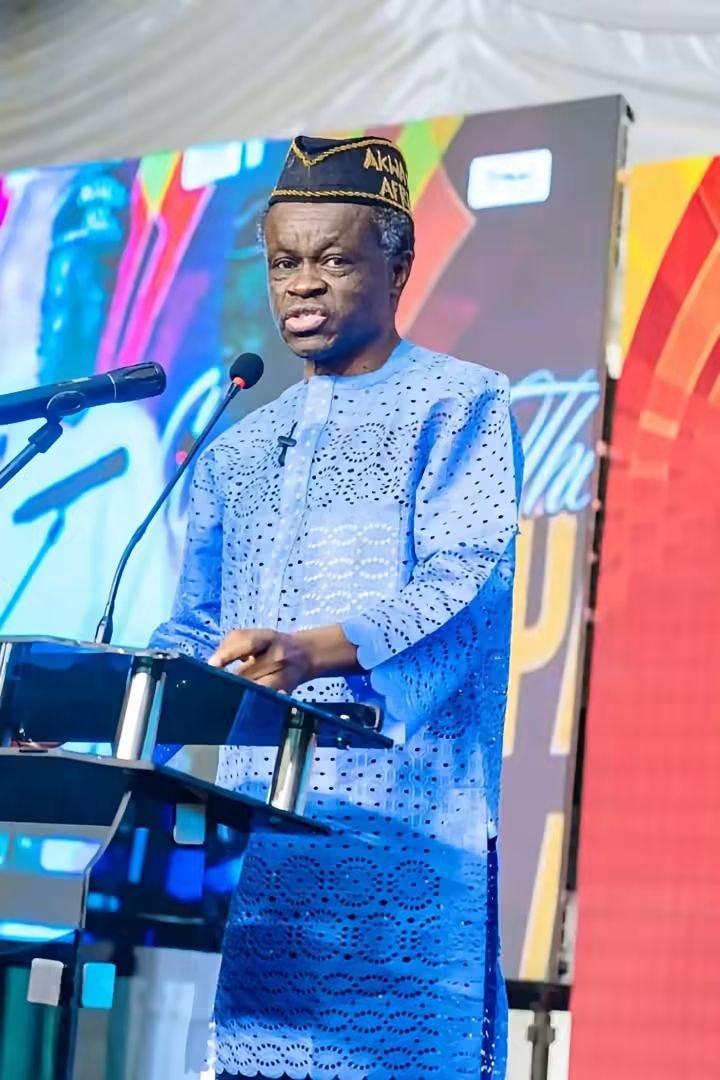
Lumumba made the remarks in Uyo, Akwa Ibom State, Nigeria, while delivering the keynote address at the maiden Pan-African Awakening Conference organised by the Social Engagement and Reorientation Initiative (SERI).
He argued that the continued preference for hospitals in Europe and other developed regions among African political leaders reflects a deeper problem of inadequate confidence in the continent’s institutions and insufficient commitment to developing local capacity.
The professor challenged African governments to demonstrate confidence in their healthcare systems by supporting domestic medical institutions, strengthening professional expertise and creating conditions that allow local hospitals to provide quality treatment.
His comments formed part of a broader argument about Africa’s dependence on foreign countries for essential services, infrastructure development, technology and manufactured products.
According to Lumumba, Africa cannot achieve meaningful economic independence if its leaders continue to depend on external expertise for responsibilities that qualified Africans can undertake.
Lumumba Questions African Leaders’ Confidence in Local Hospitals
Addressing participants at the conference, Lumumba questioned why African countries invest in training medical professionals but their political leaders frequently seek treatment in countries such as the United Kingdom, France and Germany.
He pointed to the contradiction between governments’ investments in medical education and the reluctance of senior public officials to rely on hospitals within their own countries.
The scholar specifically referenced healthcare institutions in Abuja, Nairobi and Senegal, arguing that African countries have trained doctors with advanced qualifications and specialisations who should be given the opportunity to demonstrate their capabilities.
He also questioned why presidents and health ministers would avoid the healthcare institutions overseen by their own governments when they require medical attention.
His criticism highlighted the relationship between public confidence, institutional accountability and the quality of healthcare services available to ordinary citizens.
When political leaders routinely seek medical treatment abroad, it can raise questions about their confidence in the healthcare systems they are responsible for supervising.
However, the wider challenge extends beyond where individual politicians receive treatment. It involves whether African governments can build healthcare institutions capable of delivering reliable, affordable and specialised medical services to their populations.
Africa’s Dependence on Foreign Expertise
Beyond medical tourism, Lumumba criticised the tendency of African governments to depend on foreign companies and professionals for major infrastructure projects despite the availability of trained local engineers and technical specialists.
He used road construction as an example, questioning why African countries continue to rely heavily on foreign contractors, particularly Chinese companies, when they have universities producing engineering graduates.
His argument was that African countries should develop the capacity to design, finance, construct and maintain their own infrastructure rather than repeatedly outsourcing essential development responsibilities.
Lumumba’s position was not that African countries should reject international cooperation. Instead, he encouraged governments to learn from other countries while developing solutions that reflect Africa’s economic realities, resources and development priorities.
He cited China, India and South Korea as countries from which African governments could draw useful development lessons.
Nevertheless, he stressed that such lessons should be adapted to African circumstances rather than adopted without considering local needs.
The distinction is important because international partnerships can provide financing, technology and technical knowledge, but sustainable development also requires local expertise, institutional strength and the ability to maintain completed projects.
Punch Newspapers +1
Medical Tourism and the Challenge of Healthcare Development in Africa
Medical tourism has remained a significant concern in discussions about healthcare development across several African countries.
The practice involves individuals travelling outside their countries to access medical consultations, specialised procedures, surgery and other healthcare services that may be unavailable, difficult to access or considered more reliable elsewhere.
For African governments, the challenge is not simply the decision of individuals to seek treatment abroad. It is the underlying weakness of healthcare institutions that makes foreign treatment an attractive option for people who can afford it.
These challenges include inadequate medical infrastructure, shortages of specialised equipment, limited funding, shortages of healthcare professionals in certain fields and concerns about the quality and consistency of medical services.
The consequences can extend beyond individual patients. When public officials and wealthy citizens increasingly depend on foreign hospitals, it raises questions about domestic investment, public accountability and the ability of local healthcare institutions to retain skilled professionals.
It can also deepen inequalities between citizens who can afford international treatment and those who depend entirely on domestic public healthcare facilities.
Lumumba’s intervention therefore places responsibility on African governments to address the structural problems affecting their healthcare systems rather than relying on foreign institutions as a permanent alternative.
Building stronger hospitals requires sustained investment in medical equipment, research, professional training, specialist services and effective healthcare administration.
It also requires governments to establish working conditions that encourage qualified doctors, nurses, researchers and other medical professionals to remain in Africa and contribute to the development of their countries.
Lumumba Criticises Dependence on Imported Products
The Pan-African scholar also questioned Africa’s continued dependence on imported manufactured products despite the continent’s substantial agricultural and natural resources.
He argued that African countries frequently export raw materials but import finished products manufactured from those same resources.
Using agricultural production as an example, Lumumba questioned why countries that produce milk still depend on imported butter and why cotton-producing economies continue importing finished textile products from countries such as Vietnam and China.
He also referenced leather production in Nigerian commercial centres, including Kano and Kaduna, questioning why locally available materials are not being transformed into more competitive finished products.
According to him, Africa must move beyond its traditional position as a supplier of raw materials and strengthen its manufacturing capacity.
The argument reflects a longstanding economic challenge facing the continent: the limited transformation of locally produced agricultural and mineral resources into higher-value manufactured goods.
Developing domestic industries could create employment, strengthen supply chains, support small businesses and reduce exposure to disruptions in international markets.
However, achieving these objectives requires more than access to raw materials. Governments must also address electricity shortages, transport infrastructure, financing constraints, industrial technology and the business environment.
Lumumba’s comments placed these challenges within the wider question of economic independence and the ability of African countries to determine their own development priorities.
Calls for African Solutions and a New Development Mindset
Lumumba urged African governments to study the development experiences of countries such as China, India and South Korea while adapting relevant lessons to their own environments.
He argued that Africa should not reject knowledge from outside the continent but should avoid depending entirely on foreign models.
His message was that international experience should strengthen African development rather than replace local thinking, expertise and innovation.
The professor also called for a change in how African countries approach development, insisting that the continent must recognise the abilities of its own people.
He maintained that Africa’s development would remain constrained if its governments continued to undervalue local professionals while placing greater confidence in foreign institutions and expertise.
The scholar further disclosed that 22 African and Caribbean countries had united to establish a common front aimed at challenging what he described as the negative and colonial mindset affecting leadership across the continent.
The initiative, as described in his address, reflects an effort to strengthen Pan-African cooperation and encourage greater confidence in African-led development.
However, the practical impact of the proposed common front will depend on the commitments made by participating countries and the extent to which its objectives translate into measurable policies and programmes.
Punch Newspapers +1
Lumumba Urges Nigeria to Take a Leading Role
The Kenyan scholar also called on Nigeria to assume a leading position in Africa’s campaign for greater economic and intellectual independence.
He argued that Nigeria’s population, human resources and natural wealth give the country considerable potential to influence the continent’s development.
Lumumba referenced Nigerians working in different parts of the world, including doctors and business professionals, as evidence of the country’s human capital.
He challenged Nigerian youths to take responsibility for the country’s future and avoid allowing ethnic and religious divisions to undermine national development.
He argued that Nigerians should prioritise citizenship and a shared national identity rather than tribal and religious differences.
His remarks placed particular emphasis on the role of young people in shaping the country’s future, suggesting that national development requires active participation from citizens rather than dependence on political leaders alone.
Nigeria’s position as one of Africa’s largest economies and most populous countries gives it considerable influence in regional economic and political affairs.
Nevertheless, translating that potential into sustainable development requires improvements in governance, public institutions, education, healthcare, infrastructure and industrial productivity.
Lumumba’s call for Nigeria to take the lead therefore reflects a broader expectation that the country should use its resources and influence to support continental development.
SERI Unveils Youth Mentorship Programme
The conference also featured the unveiling of the SERI Mentorship Programme, described as the flagship initiative of the Social Engagement and Reorientation Initiative.
The organisation’s Founder and Executive Director, Engineer Ekemini Amos, said SERI was established to raise a new generation of Nigerian youths from different ethnic backgrounds who could work together towards national and continental development.
Amos described the gathering as an effort to revive the Pan-African cause and encourage young people to take a more active role in shaping Africa’s future.
He urged stakeholders to support the organisation’s mentorship initiatives, including the Youth Membership Hub and the Nation Builders Club.
The Youth Membership Hub is designed for young people between the ages of 18 and 35, while the Nation Builders Club targets secondary school students aged 10 to 18.
The programmes are intended to encourage mentorship, leadership development, civic responsibility and greater engagement among young people.
Lumumba, who serves as SERI’s Chief Adviser and Grand Patron, performed the unveiling of the mentorship programme.
The initiative places youth development alongside the conference’s broader discussion about African identity, leadership and self-reliance.
Punch Newspapers +1
Akwa Ibom Government Commended for Infrastructure Development
During his address, Lumumba also commended the Akwa Ibom State Government for its infrastructure development efforts, particularly the construction of roads.
He described the state’s road infrastructure as an example of what African governments could achieve through investment in local development.
The professor referenced Akwa Ibom’s natural resources and economic potential, arguing that Nigeria should aim for a much larger economic position rather than being satisfied with its existing achievements.
His remarks reinforced his central argument that African countries must recognise and maximise their domestic resources to achieve sustainable development.
Akwa Ibom’s infrastructure development was presented as an example of the possibilities available when governments prioritise investment in essential public infrastructure.
Why Lumumba’s Message Matters to Africa
Lumumba’s intervention raises important questions about the relationship between political leadership, public confidence and institutional development across Africa.
Healthcare, infrastructure, agriculture and manufacturing are essential components of economic independence. Weaknesses in these sectors can increase dependence on foreign suppliers, contractors, hospitals and technical expertise.
The challenge is particularly important for countries such as Nigeria and Kenya, where investment in local healthcare and professional development remains central to broader economic and social progress.
For healthcare systems, political leaders must demonstrate commitment through policies that improve hospitals, strengthen medical training, support research and create an environment where professionals can deliver quality services.
Similarly, infrastructure development requires governments to invest in local engineering capacity, technical education and domestic construction industries.
Africa’s economic transformation will also depend on its ability to process more of its agricultural and natural resources locally instead of relying heavily on imported finished products.
However, achieving these objectives requires practical government action, adequate funding, transparent institutions and consistent implementation of development policies.
Lumumba’s argument ultimately places responsibility on African leadership to turn the continent’s human and natural resources into tangible improvements in the lives of its citizens.
What Happens Next?
The unveiling of SERI’s mentorship programme provides an opportunity to translate the conference’s message into sustained youth engagement and leadership development.
The effectiveness of the initiative will depend on its implementation, the participation of mentors and stakeholders, and the ability to deliver meaningful outcomes for the young people it targets.
SERI has also called on stakeholders to support its programmes and contribute to its broader objective of encouraging African consciousness and responsible citizenship.
Beyond the conference, the wider challenge remains whether African governments will translate calls for self-reliance into stronger healthcare institutions, improved infrastructure, industrial development and greater investment in local expertise.
For Lumumba, Africa’s development must begin with confidence in its people, institutions and capacity to solve its own problems.
The message from Uyo was clear: African countries cannot build lasting independence while continuing to undervalue the professionals, resources and institutions within their own borders.
Weng Global – Stories beyond borders
Sources
- Punch Newspapers – Lumumba Faults African Leaders Seeking Medical Treatment Abroad.
- Independent Newspaper Nigeria – Lumumba Faults African Leaders for Depending on Foreign Expertise Despite Local Capacity.
- New Telegraph – Lumumba Rallies African Leaders Against Neo-Colonialism at SERI Pan-African Conference.
- Social Engagement and Reorientation Initiative – Pan-African Awakening Conference 2026.