Reported by Simon Daniel Yusuph l Journalist at Weng Global
Nigeria’s Dangote Group, Ethiopia and Djibouti have announced plans to develop a $660 million refined petroleum products pipeline linking Damerjog in Djibouti with Dewele in eastern Ethiopia.
The cross-border project was announced on Thursday, September 24, 2026, during Ethiopian Prime Minister Abiy Ahmed’s visit to Djibouti, where he appeared alongside Djiboutian President Ismail Omar Guelleh and Dangote Group President Aliko Dangote.
The project will be developed through a partnership between Ethiopian Investment Holdings and the Dangote Group and is designed to improve the movement, storage and distribution of refined petroleum products between the two countries.
120-Kilometre Pipeline to Connect Ethiopia and Djibouti
The planned pipeline will stretch approximately 120 kilometres from Damerjog in Djibouti to Dewele in Ethiopia.
The infrastructure will be supported by petroleum storage terminals at both ends of the route. According to information provided by the Ethiopian Prime Minister’s Office, the system will connect marine and coastal storage facilities at Damerjog with inland storage and distribution facilities at Dewele.
Details reported by Hydrocarbon Processing indicate that the project will include approximately 375,000 cubic metres of storage capacity at Damerjog and 800,000 cubic metres at Dewele.
The project is expected to become operational within 18 months, according to a spokesperson for Prime Minister Abiy’s office cited in the report.
The planned infrastructure is expected to create an integrated system for receiving refined petroleum products at the Djibouti coast, storing them and transporting them through the pipeline into Ethiopia for onward distribution.
Dangote Highlights Energy and Transport Benefits
Dangote said the pipeline would provide a safer and more reliable method of moving refined petroleum products along the Ethiopia-Djibouti corridor.
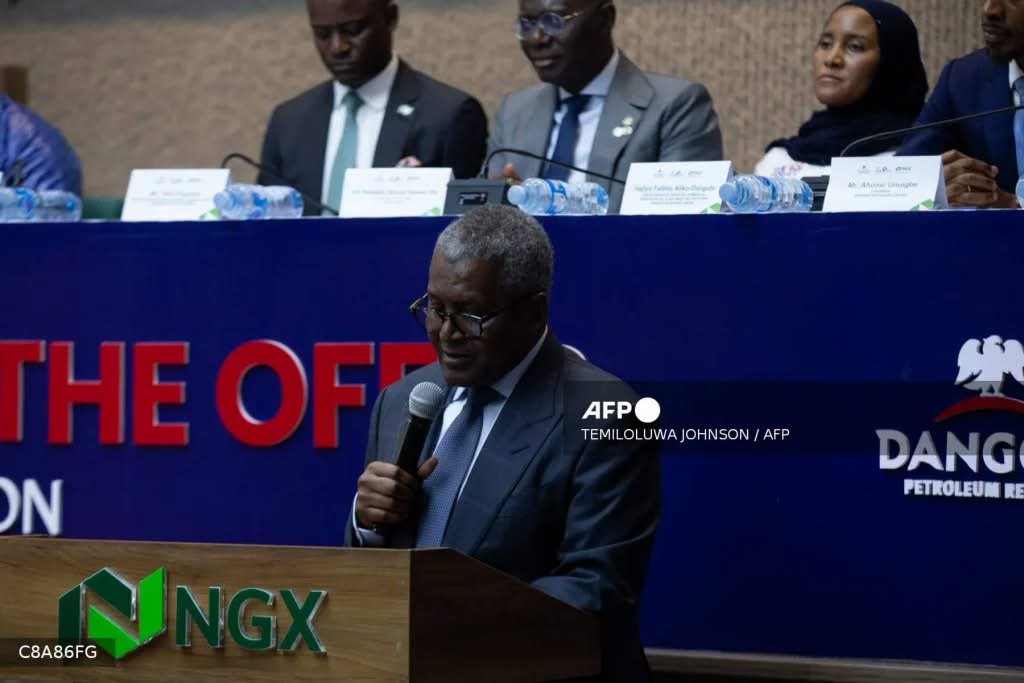
Speaking at the groundbreaking ceremony for the Damarjog Oil Terminal and Pipeline project, he said the infrastructure would connect marine and coastal storage facilities with inland storage and distribution facilities.
He said the multiproduct pipeline would receive, store, transport and distribute refined petroleum products while improving supply and inventory management.
Dangote also said the first phase would support the movement of products including jet fuel, automotive gas oil and premium motor spirit.
The project is expected to reduce the pressure placed on road transportation, particularly long-distance tanker movements between Djibouti and Ethiopia.
According to Dangote, reducing tanker traffic could also help ease congestion and reduce risks associated with road transportation of petroleum products.
Ethiopia Seeks Lower Logistics Costs
Ethiopia is landlocked and relies heavily on Djibouti for access to international maritime trade.
The Ethiopia-Djibouti corridor is therefore strategically important for the movement of imported goods, including petroleum products.
The Ethiopian government said the new pipeline is intended to reduce logistics costs and delays along the corridor while strengthening the country’s energy security.
Prime Minister Abiy described the project as an investment extending beyond the construction of a pipeline, linking it to broader regional integration and economic cooperation between Ethiopia and Djibouti.
The Government Communication Service said the infrastructure is intended to strengthen economic ties between the two countries while improving the efficiency and resilience of the corridor.
Strategic Storage Infrastructure
Storage facilities form a major component of the project.
The planned terminal at Damerjog will provide coastal storage for petroleum products received through Djibouti, while the facility at Dewele will support inland storage and distribution inside Ethiopia.
The Djibouti-based Agence Djiboutienne d’Information reported that the Damerjog terminal will have a planned storage capacity of 375,000 cubic metres and is expected to handle up to five million tonnes of petroleum products annually.
The development is expected to create a more coordinated system for petroleum-product imports, storage and transportation.
This could reduce dependence on repeated long-distance road transportation and provide greater capacity to manage fuel inventories.
A Broader African Investment Strategy
The pipeline adds to Dangote Group’s expanding investments outside Nigeria and forms part of a wider push by the Nigerian industrial group into African infrastructure and energy.
The Dangote Group already has major investments in Ethiopia, including projects connected to fertiliser production, power generation and industrial manufacturing.
Dangote previously announced that its planned investment in Ethiopia had increased from $2.5 billion to more than $4 billion, with the expanded investment including a 110-kilometre pipeline, a 120-megawatt power plant, a polypropylene packaging facility and a two-million-tonne NPK blending plant.
The new petroleum pipeline therefore represents another expansion of the company’s infrastructure footprint on the continent.
Why the Project Matters
The project has implications beyond fuel transportation.
For Ethiopia, a more direct petroleum distribution system could help reduce some of the logistical challenges associated with moving fuel from Djibouti by road.
For Djibouti, the development reinforces the country’s position as an important maritime and logistics gateway for Ethiopia and the wider Horn of Africa.
For Dangote Group, the investment strengthens its participation in Africa’s energy and infrastructure sectors and expands the company’s regional presence.
The project also illustrates how cross-border infrastructure can be used to link ports, storage facilities and inland markets across national boundaries.
Its eventual impact will depend on construction, financing, operational efficiency and the ability of the infrastructure to integrate with existing transport and petroleum distribution systems.
Regional Economic Implications
The Ethiopia-Djibouti corridor is one of the most important trade routes in the Horn of Africa.
Improving petroleum logistics along the corridor could have consequences for industries that depend on reliable fuel supplies, including aviation, transportation, agriculture, construction and manufacturing.
Dangote said the pipeline would improve product quality control and support sectors that depend on consistent petroleum supplies.
The project could also reduce the amount of fuel transported by road over long distances, although road haulage is expected to remain part of the broader logistics system.
The Djibouti-based terminal is also expected to connect with existing transport infrastructure, including rail and port facilities, according to local reporting.
What Happens Next
The immediate focus will be on developing the terminal facilities and the planned 120-kilometre pipeline connecting Damerjog with Dewele.
The project is being advanced through the partnership between Ethiopian Investment Holdings and the Dangote Group, with the governments of Ethiopia and Djibouti backing the strategic infrastructure initiative.
According to information cited by Hydrocarbon Processing, the pipeline is expected to become operational within 18 months.
Once completed, the infrastructure is expected to provide an alternative and more integrated system for transporting refined petroleum products between Djibouti and Ethiopia.
The development will also be closely watched as Ethiopia seeks to strengthen energy security and Djibouti continues to expand its role as a regional logistics and trade hub.
Weng Global – stories beyond borders
Sources
- Ethiopian News Agency
- Ethiopian Government Communication Service
- Reuters
- Fana Media Corporation
- Hydrocarbon Processing
- Dangote Group
- Djibouti Agence Djiboutienne d’Information