2027 Election: Kwankwaso Urges Nigerians to Reject Divisive Politics and Demand Competent Leadership!
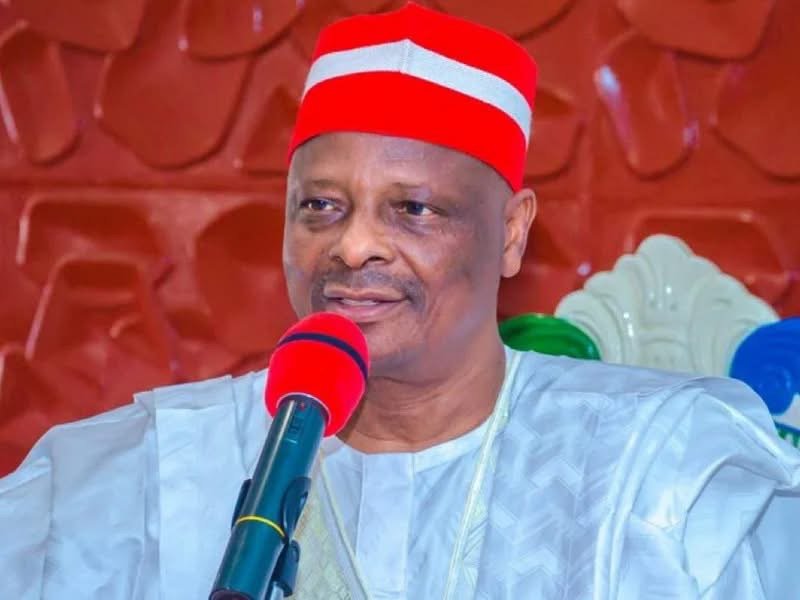
Former Kano State Governor and Vice-Presidential candidate of the Nigeria Democratic Congress (NDC), Senator Rabiu Musa Kwankwaso, has urged Nigerians to reject political rhetoric capable of deepening religious, ethnic and regional divisions ahead of the 2027 general elections.
Kwankwaso’s intervention comes as political parties and emerging opposition alliances intensify preparations for the next presidential contest, with identity, zoning, religion and regional representation already emerging as major themes in political debate.
The former governor’s latest comments followed controversy over remarks by Islamic cleric Sheikh Sani Yahaya Jingir concerning the 2027 presidential race and the continued advocacy of a Muslim-Muslim ticket.
In a statement issued in Kano, Kwankwaso described statements capable of promoting division and disunity as inappropriate at a critical period in Nigeria’s political development. He said political and religious leaders had a responsibility to promote truth, unity and reconciliation rather than deepen existing fault lines. (Arise News)
His remarks have placed the question of issue-based politics at the centre of the emerging 2027 campaign, particularly as the NDC prepares to challenge President Bola Ahmed Tinubu and the governing All Progressives Congress (APC).
Kwankwaso warns against politics of division
Kwankwaso said Nigerians should be wary of political narratives that seek to mobilise citizens primarily along religious or other identity lines.
He specifically rejected the suggestion that Kano residents support divisive religious rhetoric, saying the people of the state should not be associated with comments that could undermine national cohesion.
According to reports by Arise News and Leadership, Kwankwaso said political and religious leaders should be conscious of the influence of their public statements, particularly as the country moves closer to another highly competitive presidential election. (Arise News)
His comments reflect a broader argument he has made during the unfolding opposition realignment: that Nigeria’s immediate challenge is not simply determining which region should produce the next president, but finding leaders capable of governing effectively.
In May, while discussing his decision to accept the vice-presidential role on Peter Obi’s ticket, Kwankwaso said the central issue should be “quality leadership” rather than whether the presidency belongs to the North or South. (The Guardian Nigeria)
That position has become increasingly relevant as the 2027 contest takes shape around competing claims of competence, experience, regional balance and political inclusion.
NDC ticket brings North and South together
Kwankwaso is contesting the 2027 election as running mate to Peter Obi, the NDC presidential candidate.
The party formally affirmed the Obi-Kwankwaso ticket at its special convention in Abuja in May. The NDC said the ticket was intended to provide Nigerians with an alternative political platform focused on competence, accountability, national unity and economic revival. (NDC Nigeria)
The arrangement represents an important geographical and political combination.
Obi, a former governor of Anambra State and the Labour Party’s presidential candidate in 2023, draws significant support from the South-East and other parts of the country. Kwankwaso, a former Kano governor and former Minister of Defence, brings substantial political influence in Kano and the wider North-West.
The alliance has therefore been presented by supporters as an attempt to build a national coalition that cuts across Nigeria’s traditional regional boundaries.
The Guardian reported in April that the Obi-Kwankwaso Movement had adopted a platform that explicitly rejected ethnic, regional and religious sentiments and called for national unity while addressing economic and security challenges. (The Guardian Nigeria)
For the NDC, the challenge will be converting that political message into a nationwide electoral coalition capable of competing with the established structures of the APC and other opposition parties.
Religious politics becomes a major 2027 issue
Religion has remained one of the most sensitive issues in Nigerian presidential politics.
The controversy surrounding Muslim-Muslim tickets became particularly prominent during the 2023 presidential election, when then-candidate Bola Tinubu selected Kashim Shettima as his running mate.
The arrangement attracted criticism from sections of the Christian community and political opponents, who argued that a country as religiously diverse as Nigeria should maintain greater religious balance in its highest elected offices.
Tinubu and the APC defended the decision, while supporters argued that competence should take precedence over religious identity.
The issue has resurfaced ahead of 2027.
Channels Television reported in July that Kwankwaso had criticised the decision by President Tinubu to retain a Muslim-Muslim ticket for the next presidential election, saying the arrangement would remain an issue during the campaign. (Channels Television)
Kwankwaso’s more recent response to Sheikh Jingir’s comments has therefore placed him once again at the centre of the debate over religion and presidential politics.
His argument, however, is that political and religious leaders should avoid rhetoric that could undermine national unity.
That position could become strategically significant for the NDC, whose Obi-Kwankwaso ticket seeks support across religious and regional constituencies.
Competence versus identity politics
At the heart of Kwankwaso’s message is a call for voters to evaluate political candidates based on their ability to govern rather than their ethnic or religious background.
Nigeria’s political history has frequently been shaped by questions of zoning, regional balancing and religious representation. While supporters of these arrangements argue that they help ensure inclusion in a diverse federation, critics maintain that excessive emphasis on identity can distract from issues such as economic management, security, education, healthcare, infrastructure and employment.
Kwankwaso’s call for competent leadership places those policy issues at the centre of the electoral conversation.
He has previously argued that the country’s priority should be leadership capable of addressing its economic and security challenges rather than political calculations over which region should occupy the presidency. (The Guardian Nigeria)
That argument is likely to feature prominently as political parties prepare their campaigns and attempt to convince voters that their candidates have the experience and policy capacity required to manage Africa’s most populous country.
The Obi-Kwankwaso agreement
The NDC alliance has also been shaped by an agreement concerning the duration of an anticipated Obi presidency.
Kwankwaso disclosed in July that Obi had signed agreements committing him to serve a single four-year term if elected in 2027, after which the NDC would support the return of the presidency to Northern Nigeria in 2031.
Premium Times reported that Kwankwaso said there were two documents: one involving the party and another personal agreement between himself and Obi. Punch also reported the disclosure following Kwankwaso’s appearance on Channels Television. (Premium Times Nigeria)
The arrangement reflects the continuing importance of regional power rotation in Nigeria’s political negotiations.
At the same time, it demonstrates the complexity of the NDC’s attempt to combine a message of national unity with political agreements designed to balance regional interests.
For the alliance, the task will be to persuade voters that such arrangements can coexist with its stated commitment to competence, inclusion and national development.
Kwankwaso’s political influence
Kwankwaso remains one of the most influential political figures in Kano and the wider North-West.
His political movement, commonly associated with the Kwankwasiyya political structure, has maintained a significant grassroots presence in Kano.
The importance of his political base became particularly clear during the 2023 presidential election, when Kwankwaso contested under the New Nigeria Peoples Party (NNPP) and won Kano State.
His decision to join forces with Obi has therefore altered the early dynamics of the 2027 presidential contest.
The Nation recently described the Obi-Kwankwaso alliance as an unusual political combination linking the South-East and North-West, while also noting questions surrounding Kwankwaso’s influence beyond Kano and the wider North-West. (The Nation)
The effectiveness of the alliance will ultimately depend on whether both political blocs can translate their individual strengths into a genuinely nationwide organisation.
A test for Nigeria’s political discourse
Kwankwaso’s warning comes at a time when political rhetoric is already becoming more intense.
The 2027 election is expected to feature intense competition between the APC and several opposition formations seeking to consolidate support against the ruling party.
The Labour Party has also warned political actors against divisive campaigning. Its national chairman, Nenadi Usman, recently called for issue-based politics, patriotism and tolerance ahead of the election, while cautioning against rhetoric capable of weakening national unity. (Punch Newspapers)
The convergence of these calls suggests that the question of how political parties conduct their campaigns could become almost as important as the candidates and policies they present.
For voters, the challenge will be to distinguish between genuine appeals for national unity and campaign rhetoric designed primarily to attract particular voting blocs.
For political parties, the test will be whether they can offer credible solutions to Nigeria’s problems while resisting the temptation to exploit existing social divisions.
What Kwankwaso’s message means for 2027
The 2027 presidential election will provide an important test of whether Nigerian voters are prepared to place greater emphasis on governance performance and competence than on traditional identity-based political calculations.
Kwankwaso is positioning the NDC ticket as a vehicle for broader national cooperation, while simultaneously relying on his strong political base in the North-West to strengthen the alliance’s electoral prospects.
His rejection of divisive rhetoric is therefore both a political message and a challenge to the wider political class.
The central issues facing Nigerians remain substantial: economic pressures, insecurity, unemployment, electricity shortages, inflation, weak infrastructure and concerns about the cost of living.
Whether voters ultimately prioritise these issues over religious, ethnic and regional considerations will be one of the defining questions of the 2027 election.
Kwankwaso’s appeal for Nigerians to demand competent leadership signals the direction in which the NDC intends to take its campaign.
But the credibility of that message will depend not only on what the party says about unity, but also on the strength of its policy proposals, the conduct of its campaign and its ability to demonstrate that its proposed leadership structure can translate political alliances into measurable improvements in the lives of Nigerians.
As the race intensifies, the electorate will have the final say on whether competence, accountability and national cohesion can become stronger electoral forces than the identity-based politics that have frequently shaped Nigeria’s presidential contests.
Sources
- Arise News – Kwankwaso rejects Muslim-Muslim ticket rhetoric and warns against religious division
- Leadership – Kwankwaso says cleric’s Muslim-Muslim ticket remarks are divisive
- Channels Television – Kwankwaso says Muslim-Muslim ticket will remain an issue for Tinubu
- Premium Times – Obi and Kwankwaso formalise one-term presidency agreement
- Punch – Kwankwaso confirms Obi signed one-term presidency accord
- The Guardian – Obi-Kwankwaso Movement unveils agenda
- The Nation – Analysis of the Obi-Kwankwaso alliance and its political prospects
- Punch – Labour Party urges politicians to shun divisive politics ahead of 2027