Reported Simon Daniel Yusuph l journalist at wengglobal
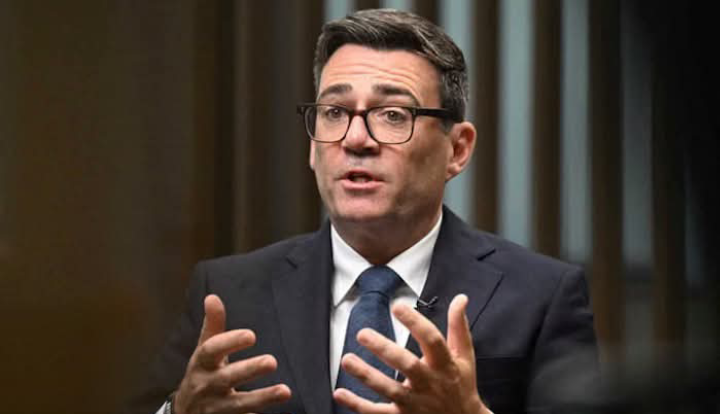
The United Kingdom Government has unveiled a £442 million programme aimed at ensuring every person sleeping rough in England has a route off the streets by Christmas 2026, as Prime Minister Andy Burnham steps up efforts to tackle a homelessness crisis that has persisted despite years of government intervention.
The initiative combines emergency accommodation with longer-term housing and support, marking one of the most ambitious interventions of Burnham’s administration since he became Prime Minister.
Burnham, who made tackling rough sleeping one of his first priorities after entering Downing Street in July, has called for a nationwide mobilisation involving central government, local authorities, charities, faith organisations, businesses and community groups.
The latest package includes £102 million in new funding, bringing the government’s total commitment to the rough-sleeping drive to £442 million. The programme is intended to provide accommodation and practical support for people currently sleeping on the streets, while also addressing some of the underlying factors that contribute to homelessness.
The government’s approach draws heavily on the experience of the COVID-19 pandemic, when the “Everyone In” initiative brought thousands of people sleeping rough into emergency accommodation. Burnham has argued that the same level of national determination can once again make a substantial difference.
However, the scale of the ambition has also prompted questions about whether the government can deliver a lasting reduction in rough sleeping without significantly expanding affordable and social housing, mental-health services, addiction treatment and other forms of long-term support.
Burnham sets Christmas deadline
The Prime Minister has made the Christmas deadline a central feature of the new strategy, saying every rough sleeper in England should be offered a route away from street homelessness before the festive period.
The government’s language is important: the objective is to provide a route off the streets rather than simply guarantee permanent housing for every person currently sleeping rough by Christmas.
Emergency accommodation, alongside access to support services, is expected to form an important part of the immediate response.
The BBC reported that the programme will offer accommodation to every rough sleeper in England this winter, with the government allocating £442 million for the wider effort. The report also noted that the previous Conservative government had set an earlier ambition to end rough sleeping by 2024. (Currently)
Burnham has argued that Britain has already demonstrated that large-scale reductions in street homelessness are possible when government and communities work together.
His administration is therefore seeking to recreate some of the cooperation seen during the pandemic, when councils, charities, hotels and public agencies rapidly worked together to provide accommodation for people sleeping rough.
£102 million in additional funding
The latest announcement includes an additional £102 million, taking the overall funding commitment to £442 million since Burnham became Prime Minister.
The Financial Times reported that the new funding forms part of a pandemic-style national effort and that the government wants councils, mayors, faith groups and community organisations to participate in the programme. (Financial Times)
The new investment is expected to support emergency accommodation and intensive assistance for people with complex needs.
The government also intends to deliver more than 1,000 settled homes for rough sleepers over the next three years.
That longer-term element is critical because homelessness charities and housing experts have repeatedly warned that temporary accommodation alone cannot solve the structural causes of rough sleeping.
A person may be removed from the street for a night or several weeks, but without stable housing and appropriate support, they can return to homelessness.
The government’s strategy therefore seeks to combine immediate intervention with pathways towards more permanent accommodation.
Rough sleeping remains a persistent challenge
The new announcement comes against a backdrop of rising rough sleeping in England.
Official government data show that the number of people seen sleeping rough over a month and on a single night increased compared with the previous year during late 2025, reaching record levels for that time of year. (GOV.UK)
The government’s December 2025 data recorded an estimated 8,010 people sleeping rough over the course of that month. Of those, 40 per cent had been sleeping rough long-term, while 28 per cent were newly identified as rough sleepers. (GOV.UK)
The figures underline the complexity of the problem.
Rough sleeping is not a single-issue phenomenon. People can lose accommodation for a variety of reasons, including high housing costs, insecure employment, relationship breakdown, mental-health challenges, substance dependence, leaving institutions such as prisons or care, and difficulties navigating housing and welfare systems.
Government data also show that people who have been sleeping rough for long periods represent a particularly significant part of the problem.
That means an effective policy cannot focus solely on finding emergency beds. It must also address why people become homeless and what prevents them from maintaining stable accommodation.
Lessons from the COVID-19 response
The new initiative takes inspiration from the “Everyone In” programme launched during the coronavirus pandemic.
The scheme represented an extraordinary mobilisation of resources, with councils and central government working rapidly to move people sleeping rough into hotels and other temporary accommodation.
The experience demonstrated that large-scale emergency interventions can substantially reduce visible street homelessness when there is sufficient political will and funding.
Burnham has pointed to that experience as evidence that ending rough sleeping is achievable.
The Financial Times reported that the pandemic-era scheme housed nearly all rough sleepers in Manchester using hotel accommodation, illustrating how quickly emergency accommodation could be mobilised when resources and political priorities were aligned. (Financial Times)
But the pandemic response also highlighted a major limitation: temporary accommodation can provide immediate safety without necessarily solving the housing crisis.
The new programme therefore faces the challenge of converting emergency intervention into sustainable housing outcomes.
More than emergency beds
The government says the initiative will involve more than providing a place to sleep.
People experiencing homelessness may have overlapping health, addiction, employment and housing needs. Without addressing those issues, the risk of returning to the streets remains high.
The new programme is expected to provide wraparound support, including assistance related to health, mental health, drug and alcohol problems and access to housing.
That approach is consistent with evidence from housing programmes that prioritise stable accommodation while providing support tailored to individual needs.
The government’s broader homelessness strategy also includes significant investment in homelessness prevention and rough-sleeping services.
In April, the government told Parliament that it had committed £3.6 billion for homelessness prevention and rough-sleeping services between 2026/27 and 2028/29. It also cited £124 million for supported housing services and £37 million for voluntary, community and faith-sector organisations working with people affected by homelessness. (UK Parliament Questions and Statements)
The £442 million Christmas initiative therefore sits within a wider policy framework rather than operating as an entirely separate programme.
Councils and communities given major role
Burnham has made clear that central government cannot tackle rough sleeping alone.
Local authorities are expected to play a major role in identifying people sleeping rough, arranging accommodation and connecting them to services.
Charities, faith groups and businesses are also being asked to contribute.
The Prime Minister’s appeal reflects the fact that homelessness services are often delivered locally even when funding comes from central government.
Local councils understand the housing pressures in their communities and are therefore better placed to identify appropriate solutions for individuals.
The government is expected to provide additional resources and coordination while allowing local actors to develop responses suited to their circumstances.
The Guardian reported that Burnham was calling for wider society to become involved, arguing that government funding alone may not be enough to achieve the ambition. The newspaper said the Prime Minister plans a national summit in the autumn to bring together relevant organisations and stakeholders. (The Guardian)
Housing supply remains a key obstacle
One of the most difficult questions facing the programme is whether England has enough suitable housing to provide sustainable routes out of homelessness.
Emergency shelters can provide immediate relief, but long-term success requires access to affordable homes.
The government has already linked its homelessness ambitions to a wider housing programme, including a commitment to build 1.5 million homes during the parliamentary term.
Housing Secretary Angela Rayner has described the housing target as extremely challenging, while the government argues that increasing housing supply will form part of the long-term response to homelessness.
The challenge is particularly acute in areas where housing costs are high and social-housing waiting lists are extensive.
Without increasing the supply of affordable homes, there is a risk that people leaving emergency accommodation could face difficulty securing permanent housing.
Charities welcome ambition but seek lasting solutions
Homelessness organisations have broadly welcomed the government’s willingness to make rough sleeping a political priority.
Crisis described the announcement as significant and said it represented an important shift in the national conversation about people sleeping on the streets. (Currently)
However, homelessness charities have also consistently argued that emergency accommodation must be accompanied by sustained investment in housing and support services.
Recent figures from London illustrate the scale of the challenge.
According to Crisis, 3,959 people were recorded sleeping rough in London between April and June 2026. While that represented a 10 per cent decline compared with the same period a year earlier, it remained 53 per cent higher than five years earlier and 47 per cent above the level recorded a decade ago. (Crisis)
The figures suggest that even where short-term improvements occur, the underlying pressures can remain substantial.
Critics question delivery
The government’s ambitious deadline has also attracted scepticism.
Opposition politicians have questioned the level of detail surrounding the implementation of the programme and how the government will ensure that every rough sleeper can access an appropriate route off the streets.
The BBC reported criticism from Shadow Housing Secretary James Cleverly, who questioned the detail surrounding how the initiative would be funded and delivered. (Currently)
Other critics have pointed to the difficulty of achieving a nationwide target in only a few months, particularly given the different housing markets and service capacities across England.
The government has not suggested that every underlying cause of homelessness can be resolved by Christmas.
Instead, the immediate objective is to ensure that people are not forced to spend the winter sleeping outdoors while longer-term support is arranged.
A test of Burnham’s political promise
The rough-sleeping initiative is also an important political test for Burnham.
The Prime Minister made homelessness one of the defining issues of his first days in office, arguing that a wealthy country should not accept people sleeping on its streets.
His previous experience as Mayor of Greater Manchester has shaped his approach.
The Financial Times reported that rough sleeping fell by about 25 per cent during Burnham’s time as Greater Manchester mayor, although the problem later increased again. (Financial Times)
The experience demonstrates both the potential and limitations of local interventions.
Burnham now has access to national resources and policy powers, allowing him to pursue the issue on a much larger scale.
But the national nature of the challenge also means that success will depend on factors beyond the control of any single local authority.
Wengglobal perspective
The UK government’s £442 million commitment represents a significant escalation in the fight against rough sleeping and places an ambitious deadline at the centre of its homelessness strategy.
Getting every rough sleeper a route off the streets by Christmas would represent a major achievement, but the measure of success should extend beyond the number of people temporarily accommodated.
The more important question is how many people move from the streets into stable, secure housing and remain there.
That will require more than emergency beds. It will require affordable housing, mental-health support, addiction services, employment assistance, effective homelessness prevention and sustained cooperation between government and civil society.
The government’s own data demonstrate that long-term rough sleeping remains a major challenge. (GOV.UK)
The Christmas deadline may provide political urgency and concentrate resources around an immediate humanitarian need. But lasting progress will depend on what happens after Christmas.
For Wengglobal, the initiative should therefore be judged on three broad measures: whether it reaches people currently sleeping rough, whether it provides meaningful routes into permanent accommodation and whether it reduces the number of people becoming homeless in the first place.
If the programme succeeds in combining immediate protection with long-term housing and support, it could represent an important turning point in England’s response to rough sleeping.
If it relies primarily on temporary accommodation without addressing housing supply and complex social needs, the government may find that people return to the streets once emergency measures end.
The £442 million pledge is therefore significant, but its lasting legacy will depend on implementation, accountability and what happens beyond the Christmas deadline.
Sources
- BBC — Reported Prime Minister Andy Burnham’s plan to offer every rough sleeper in England accommodation this winter under the £442 million programme and outlined political reactions to the initiative. (Currently)
- The Guardian — Reported Burnham’s national appeal for councils, charities, businesses, faith organisations and communities to help end rough sleeping by Christmas. (The Guardian)
- Financial Times — Reported the pandemic-style national drive, the additional £102 million funding and plans for more than 1,000 settled homes. (Financial Times)
- The Times — Analysed the government’s £442 million commitment, including the challenges surrounding temporary accommodation, housing supply and the Prime Minister’s previous record on rough sleeping. (The Times)
- UK Government — Official statistics and policy documents detailing rough-sleeping levels, homelessness prevention funding and the government’s wider national strategy. (GOV.UK)
- Crisis — Published recent London rough-sleeping figures and welcomed the government’s renewed commitment to ending rough sleeping. (Crisis)