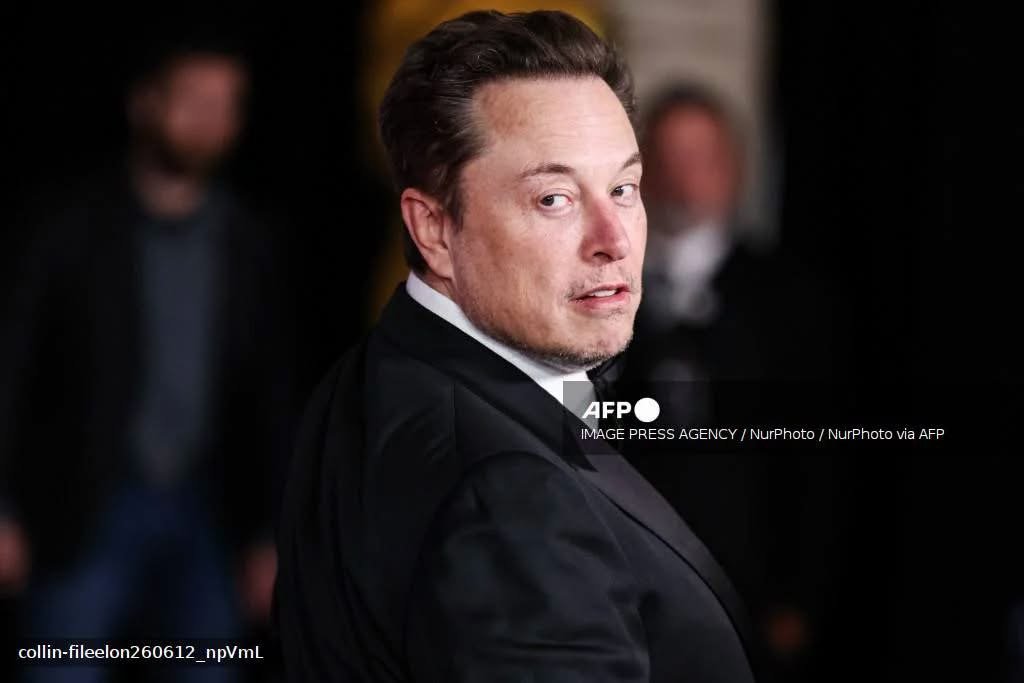
X Ends Creator Revenue Sharing, Launches Original Content Rewards in Major Monetisation Overhaul
ABUJA, Nigeria — August 8, 2026 — X, the social media platform owned by Elon Musk, is ending its Creator Revenue Sharing programme and introducing a new Original Content Rewards Programme, in a significant restructuring of how creators can earn money from content published on the platform.
The change marks a notable shift in X’s creator-monetisation strategy, moving away from its existing revenue-sharing model and towards a system explicitly designed to reward original ideas, reporting, expertise, commentary and creative work.
The announcement, made by X on Friday, August 7, comes after months of changes to the platform’s approach to creator payments and its growing effort to limit the financial incentives for accounts that repost, aggregate or substantially reproduce material created by others.
According to reports by The Punch and India Today, X has stopped accepting new enrolments into the existing Revenue Sharing programme. Existing participants, however, will not lose their outstanding earnings immediately and are expected to receive final payments under the outgoing system before the programme is fully phased out. (Punch Newspapers)
The development is particularly significant for journalists, commentators, influencers, video creators and other digital publishers who have increasingly used X as both a distribution platform and a source of income.
X moves from revenue sharing to original-content rewards
Under the outgoing Creator Revenue Sharing programme, eligible creators could earn money based largely on engagement and qualifying impressions associated with their posts.
X’s new model changes the emphasis. The Original Content Rewards Programme is designed around the principle that creators who originate valuable material should receive the financial benefit rather than accounts that merely redistribute content that has already been created elsewhere.
X says qualifying original work can include threads, videos, memes, graphics, illustrations, reporting, analysis, commentary and reactions that provide meaningful value to conversations on the platform. Material that substantially transforms existing content may also qualify where the creator adds meaningful context, analysis, narration, humour or other creative input. (Punch Newspapers)
That distinction is important in an increasingly crowded digital information environment where viral posts can be copied, repackaged and redistributed within minutes.
For news publishers and journalists, the change could have particular relevance. Original reporting, eyewitness material, analysis and expert commentary are among the types of work X has specifically identified as potentially eligible under its new approach.
At the same time, the company has made clear that simply reposting another person’s material will not be sufficient.
Reposts, recycled content face tougher monetisation rules
X’s new framework explicitly targets the practice of taking content created by another account, making minor changes and publishing it as if it were original.
According to X’s stated criteria, minor modifications such as cropping, applying filters, adding borders, changing speed, inserting watermarks or placing simple text over another person’s material would generally not constitute meaningful transformation on their own. (Punch Newspapers)
Content that is copied or substantially reproduced from another creator, downloaded and re-uploaded from X or another platform without being the original author’s work, or generated through automated processes can be excluded from the programme.
X has also indicated that disinformation and misleading content will not qualify.
The company further places responsibility on creators to ensure that they possess the necessary rights, permissions or licences when using material produced by others.
The policy represents a continuation of a broader effort by X to discourage what has become known in the social-media industry as engagement farming — strategies designed primarily to maximise impressions and monetisation rather than provide meaningful original content.
Why X is changing the system
X’s decision follows earlier efforts in 2026 to adjust how creator payouts were calculated and to direct more financial value towards original authors.
In April, X began tightening its approach to accounts that relied heavily on clickbait, recycled news and reposted material. The Guardian reported at the time that X had reduced payments to aggregator accounts and was warning users against flooding timelines with low-quality or recycled posts. (The Guardian)
In May, technology and social-media publications reported that X was identifying large accounts that systematically re-uploaded content produced by smaller creators. X’s product leadership said the platform was working to ensure that impressions generated by such material could instead be attributed to the original creator. (Social Media Today)
Those changes provide important context for the latest announcement.
Rather than continuing to add individual restrictions to the existing revenue-sharing programme, X has now opted to establish a new system built around originality from the outset.
India Today reported that X’s creators leadership described the old incentives as misaligned because the programme could encourage users to reuse existing material rather than generate genuinely new content. The new approach, therefore, is intended to reset the incentives surrounding creator monetisation. (India Today)
How the Original Content Rewards Programme works
Under the new system, eligible creators will earn based on qualified impressions generated by their original content.
X defines qualified impressions as unique impressions from Premium users viewing posts in the Home Timeline, with at least 50 per cent of the post visible. The platform says repeated impressions from the same account on a single post, paid or promoted impressions, artificially generated impressions and fraudulent impressions are excluded. (Punch Newspapers)
The programme is therefore not a simple payment-per-view arrangement.
The quality and source of impressions matter, and eligibility depends on meeting a number of conditions.
According to X’s announced requirements, creators must be at least 18 years old, live in a country where the programme is available and maintain an account in good standing. Personal and business accounts can qualify.
Creators must also subscribe to an eligible X Premium plan, have at least 500 verified followers and record at least 500,000 Home Timeline impressions from verified users during the preceding 90 days. They are also expected to regularly publish original content. (Punch Newspapers)
The requirements mean that the programme is aimed principally at established creators with demonstrable audiences rather than every account on the platform.
Transition timetable for existing creators
The transition will not happen overnight.
X has stopped accepting new registrations for the outgoing Revenue Sharing programme, while creators already enrolled will continue to receive payments during the wind-down period.
The Punch reported that existing participants are expected to receive three final payments under the outgoing system. Two are scheduled for August 14 and August 28, with a final payment covering eligible earnings through September 7 expected around September 11. (Punch Newspapers)
Existing Revenue Sharing participants are expected to become eligible to apply for the new Original Content Rewards Programme from September 8, provided they meet the new requirements.
The first payout under the new programme is scheduled for August 28 for creators already eligible under the new system, while existing Revenue Sharing creators who transition into the new programme after September 8 are expected to receive their first payment on September 25. (Punch Newspapers)
The overlapping dates underline that X is managing a transition rather than simply switching off creator monetisation altogether.
What the change means for journalists and publishers
For journalists, the new system could create both opportunities and challenges.
The opportunity lies in X’s explicit recognition of reporting, analysis, commentary and expertise as forms of original content.
A journalist who breaks a story through original reporting, publishes an informed analysis or provides independently gathered information may be better positioned under a programme designed to reward the originator of content.
This could also strengthen the economic value of original journalism on a platform where news frequently travels through reposts before readers encounter the original source.
However, creators should not interpret the new system as a guarantee of payment simply because their material is original.
The programme remains subject to eligibility requirements, qualifying impressions and X’s monetisation rules. Creators must also maintain compliance with the platform’s policies.
For publishers, copyright and attribution will remain critical. The fact that a piece of information is publicly available on X does not automatically mean another account has the right to reproduce associated photographs, videos, graphics or other protected material.
X’s insistence that creators obtain appropriate rights and permissions places an additional responsibility on accounts that regularly incorporate third-party material into their posts. (Punch Newspapers)
A broader battle against content aggregation
X’s decision is part of a larger struggle taking place across social-media platforms over who should benefit financially from digital content.
The rapid expansion of reposting, aggregation and automated content production has made it increasingly difficult to distinguish the original source of information from accounts that distribute it to larger audiences.
That problem is particularly pronounced during breaking news events. A video recorded by one person can be downloaded, edited, watermarked and reposted by multiple accounts within minutes. The account with the largest audience may subsequently receive greater visibility than the person who actually created the material.
X’s new programme attempts to address that imbalance by linking monetisation more directly to originality.
Earlier reporting from Social Media Today, The Indian Express and Forbes documented X’s attempts to identify accounts that were exploiting the revenue-sharing system by reposting or repackaging material created by smaller accounts. (Social Media Today)
The latest move suggests that X believes structural change is preferable to continuously modifying the old system.
Implications for Africa’s digital creators
The development is also relevant to creators across Africa, where social-media platforms have become important channels for journalism, entertainment, education, entrepreneurship and public commentary.
For African creators who use X to reach international audiences, the new programme could increase the importance of developing recognisable original formats rather than depending on viral reposts.
That could encourage more investment in original reporting, documentary-style video, expert commentary, visual storytelling, research-based threads and locally generated perspectives on international issues.
At the same time, the eligibility threshold may exclude smaller creators who have not yet developed a sufficiently large verified audience or the required volume of qualifying impressions.
This means the new system should not be viewed as an automatic replacement for every creator’s previous income stream.
The actual financial impact will depend on how X applies its qualification rules, how many impressions are ultimately deemed eligible and how creators adapt to the new incentives.
What creators should watch next
The most important questions surrounding the new programme will be answered through implementation.
Creators will want greater clarity on how X calculates the value of qualified impressions, how different forms of original content are weighted and how the platform identifies content that has been materially transformed.
They will also be watching how consistently X applies its originality rules to news organisations, individual journalists, commentators, meme creators, video producers and accounts that use artificial intelligence as part of their production process.
X’s existing monetisation rules already provide for eligibility reviews, suspension and other enforcement measures when creators violate platform requirements. (Help Center)
For creators, the practical lesson is straightforward: originality, authenticity, rights ownership and meaningful contribution are becoming increasingly important to monetisation on X.
A new chapter in X’s creator economy
X’s decision to retire Creator Revenue Sharing represents more than a change in branding.
It signals an attempt to reshape the economic relationship between the platform and the people who supply its content.
The previous model placed considerable emphasis on engagement and qualifying impressions. The new Original Content Rewards Programme places a much clearer emphasis on the people who originate ideas, reporting, analysis and creative work.
Whether that produces better financial outcomes for creators remains to be seen.
What is clear, however, is that X is attempting to make originality a central component of its creator economy while reducing the financial appeal of recycled and low-value content.
For journalists and publishers, the shift reinforces an increasingly important principle in digital media: the creator who produces the original work should be easier to identify, credit and reward than the account that simply republishes it.
As X moves into the transition period, creators will need to pay close attention to eligibility requirements, copyright obligations and the platform’s evolving definition of meaningful original content.
The long-term test will be whether the new programme can deliver what its predecessor struggled to achieve — a monetisation system that rewards genuine creativity and original reporting without creating new incentives for manipulation.
For now, X is betting that starting over is the better route.
Sources
- X Business — Creator Updates and Monetisation Information
- The Punch — X scraps revenue sharing, unveils new creator rewards programme
- India Today — Elon Musk ends revenue programme for X users, last payment will be on Sept 11
- The Guardian — X cuts payments to users who post clickbait
- Social Media Today — X looks to improve incentives for original creators
- The Indian Express — X cracks down on content thieves exploiting creator revenue-sharing model
- Forbes — X cracks down on stolen content and monetisation abuse
- X Help Centre — Creator Revenue Sharing requirements and policies