Nigeria Morning Briefing: Osun Poll Security Tightens as PFIPC Probe Deepens and Sports Integrity Faces Fresh Questions!
ABUJA, Nigeria — August 8, 2026 — Nigeria enters another politically and institutionally significant weekend with preparations for the August 8 Osun State governorship election taking centre stage, while the controversy surrounding the alleged Presidential Foreign Investment Promotion Council (PFIPC) continues to generate scrutiny and questions over accountability in government.
At the same time, developments in Nigerian sport are keeping questions of integrity and governance in the spotlight, with concerns over age verification and administration adding to a wider debate about how the country manages its sporting institutions.
The three developments — election security, the PFIPC controversy and sports governance — may appear unrelated, but each carries a common public-interest theme: confidence in institutions.
From the credibility of an electoral process to the management of public resources and the integrity of youth sports, Nigerians are increasingly demanding systems that can withstand scrutiny and produce verifiable results.
Police prepare major security operation for Osun election
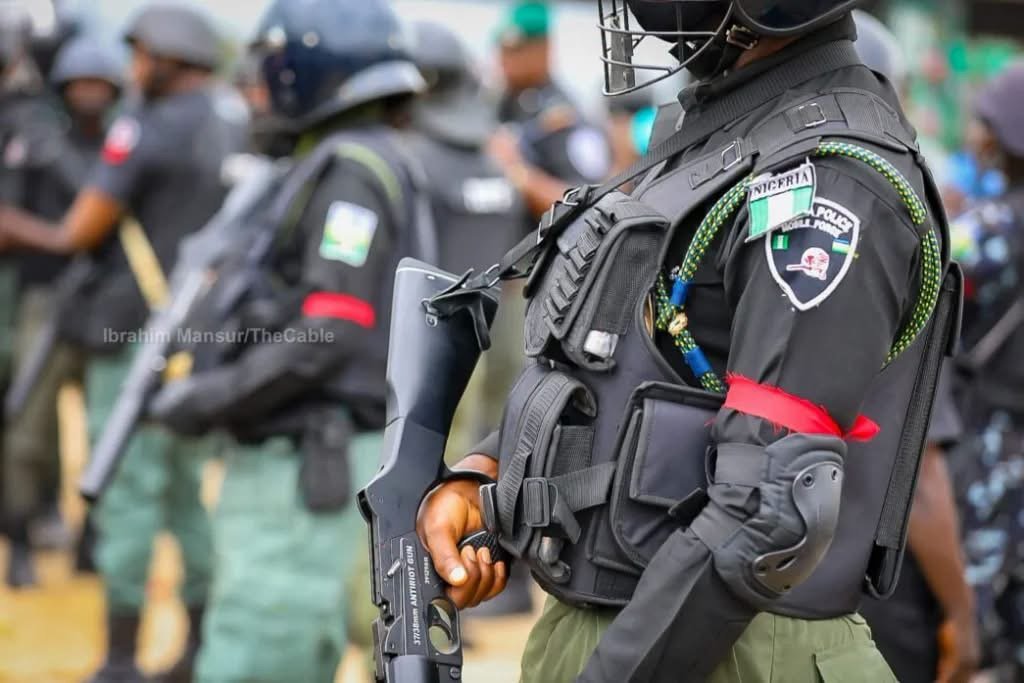
Security preparations have intensified ahead of the Osun State governorship election, with the Nigeria Police Force planning a significant deployment across polling locations.
The security operation is aimed at preventing violence, intimidation, ballot disruption and other forms of electoral malpractice during voting.
Police deployment has historically formed a central part of election security in Nigeria, particularly in off-cycle governorship elections where political competition can be intense and where local political rivalries may create heightened risks.
The Police Service Commission recorded an average of four police officers per polling unit during the 2018 Osun governorship election, alongside personnel from other security agencies. (Public Service Commission)
The present election comes eight years after that contest and at a time when election security remains a major concern for voters, political parties and election observers.
The Independent National Electoral Commission has repeatedly emphasised the importance of peaceful participation and adherence to electoral rules.
For security agencies, the challenge is to maintain order without creating an atmosphere that could intimidate voters.
A heavy security presence can deter violence and protect election materials, but excessive or partisan deployment can undermine public confidence.
The objective should therefore be a security operation that is visible enough to deter criminal activity but sufficiently professional and impartial to reassure voters.
Election credibility goes beyond security
Security is only one part of a credible election.
The integrity of the voter register, the conduct of polling officials, the protection of ballots, transparent result collation and the ability of political parties to challenge irregularities through lawful mechanisms are equally important.
Osun’s election is also being closely watched because it will provide another test of Nigeria’s off-cycle electoral system.
Previous governorship elections in states such as Edo, Ondo and Anambra have generated significant national attention, particularly around voter participation, security arrangements and the conduct of political actors.
The Osun contest will therefore be assessed not only by its winner but by the quality of the process that produces the result.
Political parties and candidates have a responsibility to instruct supporters to respect electoral rules and reject violence.
Security agencies, meanwhile, must apply the law consistently regardless of political affiliation.
For voters, the most important protection remains the ability to cast ballots freely and have those votes counted accurately.
PFIPC controversy puts public accountability under scrutiny
Away from the election, the controversy surrounding the Presidential Foreign Investment Promotion Council (PFIPC) remains one of the most closely watched governance stories in Nigeria.
The controversy began after the Presidency said the organisation was not an authorised government agency, despite the alleged activities of an individual who presented himself as its director-general.
The matter has since expanded into investigations involving government officials, public institutions and questions about how the disputed organisation was able to operate within the Federal Secretariat in Abuja.
The Independent Corrupt Practices and Other Related Offences Commission has questioned Chief of Staff to the President Femi Gbajabiamila as part of its investigation. The ICPC said the questioning followed President Bola Tinubu’s directive to investigate how the disputed organisation allegedly operated for about two years despite the Presidency’s position that it was fraudulent. (Channels Television)
Gbajabiamila has not been accused of wrongdoing by virtue of being questioned. Being interviewed by an investigative agency does not itself establish criminal responsibility.
That distinction is important in reporting the matter.
The controversy has nevertheless raised broader questions about administrative controls and oversight within government.
Alleged forged documents and parliamentary investigation
The National Assembly has also become involved.
The House of Representatives’ ad hoc committee investigating the PFIPC controversy has examined documents and testimony relating to the disputed organisation.
The Guardian reported that the committee directed the Inspector-General of Police to produce Adeniyi Adeyemi, the self-styled director-general, and said it had uncovered 29 suspected forged documents connected to the controversy. (The Guardian Nigeria)
Adeyemi has faced criminal allegations and has denied wrongdoing, with the matter proceeding through the courts.
A Federal High Court in Abuja previously issued a bench warrant after he failed to appear for arraignment on an eight-count charge involving alleged forgery, fraud and impersonation. (Channels Television)
The legal proceedings remain important because the allegations must ultimately be tested in court.
The wider institutional questions, however, go beyond the fate of one individual.
If an unauthorised organisation was able to obtain office space, official correspondence, personnel or other government-related privileges, the episode would point to weaknesses in administrative verification and internal controls.
If the allegations are disproved, the investigation should establish that clearly.
Either way, Nigerians are entitled to know how the situation developed and what safeguards will be introduced to prevent a recurrence.
Why the PFIPC case matters to public trust
The controversy has attracted attention partly because of its connection to government finances.
The Guardian reported that the dispute has raised concerns about a reported N1.3 billion budget allocation associated with the disputed council and about how an organisation the Presidency later described as fictitious could become connected to the public budgeting process. (The Guardian Nigeria)
The precise legal and administrative status of the funds remains a matter for investigation and clarification.
The Office of the Accountant-General of the Federation has also issued explanations concerning claims surrounding the organisation’s financial operations.
That means responsible reporting requires distinguishing between budgetary references, actual expenditure and allegations of financial misconduct.
Those are not interchangeable concepts.
A budget allocation does not automatically prove that money was released or spent.
Similarly, the existence of official documents does not automatically establish that every claim contained in those documents is genuine.
The appropriate response is therefore transparent investigation and documentation.
The PFIPC episode has become a test of whether Nigerian institutions can identify administrative irregularities, establish responsibility and correct weaknesses without political interference.
Basketball and the continuing question of age integrity
Nigeria’s sporting sector is facing its own version of the integrity debate.
Age verification has long been a challenge in African youth sports, where competitions depend on accurate age classification to ensure fair competition and protect younger athletes.
FIBA, basketball’s global governing body, acknowledged the problem earlier this year and announced measures to strengthen efforts against age fraud in youth competitions.
Following an examination of age-fraud cases in U16 and U18 competitions, FIBA Africa said it had approved changes to the rules governing those categories and warned that sanctions could include disqualification or suspension. (FIBA)
The concern is not merely about winning games.
When an athlete competes in an age category below their actual age, younger players may face physical disadvantages, while legitimate athletes can lose opportunities to compete, develop and attract scouts.
Age manipulation can also damage the credibility of an entire tournament.
Nigeria is not immune to the wider problem.
The country’s athletics authorities have already dealt with a separate age-falsification controversy.
The Athletics Federation of Nigeria sanctioned athletes, coaches and state associations following an investigation into age discrepancies involving competitors at the 2025 African U18 and U20 Championships. (Punch Newspapers)
The episode demonstrated how weak verification mechanisms can create problems that eventually attract international scrutiny.
For basketball, maintaining reliable age records will therefore be critical as Nigeria continues to develop its youth teams.
Nigeria’s basketball talent remains strong
The integrity concerns should not obscure Nigeria’s considerable sporting potential.
The country’s Junior D’Tigers recently qualified for the 2026 FIBA U18 AfroBasket after an unbeaten run at the Zone 3 qualifiers in Burkina Faso.
The team won all four of its matches and secured qualification for the continental championship in Côte d’Ivoire. (Punch Newspapers)
That success demonstrates why youth development and credible competition structures matter.
Nigeria has a strong history in African basketball, particularly through the women’s national team, D’Tigress, and has also produced players who have reached the NBA and other major international leagues.
But sustained success requires institutions capable of protecting young athletes, maintaining accurate records and providing fair pathways from grassroots basketball to elite competition.
Governance remains a central issue in Nigerian basketball
The sport’s administrative challenges extend beyond age verification.
The Nigeria Basketball Federation has experienced a prolonged leadership dispute that has required intervention from FIBA.
In March, FIBA confirmed that the NBBF board led by Musa Kida would remain in office until October 2026 while setting a timetable for fresh elections and rejecting proposed amendments to the federation’s statutes. (Punch Newspapers)
The dispute has periodically overshadowed the achievements of Nigerian players and national teams.
That is a concern because sports development requires stable administration.
Athletes need predictable competitions, coaches need clear programmes and federations need credible governance structures.
The same principle applies across Nigerian public life.
Institutions work best when rules are clear, records are verifiable and decisions can withstand independent scrutiny.
Three stories, one public-interest question
The Osun election, PFIPC investigation and sports-integrity concerns are different stories, but they share an important underlying issue.
Can Nigerian institutions command public confidence?
In Osun, the question is whether voters can participate freely and trust that their votes will be protected.
In the PFIPC case, the question is how an allegedly unauthorised organisation was able to acquire the appearance of government legitimacy and whether existing controls were adequate.
In sports, the question is whether competition can remain fair when age records, federation leadership and eligibility are disputed.
These questions matter because public trust is not created by official statements alone.
It is built through transparent processes, consistent enforcement and credible accountability.
What Nigerians should watch
As the Osun election unfolds, voters should watch the conduct of security personnel, political parties and election officials.
Any reports of violence, intimidation, ballot disruption or irregularities should be documented and addressed through lawful channels.
The PFIPC investigation will also require continued scrutiny.
The public deserves clarity about how the disputed council operated, how documents associated with it were processed and whether any public resources were improperly accessed.
In sport, attention will remain on the implementation of stronger age-verification mechanisms and the ability of federations to maintain transparent governance.
These issues may appear separate from the daily concerns of ordinary Nigerians, but they have direct consequences.
Credible elections determine political legitimacy.
Accountable public institutions protect taxpayers.
Fair sporting systems protect athletes and Nigeria’s international reputation.
A morning defined by accountability
Nigeria’s news cycle is often dominated by individual political battles, personalities and controversies.
But beneath the headlines are deeper institutional questions.
The Osun governorship election is an opportunity to demonstrate that electoral competition can take place peacefully and transparently.
The PFIPC investigation is an opportunity for government agencies to demonstrate that alleged administrative failures can be investigated without fear or favour.
And the sports sector has an opportunity to strengthen systems that protect young athletes and ensure that competition is based on genuine merit.
For Wengglobal, the central story is therefore not simply who dominates today’s headlines.
It is whether the institutions responsible for Nigeria’s democracy, governance and sporting development can earn and sustain the confidence of the people they serve.
As voters prepare to participate in Osun, investigators continue their work on the PFIPC controversy and sports authorities confront questions of integrity, the standard should remain the same: facts over speculation, accountability over impunity and institutions over personalities.
That is the foundation on which public trust is built.
Sources
- The Guardian Nigeria: Reporting and editorial analysis on the PFIPC controversy, including questions surrounding institutional accountability and the reported N1.3 billion budget allocation. (The Guardian Nigeria)
- Channels Television: Reporting on the ICPC questioning of Chief of Staff Femi Gbajabiamila and the investigation into the disputed PFIPC. (Channels Television)
- The Guardian Nigeria: Report on the House of Representatives’ PFIPC investigation, suspected forged documents and the order concerning Adeniyi Adeyemi. (The Guardian Nigeria)
- The Punch: Report on the PFIPC legal proceedings and the arrest of self-styled director-general Adeniyi Adeyemi. (Punch Newspapers)
- Premium Times: Investigation into staff and administrative operations associated with the disputed PFIPC. (Premium Times Nigeria)
- FIBA: Official statement on age fraud in U16 and U18 basketball and strengthened measures against age manipulation. (FIBA)
- The Punch: Report on Nigeria’s Junior D’Tigers qualifying for the 2026 FIBA U18 AfroBasket. (Punch Newspapers)
- The Punch: Report on FIBA’s decision concerning the Nigeria Basketball Federation board and forthcoming elections. (Punch Newspapers)
- Police Service Commission: Historical reference on police deployment during the 2018 Osun governorship election, including an average of four officers per polling unit. (Public Service Commission)