Reported by Simon Daniel Yusuph l Journalist at Weng Global
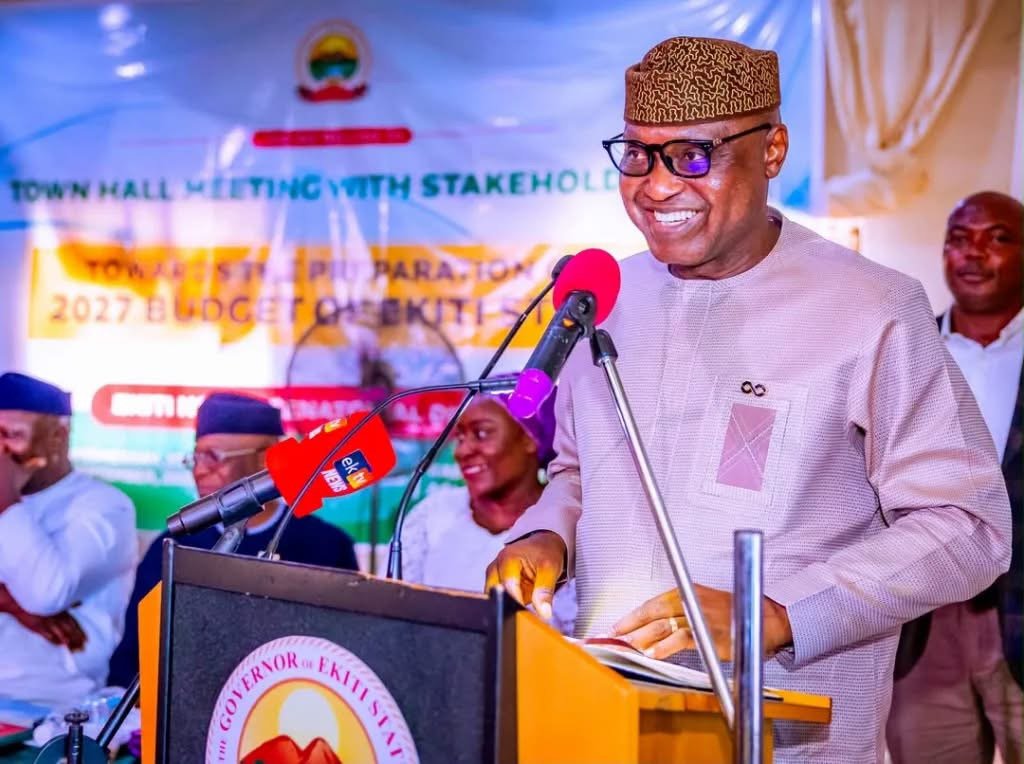
Ekiti State Governor Biodun Oyebanji has pledged to deliver a more impactful second term, expressing confidence that his administration will build on its first-term achievements as he prepares for inauguration on October 16, 2026.
Oyebanji made the commitment during an eight-hour thanksgiving and praise programme in Ado-Ekiti on October 9, where he attributed his political journey, re-election and the achievements of his administration to God’s grace.
The event, tagged the 8 Hour Sacrifice of Praise, brought together religious leaders, gospel musicians, government officials and other participants to celebrate the governor’s first term and pray for his incoming administration.
The governor’s remarks come as his government prepares to begin another four-year tenure following his victory in the June 20, 2026, Ekiti State governorship election.
The second term presents an opportunity for Oyebanji to consolidate existing programmes, address outstanding challenges and demonstrate measurable improvements in infrastructure, education, healthcare, agriculture and economic development.
While the governor has expressed optimism about the future, the success of the next four years will ultimately depend on the implementation of government policies, the effective use of public resources and the extent to which residents experience improvements in their daily lives.
Oyebanji Credits God for Political Journey and Re-election
During the thanksgiving programme, Oyebanji reflected on his journey to the governorship and expressed gratitude for his re-election.
He attributed the political developments surrounding his emergence as the All Progressives Congress (APC) candidate and his subsequent electoral victory to divine intervention.
The programme was organised as part of activities preceding his inauguration and provided an opportunity for the governor and his supporters to express appreciation for the first administration.
Religious observances have long played a role in Nigeria’s public life, with political leaders frequently attending thanksgiving services to mark elections, appointments and other major milestones.
For Oyebanji, the programme represented an expression of personal faith and a request for continued guidance as he prepares to lead Ekiti State for another four years.
The event also brought together gospel musicians, including Nathaniel Bassey, Yinka Alaseyori and BJ Sax, according to reports by the Ekiti State Government.
Although the programme focused on thanksgiving, the governor’s remarks also turned attention to the responsibilities awaiting his administration.
His pledge to make the second term more impactful raises expectations about the policies and programmes the government will prioritise after the inauguration.
The administration will need to demonstrate how its plans will translate into tangible improvements in public services, economic opportunities and living conditions across the state.
Second Term Raises Expectations for Better Governance
Oyebanji’s promise of a more impactful second term comes with heightened expectations from residents, political stakeholders and public institutions.
Having served as governor since October 2022, he enters the next phase of his administration with experience of the state’s political environment, public institutions and development priorities.
That experience could support more effective implementation if the government uses lessons from its first term to improve planning, coordination and service delivery.
However, the return of an incumbent governor also provides a basis for examining whether earlier commitments have been fulfilled and whether outstanding challenges have received adequate attention.
The government’s performance will be judged across several areas, including road infrastructure, education, healthcare, agricultural development, workers’ welfare and opportunities for young people.
Residents are likely to assess progress not only through official announcements but also through the availability and quality of public services.
For example, improvements in education would need to be reflected in school facilities, teaching conditions and learning outcomes. In healthcare, the condition of medical facilities must be considered alongside staffing, access to essential medicines and the availability of treatment.
Similarly, infrastructure projects should be evaluated according to their completion, quality, accessibility and economic usefulness.
These considerations will be important in determining whether the administration fulfils its promise of a stronger second term.
The government has indicated that it intends to continue ongoing projects and expand development programmes, although the details and timelines of individual commitments should be assessed against official policy documents and budget provisions.
Ekiti’s Infrastructure Development Agenda
Infrastructure has featured prominently in the Oyebanji administration’s development agenda.
Road construction and rehabilitation, transportation links and other public infrastructure projects are intended to improve movement within the state and support economic activity.
The state government’s account of its first-term achievements has also highlighted the Ekiti Agro-Allied International Cargo Airport, a project expected to support transportation, trade and agricultural logistics.
The potential benefits of the airport will depend on the availability of sustainable flight operations, cargo-handling services, commercial demand and supporting infrastructure.
For farmers and agricultural businesses, effective cargo services could provide additional opportunities to transport products to distant markets. Such benefits, however, depend on operational arrangements and the ability of businesses to use the facilities at competitive costs.
Road infrastructure also plays an important role in connecting rural communities to markets, schools, healthcare facilities and administrative centres.
For agricultural producers, better roads can reduce transport difficulties and improve access to buyers. For residents, they can make everyday journeys easier and potentially reduce some of the costs associated with moving goods and people.
Nevertheless, the impact of infrastructure spending cannot be measured solely by the number of projects announced.
The government will need to demonstrate that projects are completed to appropriate standards, maintained effectively and capable of meeting the needs for which they were designed.
As Oyebanji begins his second term, the condition and usefulness of existing infrastructure will remain important indicators of the administration’s performance.
Education and Healthcare Remain Critical Priorities
Education and healthcare are central to the long-term development of Ekiti State because they directly affect residents’ welfare and the opportunities available to future generations.
In education, government responsibilities extend beyond the construction or renovation of school buildings. Effective learning also requires qualified teachers, adequate learning materials, appropriate facilities and policies that help students complete their education.
The administration’s next term provides an opportunity to evaluate existing programmes and identify areas where further investment may be necessary.
Access to quality education can strengthen the state’s human capital by preparing young people for employment, entrepreneurship and further training.
Healthcare presents a similar challenge. Residents require medical facilities that are accessible, properly equipped and staffed by trained professionals.
Investments in hospitals and primary healthcare centres can improve access to treatment, but their effectiveness depends on the services available when patients need them.
The government will therefore face expectations to demonstrate improvements in healthcare delivery alongside investments in buildings and equipment.
Public information about funding, staffing, service availability and health outcomes would help residents assess whether government interventions are producing the intended benefits.
The same principle applies to education: measurable outcomes provide a stronger basis for evaluating performance than announcements alone.
Oyebanji’s pledge of a more impactful second term will consequently be tested by whether the administration can improve the quality and accessibility of these essential services.
Agriculture, Employment and Economic Opportunities
Agriculture remains an important part of the economic landscape in Ekiti State, where rural livelihoods and agricultural production contribute to household incomes and local commerce.
Government support for farmers can include access to inputs, extension services, storage facilities, transportation infrastructure and opportunities to connect with buyers.
Such interventions can help strengthen agricultural productivity when they are properly designed and implemented.
However, the impact of agricultural programmes depends on factors such as funding, weather conditions, market prices, access to land and the availability of appropriate technology.
The government will need to demonstrate how its policies address the practical difficulties facing farmers and agricultural businesses.
Economic development also requires attention to employment and opportunities for young people.
Skills training and empowerment programmes can help participants develop capabilities relevant to the labour market, but their effectiveness should be measured through evidence of completed training, employment, business development and sustained income opportunities.
Programmes that provide financial assistance or equipment should also be assessed according to whether recipients can use the support productively.
For businesses, a supportive environment requires reliable infrastructure, predictable regulations and access to markets.
The administration’s second term will therefore need to connect its development priorities with clear outcomes that can be evaluated over time.
The governor’s pledge provides a broad direction, but specific programmes, funding commitments and implementation timelines will be necessary to determine how the government intends to achieve its objectives.
Government Acknowledges Outstanding Challenges
The Ekiti State Government has acknowledged that further work remains despite its emphasis on achievements during the first term.
Commissioner for Information Taiwo Olatunbosun said in a statement issued on October 10 that the administration intended to consolidate existing progress, continue projects and extend development benefits to more communities.
He also called on traditional rulers, religious leaders, community organisations, businesses, labour groups, civil society organisations, young people and women to contribute to the state’s development.
The statement presented the second term as an opportunity to strengthen existing programmes and address outstanding concerns.
The involvement of different stakeholders can be important in identifying community priorities and improving the implementation of public policies.
Traditional institutions and community associations may help communicate local concerns, while civil society organisations and the media can contribute to public scrutiny of government commitments.
Businesses and organised labour can also provide perspectives on the conditions needed to support investment, employment and economic activity.
However, participation must be accompanied by clear channels for engagement and a willingness to consider criticism.
A government that seeks to improve service delivery needs reliable information about what is working, what remains incomplete and where residents require additional support.
For Oyebanji, acknowledging outstanding challenges creates an opportunity to show how the second term will address them through defined priorities and measurable results.
Inauguration Scheduled for October 16
Oyebanji and Deputy Governor Monisade Afuye are scheduled to begin their second term on October 16, 2026, at the Ekiti Parapo Pavilion in Ado-Ekiti.
The inauguration follows the June 20 governorship election and marks the formal transition into another four-year period of leadership.
According to information published by the Ekiti State Government, activities surrounding the inauguration began in early October and include programmes marking the transition.
The ceremony will provide an opportunity for the administration to restate its governing priorities and outline its direction for the coming years.
For the APC government, the second term offers continuity in leadership and the opportunity to advance programmes already underway.
For residents, it creates a renewed basis for assessing the administration’s performance against its promises.
The governor’s next four years will also unfold as political parties begin preparing for the 2027 general elections at the national level.
Although the Ekiti governorship election has concluded, the administration’s performance will remain part of broader discussions about governance, public accountability and political leadership in Nigeria.
The immediate focus, however, will be on the state’s development priorities and the government’s ability to implement them.
Why Oyebanji’s Second Term Matters
The significance of Oyebanji’s pledge lies in the expectations it establishes for the next phase of governance in Ekiti State.
A second term gives an incumbent administration an opportunity to complete ongoing projects, refine existing policies and address problems that may have proved difficult during the first term.
It also places greater emphasis on delivery because the government has already had time to become familiar with the state’s institutions and development needs.
Residents will have reason to examine whether public investments are producing benefits and whether government programmes are reaching communities across the state.
They may also assess how resources are distributed among infrastructure, social services, agriculture and economic development.
The government will need to explain its priorities and provide evidence of progress, particularly where projects involve substantial public spending or long implementation periods.
Independent scrutiny of budgets, project records and service-delivery indicators can help establish whether the administration is meeting its commitments.
Such scrutiny is not necessarily an expression of political opposition. It is part of the accountability process through which citizens assess public officials.
Similarly, the government should be able to demonstrate its achievements through verifiable records rather than relying exclusively on political statements.
The central question is whether the next four years will produce sustained improvements in residents’ welfare and strengthen the state’s capacity to support economic and social development.
What Happens Next?
The immediate next step is the scheduled inauguration of Oyebanji and Afuye on October 16.
Following the ceremony, attention will turn to the administration’s priorities, budgetary commitments and plans for ongoing and proposed projects.
The government has indicated that it intends to continue investments in infrastructure, education, healthcare, agriculture and other development areas.
The extent to which these commitments are achieved will depend on available resources, implementation capacity and the effectiveness of government policies.
Residents, civil society organisations and the media will have an important role in monitoring progress and comparing official promises with results.
The administration will also need to communicate clearly about its priorities, project timelines and the outcomes it expects to achieve.
Oyebanji’s thanksgiving programme reflected his gratitude for his political journey and his confidence in the future of Ekiti State.
His pledge of a more impactful second term now establishes an expectation that the next four years will deliver improvements beyond the continuation of existing programmes.
Ultimately, the administration’s legacy will depend on what it achieves in office, how effectively it manages public resources and whether its policies improve the lives of the people it governs.
Weng Global – stories beyond borders
Sources
- Ekiti State Government — report on the governor’s thanksgiving programme.
- Ekiti State Government — announcement on the second-term inauguration programme.
- Ekiti State Government — statement by the Commissioner for Information on the administration’s second-term priorities.