Reported by Simon Daniel Yusuph l Journalist at Weng Global
The Arewa Consultative Forum (ACF) has sarcastically “congratulated” Daniel Bwala, Special Adviser to President Bola Tinubu on Policy Communication, after he acknowledged that the administration’s economic reforms have contributed to an increase in poverty among Nigerians.
The ACF’s reaction followed Bwala’s appearance on Channels Television’s Politics Today on Wednesday, where he defended the Tinubu administration’s economic policies while conceding that more Nigerians had fallen into poverty since the reforms began.
Bwala maintained, however, that the hardship was an expected consequence of major economic restructuring and insisted that Nigeria had made what he described as “marked progress” since the reforms were introduced.
ACF Reacts to Bwala’s Admission
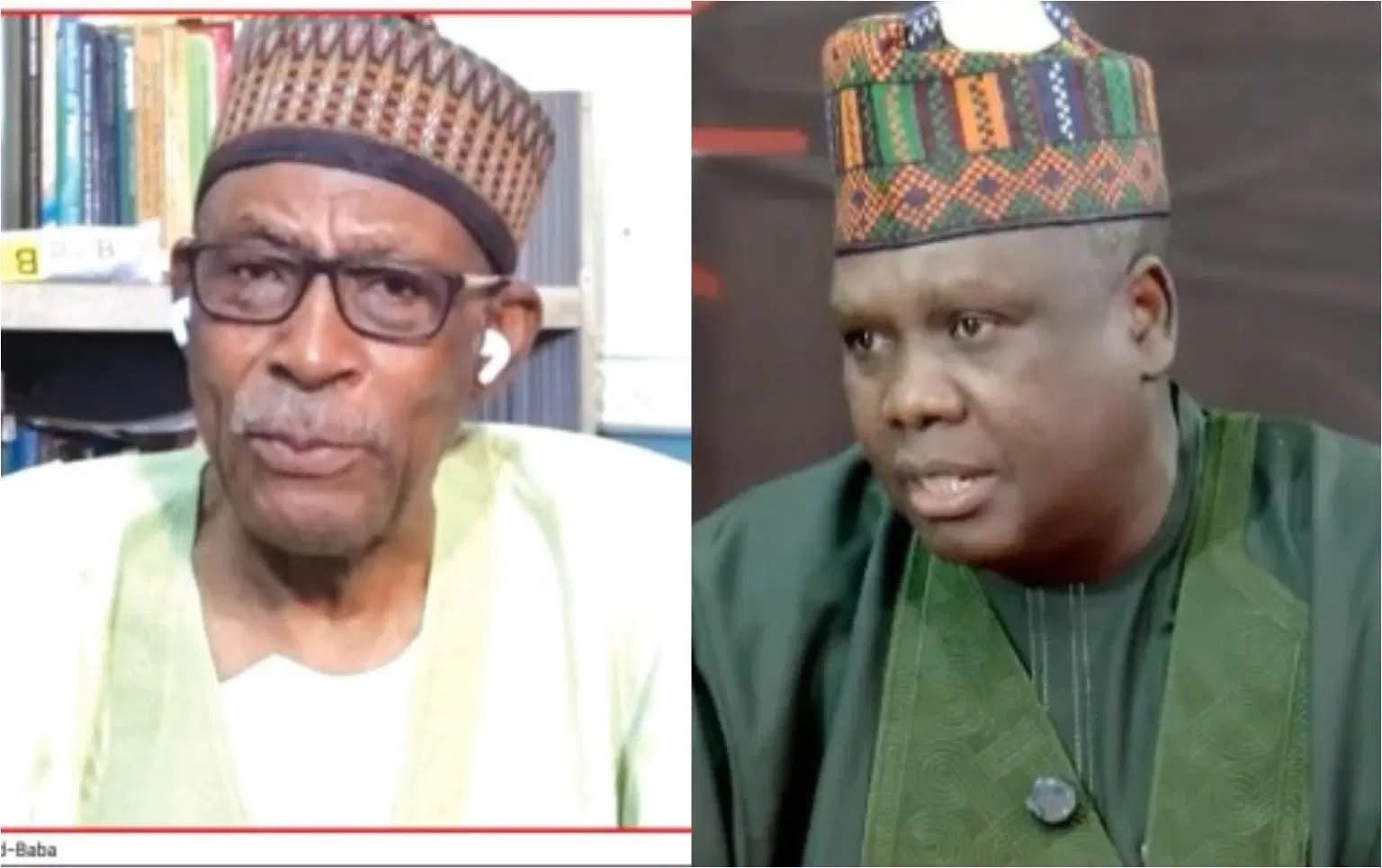
Professor Tukur Mohammed-Baba, Publicity Secretary of the ACF, reacted to Bwala’s comments during an interview on Arise Television’s News Day on Thursday.
According to Vanguard, Mohammed-Baba used the word “congratulations” sarcastically while responding to the presidential aide’s admission that the reforms had been accompanied by an increase in poverty and hardship.
The ACF’s response places renewed attention on one of the most politically sensitive aspects of President Tinubu’s economic programme: whether improvements in macroeconomic indicators are translating into better living conditions for ordinary Nigerians.
The debate comes at a time when the government continues to defend its economic direction, while opposition politicians, civil society groups and other stakeholders have repeatedly raised concerns about the cost of adjustment on households.
What Bwala Said About Poverty
Bwala made the admission while defending the reforms introduced by the Tinubu administration since it came to power in May 2023.
The reforms include the removal of the petrol subsidy and major changes to the foreign exchange market.
Responding to criticism of the economic situation, Bwala said more Nigerians had fallen into poverty as a result of the reform process but argued that the development should be understood within the wider context of economic restructuring.
He said the administration had undertaken reforms that inevitably created discomfort and maintained that the government had made significant progress since their implementation.
Bwala also argued that critics should not focus only on the number of Nigerians experiencing poverty without considering the economic improvements the government says have emerged from the reforms.
His position was that the immediate hardship should be viewed alongside longer-term changes in the Nigerian economy.
The presidential aide did not, during the interview, provide specific figures showing how many Nigerians had moved out of poverty since the reforms began.
That distinction is important because acknowledging that poverty increased does not, by itself, establish the scale of the increase or demonstrate how much subsequent improvement has occurred.
Why the Reforms Caused Hardship
President Tinubu’s administration introduced some of Nigeria’s most consequential economic policy changes in decades after taking office in 2023.
The removal of the petrol subsidy sharply increased the price of petrol and contributed to higher transportation costs. Changes to the foreign exchange system also resulted in significant movements in the value of the naira, affecting the cost of imported goods, raw materials, machinery and other products.
For households, the combined effect has been higher costs for food, transportation, energy and other basic necessities.
Businesses have also faced increased operating costs, particularly those dependent on imported inputs, diesel, transportation and foreign exchange.
These pressures have been particularly difficult for low-income households because a larger proportion of their income is spent on necessities.
The World Bank has repeatedly noted the gap between Nigeria’s improving macroeconomic position and the living conditions of many citizens. Its October 2025 Nigeria Development Update said reforms had contributed to improvements in economic growth, government revenue and external balances, but warned that these gains had not yet translated sufficiently into better living standards.
Economic Gains and Social Costs
The debate over the Tinubu reforms is complicated because there is evidence of both economic improvement and continuing hardship.
The International Monetary Fund said in its 2026 assessment that reforms undertaken since 2023 had strengthened Nigeria’s macroeconomic stability.
According to the IMF, ending fuel subsidies and deficit monetisation, alongside foreign exchange liberalisation and tighter monetary policy, helped reduce fiscal vulnerabilities, rebuild external buffers and improve the functioning of the foreign exchange market.
The IMF also noted that Nigeria had resumed portfolio inflows and returned to international financial markets.
However, the same IMF assessment highlighted the continuing hardship facing Nigerians.
The Fund estimated that poverty had reached 63 per cent at the national poverty line and said an estimated 27 million Nigerians experienced food insecurity in the autumn of 2025.
The IMF warned that poverty and food insecurity could remain under pressure from higher fuel and food prices, even as the government’s reforms strengthen macroeconomic conditions.
This creates the central challenge confronting the administration: ensuring that improved economic stability eventually produces measurable improvements in household welfare.
World Bank Warns of Gap Between Reform and Living Standards
The World Bank has similarly acknowledged progress in Nigeria’s economic stabilisation while stressing that ordinary Nigerians have yet to fully experience the benefits.
Its April 2026 Nigeria Development Update said inflation had eased, external and fiscal positions had strengthened and economic growth remained relatively robust.
But the institution also stated that household incomes had not fully recovered and poverty remained high.
The World Bank said Nigeria needed to consolidate macroeconomic stability while accelerating inclusive growth and ensuring that vulnerable households received adequate support.
In its latest country assessment, the World Bank estimated that more than 60 per cent of Nigerians were living below the national poverty line in 2025. It also noted that food inflation disproportionately affects poor households, which can spend as much as 70 per cent of their income on food.
The figures illustrate why Bwala’s acknowledgement has attracted attention.
For the government, the reforms are intended to correct long-standing economic distortions and create conditions for sustainable growth.
For households struggling with food, transport, rent and energy costs, however, the success of the reforms is more likely to be judged by purchasing power and living standards than by foreign reserves or fiscal balances.
Government Defends the Reform Direction
The Tinubu administration has consistently argued that the reforms were necessary because Nigeria’s previous economic structure was placing unsustainable pressure on government finances.
The petrol subsidy, in particular, had become a major fiscal burden, while problems in the foreign exchange market had contributed to distortions and uncertainty for businesses and investors.
The IMF has supported part of this assessment, saying Nigeria’s reforms have improved macroeconomic stability and strengthened resilience.
The government has therefore maintained that the hardship accompanying the reforms is part of a difficult transition rather than evidence that the policies have failed.
Bwala’s latest comments reflect that position.
His acknowledgement that poverty increased does not amount to a rejection of the reforms. Rather, he argued that the social costs should be considered alongside what he described as economic progress achieved since the policies were introduced.
ACF’s Criticism Highlights Political Pressure
The ACF’s sarcastic response nevertheless highlights the political pressure surrounding the government’s economic programme.
The organisation’s reaction suggests that an admission from a senior presidential adviser that more Nigerians fell into poverty could be used by critics to challenge the administration’s economic record.
The timing is also politically significant as Nigeria moves closer to the 2027 general elections.
Bwala himself used the same television appearance to express confidence that President Tinubu would perform better in the 2027 presidential election than he did in 2023.
He predicted that Tinubu would widen his margin over his opponents, citing what he described as growing support for the president among political actors and governors.
The combination of economic hardship and an approaching election means that poverty, food prices, employment and purchasing power are likely to remain central issues in Nigeria’s political debate.
The Bigger Question: When Will Nigerians Feel the Gains?
The central issue is no longer simply whether the reforms have produced macroeconomic improvements.
International financial institutions have acknowledged that Nigeria’s economic position has strengthened in several areas.
The more difficult question is whether those gains can be translated into better living standards.
Economic growth does not automatically reduce poverty. For growth to have a meaningful effect on households, it must generate productive employment, improve real incomes, reduce the cost of essential goods and expand access to basic services.
The World Bank has warned that Nigeria needs stronger investment in human capital, infrastructure and social protection to ensure that economic stabilisation becomes inclusive growth.
The IMF has also emphasised the need for policies that allow the benefits of reform to reach vulnerable Nigerians rather than remaining concentrated in macroeconomic indicators.
For millions of Nigerians, the practical test will therefore be whether their incomes can increasingly cover food, transportation, housing, healthcare and education.
What Happens Next
The Tinubu administration is expected to continue implementing its economic reform programme while attempting to reduce inflation and strengthen household welfare.
The government will also face increasing pressure to demonstrate that the economic gains cited by officials are translating into tangible improvements before the 2027 elections.
Social protection programmes, employment creation, food production, infrastructure investment and measures aimed at lowering the cost of transportation and essential goods will remain important components of that challenge.
The ACF’s reaction also indicates that the political debate over the reforms is unlikely to disappear.
Bwala’s admission provides the government with an opportunity to acknowledge the real social costs of its policies while presenting evidence of the progress it says has been achieved.
For critics, however, the admission reinforces the argument that economic reforms should ultimately be judged by their effect on citizens rather than by macroeconomic statistics alone.
The available evidence points to a more complicated picture than either side’s political messaging may suggest: Nigeria has recorded important improvements in economic stability, but poverty and food insecurity remain serious challenges.
The long-term credibility of the reforms will depend on whether the government can close that gap between economic stabilisation and household welfare.
Why It Matters
The exchange between the ACF and Bwala matters because it captures a fundamental question about Nigeria’s economic direction.
The government argues that difficult reforms were necessary to rebuild the economy and create a stronger foundation for future growth.
Critics point to the immediate human cost, including higher living expenses and increased poverty.
Both realities can exist at the same time.
Nigeria can improve its foreign reserves, fiscal position, exchange-rate functioning and economic stability while many households continue to struggle.
The challenge for the administration is therefore to ensure that macroeconomic progress does not remain an abstract achievement but becomes visible in the daily lives of Nigerians.
For citizens, the most meaningful measure of reform will ultimately be whether they can afford more, earn more securely and live with greater economic confidence.
Weng Global – stories beyond borders
Sources
- Channels Television
- Premium Times
- Vanguard
- The Cable
- International Monetary Fund
- World Bank