Reported by Simon Daniel Yusuph l Journalist at Weng Global
Amnesty International has urged the management of Madonna University, Elele Campus in Rivers State, to reverse the expulsion of a final-year nursing student and the suspension of 14 other 500-level nursing students following the circulation of a viral social media video.
The rights organisation described the disciplinary measures as disproportionate and called on the university to resolve the dispute through dialogue and mediation.
The appeal, made on Thursday, October 8, 2026, adds to growing calls from student and professional groups for the university to reconsider the sanctions imposed over a video showing nursing students dancing in different parts of the institution’s teaching hospital.
Main Development
The controversy centres on a video involving students of Madonna University’s nursing programme at the Elele Campus in Rivers State.
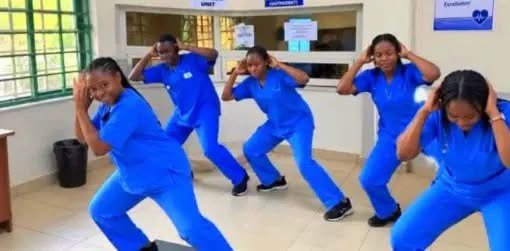
According to reports, the video showed nursing students dancing in a hospital waiting area, on a staircase and inside a bus. The footage was associated with a social media trend popularly described as the “Gen Z nurses” challenge.
The video attracted widespread attention online, prompting the university to take disciplinary action against students involved.
The Nigerian Universities Nursing Students’ Association, NUNSA, confirmed that 14 500-level nursing students were suspended for one year while one 500-level nursing student was expelled. The association said it had begun engaging relevant stakeholders and the university management over the matter.
Amnesty International has now joined those calling for the sanctions to be reviewed.
In its appeal, the human rights organisation urged the authorities of Madonna University’s Elele Campus to rescind the expulsion and suspension, describing the measures as disproportionate.
Amnesty also called for dialogue and mediation rather than allowing the disciplinary dispute to end the academic progression of the affected students.
The intervention has shifted the debate beyond the conduct displayed in the video to broader questions about proportionality in university discipline, students’ rights, academic progression and the responsibilities of institutions when dealing with social media-related misconduct.
How the Dispute Started
The dispute followed the circulation of a short video showing nursing students engaging in a dance routine within areas associated with the university’s teaching hospital.
Reports indicate that the video was part of a wider social media trend involving healthcare workers and nursing students producing entertainment-oriented videos in clinical environments.
A version of the footage reportedly gained significant attention online after being shared on social media, bringing the students and their institution into public focus.
The university subsequently imposed disciplinary measures on the students involved.
Madonna University’s Director of Communications and Public Affairs, Chima Achu, had earlier confirmed that disciplinary action had been taken against students involved in the video. Premium Times reported that the university said the video had been recorded inside its teaching hospital.
The university’s position is important because the controversy is not simply about students appearing in a social media video. The setting of the recording — a teaching hospital — raises additional questions concerning professional conduct, institutional rules and the appropriate use of clinical environments.
However, the debate has increasingly focused on whether the punishment imposed was proportionate to the misconduct.
Amnesty’s Human Rights Concerns
Amnesty International’s intervention places the case within a broader discussion about the balance between institutional discipline and students’ fundamental rights.
The organisation argued that expulsion and lengthy suspension could have serious consequences for the affected students, particularly those already approaching the completion of their nursing education.
For a final-year student, expulsion can potentially disrupt years of academic preparation and investment. For the 14 students placed on one-year suspension, the disciplinary measure could also delay their academic progression.
Amnesty therefore urged the university to reconsider the sanctions and pursue a resolution based on dialogue and mediation.
The rights organisation’s position does not necessarily remove the university’s authority to establish and enforce standards for its students.
Universities have rules governing conduct, and professional programmes such as nursing also require students to understand expectations relating to patient dignity, professional behaviour and the use of institutional facilities.
The central issue raised by Amnesty is instead whether the punishment imposed is proportionate to the conduct in question and whether alternative disciplinary or restorative measures could address the concerns without permanently disrupting a student’s education.
NUNSA Calls for Fair Review
Before Amnesty’s intervention, the Nigerian Universities Nursing Students’ Association had already become involved in the matter.
In a statement dated October 3, NUNSA National acknowledged the suspension of 14 500-level nursing students for one year and the expulsion of one 500-level student following the circulation of the video.
The association said it had commenced engagement with relevant stakeholders and Madonna University management to ensure that the interests and welfare of the affected students were represented.
NUNSA called for constructive dialogue and a fair review of the disciplinary measures while stressing the importance of maintaining the dignity and welfare of Nigerian student nurses.
The association also acknowledged interventions by other stakeholders, including the National Association of Nigerian Students and the Rivers State chapter of the National Association of Nigeria Nurses and Midwives.
That response indicates that the issue had already moved beyond a dispute between the university and individual students and had become a matter attracting attention from wider student and professional bodies.
NANS Also Appeals for Clemency
The National Association of Nigerian Students has also appealed to Madonna University over the sanctions.
NANS National President Akinteye Babatunde Afeez called on the university management to commute the punishment imposed on the affected nursing students.
The student body acknowledged that the conduct displayed in the video was inappropriate and did not reflect the level of discipline and professionalism expected of nursing students.
However, NANS also expressed concern about the long-term consequences of expulsion, particularly for a student who was already in the final stage of her nursing education.
The NANS position reflects an attempt to balance two competing considerations: the responsibility of students to comply with institutional and professional standards, and the need for disciplinary decisions to take account of the possibility of correction and rehabilitation.
Expelled Student Appeals for a Second Chance
The human dimension of the controversy became more visible after one of the affected students publicly appealed for reconsideration.
A 500-level nursing student who was expelled reportedly made an emotional appeal for the university to give the affected students another opportunity.
In a video reported by Nigerian media, the student expressed concern about how she would explain the situation to her mother after spending years pursuing her nursing education.
The appeal has contributed to calls for the university to reconsider the expulsion and explore a disciplinary response that does not permanently end the students’ academic careers.
The student’s plea also illustrates why disciplinary decisions in higher education can have consequences extending well beyond the immediate incident.
For students in professional programmes, years of tuition, examinations, clinical training and personal sacrifice can be tied to the expectation of eventually entering their chosen profession.
Professional Standards and Social Media
The controversy also highlights a growing challenge facing universities and professional training institutions across Nigeria: how to regulate student behaviour in an era when almost any activity can quickly become public through social media.
Nursing students are expected to understand that their future profession involves responsibilities to patients, colleagues, healthcare institutions and the public.
Recording entertainment content inside a hospital environment can therefore raise legitimate questions about whether clinical spaces are being treated with appropriate seriousness.
At the same time, social media has become a major part of how young people communicate, express themselves and participate in popular trends.
The challenge for educational institutions is to establish clear boundaries between acceptable student expression and conduct that genuinely undermines professional standards, patient privacy, institutional reputation or safety.
That makes proportionality particularly important.
A disciplinary system should be capable of distinguishing between serious misconduct and behaviour that may be corrected through education, counselling, warnings, retraining or other sanctions.
University Rules and Due Process
The university’s broader student conduct framework provides context for the debate.
Madonna University’s published student code states that students are expected to respect university rules and that violations can result in disciplinary sanctions.
The code also states that students facing disciplinary action should be afforded due process and that, where appropriate, a student may have access to a Student Appeal Board. It further provides that severe or repeated infractions can result in dismissal.
Those provisions are relevant because any review of the current dispute is likely to involve questions about the rules the students were accused of violating, the process followed before the sanctions were imposed, the evidence considered and the students’ available avenues of appeal.
A fair review would therefore need to establish not only what happened in the video but also how the university applied its disciplinary rules to the students involved.
Why the Case Matters
The Madonna University dispute matters beyond the individual students because it raises wider questions about discipline and student rights in Nigerian higher education.
Universities have legitimate responsibilities to protect their reputation, maintain order and prepare students for professional careers.
Professional programmes such as nursing have additional obligations because students are being trained for work involving vulnerable people and sensitive environments.
But disciplinary decisions also have to consider fairness, proportionality and the educational purpose of higher institutions.
The controversy therefore presents a difficult question for university administrators: how should institutions respond when students violate expected standards without unnecessarily destroying their academic and professional futures?
For Amnesty International, the answer should involve dialogue, mediation and respect for students’ rights.
For university authorities, the issue also involves protecting institutional standards and ensuring that students understand the seriousness of professional conduct.
Finding a balance between those responsibilities could determine how the Madonna University case is ultimately resolved.
What Happens Next
The immediate focus is likely to remain on discussions between Madonna University management and the various stakeholders seeking a review of the sanctions.
NUNSA has already said it is engaging relevant stakeholders and the university management.
NANS has appealed for clemency, while Amnesty International has now called for the expulsion and suspensions to be rescinded and for the matter to be handled through dialogue and mediation.
The university has yet to publicly announce, in the sources reviewed for this report, a reversal of the sanctions following Amnesty’s intervention.
Any decision to modify, uphold or replace the disciplinary measures would therefore be significant for the affected students and could also shape how similar social media-related disciplinary cases are handled in Nigerian universities.
For the students involved, the outcome could determine whether they return to their studies, continue their professional training after a period of suspension, or face the longer-term consequences of the original disciplinary decisions.
Conclusion
Amnesty International’s call for Madonna University to reverse the sanctions against 15 nursing students has intensified an already growing debate over discipline, professional standards and student rights.
The controversy began with a social media video showing nursing students dancing within the university’s teaching hospital and has since developed into a wider discussion involving Amnesty International, NUNSA, NANS and other stakeholders.
The university has a responsibility to uphold standards expected of nursing students, particularly concerning conduct within a healthcare environment. At the same time, the affected students have an interest in fair procedures and proportionate disciplinary measures.
The next stage will depend on whether the university management agrees to review the sanctions and whether dialogue between the institution and the students’ representatives produces a resolution.
For now, the case remains a significant test of how Nigerian higher institutions can enforce discipline while protecting students’ educational opportunities and ensuring that punishment remains proportionate to the conduct being addressed.
Weng Global – stories beyond borders
Sources
- Amnesty International
- Madonna University
- Nigerian Universities Nursing Students’ Association (NUNSA)
- National Association of Nigerian Students (NANS)
- Punch Newspapers
- Premium Times
- Vanguard
- The Guardian