Reported by Simon Daniel Yusuph l Journalist at Weng Global
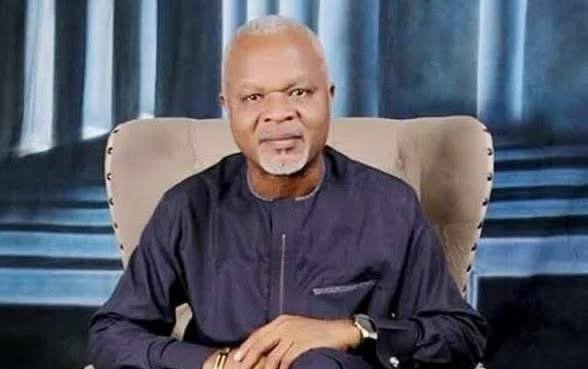
Dr Tom Ohikere, a former Commissioner for Information in Kogi State, has called for the governorship seat to move to Kogi West in the 2027 election, arguing that political equity and inclusion require the senatorial district to have an opportunity to produce the state’s next governor.
Ohikere, who has previously advocated power rotation in Kogi State, renewed the call amid growing political discussions ahead of the 2027 governorship election.
His position was outlined in recent statements and interviews in which he argued that Kogi East and Kogi Central have occupied the governorship since the return of democratic rule in 1999, while Kogi West has not produced an elected governor during the period.
Ohikere’s Argument for Kogi West
Ohikere has framed the issue as one of fairness among Kogi State’s three senatorial districts rather than a demand based on ethnic or religious considerations.
In a statement titled “The Kogi Question: Justice, Equity and the Case for 2027,” he argued that the 2027 election should provide an opportunity for Kogi West to seek the governorship.
Reports on the statement said Ohikere maintained that Kogi East had produced governors for about 17 years since 1999, while Kogi Central would account for about 12 years by 2027.
Kogi West, he argued, had not held the office through an elected governor during the democratic period.
Ohikere has described the figures as part of what he considers a broader question of political inclusion in the state.
His argument does not amount to a constitutional requirement for zoning. Rather, it is a political position advocating an informal rotation of the governorship among the three senatorial districts.
A Debate That Predates the 2027 Election
The question of power rotation in Kogi is not new.
Ohikere previously advocated the same position during preparations for the 2023 governorship election. At the time, he argued that Kogi West should be considered for the governorship on grounds of fairness and equitable representation.
His position has therefore evolved into a recurring part of his political commentary on the state.
During the 2023 election cycle, however, the governorship eventually went to Ahmed Usman Ododo of Kogi Central, who emerged as the All Progressives Congress candidate and later won the November 2023 governorship election.
The current debate is consequently taking place in a different political environment, with attention now turning to the 2027 election.
Ohikere Links Rotation to Political Inclusion
In his recent interventions, Ohikere has argued that rotation should help ensure that each senatorial district has a sense of participation in the state’s highest elected office.
He has said that the demand for Kogi West should not be interpreted as an attempt to deny residents of Kogi East or Kogi Central their political rights.
Instead, he has presented it as an argument for broader inclusion and confidence among the three senatorial districts.
National Watch reported that Ohikere said the demand was not motivated by tribal, religious or partisan considerations but by what he described as the need for fairness, peaceful coexistence and good governance.
The issue nevertheless remains political, and the question of whether parties and voters will support zoning to Kogi West will ultimately depend on party decisions, candidates and the electorate.
Ohikere Also Criticises the Ododo Administration
Ohikere’s call for Kogi West has come alongside criticism of Governor Ahmed Usman Ododo’s administration.
In a recent interview, he acknowledged what he described as improvements in salary payments and relative peace in the state but argued that significant challenges remained in areas including water supply, healthcare, education, employment, infrastructure and economic development.
He specifically raised concerns about water infrastructure, including the Greater Lokoja Water Works and facilities in Kogi Central.
Ohikere also criticised what he described as the practice of starting projects without completing existing ones, calling for greater transparency over public spending and project completion.
Those comments represent Ohikere’s assessment of the administration and should be distinguished from independently established findings on the performance of the state government.
His Position Has Also Included Competence
While advocating for Kogi West, Ohikere has also said that zoning should not be the only consideration in choosing the state’s next governor.
In July, he said the discussion around the 2027 election should go beyond political camps and focus on leadership, competence and the ability to address citizens’ concerns.
He identified food security, community security, employment, private-sector investment, agro-processing and solid-mineral development among the areas he believes should receive attention.
That position introduces an additional dimension to the zoning debate: whether geographical rotation should be considered alongside the qualifications, record and policy programme of individual candidates.
Kogi’s Political Structure
Kogi State is divided into three senatorial districts: Kogi East, Kogi Central and Kogi West.
The distribution of political power among the three areas has periodically featured in debates over governorship elections.
Previous reporting has documented calls for the governorship to move to Kogi West, particularly because the district has not produced an elected governor since the beginning of the Fourth Republic.
However, the state’s political history also includes periods in which political arrangements were shaped by party nominations, individual candidates, elections and other factors rather than a formally codified rotation agreement.
Consequently, claims about zoning should be understood as political positions and expectations unless backed by a formal party agreement or other binding arrangement.
Why the 2027 Debate Matters
The debate over Kogi West is likely to form part of the wider political conversation ahead of the 2027 governorship election.
For supporters of rotation, the argument is centred on inclusion and the belief that all three senatorial districts should have an opportunity to occupy the state’s highest elective office.
For other political actors, the focus may instead be on the candidate’s policies, experience, party platform, record and ability to win support across the state.
Ohikere himself has previously argued that Kogi voters should consider competence, evidence and capacity to deliver rather than political emotion or factional loyalty.
This means the emerging debate is not limited to geography. It also involves questions about governance, development priorities and the criteria voters should apply when assessing candidates.
What Happens Next
The political significance of Ohikere’s intervention will depend on how political parties, aspirants and stakeholders respond as the 2027 election approaches.
At present, his call for Kogi West to produce the next governor remains an advocacy position rather than an established agreement binding the state’s political parties or electorate.
Political parties will ultimately determine their nomination processes and candidates in accordance with applicable electoral and party rules, while voters will decide the outcome at the election.
As the contest develops, further attention is expected on zoning, party primaries, potential candidates and competing policy proposals across Kogi’s three senatorial districts.
For now, Ohikere’s intervention has placed the question of Kogi West’s claim to the governorship back at the centre of the state’s political conversation.
Sources
National Watch TV
The Nigerian Post
Kogi Reports
Blueprint Newspapers
The Guardian Nigeria
Political Talk Today