Reported by Simon Daniel Yusuph l Journalist at Weng Global
Nigeria’s Minister of the Federal Capital Territory (FCT), Nyesom Wike, Edo State Governor Monday Okpebholo and former Edo State Governor Adams Oshiomhole were among prominent political figures who gathered in Ogbona, Edo State, on Saturday, October 10, 2026, to pay their final respects to the late Chief Daniel Osikheme Orbih.
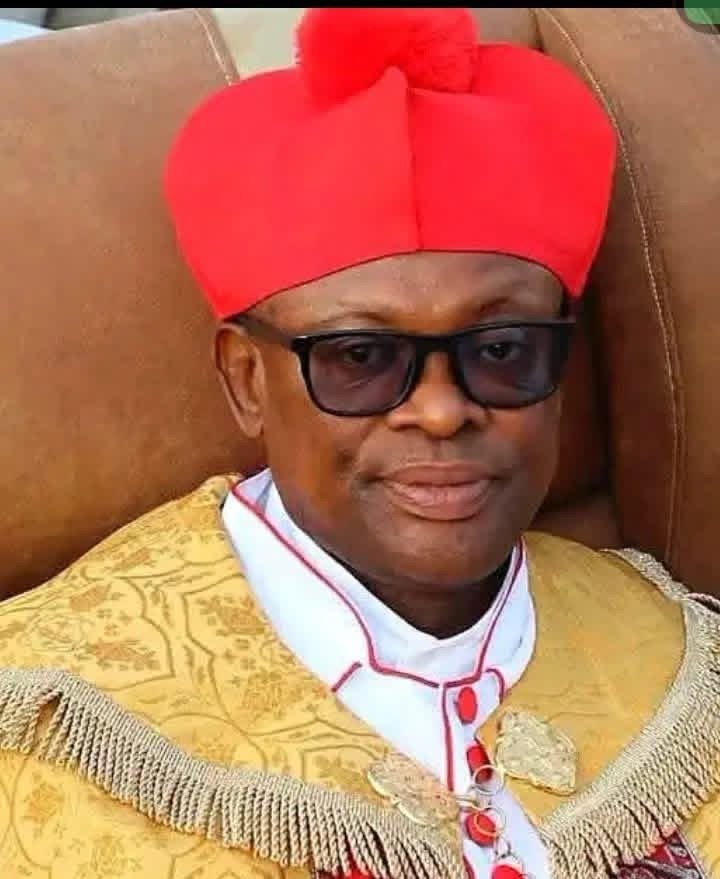
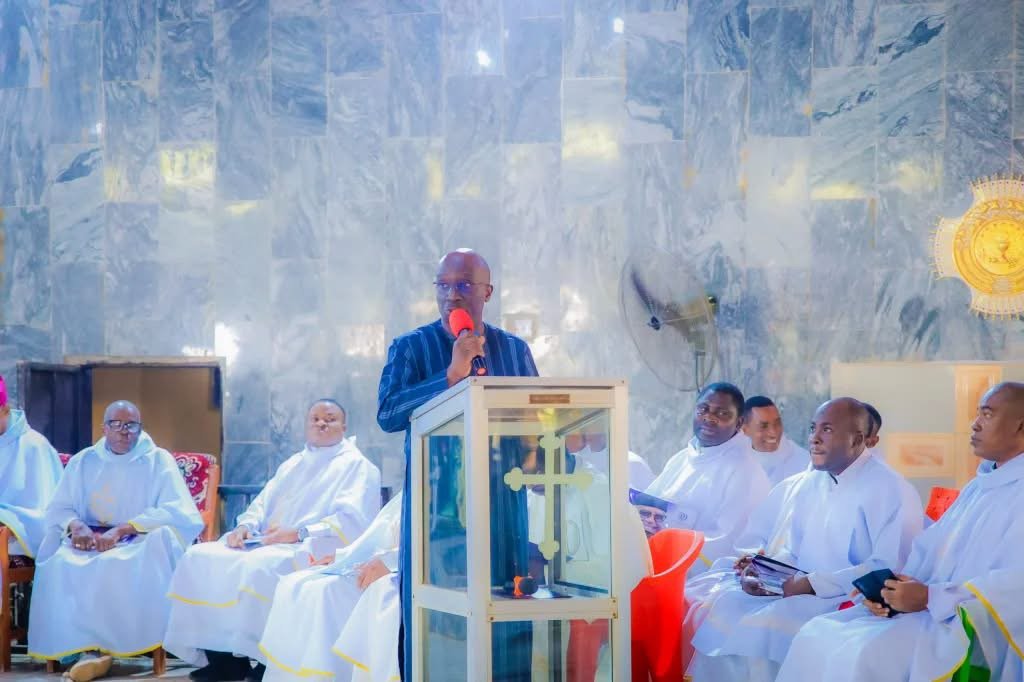
Orbih, a prominent Peoples Democratic Party (PDP) chieftain and former National Vice Chairman of the party in the South-South, was laid to rest in his hometown of Ogbona, Etsako Central Local Government Area, following a funeral Mass at St. John the Baptist Catholic Church.
The ceremony brought together political leaders, family members, friends, associates and other dignitaries to honour the late politician, whose influence extended across party lines and into Edo State’s political and educational institutions.
The burial marked the culmination of funeral activities following Orbih’s death on August 31, 2026, at the age of 64. He was also the chairman of the Governing Council of Ambrose Alli University, Ekpoma, until his death.
According to reports by Vanguard, THISDAY and other Nigerian media organisations, the funeral provided an opportunity for political associates to reflect on Orbih’s life, his relationships with influential figures and his contributions to public life.
Wike Describes Orbih as a Friend and Brother
Wike, who attended the funeral Mass, expressed grief over the death of Orbih, describing him as a close friend and political associate.
The FCT minister acknowledged the emotional weight of the occasion, noting that seeing the late politician’s remains had made the reality of his death more difficult to bear.
He also expressed appreciation to Okpebholo for receiving Orbih’s remains when they arrived in Benin City and for supporting the family during the funeral arrangements.
Wike’s presence at the ceremony reflected the longstanding political relationship between the two men, which had extended beyond the immediate boundaries of Edo State.
In earlier tributes following Orbih’s death, Wike described him as a committed political ally whose friendship and support had played an important role in his political journey.
The minister’s remarks at the funeral also highlighted the personal relationships that can develop among politicians from different parts of Nigeria through years of political engagement, cooperation and shared experiences.
Although political associations are often viewed through the lens of party affiliation, Wike’s tribute illustrated how personal loyalty and friendship can remain significant even when political circumstances change.
For Orbih’s family and associates, the funeral offered an opportunity to remember him not only as a politician but also as a friend, family member and individual whose relationships had shaped different aspects of his life.
Okpebholo Calls for Selfless Public Service
Okpebholo, who joined other dignitaries at the funeral, urged Nigerians, particularly people occupying positions of authority, to live selfless lives and use their influence to improve society.
The governor said Orbih’s death served as a reminder of life’s uncertainty and the importance of making meaningful contributions while alive.
He reflected on the late politician’s passing and encouraged public officials to focus on service to humanity rather than treating political office as an end in itself.
According to reports by The Nigerian Observer and TVC News, Okpebholo described Orbih’s death as a painful loss and called on people to draw lessons from the deceased’s life.
The governor had earlier received Orbih’s remains at Benin Airport on Friday, October 9, before accompanying family members, friends, political associates and government officials to the deceased’s residence in Benin City for a lying-in-state ceremony.
During that earlier gathering, Okpebholo described Orbih as more than a political associate, recalling the personal bond they shared.
The governor’s participation in the burial activities demonstrated the significance of the late politician’s relationships across Edo State’s political landscape.
Okpebholo also offered prayers for the bereaved family, asking for strength and comfort as they came to terms with the loss.
His appeal for selfless service added a broader message to the funeral proceedings, placing emphasis on the responsibilities that accompany public leadership.
Wike Dismisses Speculation About Rift With Okpebholo
The funeral also provided an opportunity for Wike to address suggestions of a disagreement between him and Okpebholo.
Speaking during the ceremony, the FCT minister dismissed reports of a rift, maintaining that their relationship remained cordial.
Wike’s remarks followed speculation about the relationship between the two political figures, with the minister insisting that there was no problem between them.
He also thanked Okpebholo for receiving Orbih’s remains in Benin City and paying his respects to the deceased before the burial.
The exchange placed the funeral within the wider context of political relationships in Nigeria, where interactions among prominent officeholders can attract public attention beyond the immediate event.
However, Wike’s comments were a direct rejection of suggestions that the two men were experiencing a disagreement.
The funeral itself brought them together in a shared expression of respect for Orbih, allowing both political figures to participate in the final rites for a man they had known personally.
Their attendance should not, by itself, be interpreted as evidence of any broader political agreement beyond the statements they made publicly.
Nevertheless, Wike’s decision to address the speculation demonstrated that he considered it important to clarify his relationship with the Edo governor while paying tribute to their late associate.
Oshiomhole and Other Political Leaders Attend
Former Edo State governor and senator representing Edo North, Adams Oshiomhole, was also among the prominent political figures who attended the funeral.
His presence further reflected the importance of the occasion within Edo State’s political community.
Orbih’s political career had been closely associated with the PDP, while the funeral attracted personalities from different political backgrounds.
The gathering illustrated how the death of an influential political figure can bring together people who may otherwise operate within different party structures.
Reports on the burial also identified other political figures and associates who joined the family and community in honouring the deceased.
Their attendance reflected the recognition Orbih received among political stakeholders and people who had interacted with him throughout his career.
However, the significance of the gathering extended beyond the presence of prominent officeholders. The funeral was also an occasion for the deceased’s family, friends and community members to mourn and celebrate his life.
For Ogbona, Orbih’s hometown, the burial represented the final stage of the farewell to a son of the community who rose to prominence in state and national politics.
Orbih’s Political Career and Influence in Edo State
Chief Daniel Osikheme Orbih was a prominent figure in Edo State politics and held important positions within the PDP.
He served as chairman of the party in Edo State before becoming its National Vice Chairman for the South-South geopolitical zone.
These roles placed him within the party’s leadership structure and connected him to political developments across the region.
As a party leader, Orbih was associated with the organisation and mobilisation of political support in Edo State, where competition among parties has remained an important feature of democratic activity.
His political career also brought him into contact with influential figures across Nigeria, including Wike, whose political journey intersected with Orbih’s through party relationships and alliances.
The late politician’s influence was not limited to party administration. Until his death, he also served as chairman of the Governing Council of Ambrose Alli University in Ekpoma.
The position placed him within the university’s governance structure, which oversees important institutional responsibilities.
His involvement in the institution connected his public service to the education sector, in addition to his political activities.
Orbih’s death therefore represented a loss across more than one area of public life, affecting his family, political associates and the university community.
While tributes from political figures focused on his relationships and contributions, his tenure at Ambrose Alli University also formed part of the public responsibilities he held before his death.
A comprehensive assessment of his legacy would require examining his record in party leadership, his role in university governance and the broader impact of his activities on the communities and institutions with which he was associated.
Ambrose Alli University Community Also Mourns
Orbih was serving as chairman of the Governing Council of Ambrose Alli University, Ekpoma, when he died.
His position made him a notable figure within the institution’s governance structure, which is responsible for key administrative and policy matters.
The death of a governing council chairman can create a transition for an institution, particularly where leadership responsibilities require continuity and coordination.
However, the specific arrangements for filling Orbih’s position were not established in the reports about the funeral.
It would therefore be premature to draw conclusions about the university’s administrative plans without an official announcement.
The institution’s role in Orbih’s public life nevertheless adds another dimension to his legacy.
His responsibilities extended beyond political representation and party affairs into the oversight of a state university, an institution whose work affects students, lecturers, non-academic staff and the wider community.
Universities play an important role in regional development through teaching, research, professional training and the preparation of future leaders.
For that reason, leadership within such institutions carries responsibilities that extend beyond political affiliations.
Orbih’s death marked the end of his tenure in that role, while leaving questions of institutional succession to be addressed through the relevant university and government procedures.
Funeral Brings Together Political and Community Relationships
The burial in Ogbona highlighted the personal and community dimensions of public life in Nigeria.
Although political leaders often attract attention because of their official positions, funerals and other major life events can reveal the personal relationships that exist beyond formal political structures.
Orbih’s funeral brought together associates from different political backgrounds, including Wike, Okpebholo and Oshiomhole.
Their attendance offered a visible expression of respect for the deceased, while the tributes delivered during the funeral reflected the personal loss experienced by those who knew him.
Such gatherings also provide opportunities for communities to preserve the memories of people who played important roles in public affairs.
In Ogbona, the burial allowed family members, friends and residents to participate in the final rites for a prominent son of the area.
The ceremony also reinforced the connection between public figures and their communities of origin, particularly in circumstances where a person’s career has extended beyond their hometown.
For political associates, the funeral was an opportunity to acknowledge personal bonds and reflect on the experiences they shared with Orbih.
For the wider public, the event offered a reminder that political influence and public office are only parts of a person’s life and that personal relationships, family responsibilities and community ties remain important.
Why Orbih’s Death Matters to Edo Politics
Orbih’s death has significance for Edo State’s political landscape because he occupied leadership positions within the PDP and maintained relationships with influential political figures.
His experience in party administration made him part of the network of political actors who have shaped party organisation and competition in the state.
The loss of an experienced party figure can affect internal relationships, leadership discussions and the transfer of institutional knowledge.
However, the precise political consequences of Orbih’s death will depend on developments within the PDP and the decisions of its leadership.
It would be inaccurate to assume that his death will automatically produce a particular political realignment or electoral outcome.
The party’s structures, its succession arrangements and the actions of other political actors will be more reliable indicators of how the organisation responds to the loss.
At the same time, the presence of leaders from different political backgrounds at the funeral demonstrates that Orbih’s relationships extended beyond a single party.
This is relevant in a political environment where alliances, personal relationships and regional interests can influence engagement between public officials.
The funeral did not establish any new political agreement among those present, but it highlighted the connections that can persist across political divisions.
The broader significance of the event lies in its reminder that public life involves both institutional responsibilities and personal relationships.
What Happens Next?
With Orbih laid to rest in Ogbona, attention will turn to how his family, political associates and the institutions with which he was involved preserve his memory and address responsibilities left by his death.
Within the PDP, any decisions concerning leadership positions previously held by Orbih will depend on the party’s established procedures and official announcements.
At Ambrose Alli University, any arrangements concerning the vacant chairmanship of the Governing Council will similarly depend on the relevant authorities.
No specific succession decision should be assumed without confirmation from the party or the institution.
For Orbih’s family, the immediate period will be one of mourning and adjustment following the burial.
The tributes from Wike, Okpebholo, Oshiomhole and other associates have documented the regard in which the late politician was held by people who interacted with him during his public career.
Ultimately, his legacy will be assessed through his political record, his service in university governance, his relationships and the lasting effects of his work.
The funeral in Ogbona brought these different aspects of his life into focus, as political leaders and community members gathered to bid farewell to a figure who occupied an important place in Edo State’s public affairs.
Weng Global – stories beyond borders
Sources
- Vanguard
- THISDAY
- The Nigerian Observer
- TVC News
- Punch