Reported by Simon Daniel Yusuph l Journalist at Weng Global
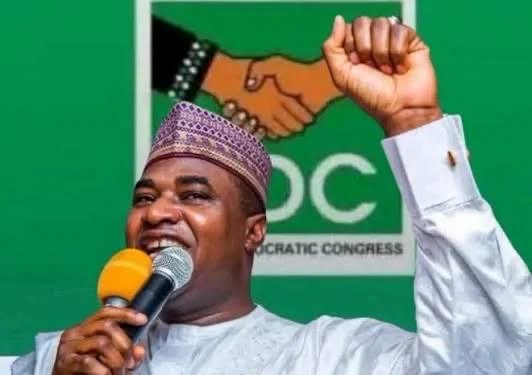
The African Democratic Congress (ADC) governorship candidate in Sokoto State, Manir Muhammad Dan’iya, has challenged Governor Ahmed Aliyu to disclose the total revenue received and expenditure incurred by his administration between May 2023 and September 2026, insisting that the public deserves a transparent account of how government funds have been managed ahead of the 2027 general elections.
Dan’iya made the demand in a statement issued by his media aide, Aminu Abdullahi, on Sunday, October 11, 2026, following the governor’s reported position that the All Progressives Congress (APC) would campaign on its record of performance rather than engage in personal attacks against political opponents.
The former deputy governor of Sokoto State said the proposed political debate should extend beyond announcements of completed projects and development initiatives to include a detailed account of the public resources available to the state government and how those funds have been used.
He called on Aliyu to publish a consolidated financial statement covering revenue from the Federation Account, internally generated revenue and other sources, alongside expenditure records showing how the funds were allocated across different sectors.
The ADC candidate also demanded a breakdown of allocations and spending by the state’s 23 local government areas, arguing that citizens should be able to assess the performance of both state and local governments using verifiable financial records.
According to Dan’iya, public accountability requires government officials to explain not only what they have accomplished but also the financial resources available to them and the measurable benefits delivered to residents.
Dan’iya Demands Comprehensive Revenue and Expenditure Disclosure
Dan’iya’s central demand is that the Sokoto State Government provide a comprehensive account of its financial activities from May 2023 to September 2026.
He wants the government to disclose the amount received through federal allocations, the revenue generated internally and any additional income obtained during the period.
The requested disclosure would also cover statutory deductions, recurrent expenditure, capital spending and the funds allocated to local government councils.
Recurrent expenditure generally covers the regular costs of running government, including salaries, administrative expenses and other operational obligations. Capital expenditure, by contrast, relates to investments in infrastructure and other long-term public assets.
A breakdown of these categories would help residents understand how public funds have been distributed between the day-to-day running of government and projects intended to improve public services.
Dan’iya argued that the publication of aggregate figures alone would not provide sufficient information for citizens to evaluate the administration’s performance.
Instead, he called for financial records that could be examined by journalists, auditors, civil society organisations and other interested members of the public.
The ADC candidate also wants the government to distinguish between projects that have been announced, those under construction and those that have been completed and delivered for public use.
Such distinctions are important because a project announcement or contract award does not necessarily establish that the work has been completed or that residents are already benefiting from it.
A transparent assessment would therefore require information about project costs, implementation stages, completion status and the services or facilities delivered.
Dan’iya’s demand places public finance at the centre of the political debate in Sokoto State as parties begin positioning themselves ahead of the 2027 elections.
However, the figures requested by the ADC candidate were not provided in the statement announcing his demand. His call should therefore be understood as a request for disclosure, rather than proof that any particular amount has been received or improperly spent.
Local Government Finances Also Under Scrutiny
Beyond the state government’s finances, Dan’iya called for a detailed account of resources allocated to Sokoto’s 23 local government areas during the same period.
He wants the records to show monthly Federation Account allocations, internally generated revenue, statutory deductions and expenditure on local services.
The demand broadens the accountability debate beyond the state capital to the institutions responsible for delivering services at the grassroots.
Local governments are important to community-level development because their responsibilities and activities can affect residents’ access to basic services, local infrastructure and other public interventions.
A clear picture of local government finances would allow citizens to compare the resources available to individual councils with their spending priorities and reported achievements.
For example, published records could help residents establish how much money was received by a council over a given period, what proportion was spent on administration and what resources were committed to local development.
Comparisons would need to account for differences in population, local needs, revenue sources and statutory responsibilities. Raw allocation figures alone would not necessarily provide a fair assessment of the performance of different councils.
Dan’iya’s proposal also raises questions about the availability and accessibility of local government financial records.
For the information to be useful, it would need to be presented in a consistent format that enables residents to understand the amounts received, deductions made and expenditure recorded.
Where figures are published, supporting documents and clear explanations would help readers distinguish approved budgets from actual revenue and expenditure.
The ADC candidate’s call is therefore not simply for the publication of financial totals. It is also a demand for records that would allow the public to follow the movement of funds from allocation to expenditure and, where applicable, to the delivery of services.
Political Debate Shifts Towards Governance and Accountability
The controversy emerged against the background of preparations for the 2027 general elections, when political parties are expected to present their records, policies and proposed solutions to voters.
According to the statement issued by Dan’iya’s media aide, the ADC candidate was responding to remarks attributed to Aliyu that the APC would campaign on its performance rather than resort to personal attacks against opponents.
Dan’iya welcomed the principle of an issue-based political contest but argued that government accountability should be part of any assessment of performance.
His position is that a government’s record cannot be evaluated solely through announcements of projects or claims of development. Voters should also have access to information about the public resources available to the administration and the results achieved with those resources.
The argument introduces a practical question into the political debate: what information should citizens have when assessing an incumbent administration?
For the ADC candidate, the answer includes financial disclosures covering revenue, expenditure, project implementation and the distribution of resources to local governments.
Such information could give voters a stronger basis for evaluating competing political claims, provided the records are accurate, sufficiently detailed and open to independent examination.
Nevertheless, the demand remains a position advanced by an opposition candidate. It does not, on its own, establish that the Sokoto State Government has failed to disclose all relevant financial information or that public funds have been mismanaged.
A fair assessment would require examination of the government’s published financial documents, relevant audit reports, budget implementation records and any response the administration provides to the specific questions raised.
The governor’s reported commitment to campaigning on performance also creates an opportunity for the APC to present verifiable evidence of its achievements and explain how those achievements relate to the resources available to the state.
The central issue for voters is whether claims from both the government and opposition can be tested against reliable evidence.
What Sokoto’s Budget and Financial Records Can Reveal
Budget documents provide an important starting point for understanding how a state government intends to use public money.
They set out planned revenue, proposed expenditure and the sectors or projects expected to receive funding during a financial year.
However, an approved budget is not the same as an account of actual spending.
A government may approve a particular amount for a project but spend a different amount during implementation. Revenue may also differ from initial projections because of changes in federal allocations, internally generated income or other financial circumstances.
For that reason, a meaningful assessment of Sokoto State’s finances would require comparisons between approved budgets, actual revenue receipts and expenditure records.
The Sokoto State Government’s official website publishes budget-related information and government announcements, including material concerning its development priorities.
In a report published on March 11, 2026, the state government outlined its priorities under the 2026 budget, while subsequent official communications have described expenditure plans and projects across different sectors.
Such documents can help establish what the administration planned to fund. To assess implementation, however, they must be considered alongside relevant budget-performance reports, audited financial statements and other records showing actual expenditure.
The distinction matters because financial transparency involves more than making announcements about intended spending.
Citizens need to be able to determine whether approved funds were released, whether expenditure was recorded and whether the intended projects or services were delivered.
Where discrepancies arise between planned and actual spending, explanations from the relevant authorities and findings from credible audits can help clarify the reasons.
Dan’iya’s demand for a consolidated financial statement covering May 2023 to September 2026 would require information spanning several financial years.
A useful disclosure would identify the reporting periods, explain the categories of revenue and expenditure, and provide enough detail to prevent figures from different periods or institutions from being confused.
It would also need to distinguish state government finances from the separate financial records of local government councils.
Without that clarity, comparisons could produce misleading conclusions about the amount of money available to the administration or how it was spent.
Why Public Financial Transparency Matters
The debate over Sokoto State’s finances has implications beyond the immediate political contest.
Public revenue is used to finance government operations and development priorities, making information about its management important to residents, businesses, public institutions and development partners.
When financial information is accessible and understandable, citizens can examine government priorities and ask more specific questions about public spending.
They can also compare official claims with budget documents, project records and information about services delivered in their communities.
For journalists, access to reliable financial records can improve reporting by making it possible to verify claims about allocations, contracts and completed projects.
For civil society organisations and researchers, consistent data can support analysis of spending priorities and the relationship between public expenditure and development outcomes.
Transparency can also strengthen public debate by shifting attention away from competing political assertions towards evidence that can be independently examined.
However, disclosure alone does not automatically guarantee effective public spending.
Financial records must be accurate, comprehensive and published in a form that ordinary citizens can understand. Independent auditing, legislative oversight and appropriate action where irregularities are established also remain important parts of public financial accountability.
Similarly, high spending does not necessarily demonstrate good performance if projects are poorly implemented or fail to meet community needs.
An assessment of government performance should therefore consider both financial management and the actual outcomes of public expenditure.
In Sokoto State, this could include examining whether funds allocated to education, healthcare, security, infrastructure and other priorities produced the intended results.
The relevant evidence would depend on the sector, the projects undertaken and the indicators used to measure progress.
Dan’iya’s demand places these questions within the political discussion ahead of 2027, but the answers will depend on the financial documents made available and the findings of any independent assessment.
No Figures Provided to Substantiate the Demand
Although Dan’iya called for a comprehensive account of the money received and spent by the state government, his statement did not provide a complete revenue-and-expenditure breakdown for the period under review.
The request therefore does not establish the total amount received by the state between May 2023 and September 2026.
Nor does it demonstrate that any particular sum was diverted, misappropriated or spent unlawfully.
Those conclusions would require documentary evidence and, where allegations of wrongdoing arise, appropriate investigation and due process.
The demand should instead be viewed as a call for disclosure that can be assessed against official financial records.
The distinction is important in political reporting because a request for accountability is not itself evidence of financial misconduct.
Likewise, government claims about completed projects or development achievements should be examined against available records rather than accepted or rejected solely on the basis of party affiliation.
A transparent process would give the government an opportunity to explain its revenue and spending while allowing citizens to scrutinise the evidence.
It would also give opposition parties and other stakeholders a more reliable basis for evaluating the administration’s performance.
What Happens Next?
The next significant development will be whether the Sokoto State Government responds directly to Dan’iya’s request and provides the detailed financial information he has demanded.
A response could clarify the administration’s position on the requested reporting period, the availability of consolidated financial statements and the records covering the state’s 23 local government areas.
The relevant documents would then need to be examined to determine what they show about revenue receipts, expenditure, deductions, project implementation and service delivery.
Any assessment should distinguish between budgeted amounts and actual spending, as well as between state-level finances and local government accounts.
The ADC candidate is also expected to continue presenting his party’s position as the 2027 election approaches, although further campaign commitments should be treated as confirmed only when announced.
No specific deadline for publishing the requested consolidated statement was established in the statement reviewed, and no direct response from Governor Aliyu to this particular demand was available in the reports used for this article.
For voters, the central question remains whether the competing claims of the government and opposition can be supported by evidence.
The outcome of the debate will depend not simply on political statements but on the availability of credible financial records and the willingness of relevant institutions to explain how public resources have been managed.
As the 2027 elections approach, a detailed examination of Sokoto State’s revenue and expenditure could help residents make more informed judgments about the performance of the state government and its local councils.
Weng Global – stories beyond borders
Sources
- Managarciya — report published October 11, 2026, on Dan’iya’s demand for revenue and expenditure disclosure.
- Sokoto State Government official website — published budget information and government financial and development announcements.