Opposition Parties Boycott Bauchi LG Poll, Cite Unfair Electoral Process
Reported by Weng Patrick Atokor | Journalist at Weng Global
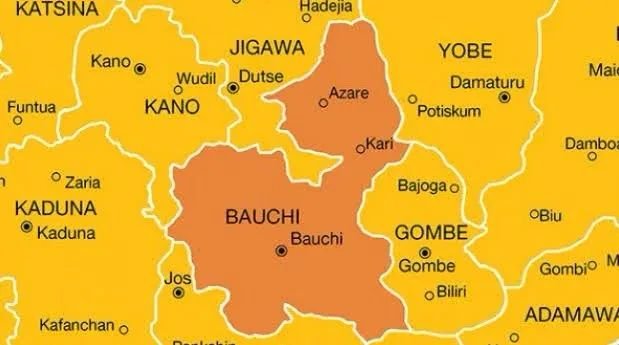
A coalition of opposition political parties in Bauchi State has announced a boycott of the state’s local government elections, accusing the Bauchi State Independent Electoral Commission (BASIEC) of creating an electoral environment that does not provide a level playing field for all participating parties.
The opposition coalition announced the decision less than 24 hours before the local government elections scheduled for Monday, August 17, 2026. The parties described the election process as unfair and alleged that the guidelines and administrative arrangements adopted by BASIEC had placed opposition parties at a disadvantage.
The coalition comprises the African Democratic Congress (ADC), African Action Congress (AAC), Social Democratic Party (SDP), Peoples Redemption Party (PRP) and New Nigeria Peoples Party (NNPP). The parties announced their joint position at a press briefing held at the Nigeria Union of Journalists Secretariat in Bauchi on Sunday.
According to reports, Dr Ladan Salihu, the national spokesperson of the ADC, spoke on behalf of the coalition and said the opposition parties had agreed to stay away from the election because of concerns surrounding the legal framework, nomination charges, electoral timetable and other requirements imposed by the electoral commission.
Opposition challenges legal framework
One of the central complaints raised by the coalition concerns the legal basis for the election.
The opposition parties alleged that BASIEC was conducting the 2026 local government election under guidelines based on the 2008 Bauchi State Electoral Law. They argued that the framework was inconsistent with the 2026 Electoral Act, which they said should provide the broader legal basis for electoral administration.
The coalition consequently questioned the legality and credibility of the electoral process, describing the framework as weak and potentially vulnerable to legal challenges.
The dispute highlights a wider issue that has continued to generate debate around elections in Nigeria: the need for state-level electoral commissions to operate within clearly defined legal and constitutional boundaries while ensuring that political parties have confidence in the process.
BASIEC had earlier announced the August 17 election date and issued a statutory 60-day notice to political parties, stakeholders and members of the public. The commission said the notice was issued in accordance with the Bauchi State Electoral Law governing local government elections.
Parties protest nomination and administrative fees
The coalition also criticised what it described as excessive nomination and administrative fees imposed on candidates seeking to participate in the elections.
The opposition parties argued that the duplication of charges placed an unnecessary financial burden on political parties and candidates, particularly opposition groups that may not have the financial resources available to the ruling political structure.
They noted that nomination-related payments were only one part of the expenses required to contest an election.
According to the coalition, parties and candidates also had to spend money on campaigns, transportation, accommodation, publicity, security, polling agents and other logistical arrangements.
The opposition therefore argued that the financial requirements could discourage meaningful participation and weaken competition.
The controversy over election-related charges is significant because local government elections are expected to provide citizens with the opportunity to choose leaders closest to their communities. If political parties believe that the cost of participation is prohibitively high, the range of choices available to voters could become narrower.
Opposition rejects compressed timetable
Another major concern raised by the coalition was the electoral timetable.
The parties described the timetable issued by BASIEC as too compressed, arguing that insufficient time was provided for political parties to conduct internal processes, screen candidates, address disputes and prepare adequately for the election.
Reports indicate that the coalition questioned the short periods allocated for party primaries, nomination form collection and the submission of completed forms.
The parties also complained about the limited opportunities available for screening, appeals, correction of errors, substitution of candidates and resolution of internal party disputes.
According to the opposition, the compressed timetable made it difficult for political parties to organise effectively and could undermine confidence in the process.
Campaign period also questioned
The coalition further complained about the limited period available for campaigns.
For opposition parties, campaigning is particularly important because it allows candidates to introduce themselves to voters, explain their programmes and build political structures across wards and local government areas.
The parties argued that the timetable did not provide adequate opportunity for candidates to reach voters and mobilise support.
They also questioned the decision to require electoral forms to be processed exclusively at BASIEC headquarters in Bauchi rather than allowing greater decentralisation through zonal or local government offices.
The coalition said such arrangements created additional logistical challenges for candidates and parties operating across the state.
What the boycott could mean
The boycott could have significant political implications for Bauchi State.
Local government elections are important because councils are directly connected to grassroots governance, including local infrastructure, markets, sanitation, community development and other services that affect residents.
When major opposition parties withdraw from an election, the political competition can be substantially reduced.
The decision could therefore raise questions about voter participation, the legitimacy of the eventual results and the level of competition in different local government areas.
However, the boycott itself does not automatically determine the outcome of the election. The election authorities remain responsible for conducting the poll according to the applicable laws and announcing results in accordance with the established procedures.
The development also puts additional pressure on BASIEC to demonstrate that the process is transparent, inclusive and credible.
BASIEC’s position
BASIEC had previously stated that it was committed to conducting free, fair, credible and transparent local government elections in Bauchi State.
When the commission issued its 60-day notice, it urged political parties intending to participate to complete their internal processes and comply with its guidelines and relevant provisions of the state electoral law.
The commission’s earlier position contrasts sharply with the opposition’s current allegations.
While the opposition parties have presented their boycott as a protest against what they consider an uneven electoral process, the commission’s stated position has been that it is acting within the legal framework governing local government elections in the state.
A test for grassroots democracy
The dispute comes at a sensitive time for electoral governance in Nigeria, where the credibility of local government elections remains an important issue.
Unlike federal and state elections conducted by the Independent National Electoral Commission, local government elections are administered by state independent electoral commissions. This has frequently generated debates over their autonomy, neutrality and ability to conduct competitive elections.
For Bauchi, the immediate challenge is to ensure that disagreements between political parties and the electoral commission do not permanently undermine public confidence in grassroots democracy.
The opposition parties have called attention to what they consider serious problems with the election process. BASIEC, on the other hand, has a responsibility to explain its procedures and demonstrate that all eligible political parties and candidates were given equal opportunities to participate.
Ultimately, the credibility of the Bauchi local government elections will depend not only on the conduct of voting but also on whether citizens, political parties and other stakeholders believe that the process was transparent and impartial.
As the August 17 poll proceeds, attention will therefore remain focused on voter turnout, the participation of candidates, the conduct of electoral officials and the eventual results across the state’s local government areas.
The opposition boycott has already transformed the election from an ordinary local government contest into a wider debate about electoral fairness, legal compliance and the future of grassroots democracy in Bauchi State.
Sources
- Punch Nigeria — Opposition parties boycott Bauchi LG poll
- The Guardian Nigeria — Opposition parties boycott Bauchi LG poll hours to election
- Leadership Nigeria — Five opposition parties boycott Bauchi LG poll
- Independent Nigeria — Bauchi LG polls: Five opposition parties announce boycott
- Bauchi State Government — State electoral commission information
Meta Description:
Five opposition parties in Bauchi State have boycotted the 2026 local government elections, citing an unfair electoral framework, high fees and a compressed timetable.
Tags:
Bauchi LG Election, Bauchi Politics, BASIEC, Nigeria Elections, Opposition Parties, ADC, AAC, SDP, PRP, NNPP, Local Government Elections, Electoral Reform, Nigerian Politics, Grassroots Democracy, Bauchi State,Weng Global,