Reported by Simon Daniel Yusuph l Journalist at Weng Global
Nigeria’s water crisis is threatening economic growth by exposing agriculture, manufacturing, energy production and investment to unreliable water supplies, according to organisers of an international exhibition showcasing the country’s water-related challenges in Copenhagen, Denmark.
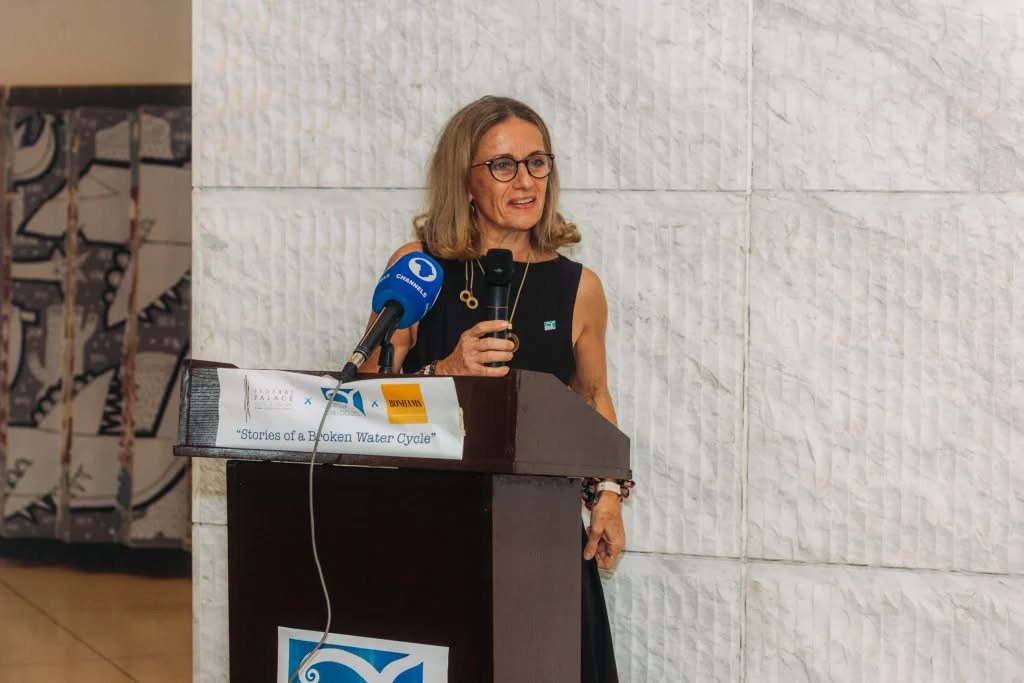
The exhibition, titled Stories of a Broken Water Cycle, opened at UN City in Copenhagen on October 8 and will run until October 22, 2026. Organised by Lokoja Dialogues and hosted by the United Nations Population Fund (UNFPA) Nordic Representation Office in collaboration with Shoreline and Nigerian and international partners, the programme seeks to connect water insecurity with its effects on communities, livelihoods and economic development.
The initiative combines an exhibition with public engagement activities, 90-minute discussions and study visits. It highlights the difficulties faced by communities dealing with changing environmental conditions, unreliable water access and the effects of unpredictable rainfall.
Organisers argue that Nigeria’s challenge is not simply a lack of freshwater resources but also unequal access, inadequate management, financing constraints and weaknesses in the systems needed to deliver water where it is required.
The exhibition comes as water security increasingly features in discussions about climate resilience, agricultural productivity, industrial development and sustainable investment.
Water Insecurity Threatens Agriculture and Industrial Production
Water is essential to Nigeria’s agricultural and industrial activities, making unreliable supply an economic concern as well as a public health and environmental issue.
Farmers depend on predictable access to water for crop production, livestock management and other agricultural activities. Where rainfall becomes unreliable or water sources decline, agricultural output can become more difficult to maintain.
These disruptions can affect household incomes, food availability and the supply of raw materials to food-processing companies.
Communities around the Nguru wetlands in northeastern Nigeria, for example, have reported declining water availability and disruptions to fishing and farming, according to information presented by the exhibition organisers.
Such pressures illustrate how changes in water systems can affect several economic activities simultaneously. Reduced water availability can undermine farming, while damage to wetlands can disrupt fishing, local trade and livelihoods that depend on healthy ecosystems.
Manufacturing also depends on reliable water supplies for processing, cleaning, cooling and other industrial operations. Industries that cannot obtain sufficient water may face higher operating costs, production interruptions or additional expenditure on water storage and treatment.
Energy production, mining and emerging sectors such as data centres also require dependable water systems, although their needs vary by technology and location.
For investors, these conditions can influence decisions about where to establish businesses, expand production or finance infrastructure.
The exhibition therefore presents water security as a factor in economic competitiveness, rather than an issue confined to household consumption.
Nigeria’s Water Paradox
Nigeria has substantial freshwater resources, yet access to safe and reliable water remains uneven across communities.
Polly Alakija, trustee and chief executive of Lokoja Dialogues, highlighted this contradiction at a gathering in Lagos in August, describing Nigeria as a country with significant water resources but severe water stress.
The distinction between water availability and water security is important.
A country may possess rivers, wetlands, reservoirs and groundwater resources without ensuring that households, farms and businesses can access sufficient clean water when and where they need it.
Water must be collected, stored, treated and distributed through systems capable of serving growing populations. Infrastructure gaps, inadequate maintenance, environmental degradation and financing constraints can weaken those systems.
The exhibition organisers also point to the effects of upstream environmental changes, including deforestation and damming, on communities and ecosystems downstream.
Changes in one part of a river basin can affect water availability elsewhere, with consequences for agriculture, energy production, cities and natural habitats.
Addressing water insecurity therefore requires more than identifying water sources. It also requires effective management, infrastructure investment, environmental protection and coordination among the institutions and communities that depend on shared resources.
Climate Change Adds Pressure to Communities
Climate variability is another major concern highlighted by the exhibition.
Farmers facing unpredictable rainfall can struggle to plan planting seasons, maintain crop yields and manage production costs. Communities that rely on wetlands and other natural water systems may also experience disruptions when water availability changes.
The exhibition includes stories of people adapting to changing landscapes and the difficulties associated with collecting water for household use.
One of its focal points comes from Damaturu in Yobe State, where 600 children were asked to draw their environment thousands of years ago compared with how they understand it today.
The exercise uses children’s drawings to explore perceptions of environmental change and the future of the communities in which they live.
Organisers said one child’s response was “Game over”, a remark that illustrates the anxiety surrounding environmental degradation and the prospects facing younger generations.
Although such personal accounts do not replace scientific measurements, they provide a way to communicate how environmental changes are understood by people experiencing them.
For communities dependent on farming, fishing and other natural-resource-based livelihoods, climate resilience is closely linked to the ability to manage water resources effectively.
Water infrastructure, reliable information and measures to protect ecosystems can help communities prepare for changing conditions. However, the effectiveness of these interventions depends on local needs, funding and long-term implementation.
Women Bear a Disproportionate Burden
The programme also examines the relationship between water access, gender equality and economic opportunity.
In communities where reliable household water supplies are unavailable, women and girls often carry a disproportionate responsibility for collecting water and managing domestic needs.
The time required to obtain water can limit opportunities for education, paid employment, business activities and rest.
Unreliable supplies can also complicate household sanitation and hygiene, increasing the burden on families already facing economic difficulties.
These effects demonstrate why water infrastructure should be assessed not only by the volume of water delivered but also by how access affects people’s daily lives.
Improving water availability closer to homes can reduce the time spent collecting it and help households allocate more time to education, work and other activities.
However, lasting improvements require systems that remain functional after construction. Maintenance, affordable services, responsible management and adequate financing are essential to ensuring that new infrastructure delivers sustained benefits.
The exhibition’s focus on women’s experiences places these everyday consequences alongside broader discussions about investment, climate adaptation and economic development.
Exhibition to Explore Financing and Infrastructure Solutions
The Copenhagen programme is expected to examine how governments, development finance institutions, philanthropic organisations and private investors can support more resilient water systems.
According to the organisers, its 12 themes include water stress and security, infrastructure financing, women’s participation in water governance, sustainable cities, artificial intelligence and water security, and water diplomacy.
The discussions are intended to examine the institutional and financial arrangements needed to improve water management and expand access.
Public investment remains important for infrastructure that serves communities but may not generate sufficient commercial returns to attract private capital on its own.
Private investment can contribute financing, technical expertise and operational capacity, but projects must also address affordability, accountability and the needs of low-income communities.
Development finance and philanthropic support can help bridge some funding gaps, depending on the design of individual projects.
The challenge is to ensure that financing arrangements deliver reliable services while protecting people who cannot afford high water charges.
The programme also aims to encourage exchanges between Nigeria and Denmark, which face different water-related pressures.
Nigeria’s challenge includes unequal access to reliable water, while Denmark faces pressures associated with changing rainfall and groundwater conditions.
The organisers say the comparison offers opportunities for learning about water governance, infrastructure and resilience across different national settings.
The exhibition is scheduled to continue until October 22, with registration required for participation in the programme.
Nigeria’s Water Challenge Requires Long-Term Investment
Nigeria’s water-security challenges have implications beyond individual communities because water connects agriculture, manufacturing, public health, energy and urban development.
The Federal Government has previously acknowledged the importance of addressing water-related pressures.
In August 2024, the Ministry of Water Resources and Sanitation called for international cooperation and private-sector support to help Nigeria tackle its water challenges.
At the International Water Association’s World Water Congress and Exhibition in Toronto, Canada, the then Minister of Water Resources and Sanitation, Joseph Terlumun Utsev, identified population growth, urbanisation and climate change as pressures on the country’s water resources.
The ministry also linked water challenges to food security, public health, economic stability and environmental sustainability.
Nigeria has policy frameworks intended to improve water management and access, including the National Water Resources Master Plan, the National WASH Policy and the Partnership for Expanded Water Supply, Sanitation and Hygiene programme.
However, the existence of policies does not by itself guarantee improved services. Progress depends on implementation, funding, institutional coordination and the maintenance of water infrastructure.
The current exhibition adds an international platform to the discussion by bringing community experiences into conversations about economic development and investment.
Its central argument is that water insecurity should be treated as a development risk requiring coordinated responses, rather than as an isolated environmental problem.
What Happens Next?
The Stories of a Broken Water Cycle exhibition and its associated discussions will continue in Copenhagen until October 22, 2026.
The programme is expected to bring together stakeholders to examine water governance, financing, infrastructure and the relationship between water security and sustainable development.
The organisers have not, in the material reviewed for this report, announced specific Nigerian infrastructure projects or funding commitments resulting from the exhibition. Any practical outcomes will depend on subsequent decisions by governments, investors, development partners and other participating institutions.
For Nigeria, the broader challenge remains translating policy commitments and public awareness into dependable water services for households, farmers and businesses.
That requires investment in water supply and treatment, better maintenance of existing infrastructure, protection of water sources and effective planning for changing climate conditions.
The exhibition’s message is that Nigeria’s economic prospects are closely connected to how effectively the country manages its water resources. Reliable access can support agricultural production, industrial activity and healthier communities, while persistent gaps can impose costs on households and businesses.
Whether the international discussions lead to measurable improvements will depend on the actions taken after the exhibition ends.
Weng Global – stories beyond borders
Sources
- BusinessDay: Reporting on the Lokoja Dialogues exhibition in Copenhagen, its themes and the economic implications of Nigeria’s water challenges.
- THISDAY: Reporting on the exhibition programme, participating organisations and the experiences of communities affected by water insecurity.
- Federal Ministry of Information and National Orientation: Official report on the Federal Government’s position regarding water-related challenges and sustainable growth, published August 13, 2024.