Reported by Simon Daniel Yusuph l Journalist at Weng Global
The House of Representatives has passed for second reading a bill seeking to amend the National Social Investment Programme Agency (NSIPA) Establishment Act, 2023, in a move aimed at improving the coordination, monitoring and delivery of social intervention programmes across Nigeria.
The proposed legislation, sponsored by Deputy Speaker of the House, Benjamin Okezie Kalu, is designed to strengthen the institutional framework responsible for managing government assistance to vulnerable households, unemployed young people, children and other citizens requiring social support.
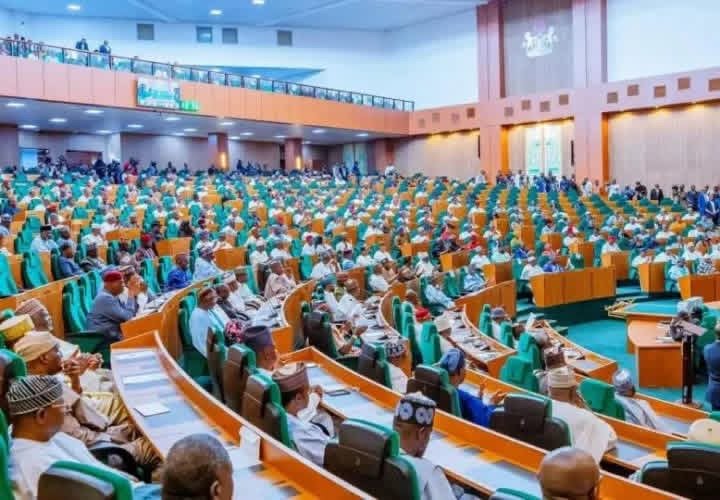
The bill was considered during plenary on Tuesday, November 24, 2026, after Kalu presented its general principles to lawmakers. It received the support of members through a voice vote.
The proposed amendment contains 15 clauses and seeks to address administrative fragmentation, weak coordination, unreliable beneficiary data and unclear responsibilities within Nigeria’s social protection system.
Among its major proposals are the establishment of a National Social Safety-Net Coordinating Office as a central coordination and data-management institution, the strengthening of the National Social Register, the creation of state offices and clearer responsibilities for executive directors overseeing individual programmes.
The development comes amid continuing efforts to improve the effectiveness of government social investment initiatives and ensure that assistance reaches the people for whom it is intended.
Benjamin Kalu Explains Purpose of the Bill
Leading the debate on the bill, Kalu argued that the success of social investment programmes should not be determined only by the amount of money allocated to them or the number of initiatives established.
Rather, he said their effectiveness should be measured by whether vulnerable Nigerians actually experience improvements in their living conditions.
The Deputy Speaker identified administrative fragmentation, unreliable data and unclear institutional responsibilities as challenges that can prevent government interventions from reaching intended beneficiaries.
He explained that the proposed amendments were intended to create a more integrated system through which social protection programmes could be coordinated, implemented and monitored.
Kalu also emphasised the importance of protecting beneficiary information and strengthening the National Social Register to improve the identification of eligible households.
The bill was co-sponsored by Bamidele Salam and five other lawmakers.
Key Proposals in the 15-Clause Bill
One of the major components of the proposed legislation is the National Social Safety-Net Coordinating Office.
The office is expected to serve as the central coordinating and data-management institution for national social safety-net interventions.
Under the proposal, it would be responsible for maintaining, updating and verifying the National Social Register, which is an important tool for identifying poor and vulnerable households that may qualify for government assistance.
A reliable register is essential to ensuring that social intervention programmes are directed towards eligible beneficiaries rather than being distributed through fragmented or inconsistent records.
The proposed amendments also seek to strengthen the Grant for Vulnerable Groups Programme and improve the institutional arrangements for coordinating social protection interventions.
Another provision concerns the establishment of state offices to bring programme implementation closer to communities and beneficiaries.
The bill also proposes executive directors with clearly defined responsibilities for individual programmes. The arrangement is intended to establish clearer lines of authority and accountability within the agency.
If approved through the remaining legislative stages and assented to by the President, these provisions could change how the agency coordinates its activities across federal and state institutions.
Strengthening the National Social Register
The National Social Register is central to the proposed reforms because it provides information used to identify households considered poor or vulnerable.
Government social assistance programmes depend on accurate beneficiary information to determine who qualifies for particular interventions.
Where records are outdated, incomplete or poorly coordinated, eligible households may be excluded while assistance could be directed to people who do not meet the required criteria.
The proposed bill seeks to strengthen the management of the register by assigning clearer responsibility for its maintenance, updating and verification.
This could improve the consistency of beneficiary information across different social protection programmes.
However, the effectiveness of the register will depend on the quality of data collection, regular verification, transparency and the availability of accessible procedures for citizens who believe they have been wrongly excluded.
Data protection will also remain important because the register contains personal information about households and individuals seeking government assistance.
The proposed coordinating office is therefore expected to play an important role in improving the administration of social safety-net information.
State Offices to Bring Programmes Closer to Beneficiaries
The proposed establishment of state offices is another significant feature of the legislation.
Nigeria’s social intervention programmes operate across different states and communities, where economic conditions, poverty levels and the needs of vulnerable households may vary.
A stronger state-level structure could help improve communication between the federal agency, state governments and communities.
It could also support better monitoring of programme delivery and make it easier to identify problems affecting beneficiaries.
For instance, households in remote communities may face difficulties accessing information about available assistance or resolving complaints concerning their eligibility and payments.
A more decentralised administrative arrangement could help address some of these challenges, although its success would depend on adequate staffing, funding, operational guidelines and effective supervision.
The proposal does not, by itself, guarantee improved delivery. The practical outcome will depend on how the offices are established and how responsibilities are shared between federal and state institutions.
Executive Directors and Clearer Accountability
The bill also proposes executive directors with defined responsibilities for individual programmes.
The arrangement is intended to reduce administrative overlap and make it easier to determine which officials are responsible for specific aspects of programme implementation.
Clear responsibilities can strengthen monitoring because programme performance can be assessed against identifiable administrative duties.
It may also improve the handling of complaints, financial oversight and reporting on the progress of government interventions.
For social investment programmes involving public funds, accountability is particularly important.
Citizens need confidence that resources allocated for poverty reduction, youth empowerment and household assistance are properly managed and reach the intended beneficiaries.
The proposed structure seeks to strengthen that institutional responsibility.
Understanding Nigeria’s Social Investment Programme Agency
The National Social Investment Programme Agency was established to provide an institutional framework for managing and coordinating federal social intervention programmes.
Its legal foundation is the National Social Investment Programme Agency (Establishment) Act, 2023, which was signed into law by former President Muhammadu Buhari on May 22, 2023.
The agency oversees major interventions designed to address poverty, unemployment, household vulnerability and other socioeconomic challenges.
Its programme areas include the N-Power youth empowerment initiative, the Government Enterprise and Empowerment Programme, the National Home-Grown School Feeding Programme, cash transfer interventions and support for vulnerable groups.
These initiatives target different categories of Nigerians.
N-Power focuses on youth employment, skills development and opportunities for economic participation.
The Government Enterprise and Empowerment Programme provides support to eligible small businesses and individuals through intervention schemes.
The Home-Grown School Feeding Programme seeks to improve nutrition among pupils in public primary schools while supporting local food production and supply chains.
Cash transfer interventions are designed to provide financial assistance to eligible poor and vulnerable households.
The proposed amendment seeks to strengthen the institutional arrangements through which such interventions are coordinated and monitored.
Who Could Benefit From the Proposed Reforms?
The proposed changes could affect several groups of Nigerians who depend on social protection interventions.
Children from vulnerable households may benefit from better coordination of programmes supporting school attendance, nutrition and access to basic services.
Unemployed young people could benefit from more clearly administered employment and skills-development initiatives.
Low-income households requiring temporary financial assistance may also benefit if improved beneficiary records and coordination reduce delays, duplication and exclusion.
Other vulnerable citizens, including people whose economic circumstances make them dependent on government support, are also among the intended beneficiaries of social investment programmes.
However, the passage of the bill for second reading does not mean that new benefits have already been approved or that existing beneficiaries will automatically receive additional assistance.
The proposed changes must first pass through further legislative consideration before they can become law.
Why the Proposed Amendment Matters
Nigeria continues to face significant economic and social challenges, including poverty, unemployment and pressure on household incomes.
Social investment programmes are among the government’s tools for providing targeted assistance to citizens facing economic difficulties.
Their effectiveness, however, depends not only on funding but also on accurate beneficiary identification, transparent administration and the ability of institutions to monitor results.
Poor coordination can lead to duplicated records, delays, weak oversight and the exclusion of people who genuinely qualify for assistance.
The proposed amendment addresses these institutional concerns by seeking to establish clearer responsibilities and improve coordination between different levels of government.
If effectively implemented, the changes could strengthen the administration of social protection programmes and improve the ability of government institutions to identify and support eligible citizens.
Nevertheless, legislation alone cannot guarantee successful outcomes. Adequate funding, reliable data, transparent payment systems, independent monitoring and effective complaint mechanisms will remain necessary.
The ultimate test will be whether the reforms translate into measurable improvements in the lives of the people the programmes are designed to support.
Bill Still Has Legislative Stages to Complete
Although the House of Representatives has passed the proposal for second reading, it has not yet become law.
A bill that passes second reading generally proceeds to further legislative consideration, including committee scrutiny, where lawmakers examine its provisions and may recommend amendments.
It must subsequently complete the remaining stages in the House. Depending on the legislative process and the final version, approval by the Senate and presidential assent will also be required before it becomes law.
The second-reading approval therefore represents progress in the legislative process, not the final adoption of the proposed reforms.
Further details about the bill’s committee consideration and subsequent legislative timetable will be important in determining when the proposed changes could take effect.
For now, the legislation signals an effort by lawmakers to strengthen the institutional framework for delivering social investment programmes in Nigeria.
Weng Global – stories beyond borders
Sources
- Tribune Online – Report on the House of Representatives’ second-reading approval of the amendment bill, November 24, 2026.
- Vanguard – Reporting on the proposed reforms to the National Social Investment Programme Agency.
- Policy and Legal Advocacy Centre (PLAC) – Weekly Legislative Digest, November 17–19, 2026.
- National Social Investment Programme Agency – Official information on the agency’s mandate and programmes.
- Federal Ministry of Information and National Orientation – Announcement on the signing of the NSIPA Establishment Act in May 2023.