Reported by Simon Daniel Yusuph l Journalist at Weng Global
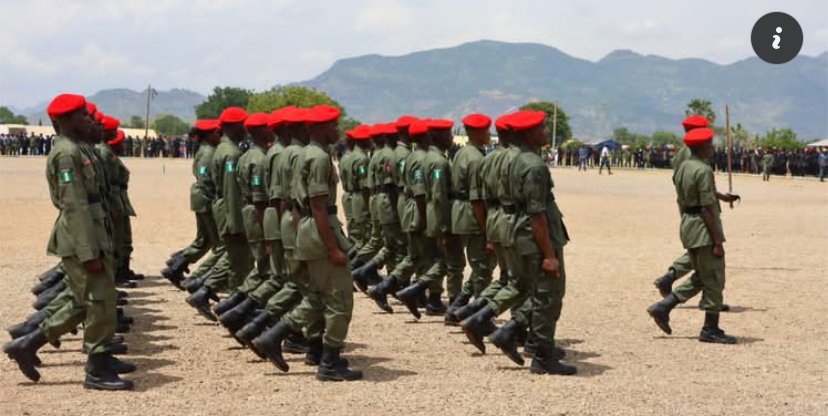
Nigeria’s Forest Guards initiative is entering a more operational phase as federal and state authorities expand recruitment and training aimed at securing forests and other remote areas that have been used by criminal groups as hideouts and operating bases.
The programme is designed to complement conventional security agencies by placing trained personnel in forested and difficult-to-access areas, improving surveillance, gathering intelligence and supporting efforts to protect communities.
The initiative has expanded across several states since President Bola Ahmed Tinubu approved the establishment of a national forest guard system in 2025. Recent government and security-agency statements indicate that the programme is intended to become part of Nigeria’s broader response to kidnapping, banditry, terrorism and other criminal activity.
But as the programme grows, questions about training, equipment, command structures, accountability and coordination with existing security agencies will become increasingly important.
From Forest Protection to National Security
Forest guards have traditionally been associated with the protection of forests, wildlife and natural resources. Nigeria’s emerging programme gives the role a much broader security dimension.
In August 2025, National Security Adviser Nuhu Ribadu said the Federal Government had begun establishing a forest guards programme as part of efforts to strengthen national security. Under the plan reported at the time, states were expected to recruit between 2,000 and 5,000 guards depending on their capacity.
The programme has since moved from planning towards recruitment and training in different parts of the country.
The Office of the National Security Adviser has taken a coordinating role, with security agencies and state governments involved in implementation. The Federal Government has described the initiative as a way of reducing the vulnerability of forests and other ungoverned spaces exploited by criminal groups.
Training Has Expanded Across States
The scale of the programme has increased during 2026.
The News Agency of Nigeria reported in July that more than 9,000 personnel had been trained under the Presidential Forest Guards Initiative across 10 states. The programme involves the Office of the National Security Adviser, the Department of State Services, the National Intelligence Agency, Defence Headquarters, the Nigeria Police Force and the National Park Service.
The Federal Ministry of Environment separately said in August that approximately 137,000 Forest Guards were expected to be trained nationwide, with training already conducted in 11 states at that point.
The figures reported by different government-linked sources have varied according to the stage and scope of implementation. The distinction is important because personnel trained in individual states should not automatically be interpreted as the final size of the national force.
In Edo State, for example, the Federal Information Centre reported in July that 500 forest guards were undergoing training, while Kaduna began a six-week training programme for 1,000 recruits in June.
Kogi State also commissioned 530 pioneer Forest Guards in August as part of its security strategy.
Oyo and Katsina Show the Security Focus
The security role of the initiative became particularly visible in Oyo State following the abduction of pupils and teachers from schools in Oriire Local Government Area in May 2026.
President Tinubu subsequently approved the recruitment of 1,000 forest guards for Oyo State in collaboration with the state government. The Federal Government also announced the deployment of a specialised rescue team following the incident.
The Presidential statement said the forest guards were among immediate measures intended to strengthen security in the affected area.
Katsina State later announced approval for the recruitment of another 1,000 forest guards. Governor Dikko Radda said the personnel would work alongside conventional security agencies and community watch groups.
These developments show that the initiative is being deployed in response to specific security concerns rather than solely as a conventional forestry programme.
What Forest Guards Are Expected to Do
The Federal Government’s broader initiative envisages Forest Guards operating in areas where conventional security forces may face difficulties maintaining a continuous presence.
Their responsibilities can include forest surveillance, early-warning activities, intelligence gathering, patrols and cooperation with established security agencies.
The wider security objective is to make forests less accessible as safe operating spaces for criminal organisations.
The initiative also has a conservation dimension. The Federal Ministry of Environment has linked the programme to protecting Nigeria’s forests, national parks and natural heritage, while recognising the growing overlap between environmental protection and security.
This dual role means the guards will operate in an environment requiring both security awareness and knowledge of forest and conservation issues.
Equipment and Communication Will Be Critical
The effectiveness of the Forest Guards will depend on more than the number of personnel trained.
Personnel operating in large forests and remote communities require reliable communication systems, transportation, protective equipment, medical support and effective intelligence channels.
Technology can also improve the ability to monitor large areas. The Federal Government has announced plans for surveillance cameras in national parks and a central command system to facilitate real-time monitoring of protected areas.
Such systems could complement physical patrols, particularly where forests cover large distances that cannot be continuously monitored by personnel on foot.
However, technology will only be useful if there is sufficient maintenance, reliable communications infrastructure, trained operators and a command structure capable of responding to information generated by surveillance systems.
Clear Command Structure Is Essential
Another major issue is how Forest Guards will relate to the military, police, DSS, National Park Service and existing state security structures.
The Federal Government has repeatedly described the guards as personnel who will work alongside conventional security agencies rather than replace them.
That distinction matters.
A security environment involving several agencies requires clearly defined responsibilities. Without effective coordination, overlapping mandates can create confusion over who controls an operation, who responds to intelligence and who is accountable when an operation fails.
The Office of the National Security Adviser has been given a strategic role in coordinating the national programme, while state governments remain important partners in recruitment and implementation.
A clearly documented chain of command and operational rules will therefore be important as the programme expands.
Local Knowledge Can Improve Intelligence
Forest Guards recruited from communities around forested areas could provide an important local intelligence capability.
Knowledge of local terrain, languages, communities, roads, waterways and settlement patterns can help personnel understand areas that outsiders may find difficult to navigate.
That local connection, however, also creates a need for strong recruitment standards and accountability mechanisms.
Security personnel operating close to their communities must be properly trained to handle sensitive information and must be subject to professional rules that reduce the risk of collusion, intimidation or abuse.
The objective should be to combine local knowledge with formal security training and institutional oversight.
The Programme Must Protect Civilians
The success of the Forest Guards should ultimately be measured by their contribution to public safety.
That includes protecting rural communities, schools, farms, roads and other vulnerable locations while respecting the rights of residents.
Security operations in forests can involve difficult decisions, particularly where criminal groups and civilian communities occupy or move through the same areas.
Clear rules of engagement, proper identification of personnel and mechanisms for investigating complaints will therefore be important.
The programme’s legitimacy will depend not only on its ability to confront criminal groups but also on the confidence of the communities it is designed to protect.
The Bigger Economic Question
Forest insecurity has consequences beyond immediate public safety.
When farmers cannot safely reach their farms, agricultural production can suffer. When rural roads and communities become vulnerable to kidnapping, movement and commerce can be disrupted.
The Federal Government has linked the forest security programme to efforts to reclaim areas that criminal groups have exploited.
If successful, improved security could support farming, rural trade and investment in areas previously affected by insecurity. However, those outcomes cannot be assumed simply because personnel have been recruited.
They will depend on sustained deployment, intelligence-led operations, effective policing and broader measures addressing the conditions that allow criminal networks to operate.
What Happens Next
The next stage of the Forest Guards initiative will involve continued training, deployment and integration with existing security structures.
Government statements indicate that the programme is intended to operate nationwide, while individual states continue to recruit and train personnel according to local security needs.
The Federal Government will also need to maintain funding for equipment, communications, transportation, welfare and training.
The most significant test will therefore come after graduation ceremonies and recruitment announcements.
The real measure will be whether trained personnel can maintain a sustained presence in vulnerable forest areas, generate useful intelligence, support conventional security agencies and improve the safety of communities without creating new accountability problems.
Nigeria’s Forest Guards programme has grown from a policy proposal into an expanding national security initiative. Its long-term significance will depend on how effectively the government converts recruitment and training into professional, accountable and coordinated security operations.
Weng Global – stories beyond borders
Sources
- Office of the National Security Adviser (ONSA) — information on the Presidential Forest Guards Initiative and its coordination with security agencies.
- Federal Ministry of Information and National Orientation — official reports on Forest Guards recruitment and training in Oyo, Kaduna and Edo.
- Federal Ministry of Environment — information on the nationwide Forest Guards programme and forest and national park security.
- State House, Abuja — official statement on the approval of 1,000 Forest Guards for Oyo State.
- Katsina State Government — announcement on the recruitment of 1,000 Forest Guards for Katsina State.
- News Agency of Nigeria (NAN) — reporting on the expansion and training of Forest Guards.
- Vanguard — editorial commentary on priorities for the Forest Guards programme.