Reported by Simon Daniel Yusuph l Journalist at Weng Global
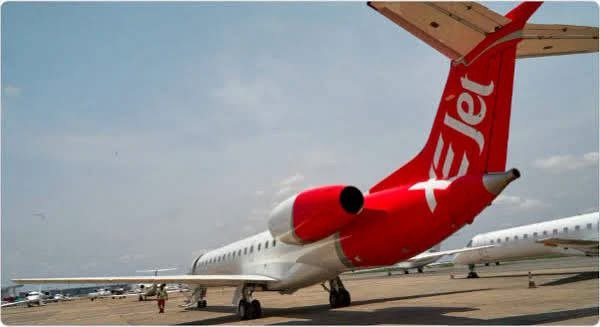
Ground handling services for Nigerian airline XEJet were suspended on Monday after the Aviation Ground Handlers Association of Nigeria (AGHAN) directed its members to withdraw services from the carrier over an outstanding debt it estimates at about N300 million.
The action, announced on September 28, 2026, has created operational difficulties for XEJet, particularly in areas involving passenger baggage and aircraft ramp support. Reports indicate that the airline had to make alternative arrangements for some passengers’ check-in luggage following the withdrawal.
AGHAN Cites Unpaid Ground Handling Bills
AGHAN said its decision followed repeated failures by XEJet to honour payment arrangements reached with ground handling companies.
In a joint statement signed by the association’s President, Olaniyi Adigun, and Vice President, Bashir Ahmed, AGHAN said its members had made several attempts to recover the outstanding payments and had provided opportunities for the airline to meet agreed repayment schedules.
The association said other domestic airlines facing similar debts had submitted repayment plans and begun making payments, but alleged that XEJet failed to comply with the arrangements reached with its handlers.
AGHAN therefore instructed its members to withdraw ground handling services from the airline, saying the directive had been fully implemented.
The association estimated XEJet’s outstanding obligations to its members at approximately N300 million.
AGHAN also argued that prolonged non-payment was putting additional pressure on ground handling companies, which require revenue to maintain equipment, meet staff obligations and continue providing services to airlines.
Impact on XEJet Operations
Ground handling is an essential part of commercial aviation operations.
Ground handlers support airlines with services that can include passenger and baggage handling, ramp operations and other activities required to prepare aircraft and passengers for flights.
The withdrawal of those services can therefore create immediate operational challenges for an airline, particularly where alternative arrangements have to be made at short notice.
Reports on the XEJet dispute indicate that some passenger check-in luggage was diverted to another domestic airline for processing after the ground handlers withdrew their services.
The development does not necessarily mean that all XEJet flights have been permanently cancelled, but it places additional operational pressure on the airline while the dispute over outstanding payments remains unresolved.
XEJet has continued to promote its scheduled operations. The airline recently announced a new Abuja-Gusau route scheduled to begin on October 5, 2026, indicating that it has ongoing expansion plans despite the dispute with ground handling companies.
As of the latest reports reviewed by Weng Global, no detailed public response from XEJet disputing AGHAN’s N300 million debt figure was identified.
Wider Debt Problem in Nigeria’s Aviation Sector
The dispute involving XEJet is part of a broader financial problem that has affected relationships between Nigerian airlines and aviation service providers.
AGHAN had previously raised concerns over much larger outstanding debts owed by domestic airlines. In May 2026, the association issued a final three-day notice to airlines over reported outstanding obligations of more than N9 billion, warning that ground handling services could be withdrawn if affected carriers failed to make payments.
The association had earlier demanded that affected airlines take steps toward settling their liabilities, including meeting specified payment arrangements.
A similar dispute occurred in June when ground handlers withdrew services from Max Air over an alleged debt estimated at about N1 billion. That action also affected the airline’s domestic operations.
These developments show how unpaid service charges can move beyond accounting disputes and begin affecting the practical operation of flights.
For airlines, ground handling is not an optional service. For handling companies, however, providing services without receiving payment can create financial difficulties of their own.
Ground Handlers Face Rising Operating Costs
AGHAN has argued that ground handling companies are operating under many of the same economic pressures affecting airlines.
Ground handlers must maintain specialised equipment, employ operational personnel and meet safety and service requirements at airports.
Nigeria’s aviation regulator, the Nigeria Civil Aviation Authority, has previously recognised the need for sustainable ground handling operations. In an official circular, the NCAA said revised safety-threshold ground handling charges were introduced following consultations with industry stakeholders, including AGHAN and airline operators. The regulator said the charges were intended to support sustainable and profitable ground handling businesses while maintaining safety standards.
This financial relationship creates a delicate balance within the aviation value chain. Airlines need reliable ground services to operate efficiently, while handlers depend on timely payments to maintain their own businesses.
When that relationship breaks down, passengers can ultimately experience the consequences through baggage delays, changes to airport procedures and potential disruption to scheduled operations.
AGHAN Warns Other Airlines
The association has also warned that XEJet may not be the only airline facing service withdrawal if outstanding payment obligations are not addressed.
AGHAN said its members would take similar action against other carriers that fail to honour agreed payment commitments for services already provided.
The warning comes after the association previously gave indebted airlines opportunities to present workable repayment plans.
According to reports, the earlier enforcement threat was suspended after some affected airlines submitted payment arrangements and began steps toward settling their obligations. AGHAN said XEJet failed to satisfy the agreed conditions, leading to the latest withdrawal of services.
Why the XEJet Dispute Matters
The dispute highlights the financial pressures facing Nigeria’s aviation industry and the interconnected nature of airline operations.
An airline’s ability to fly depends not only on aircraft and crew but also on a network of service providers responsible for activities before, during and after each flight.
A prolonged disagreement between an airline and its ground handlers could therefore have consequences beyond the companies directly involved.
For passengers, the immediate concern is whether the dispute will affect baggage processing, flight schedules or other airport services.
For the aviation industry, the episode raises broader questions about how airlines and service providers can manage outstanding obligations without allowing financial disagreements to disrupt essential operations.
It also underlines the importance of clear payment agreements and effective dispute-resolution mechanisms between airlines and ground handling companies.
What Happens Next
The immediate focus will be on whether XEJet and the affected ground handling companies can reach an agreement over the reported N300 million obligation.
A resolution could allow ground handling services to resume, while a prolonged dispute could create further operational complications for the airline.
AGHAN has not indicated that its wider warning to other indebted airlines has been abandoned. The association’s latest action suggests that it is prepared to enforce payment obligations when agreed repayment arrangements are not honoured.
Weng Global could not independently verify the exact amount owed by XEJet from an independently published financial record. The N300 million figure is therefore presented as AGHAN’s estimate of the airline’s outstanding obligations to its members.
The airline’s position on the debt claim should be included if and when XEJet issues a substantive public response.
Weng Global – stories beyond borders
Sources
- Aviation Ground Handlers Association of Nigeria (AGHAN), as reported in its joint statement cited by Nigerian aviation publications
- BusinessDay
- Independent Newspaper Nigeria
- NigerianFLIGHTDECK
- Aviation Metric
- Lagos Television
- Nigeria Civil Aviation Authority (NCAA)