Reported by Simon Daniel Yusuph l Journalist at Weng Global
The Chief of Training (Navy), Rear Admiral Abdulrasheed Haruna, has urged passing-out cadets of the Nigerian Defence Academy (NDA) to uphold democratic values, remain committed to their constitutional responsibilities and place Nigeria’s national interests above personal considerations.
Haruna gave the charge during an engagement with cadets at the Nigerian Defence Academy in Kaduna, where he emphasised the responsibilities that come with military service and the need for newly trained officers to maintain professionalism, discipline and loyalty to the Constitution.
His message comes as the cadets prepare to transition from military training into professional service, where they will be expected to apply the leadership, discipline and operational knowledge acquired at the academy.
Navy chief stresses commitment to democratic values
Haruna told the cadets that military service carries responsibilities that extend beyond professional competence, stressing the importance of respecting democratic institutions and the constitutional order.
The emphasis on democratic values reflects the constitutional position of Nigeria’s Armed Forces as institutions subject to civilian authority.
The Nigerian military’s role includes defending Nigeria’s sovereignty and territorial integrity while operating within the constitutional framework governing the Armed Forces.
The call also comes against the background of continuing efforts by Nigeria’s military institutions to reinforce professionalism and respect for democratic governance among officers and personnel.
In December 2025, the Chief of Army Staff, Lieutenant General Waidi Shaibu, similarly told officers at a passing-out ceremony that the Nigerian Army would remain apolitical and committed to protecting Nigeria’s democracy in line with its constitutional mandate.
Cadets urged to safeguard national interests
The Navy chief also charged the graduating cadets to make the protection of Nigeria’s national interests a central responsibility of their service.
For naval officers in particular, that responsibility extends to Nigeria’s maritime domain, including the protection of territorial waters, maritime resources, offshore economic assets and the country’s wider maritime security interests.
Nigeria’s maritime environment is strategically important because of the country’s dependence on the Gulf of Guinea and the wider Atlantic maritime space for trade, energy production and economic activity.
The Nigerian Navy therefore plays a role in maritime security operations alongside other government agencies and security institutions.
The professional expectations placed on newly commissioned officers include discipline, leadership, operational readiness and adherence to lawful orders.
From academy training to military service
The Nigerian Defence Academy is Nigeria’s principal institution for training officer cadets for the Armed Forces.
Cadets undergo academic and military training before being commissioned into the Nigerian Army, Nigerian Navy or Nigerian Air Force, depending on their service allocation and training pathway.
The transition from cadetship to commissioned service represents a significant stage in an officer’s career because responsibilities increase considerably after commissioning.
Beyond military skills, officers are expected to demonstrate leadership, integrity, sound judgement and an understanding of the constitutional framework within which the Armed Forces operate.
The academy’s training therefore combines academic education with military instruction designed to prepare cadets for leadership responsibilities.
Recent NDA admission exercises have continued to attract candidates from across Nigeria. The academy’s 78 Regular Combatant Course, for example, followed an Armed Forces Selection Board exercise conducted between July 4 and August 19, 2026, with successful candidates scheduled to report to the NDA in Kaduna in September.
Professionalism remains central to military leadership
For the Nigerian Armed Forces, professionalism is closely connected to discipline and respect for the chain of command.
Military officers are expected to perform their duties according to established laws, regulations and operational procedures while maintaining loyalty to the Nigerian state.
The importance of professionalism has also featured prominently in recent statements by senior Nigerian military commanders.
The Army, for instance, has publicly emphasised the need for personnel to remain apolitical while carrying out their constitutional duties.
For newly trained officers, such expectations become particularly important as they assume responsibilities involving personnel management, operational decision-making and, depending on their assignments, engagement with civilian authorities and communities.
Nigeria’s maritime security responsibilities
The Navy’s responsibilities are particularly significant because of Nigeria’s extensive maritime interests.
The country’s maritime environment supports oil and gas production, shipping, fishing, international trade and other economic activities.
Security challenges in the Gulf of Guinea have historically included piracy, maritime crime, illegal fishing, oil theft and other forms of illicit activity.
The Nigerian Navy has therefore remained involved in maritime security operations aimed at protecting national assets and supporting the broader security of Nigeria’s territorial waters and economic interests.
For naval cadets moving into active service, understanding these responsibilities is essential to their professional development.
The charge to safeguard national interests consequently extends beyond military operations to include responsible stewardship of Nigeria’s maritime resources and the protection of lawful economic activity.
Why the message matters
The message from the Chief of Training (Navy) highlights the responsibilities that accompany military commissioning at a time when Nigeria continues to rely heavily on its Armed Forces for national security operations.
For the cadets, the transition marks the beginning of a career in which their conduct can have implications beyond their individual units.
Respect for democratic institutions, adherence to the Constitution and professional conduct are central to maintaining the relationship between the Armed Forces and civilian authorities.
For the wider public, these principles are important because Nigeria’s security institutions operate within a constitutional democracy in which elected civilian authorities exercise control over the Armed Forces.
Maintaining that relationship is therefore not only a military responsibility but also an important element of institutional stability.
The road ahead for the cadets
Following their training and commissioning, the cadets will proceed into their respective services and assignments, where they will begin applying the knowledge and skills acquired at the academy.
Their responsibilities will vary according to their service, rank, appointments and operational assignments.
For those joining the Nigerian Navy, duties may include maritime security, fleet operations, logistics, engineering, intelligence, administration and other specialised areas.
The professional standards set during their training will consequently become the foundation for their subsequent service careers.
Haruna’s charge places particular emphasis on the expectation that the cadets will combine military competence with loyalty to Nigeria’s constitutional order and commitment to national service.
As they leave the academy, the central challenge will be to translate those principles into responsible conduct and effective leadership throughout their careers.
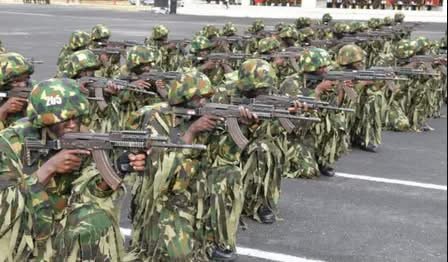
Image Caption
Rear Admiral Abdulrasheed Haruna addressing Nigerian Defence Academy cadets during a passing-out engagement in Kaduna.
Weng Global – stories beyond borders
Sources
- Nigerian Defence Academy (NDA)
- The Nigerian Armed Forces
- Zagazola Makama — reporting on Nigerian military commitment to democratic governance
- ThisDay — background on Rear Admiral Abdulrasheed Haruna’s Nigerian Navy appointments
- Vanguard — background on Nigerian Navy senior command appointments