Reported by Simon Daniel Yusuph l Journalist at Weng Global
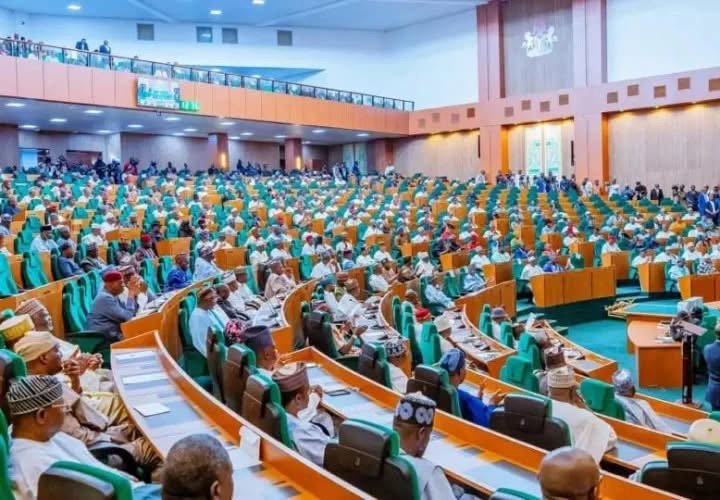
Nigeria’s House of Representatives has commenced consideration of a proposed amendment to the country’s oil pollution laws that seeks to introduce tougher penalties, including imprisonment, for individuals and companies responsible for oil spill violations.
The development comes shortly after the Senate passed the National Oil Spill Detection and Response Agency (NOSDRA) (Establishment) Act (Amendment) Bill, 2026, and transmitted it to the House of Representatives for concurrence.
The proposed legislation is designed to strengthen environmental accountability in Nigeria’s petroleum industry by increasing the consequences for oil pollution and expanding the enforcement powers of the National Oil Spill Detection and Response Agency (NOSDRA).
The move comes amid longstanding environmental concerns in the Niger Delta, where repeated oil spills have affected waterways, agricultural land, fishing activities and the livelihoods of communities living in oil-producing areas.
Although the Senate has approved the proposed amendment, the legislation has not yet become law. It must complete the necessary legislative stages in the National Assembly before it can be forwarded to the President for assent.
House of Representatives Begins Consideration of NOSDRA Amendment Bill
The House of Representatives has started processing the proposed amendment following its transmission from the Senate.
According to a report by The Punch published on November 2, 2026, a source in the Office of the Clerk of the National Assembly confirmed that the legislation had been transmitted to the House for concurrence.
The source stated that the NOSDRA Establishment Act amendment had formally reached the House.
The newspaper also reported that the bill had passed its first reading in the House, marking the initial stage of consideration by the chamber.
The development represents an important step in the legislative process because both chambers of the National Assembly must agree on the proposed changes before the legislation can proceed towards presidential assent.
The bill, titled the National Oil Spill Detection and Response Agency (Establishment) Act (Amendment) Bill, 2026, seeks to amend the existing legal framework established under the NOSDRA Act of 2006.
Its central objective is to address concerns that the existing penalties for oil pollution have not been sufficiently effective in discouraging environmental violations within the petroleum industry.
The proposed changes are expected to provide stronger legal grounds for imposing financial and criminal sanctions on those found responsible for oil spill offences.
Senate Approves Tougher Penalties for Oil Pollution
Before the House began considering the legislation, the Senate passed the amendment following the consideration and adoption of a report by its Committee on Environment.
The Senate approved the bill after lawmakers examined its provisions clause by clause under the Committee of the Whole.
According to reports by Vanguard and The Guardian, the Senate approved all 12 clauses of the proposed legislation, alongside the short title, explanatory memorandum and long title.
The bill was subsequently returned to plenary, read for the third time and passed.
Presenting the committee’s report on behalf of its chairman, Senator Olubiyi Fadeyi, Senate Chief Whip Tahir Monguno defended the proposed changes, arguing that existing financial penalties had failed to discourage repeated environmental violations.
Monguno, who represents Borno North Senatorial District, highlighted the continuing consequences of oil pollution for communities whose economic activities depend heavily on the natural environment.
He pointed particularly to the damage caused to fishing and farming, two important sources of livelihood across several oil-producing communities.
According to his explanation during the Senate proceedings, existing fines were not sufficiently deterrent to prevent offenders from violating environmental regulations.
He said:
“The fines are not deterrent enough to deter offenders.”
Monguno further explained that the proposed legislation would introduce criminal liability for oil spills that damage the environment and deprive affected residents of their means of livelihood.
The argument reflects a growing legislative concern that environmental violations should attract consequences proportionate to the damage caused.
The Senate’s approval therefore represents an attempt to move beyond a regulatory framework that relies heavily on financial penalties towards one that also provides for criminal accountability.
What the Proposed Amendment Means for Oil Companies
If enacted, the proposed amendment could significantly change the legal consequences facing individuals and organisations responsible for oil pollution in Nigeria.
Under the existing framework, NOSDRA plays a central role in coordinating responses to oil spills, monitoring incidents and supporting the implementation of environmental regulations relating to oil pollution.
The proposed amendment seeks to strengthen the agency’s statutory enforcement capacity and provide additional legal mechanisms for addressing violations.
One of the most significant aspects of the proposed legislation is the introduction of criminal sanctions, including custodial penalties, for qualifying environmental offences.
This would potentially expose responsible individuals and corporate actors to more serious legal consequences where their actions or omissions result in serious environmental damage.
The legislation also seeks to increase financial penalties to make violations more costly and discourage operators from disregarding environmental obligations.
However, the precise application of these penalties will depend on the final provisions of the legislation, the offences established under the amended law and the legal procedures governing investigations and prosecutions.
It is therefore important to distinguish between the proposed penalties and sanctions already enforceable under existing legislation.
The Senate’s passage of the bill does not automatically make every proposed punishment immediately applicable.
The amendment must first complete the legislative process and receive presidential assent before its provisions can become law.
Niger Delta Communities Remain at the Centre of Oil Pollution Concerns
The proposed legislative changes carry particular significance for the Niger Delta, Nigeria’s principal oil-producing region.
For decades, environmental pollution associated with petroleum exploration and production has remained a major concern in parts of the region.
Oil spills can contaminate rivers, creeks, wetlands and agricultural land, affecting communities that depend on these natural resources for food, income and everyday economic activities.
Fishing communities may experience reduced access to productive fishing waters, while farmers can face difficulties cultivating land affected by petroleum contamination.
Pollution can also create wider public health and environmental concerns, particularly where contaminated water and damaged ecosystems affect daily living conditions.
These challenges have contributed to longstanding demands from environmental organisations, community leaders and civil society groups for stronger regulation, accountability and remediation.
The Niger Delta’s environmental difficulties are not limited to individual spill incidents. Repeated pollution, inadequate remediation and disputes over responsibility can compound the damage experienced by affected communities.
For residents, the consequences often extend beyond the immediate period following a spill.
Where agricultural land or waterways remain contaminated, communities may experience prolonged disruption to their economic activities.
The proposed NOSDRA amendment therefore addresses an important question about how Nigeria can strengthen the legal consequences for environmental damage while improving the protection of communities affected by petroleum operations.
However, stronger penalties alone may not resolve the region’s environmental problems. Effective monitoring, timely investigations, transparent reporting and proper remediation will also be necessary.
NOSDRA’s Role in Environmental Protection
The National Oil Spill Detection and Response Agency was established under the NOSDRA Act of 2006 to coordinate and implement Nigeria’s national oil spill response framework.
Its responsibilities include monitoring oil spill incidents, coordinating response activities and supporting efforts to address pollution arising from petroleum operations.
The agency also plays an important role in ensuring that relevant operators comply with applicable environmental requirements.
The proposed amendment seeks to reinforce this institutional responsibility by strengthening the legal authority available to the agency.
A more effective enforcement framework could help improve compliance across the petroleum industry by making the consequences of environmental violations more substantial.
For such changes to deliver meaningful results, however, NOSDRA must have the institutional capacity to investigate incidents, establish the circumstances surrounding spills and ensure that responsible parties are held accountable under the law.
The agency’s ability to enforce regulations will also depend on adequate funding, technical expertise, monitoring equipment and cooperation among relevant government institutions.
Environmental enforcement can be particularly challenging where incidents involve complicated operational arrangements, disputes over responsibility or competing explanations for the causes of pollution.
A credible regulatory system must therefore combine strong penalties with transparent investigations and evidence-based decisions.
Why Tougher Oil Spill Penalties Matter to Nigeria’s Economy
Nigeria’s petroleum industry remains an important part of the national economy, contributing to government revenue, foreign exchange earnings and economic activities across several states.
However, the economic benefits of petroleum production must be considered alongside the environmental responsibilities associated with exploration, transportation and processing.
Oil pollution can impose significant costs on communities, businesses and government institutions.
Farmers and fishermen may lose income when pollution affects their sources of livelihood. Local businesses can also suffer when environmental damage disrupts economic activities.
Government agencies may face additional responsibilities and expenses relating to environmental monitoring, investigations and remediation.
The proposed amendment seeks to strengthen the accountability framework governing these activities.
By introducing more substantial penalties, lawmakers hope to discourage environmental violations and encourage greater compliance with existing regulations.
For oil companies and other petroleum operators, the proposed changes could increase the importance of environmental risk management, operational safety and regulatory compliance.
Companies operating in the sector will have an interest in ensuring that their facilities, pipelines and other infrastructure are properly maintained and that spill incidents are addressed in accordance with applicable laws.
Nevertheless, the effectiveness of stronger penalties will depend on whether regulatory institutions can consistently identify violations and enforce the law without discrimination.
A legal framework that provides severe punishment but fails to establish responsibility through credible investigations may not achieve its intended objectives.
Environmental Accountability Must Include Remediation
Beyond punishment, another important issue surrounding oil pollution in Nigeria is the restoration of affected environments.
When oil spills occur, affected communities need more than assurances that responsible parties will face penalties.
They also need effective measures to contain pollution, clean contaminated areas and restore damaged ecosystems where possible.
The proposed amendment’s emphasis on stronger sanctions could contribute to accountability, but enforcement must also be connected to the broader responsibilities of preventing spills and addressing environmental damage.
For communities in the Niger Delta, remediation is particularly important because environmental contamination can continue affecting livelihoods long after an initial incident has been reported.
A comprehensive approach to oil pollution should therefore include prevention, emergency response, investigation, accountability and environmental restoration.
The government and relevant regulatory agencies will also need to ensure that affected communities receive accurate information about incidents and the measures being taken to address them.
Public access to reliable environmental information can help strengthen trust between regulators, petroleum operators and residents.
Legislative Process: What Happens Next?
With the Senate having passed the proposed amendment and the House of Representatives beginning its consideration, the legislation must complete the remaining constitutional and parliamentary requirements.
The House will need to consider the bill and determine whether it agrees with the version passed by the Senate.
If both chambers approve the same legislative text, the bill can proceed to the President for assent.
Where differences arise between the versions approved by the two chambers, the National Assembly may need to resolve those differences before presenting a final version.
Presidential assent is an essential step before the amendment can become law.
Until that process is completed, the proposed changes remain legislative proposals rather than enforceable provisions of the amended Act.
The next stages will therefore determine the final wording of the legislation, the penalties that will be established and the additional enforcement powers that will be available to NOSDRA.
The National Assembly’s handling of the bill will be closely relevant to oil-producing communities and stakeholders in Nigeria’s petroleum industry.
Stronger Laws Require Effective Implementation
The proposed amendment represents a significant legislative effort to strengthen Nigeria’s response to oil pollution.
Its progress through the Senate and the House of Representatives indicates growing attention among federal lawmakers to the consequences of environmental violations in the petroleum sector.
However, the ultimate test will not simply be the passage of the legislation.
It will be whether the amended law can improve environmental protection, discourage negligence and ensure that those responsible for serious pollution are held accountable.
For communities in the Niger Delta, the expectation is that stronger legislation should translate into fewer preventable spills, more effective investigations and meaningful environmental restoration.
For petroleum operators, the proposed changes could reinforce the importance of meeting environmental obligations and maintaining responsible operational standards.
For government institutions, the bill presents an opportunity to strengthen regulatory enforcement and demonstrate that environmental protection is an essential part of Nigeria’s economic development.
As the House of Representatives continues consideration of the amendment, attention will remain on the final legislative outcome and the practical measures required to enforce its provisions.
Nigeria’s ability to protect its oil-producing communities will ultimately depend not only on the severity of environmental penalties but also on the consistency, transparency and effectiveness with which the law is implemented.
Weng Global – stories beyond borders
Sources
- The Punch – Report on the House of Representatives’ consideration of the NOSDRA Amendment Bill, November 2, 2026.
- The Guardian – Report on the Senate’s passage of the bill seeking tougher sanctions for oil spills, October 28, 2026.
- Vanguard – Report on the Senate’s approval of heavier fines and criminal penalties for oil spill violations, October 27, 2026.
- National Assembly Legislative Research and Training Institute – Legislative information relating to the NOSDRA amendment.
- Policy and Legal Advocacy Centre (PLAC) – Senate Committee on Environment report on the NOSDRA (Establishment) Act (Amendment) Bill, 2026.