Reported by Simon Daniel Yusuph l Journalist at Weng Global
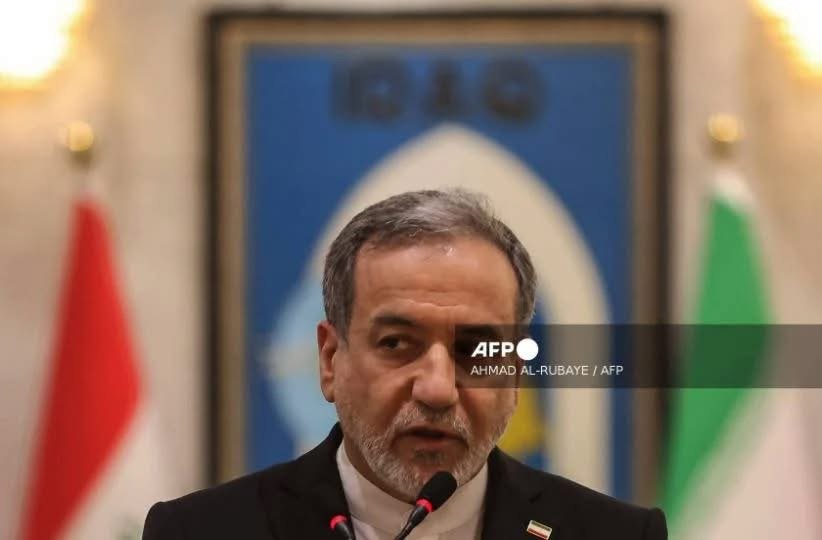
Iranian Foreign Minister Abbas Araghchi has said there is no military solution to the country’s conflict with the United States, insisting that negotiations remain the only viable path toward ending the war while warning that Tehran would respond more forcefully if Washington or its allies resume military action.
Araghchi made the remarks on Sunday, October 4, 2026, during a meeting with foreign ambassadors and representatives of international organisations in Tehran, as diplomatic efforts to end the conflict face significant obstacles.
The Iranian foreign minister said Tehran remained prepared for negotiations but would defend itself if military confrontation resumed. His comments come amid continuing disagreement between Iran and the United States over the terms for ending hostilities, sanctions relief and the reopening of the strategically important Strait of Hormuz.
Araghchi Rejects Military Solution
Araghchi said military action and additional sanctions would not provide a lasting answer to the conflict.
According to remarks reported by AFP, the Iranian foreign minister argued that neither military pressure nor new sanctions could resolve the dispute, saying a negotiated settlement based on justice, fairness and diplomacy was necessary.
At the same time, he issued a warning that Tehran’s preference for diplomacy should not be interpreted as an unwillingness to respond militarily.
“If our enemies again choose the path of military confrontation, our response will be stronger than before,” Araghchi said, according to AFP reporting on his remarks.
The statement reflects Tehran’s current position of combining diplomatic overtures with a warning that any renewed attack would trigger a significant response.
Iran Says It Remains Ready for Negotiations
Araghchi said Iran remained willing to pursue what he described as an honourable diplomatic settlement.
He pointed to discussions held around the United Nations General Assembly in New York, where Iranian officials engaged in diplomatic contacts with international and regional actors.
Iran has also presented a proposal under which the Strait of Hormuz could be reopened if the United States accepts conditions put forward by Tehran.
The proposal is part of a wider effort to establish a framework for ending the conflict and addressing the economic and security consequences that have followed the fighting.
Reuters reported on Sunday that Iran had tied the reopening of the Strait of Hormuz to seven conditions connected to an earlier memorandum of understanding. Iranian officials have maintained that the conditions are linked to commitments they expect Washington to fulfil.
The position demonstrates the difficulty facing negotiators: Iran is seeking a diplomatic settlement while also maintaining pressure through control of a critical international shipping route.
Strait of Hormuz Becomes Central to the Dispute
The Strait of Hormuz has emerged as one of the most important points of disagreement between Iran and the United States.
The narrow waterway connects the Persian Gulf with the Gulf of Oman and is one of the world’s most strategically important energy corridors. Disruption to shipping through the strait can affect oil supplies, energy prices and international trade well beyond the Middle East.
Iran has made reopening the waterway part of its negotiating position.
Reuters reported that Iranian Parliament Speaker Mohammad Baqer Qalibaf said the strait would remain closed until Washington accepted conditions associated with an earlier agreement. Araghchi separately said Tehran’s proposal could allow the waterway to reopen within seven days if its terms were accepted.
For countries that depend heavily on imported energy, prolonged disruption creates economic risks. Higher transportation costs and uncertainty over crude oil supplies can also affect inflation and consumer prices in markets far from the conflict zone.
That makes the dispute not only a military and diplomatic issue but also an international economic concern.
US-Iran Diplomacy Faces Major Obstacles
The latest Iranian statement comes after months of fighting and repeated diplomatic efforts aimed at stopping the conflict.
The United States and Iran have continued to communicate indirectly through mediators, including Qatar and other regional actors. The two sides have nevertheless remained divided over the conditions for a lasting settlement.
The Associated Press reported that Iran had received an official US response to its latest proposal, although the details of Washington’s response had not been publicly disclosed.
The report said Iran’s proposal included conditions involving the Strait of Hormuz, sanctions and access to frozen assets. Mediators from Qatar and Pakistan have continued efforts to keep diplomacy alive despite the lack of a final agreement.
The continuing negotiations indicate that both sides have not completely abandoned diplomacy, even as their public statements remain sharply critical of one another.
Iran Warns Against Renewed Military Action
Araghchi’s warning comes amid concerns that the conflict could escalate again.
Iranian officials have repeatedly said they are prepared to defend the country against renewed attacks.
President Masoud Pezeshkian also said in September that Iran had not initiated the war and would defend itself if attacked. He argued that disputes should be resolved through dialogue rather than military action.
Reuters reported earlier this week that Iranian military commanders were preparing for a potentially broader response should the United States resume large-scale attacks.
The report said Iranian planning could involve targets beyond US assets and could potentially extend to countries supporting American military operations.
Those reported preparations underline the risks surrounding the current diplomatic stalemate, although they should not be interpreted as confirmation that a new military campaign is inevitable.
Washington Maintains Pressure on Tehran
While Iran is calling for negotiations, the United States has continued to apply economic pressure.
Washington has expanded sanctions targeting Iranian financial, industrial and other economic networks as part of its strategy to restrict Tehran’s sources of revenue.
The Trump administration has also maintained pressure on Iran’s oil sector.
According to recent reporting, Washington has argued that cutting Iran’s oil revenues is an important part of its effort to weaken the country’s ability to finance military operations and maintain its broader regional activities.
Iran, however, argues that sanctions have failed to provide a solution and has rejected the use of economic pressure as a substitute for negotiations.
The opposing positions have created a difficult diplomatic environment in which each side is attempting to use economic, political and strategic pressure while keeping open the possibility of further negotiations.
A Conflict With Global Economic Consequences
The consequences of the US-Iran conflict extend well beyond the two countries.
The Strait of Hormuz is particularly important because of its role in international energy markets. Any prolonged interruption to shipping can create uncertainty for oil-importing countries and place pressure on energy prices.
Recent market movements have already reflected concerns about supply disruptions.
Reuters reported last week that oil prices rose amid uncertainty surrounding the continued disruption of the Strait of Hormuz and Washington’s rejection of an earlier Iranian proposal.
For African countries, developments in the Middle East can also have indirect consequences.
Higher global oil prices can increase fuel and transportation costs in oil-importing African economies. Governments may face greater pressure on foreign-exchange reserves, inflation and the cost of importing goods.
Oil-producing countries can benefit from higher crude prices in some circumstances, but prolonged instability can also create uncertainty in global markets and complicate investment and trade.
The longer the conflict continues, the greater the potential for those effects to spread through international energy and commodity markets.
Diplomatic Efforts Remain the Main Exit Route
Despite the hostile rhetoric and continuing military preparations, diplomacy remains the most visible avenue for ending the conflict.
Araghchi’s latest statement is significant because he explicitly rejected the idea that military pressure could produce a lasting solution while simultaneously warning against further attacks.
That combination reflects Tehran’s current strategy: maintain its military readiness while continuing to present negotiations as the preferred route to an agreement.
The United States has also left room for diplomacy, although Washington has rejected elements of Iran’s proposals and continues to demand concessions from Tehran.
Recent reports indicate that indirect negotiations have continued through mediators even after disagreements between the two governments.
The challenge is converting those contacts into a durable agreement that addresses the core disagreements rather than producing another temporary pause in fighting.
Why It Matters
Araghchi’s remarks matter because they come at a particularly sensitive moment in the US-Iran conflict.
A renewed military confrontation could produce consequences beyond the battlefield, including further disruption to energy supplies, increased pressure on global oil prices, risks to commercial shipping and greater instability across the wider Middle East.
The Strait of Hormuz makes the situation particularly consequential. A prolonged closure or restricted passage could affect international trade and energy markets at a time when governments and businesses are already dealing with economic uncertainty.
The conflict also presents a wider diplomatic test.
Regional countries have an interest in preventing another escalation, while international powers face pressure to help create conditions under which Iran and the United States can reach a negotiated settlement.
For ordinary people, the stakes are ultimately reflected in security, energy costs, food prices and economic stability.
What Happens Next
The immediate focus is likely to remain on diplomatic contacts between Iran and the United States and the efforts of mediators to narrow the differences between the two sides.
Iran has made clear that it wants negotiations to address its conditions, including the reopening of the Strait of Hormuz and the broader economic pressure imposed through US sanctions.
Washington’s response to those demands will be important in determining whether the diplomatic process gains momentum.
At the same time, Iran’s warning that it would respond more strongly to renewed military action means that the possibility of escalation remains.
No new military confrontation should be treated as inevitable, but the continuing preparations and public warnings demonstrate the risks created by the diplomatic impasse.
For now, Tehran is presenting negotiations as the only sustainable route to ending the conflict while making clear that it considers itself prepared for another round of military confrontation if attacked.
The central question is whether diplomacy can produce enough compromise to prevent the conflict from entering another cycle of escalation.
Weng Global — Stories beyond borders
Sources
Associated Press (AP)
Agence France-Presse (AFP)
Reuters
Al Jazeera
Iranian Foreign Ministry statements