Reported by Simon Daniel Yusuph l Journalist at Weng Global
Iran has proposed a plan that could see the strategically important Strait of Hormuz reopen within seven days if the United States agrees to conditions linked to ending hostilities and easing military pressure, Iranian Foreign Minister Abbas Araghchi said on the sidelines of the United Nations General Assembly in New York.
Araghchi said on Thursday, September 24, that Tehran had delivered the proposal to Washington through mediators and that the seven-day timetable would begin once the United States accepts the terms.
The proposal comes amid continuing tensions between Iran and the United States over the strategic waterway, which is a major route for global oil and liquefied natural gas shipments.
Iran has presented the proposal as part of a wider diplomatic effort aimed at ending the conflict and returning to negotiations with Washington. However, the plan remains conditional, and there is no confirmation that the United States has accepted it.
Araghchi outlines seven-day proposal
Speaking to reporters in New York, Araghchi said Iran had submitted its proposal through intermediaries and that the Strait of Hormuz could be reopened seven days after Washington accepts the agreement.
The Iranian foreign minister did not publicly disclose every condition attached to the proposal, but reporting from several international media organisations indicates that Tehran is seeking measures to reduce U.S. military pressure and address the blockade affecting Iranian ports.
Araghchi said the proposed arrangement would also create a pathway for renewed negotiations on a broader agreement to end the conflict.
The proposal builds on earlier diplomatic efforts between Tehran and Washington, including a memorandum of understanding discussed earlier in the year. According to reporting on the latest initiative, Iran wants the new process to provide a framework for resolving the wider confrontation rather than dealing with the Strait of Hormuz in isolation.
What Iran is seeking
Iranian officials have indicated that the reopening of Hormuz would be linked to steps by Washington to ease military and economic pressure on Tehran.
Earlier reporting by Reuters said a senior Iranian official had stated that Iran could reopen the waterway within seven days if the United States eased military pressure and lifted its blockade of Iranian ports.
The official said Tehran wanted Washington to make clear that it was prepared to resolve the dispute diplomatically before agreeing on a timetable for further negotiations. Iran’s proposal was reportedly transmitted through mediators on September 16.
Iranian officials have also identified the lifting of the maritime blockade, an end to military operations associated with the Strait and the unfreezing of Iranian assets as issues involved in the broader diplomatic discussions.
The exact sequence and implementation of those measures remain subject to negotiations.
US response remains cautious
The proposal has not yet produced a confirmed agreement between Washington and Tehran.
A White House official told the Financial Times that the United States and Iran were engaged in positive discussions through mediators but did not publicly endorse the specific seven-day proposal announced by Araghchi.
The official also indicated that Washington believed it remained in a strong position concerning the Strait and was not under pressure to accept an agreement immediately.
The differing positions underline the uncertainty surrounding the proposal. Iran has linked the reopening of Hormuz to changes in U.S. military and economic pressure, while Washington has continued to emphasise its negotiating position.
Why the Strait of Hormuz matters
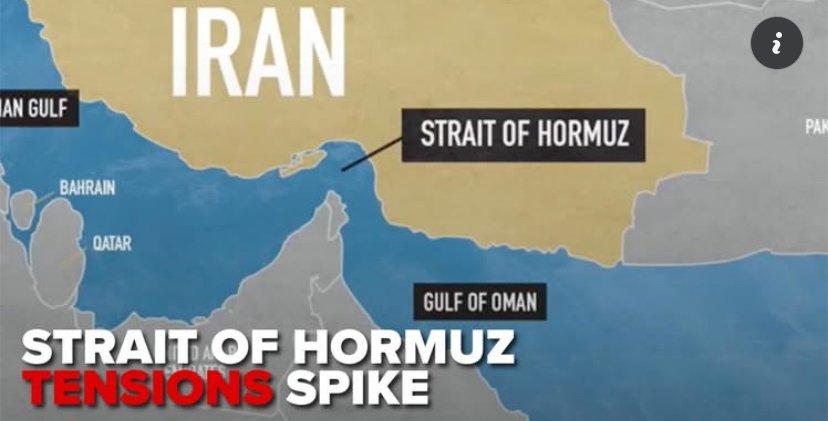
The Strait of Hormuz is one of the world’s most important maritime energy corridors.
Located between Iran and Oman, the narrow waterway connects the Persian Gulf with the Gulf of Oman and the wider Arabian Sea. Large volumes of oil, petroleum products and liquefied natural gas pass through the route.
Any prolonged disruption can therefore affect energy markets, shipping costs and the economies of countries that depend heavily on Gulf energy supplies.
For major oil-producing countries in the Gulf, including Saudi Arabia, the United Arab Emirates, Kuwait, Iraq and Qatar, the security and accessibility of regional maritime routes are particularly important.
The waterway’s significance also extends beyond the Middle East. Asian economies are among the largest destinations for Gulf energy exports, meaning developments around Hormuz can have consequences for global consumers and businesses.
Diplomatic efforts intensify at UN General Assembly
The latest proposal emerged while Iranian and American officials were in New York for the 81st United Nations General Assembly.
The UN gathering has provided an opportunity for countries involved in the dispute to communicate through diplomatic channels and intermediaries.
Qatar has been involved in passing messages between Washington and Tehran, while other diplomatic actors have also sought to keep negotiations alive.
Iranian officials have described the UN General Assembly as an opportunity to revive diplomacy, while the United States has acknowledged that discussions through intermediaries are taking place.
The diplomatic activity does not, however, mean that a final agreement has been reached.
Earlier proposal preceded the latest announcement
Iran’s latest seven-day proposal follows an earlier offer reported by Reuters on September 22.
At that time, a senior Iranian official said Tehran was prepared to reopen the Strait within seven days if Washington took initial steps to ease military pressure and lift its blockade of Iranian ports.
The official said Iran’s delegation in New York had authority to pursue diplomacy and that Tehran was prepared to discuss an agreement through mediators.
The latest comments from Araghchi provide additional detail on that diplomatic initiative and indicate that Iran has formally presented a proposal with a seven-day implementation framework.
Global energy markets watch developments
The prospect of a diplomatic agreement has attracted attention from energy markets because any sustained improvement in access through Hormuz could reduce concerns about disruptions to global energy supplies.
Conversely, failure of the negotiations could leave shipping and energy markets exposed to continued uncertainty.
The economic implications are particularly significant because the Strait is not simply a regional shipping route. It is a critical link in the international energy system.
For African economies, developments in global oil markets can also have consequences through fuel prices, import costs, inflation and government revenues in oil-producing countries.
Nigeria, as a major crude oil producer, is particularly exposed to changes in global oil prices, although the precise effect on the country would depend on wider market conditions, domestic production and other economic factors.
No confirmed reopening yet
Despite the headline-making proposal, the Strait of Hormuz has not been confirmed as reopened under the seven-day plan.
Iran has said it is prepared to begin the timetable if Washington accepts the conditions. The United States, meanwhile, has not publicly announced acceptance of the Iranian proposal.
The distinction is important because the latest development represents a diplomatic offer rather than an implemented agreement.
Any reopening would depend on negotiations over the conditions, verification of commitments and the actions of the parties involved.
What happens next
The immediate focus will be on whether Washington and Tehran can reach agreement through the diplomatic channels operating around the UN General Assembly.
If the United States accepts the Iranian conditions, Tehran has indicated that the seven-day process for reopening the Strait could begin.
The wider negotiations would also seek to address the underlying conflict, including military operations, economic restrictions and Iran’s demands concerning its frozen assets.
If the parties fail to reach an agreement, the status of the Strait will remain a major issue in the broader confrontation between Iran and the United States.
For the international community, the next stage of the negotiations will therefore be closely watched because the outcome could affect not only Middle Eastern security but also global energy flows, shipping and economic conditions
Weng Global – stories beyond borders .
Sources
- Reuters
- Financial Times
- Al Jazeera
- The Washington Post
- The Jerusalem Post
- Kyodo News