Reported by Simon Daniel Yusuph l Journalist at Weng Global
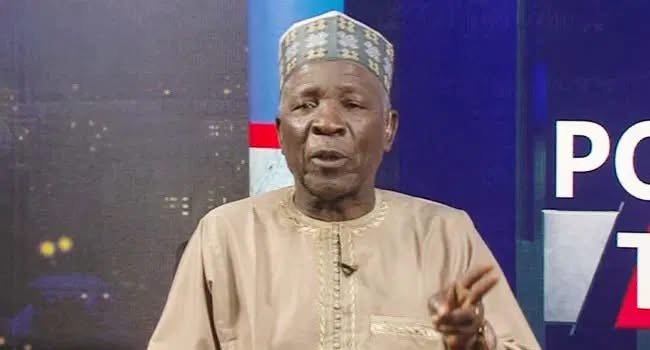
Buba Galadima, a chieftain of the Nigeria Democratic Congress (NDC), has challenged former Katsina State governor Aminu Bello Masari’s reported suggestion that northerners who do not support President Bola Ahmed Tinubu are ingrates, arguing that political support should be judged against the realities facing citizens, particularly insecurity in the North.
Galadima made the remarks during an interview with Channels Television on September 24, 2026, while responding to comments attributed to Masari, a former Speaker of the House of Representatives and former governor of Katsina State.
The exchange has added to the growing political debate over Tinubu’s 2027 re-election bid, particularly in northern Nigeria, where insecurity, displacement and the performance of government remain major issues in political discussions.
Galadima questions Masari’s position
Galadima said he had watched Masari speak about political support for Tinubu and described the former governor as a “prominent friend”.
According to Galadima, Masari had argued that northerners who refused to support Tinubu could be regarded as ungrateful.
Galadima rejected the implication, pointing to the security situation in Masari’s home state.
He argued that Katsina residents continue to face displacement and insecurity and questioned why residents should be expected to support a government solely on the basis of political loyalty.
The comments were made as political parties and emerging alliances intensify preparations for the 2027 presidential election.
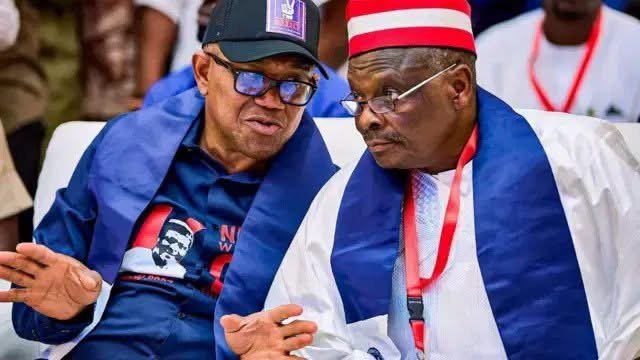
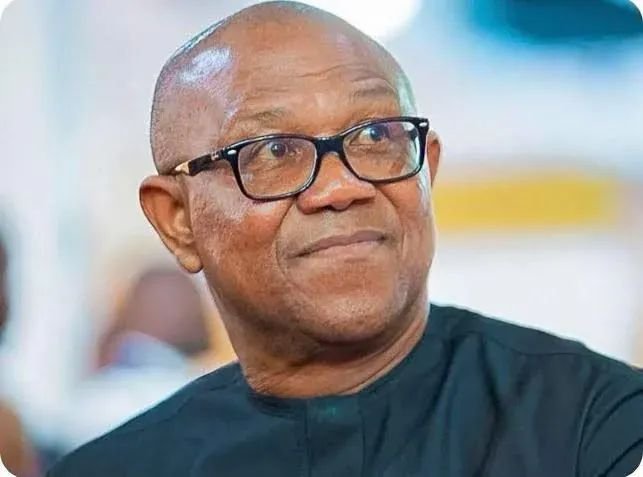
Galadima is currently associated with the opposition NDC and is involved in the campaign structure backing a joint presidential ticket involving Peter Obi and Rabiu Musa Kwankwaso.
What Masari said about Tinubu
Masari’s comments came shortly before Galadima’s response.
In a video published by the Hausa-language media platform HM Arewa, Masari praised Tinubu’s administration and said his nearly four decades of political experience had not exposed him to a president with better plans for Nigeria.
The former Katsina governor described Tinubu’s plans as superior to those of previous presidents and defended the administration against criticisms that it had achieved little.
Masari’s comments were made amid increasing political mobilisation ahead of the 2027 election.
Masari has also taken on a formal role in Tinubu’s re-election campaign. Reports say he was appointed Deputy Director-General, Parliamentary Mobilisation, of the APC Presidential Campaign Council for the 2027 election.
That political role provides context for his strong endorsement of the president.
Galadima focuses on insecurity in Katsina
Rather than debating Tinubu’s policy plans directly, Galadima focused his response on the security challenges affecting northern communities.
He specifically referred to Katsina, saying people in the state were being displaced and killed and questioning the record of the federal government in addressing those problems.
His argument places security at the centre of the question of political support.
Katsina, like several states in Nigeria’s North-West, has faced persistent attacks by armed groups and bandits. Insecurity has affected rural communities, farming activities, movement and livelihoods across parts of the region.
For political opposition figures such as Galadima, those conditions have become an important basis for evaluating the Tinubu administration.
For supporters of the government, however, the security situation is part of a broader national challenge that requires sustained military and security operations rather than being reduced to the performance of a single administration.
The argument over political gratitude
The disagreement between Masari and Galadima reflects a broader question in Nigerian politics: whether citizens should reward political leaders for perceived improvements or judge governments primarily by their results.
Masari’s position is strongly supportive of Tinubu and his policies.
Galadima takes the opposite approach, arguing that citizens should not be described as ungrateful simply because they decline to support an incumbent president.
The difference also illustrates the competing narratives likely to dominate the 2027 election.
The governing camp is expected to campaign on Tinubu’s reforms, economic policies and continuity, while opposition parties are likely to focus on inflation, living costs, insecurity, unemployment and other challenges facing Nigerians.
Tinubu’s 2027 re-election campaign
Tinubu is seeking a second term in office at a time when political alignments are changing across the country.
The president and the ruling All Progressives Congress (APC) have been working to consolidate support ahead of the January 2027 presidential election.
The Independent National Electoral Commission has scheduled the presidential election for January 16, 2027.
Political mobilisation has consequently intensified months before voters head to the polls.
The North remains particularly important to the presidential contest because of its large electorate and the significant number of states across the region.
Tinubu’s ability to retain or expand support in the North will therefore be an important element of the 2027 election.
Galadima’s opposition to Tinubu
Galadima has emerged as a prominent critic of the Tinubu administration and is now campaigning on an opposition platform.
During his recent Channels Television interview, he questioned the government’s handling of the economy, security and the electoral process.
He also expressed confidence in the opposition ticket involving Peter Obi and Rabiu Kwankwaso, claiming that the candidates could win the 2027 election if the process was free and fair. That remains his political assessment rather than an established electoral forecast.
Galadima also raised concerns about a reported meeting involving Tinubu and the INEC chairman in France, suggesting that opposition parties had reasons to be cautious about the conduct of the coming election.
Those claims were presented by Galadima and should not be treated as established evidence of electoral wrongdoing.
The El-Rufai connection
The political debate also comes against the background of the changing relationship between Tinubu and former Kaduna State governor Nasir El-Rufai.
El-Rufai was initially a prominent supporter of Tinubu during the 2023 presidential campaign. After Tinubu became president, he was nominated for a ministerial position but was not confirmed by the Senate.
El-Rufai subsequently became a vocal critic of the administration and left the APC for the Social Democratic Party (SDP), where he has become associated with opposition efforts ahead of 2027.
His political fallout with Tinubu has generated considerable debate among northern politicians.
However, it is important to distinguish this issue from Galadima’s latest remarks.
The widely reported statement that El-Rufai was experiencing “payback” for what he previously did to Rotimi Amaechi was made by Senator Ali Ndume in June 2025, not Galadima. Ndume said El-Rufai had initially been aligned with Amaechi during the 2023 APC presidential contest before switching his support to Tinubu.
That distinction is important because attributing Ndume’s comments to Galadima would inaccurately combine separate political statements made at different times.
El-Rufai’s legal troubles
El-Rufai’s political dispute with Tinubu has also coincided with legal proceedings involving allegations from the ICPC.
The Independent Corrupt Practices and Other Related Offences Commission has brought criminal charges against the former Kaduna governor involving allegations including corruption, money laundering and abuse of office.
In one case, the ICPC alleged that El-Rufai approved a CCTV contract in Kaduna worth more than ₦8.68 billion in circumstances the commission said violated procurement laws. El-Rufai pleaded not guilty to the charges.
The ICPC has also previously arraigned him over separate allegations involving ₦579.6 million and $1.1 million. He pleaded not guilty in that matter as well.
These are allegations before the courts and have not established criminal guilt. El-Rufai remains entitled to due process and the presumption of innocence.
Security remains a major northern issue
Galadima’s reference to Katsina highlights one of the most politically sensitive issues in northern Nigeria.
Across parts of the North-West and North-Central regions, armed groups have continued to threaten communities, disrupt farming and force residents from their homes.
The effects extend beyond security itself.
When farmers cannot safely reach their fields, agricultural production can be affected. When communities are displaced, local economies suffer and pressure increases on neighbouring communities and urban centres.
Consequently, security performance is likely to remain a major issue in northern voting decisions in 2027.
Whether voters respond to the issue by supporting the incumbent government or backing an opposition alternative will depend on their individual experiences and political preferences.
Reactions and political divide
Masari and Galadima represent sharply different political positions ahead of the election.
Masari has offered strong support for Tinubu and his administration, arguing from his long experience in Nigerian politics that the president has a particularly strong development agenda.
Galadima, meanwhile, has aligned himself with an opposition coalition seeking to challenge Tinubu in 2027.
Their disagreement therefore extends beyond a personal exchange.
It reflects the wider political battle over how Nigerians should evaluate the Tinubu presidency.
Supporters point to reforms and policy continuity, while opponents argue that the government’s record should be judged against the economic and security pressures experienced by citizens.
Why it matters
The dispute matters because northern Nigeria is expected to play a decisive role in the 2027 presidential election.
Political parties are already seeking to build alliances across regional, ethnic and political lines, while influential northern figures are taking different positions on Tinubu’s re-election.
Galadima’s response also demonstrates how insecurity can shape political arguments.
For voters in affected communities, questions about security are not merely campaign issues. They concern access to farms, schools, markets, homes and livelihoods.
At the same time, Masari’s support illustrates the competing argument that political leaders should be assessed according to their broader plans and reforms rather than only individual challenges.
The clash between those positions is likely to continue as the election approaches.
What happens next
The political debate is expected to intensify as presidential campaigns and grassroots mobilisation expand across northern states.
Tinubu’s supporters will seek to demonstrate that his administration deserves another term, while opposition groups will continue to highlight insecurity, economic hardship and concerns about governance.
The opposition will also need to convince voters that its alternative leadership can address the same problems it is criticising the government over.
For Galadima, the immediate political objective is to strengthen support for the opposition ticket and convince voters that the 2027 election can produce a change of government.
For Masari and other Tinubu supporters, the task will be to defend the administration’s record and build a coalition broad enough to secure re-election.
The eventual judgement will belong to Nigerian voters.
Weng Global – Stories beyond borders
Sources
Channels Television
TheCable
Independent National Electoral Commission
Independent Corrupt Practices and Other Related Offences Commission
The Nation
The Punch