Reported by Simon Daniel Yusuph l Journalist at Weng Global
Children who have received the recommended primary doses of diphtheria-containing vaccines can still develop diphtheria, paediatricians have warned, highlighting the importance of booster doses and sustained immunity beyond the initial vaccination series.
The warning comes amid continuing concern over diphtheria in Nigeria, where health authorities have previously recorded significant outbreaks affecting children, particularly those who were unvaccinated or insufficiently protected.
The experts stressed, however, that vaccination remains the most effective protection against diphtheria and substantially reduces the risk of severe illness and complications.
Why Vaccination Does Not Always Prevent Infection
According to paediatricians quoted by PUNCH HealthWise, completing the primary vaccination series does not necessarily provide lifelong protection against diphtheria.
Dr Abdurrazzaq Alege, Head of Paediatrics at the Federal Teaching Hospital, Katsina, and Team Lead for Diphtheria Case Management, explained that immunity can decline with time.
Alege said the primary vaccination doses are important for establishing protection, but that immunity may subsequently weaken, making booster doses necessary.
Nigeria’s routine childhood immunisation programme provides diphtheria-containing vaccines through the pentavalent vaccine at six, 10 and 14 weeks of age.
The paediatrician therefore urged parents and health workers to consider not only whether a child received the primary doses but also whether the child received the additional vaccinations required to maintain protection.
Vaccination Still Offers Strong Protection
The possibility of a vaccinated child developing diphtheria should not be interpreted as evidence that the vaccine is ineffective.
The World Health Organization (WHO) states that diphtheria is a vaccine-preventable disease and that multiple doses, including booster doses, are needed to establish and sustain immunity.
WHO recommends three primary doses during infancy followed by three additional booster doses during childhood and adolescence for longer-term protection.
The United States Centers for Disease Control and Prevention (CDC) similarly states that diphtheria vaccines work well but that protection decreases over time.
The CDC says vaccines that protect against diphtheria cannot prevent every case, but vaccination significantly reduces the risk of serious disease.
This distinction is important in understanding breakthrough infections.
A vaccinated child who becomes infected is not necessarily receiving no benefit from vaccination. Protection against the disease’s serious toxin-related effects can remain important even when infection occurs.
Diphtheria Vaccine Primarily Protects Against the Toxin
Consultant Paediatrician Dr Femi Akodu, of Olabisi Onabanjo University Teaching Hospital, Sagamu, Ogun State, told PUNCH HealthWise that diphtheria vaccination primarily protects against the toxin produced by the bacterium rather than completely preventing the bacterium from entering or colonising the body.
This means vaccination can substantially reduce the likelihood of severe toxin-mediated disease without guaranteeing that the bacterium can never infect a vaccinated person.
Diphtheria is caused by Corynebacterium diphtheriae, a bacterium that can infect the upper respiratory tract and produce a toxin capable of damaging organs.
Severe disease can affect the heart and nervous system and can lead to breathing difficulties and other serious complications.
The WHO says diphtheria can be fatal, particularly among young children who are not adequately protected and do not receive appropriate treatment.
Immunity Can Decline Over Time
The issue of waning immunity is not unique to diphtheria.
Some vaccines require multiple doses and subsequent boosters because protection can decrease over time.
The CDC explains that non-live vaccines can require repeated doses to establish and maintain protection, with booster doses helping restore immunity as it declines.
For diphtheria, this is particularly important because immunity generated by vaccination is not necessarily permanent.
WHO currently recommends three primary doses of diphtheria-containing vaccine during infancy and three booster doses during childhood and adolescence.
The organisation says countries should strengthen immunisation programmes to ensure that children receive both their primary doses and recommended boosters.
Nigeria’s Childhood Immunisation Schedule
Nigeria’s National Primary Health Care Development Agency and the Nigeria Centre for Disease Control and Prevention (NCDC) have consistently emphasised the importance of completing routine childhood immunisation.
NCDC guidance states that children should receive three doses of the pentavalent vaccine containing diphtheria toxoid at six, 10 and 14 weeks.
The agency also notes WHO’s recommendation for additional booster doses during childhood and adolescence to support long-term protection.
This makes it important for parents to maintain vaccination records and consult healthcare professionals about whether children are due for additional doses.
Parents should not assume that completion of the first three doses automatically means a child will have lifelong protection.
Nigeria Has Experienced Serious Diphtheria Outbreaks
The warning is particularly relevant to Nigeria because the country has experienced significant diphtheria outbreaks in recent years.
In a 2023 public health advisory, the Nigeria Centre for Disease Control and Prevention reported 798 confirmed diphtheria cases from 33 local government areas in eight states as of June 30, 2023.
The agency said 71.7 per cent of the confirmed cases occurred among children aged between two and 14 years.
It also reported 80 deaths among the confirmed cases at that point.
NCDC identified historically inadequate vaccination coverage as a major driver of the outbreak.
The agency also cited a national survey showing that only 41.7 per cent of children below 15 years were fully protected against diphtheria at the time of the survey.
In another statement concerning the outbreak, NCDC said 654 of 798 confirmed cases, or 82 per cent, were among unvaccinated people.
The figures illustrate why maintaining high vaccination coverage remains central to controlling diphtheria.
Fully Vaccinated Children Have Also Been Reported Among Cases
While most cases in Nigeria’s major outbreaks have involved people who were unvaccinated or inadequately protected, health officials have also reported infections among people who had received vaccination.
A June 2025 PUNCH HealthWise report documented diphtheria infections among fully vaccinated people during an outbreak in Edo State.
The report quoted Edo State Commissioner for Health Dr Cyril Oshiomhole as saying that fully vaccinated people were among those infected.
The development prompted renewed discussion among medical professionals about the difference between receiving the primary vaccination series and maintaining adequate immunity over time.
A recent study by Nigerian researchers published in Infectious Diseases in 2026 also examined anti-diphtheria immunity among Nigerian children aged six to 59 months.
The researchers noted that Nigeria’s recent diphtheria outbreak had predominantly affected unvaccinated children, but that a significant proportion of fully vaccinated children had also been affected, raising questions about the level of immunity after vaccination.
Why Booster Doses Matter
Booster doses are designed to strengthen or restore immunity after protection from earlier vaccination begins to decline.
WHO says children should receive three booster doses of diphtheria-containing vaccine during childhood and adolescence.
The organisation has warned that relying solely on the initial infant vaccination series may leave immunity gaps later in childhood.
This is especially important in communities where diphtheria continues to circulate.
When vaccination coverage is low, the bacterium can spread more easily, increasing exposure even among people who have received some doses of vaccine.
High community vaccination coverage therefore provides protection not only to individuals but also helps reduce transmission.
What Parents Should Watch For
Diphtheria commonly affects the nose and throat and can initially cause symptoms such as sore throat, fever, weakness and swollen glands in the neck.
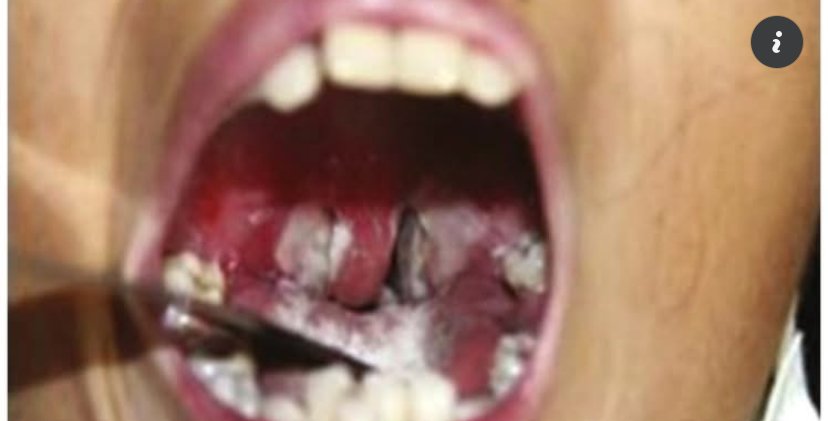
One characteristic sign is a thick greyish membrane that can develop in the throat and interfere with breathing or swallowing.
Because diphtheria can progress rapidly and cause serious complications, suspected cases require urgent medical attention.
WHO advises that treatment should begin promptly when diphtheria is suspected rather than waiting unnecessarily for laboratory confirmation.
Appropriate treatment can include diphtheria antitoxin and antibiotics, depending on the clinical circumstances.
Parents should therefore seek medical care promptly if a child develops symptoms consistent with diphtheria, particularly during an outbreak.
Vaccination Remains the Best Protection
The central message from health authorities and paediatricians remains clear: vaccination continues to be the most effective way to prevent diphtheria and severe disease.
The possibility of breakthrough infection does not remove the value of vaccination.
Instead, it demonstrates why maintaining adequate immunity requires completion of the recommended vaccination schedule and appropriate booster doses.
WHO has stressed that recent diphtheria outbreaks around the world are closely linked to inadequate vaccination coverage.
The organisation estimates that in 2025, about 85 per cent of infants globally received the recommended three primary doses of diphtheria-containing vaccine, leaving millions without complete primary protection.
Why This Matters for Nigeria
For Nigeria, the issue extends beyond individual families.
Diphtheria outbreaks place additional pressure on hospitals, health workers and public health systems.
They can also cause preventable deaths, particularly among children who have not received adequate vaccination.
Strengthening routine immunisation, improving access to booster doses, maintaining accurate vaccination records and quickly identifying suspected cases are therefore important components of outbreak prevention.
Public health authorities also need to address misinformation and barriers that prevent families from accessing routine immunisation services.
The experience of recent outbreaks shows that high vaccination coverage must be maintained consistently rather than only increased after an outbreak has already begun.
What Happens Next
Paediatricians and public health authorities are expected to continue encouraging parents to complete children’s vaccination schedules and seek professional advice about booster requirements.
Healthcare workers also have a role in identifying children who may have missed doses and helping families access catch-up vaccination where appropriate.
For parents, the key step is to check a child’s immunisation record rather than assume that previous doses guarantee lifelong protection.
Children who develop symptoms suggestive of diphtheria should receive urgent medical evaluation, particularly in areas experiencing an outbreak.
The evidence does not suggest that parents should lose confidence in diphtheria vaccination. Instead, it reinforces the importance of complete and sustained immunisation.
Diphtheria remains a serious but preventable disease. While breakthrough infections can occur, maintaining high vaccination coverage and ensuring that children receive recommended booster doses remain among the most important tools for protecting individuals and communities.
Sources:
- PUNCH HealthWise — Interviews with paediatricians Dr Abdurrazzaq Alege and Dr Femi Akodu on waning diphtheria immunity and breakthrough infections.
- World Health Organization (WHO) — Diphtheria fact sheet and vaccination recommendations on primary and booster doses.
- Centers for Disease Control and Prevention (CDC) — Information on diphtheria vaccination, vaccine effectiveness and waning protection.
- Nigeria Centre for Disease Control and Prevention (NCDC) — Public health information and outbreak data on diphtheria in Nigeria.
- Infectious Diseases (2026) — Nigerian study evaluating anti-diphtheria immunity among children aged six to 59 months.