Reported Simon Daniel Yusuph l journalist at wengglobal
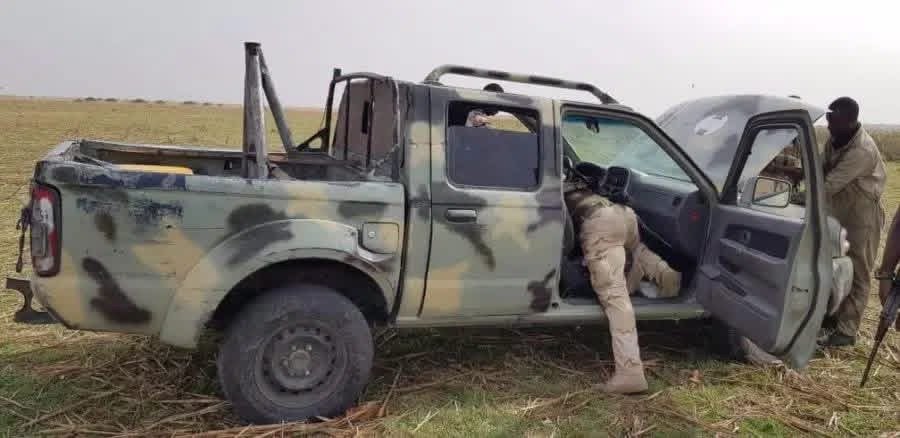
A suspected Boko Haram attack on Gaya community in Hong Local Government Area of Adamawa State has left a police inspector and seven civilians dead, according to the chairman of Hong Local Government Council, Aliyu Sa’ad.
The attack, which occurred on Monday night, August 17, 2026, has renewed concerns over the persistent security challenges facing communities in Adamawa’s northern axis, particularly settlements located close to routes and areas associated with insurgent activity around the Sambisa Forest.
According to reports by PUNCH and Vanguard, the attackers invaded Gaya at night and targeted two houses. The assailants reportedly set both houses ablaze before killing the victims. The chairman of Hong Local Government Area confirmed that eight people were killed in the incident one police officer and seven civilians. (Punch Newspapers)
The attack has prompted the deployment of troops, police personnel, hunters, vigilantes and other security operatives to the area in an effort to track the perpetrators and prevent further violence.
Police Confirm Attack, Await Further Casualty Details
While local authorities put the death toll at eight, the Adamawa State Police Command initially reported recovering five bodies after the attackers withdrew from the community.
Police spokesman, SP Suleiman Nguroje, said four of the bodies recovered were civilians while the fifth was that of a police inspector. He added that security forces had been deployed and that the command was awaiting further information from the field before providing a comprehensive update. (Punch Newspapers)
The difference between the initial police casualty figure and the figure provided by the local government chairman highlights the difficulty of obtaining complete information immediately after an attack in a remote community.
For Wengglobal, the higher figure of eight deaths is therefore attributed to the local government chairman’s account, while the police figure is presented separately rather than treated as a contradiction that has already been resolved.
The circumstances surrounding the deaths of the victims, their identities and the condition of any possible survivors are expected to become clearer as security agencies complete their assessment of the scene.
Gaya Community Targeted at Night
The attacker’s decision to strike at night appears to have left residents particularly vulnerable.
According to the chairman of Hong Local Government, the assailants attacked two houses, burned the structures and killed those inside. The incident occurred after the attackers entered the community under cover of darkness. (Punch Newspapers)
Night-time attacks remain a significant security concern in rural communities across Nigeria’s northeast, where limited security presence, difficult terrain and the remoteness of settlements can make rapid intervention challenging.
The latest incident also underscores the vulnerability of communities situated near areas where insurgent groups have historically operated.
Gaya is located in Hong Local Government Area, an area that has experienced attacks linked to insurgency. PUNCH reported that Monday’s incident was the eighth insurgent attack recorded in Hong Local Government Area in 2026, according to its latest report. (Punch Newspapers)
That frequency has intensified calls for stronger preventive security measures rather than relying primarily on responses after attacks have already occurred.
Security Agencies Launch Manhunt
Following the attack, security agencies moved into the affected area as part of efforts to locate the perpetrators.
The Hong council chairman said the military, police, hunters and other security agencies had been deployed to search for the attackers. Police spokesman Suleiman Nguroje also confirmed that troops and other security personnel, including vigilantes and hunters, were participating in the operation. (Punch Newspapers)
The involvement of multiple security and community-based forces reflects the operational challenges associated with securing remote communities.
Hunters and vigilante groups have increasingly played supporting roles in intelligence gathering and local security operations in parts of northern Nigeria, particularly where residents possess detailed knowledge of difficult terrain.
However, sustained security improvements require coordinated intelligence, adequate personnel, mobility and rapid-response capabilities. Community-based security structures can assist formal agencies but cannot substitute for a comprehensive state security presence.
Sambisa Forest Remains a Security Concern
The latest attack has also renewed attention on the continuing security implications of communities located near the Sambisa Forest.
The forest, which extends across parts of northeastern Nigeria, became internationally associated with Boko Haram during the height of the insurgency. Although Nigerian security forces have conducted extensive operations against insurgents in the region over the years, armed groups continue to pose security threats in parts of the wider northeast.
PUNCH reported that residents in parts of Adamawa continue to face threats from Boko Haram and other armed groups operating around communities bordering the Sambisa Forest. (Punch Newspapers)
Vanguard similarly reported that communities in the area remain vulnerable to attacks and noted concerns surrounding security infrastructure along routes associated with insurgent movement. (Vanguard News)
The geography of the region remains an important factor in security planning. Large forested and sparsely populated areas can provide cover for armed groups, while rural communities may have limited access to immediate emergency assistance.
Proposed Military Barracks Remains Unoperational
The attack has also revived concerns about the proposed establishment of a military barracks at Garaha.
According to the Hong council chairman, the proposed facility is located near one of the major routes reportedly used by Boko Haram fighters to access the Sambisa Forest, but it has yet to commence operations. (Punch Newspapers)
The status of the proposed barracks could become part of the wider debate over security infrastructure in the area, particularly as communities continue to face attacks.
For residents, the presence of operational security formations close to vulnerable settlements could potentially reduce response times and strengthen deterrence.
However, security installations alone cannot eliminate insurgent threats. Their effectiveness depends on personnel, intelligence, logistics, surveillance capabilities and sustained coordination between security agencies and local communities.
The Broader Security Challenge in Adamawa
Adamawa has experienced years of insecurity linked to the Boko Haram insurgency and other armed groups.
The state shares borders with Borno, Taraba and Cameroon, placing several communities within a wider security environment affected by insurgency, cross-border movement and communal tensions.
Although the intensity of Boko Haram violence in Adamawa has fluctuated over time, attacks in vulnerable communities demonstrate that the threat has not disappeared.
The latest Gaya incident is particularly significant because it involved both civilians and a serving police officer.
The killing of a police inspector during the attack illustrates the risks faced by security personnel deployed in communities affected by insurgency. Police officers and other security personnel operating in rural areas can become targets because of their role in protecting civilians and maintaining government presence.
The loss of a police officer also raises questions about the adequacy of security equipment, intelligence support and operational preparedness for personnel working in high-risk communities.
Need for Intelligence-Led Security
Beyond the immediate manhunt, the Gaya attack highlights the need for stronger intelligence-led security operations.
Preventing attacks requires authorities to identify threats before armed groups reach vulnerable communities. This can involve strengthening communication channels between residents and security agencies, improving surveillance of known routes, monitoring suspicious movements and ensuring that credible intelligence reaches operational units quickly.
Community trust is equally important.
Residents who fear retaliation or believe that information will not be acted upon may be reluctant to report suspicious activity. Security agencies therefore need mechanisms that protect informants and demonstrate that information provided by communities can lead to timely action.
The latest deployment of hunters and vigilantes alongside conventional security forces could help authorities gather local intelligence, but such cooperation must remain properly coordinated and operate within the law.
Protecting Civilians Must Remain the Priority
For families in Gaya, the immediate concern is the loss of loved ones and the safety of those who remain in the community.
The burning of two houses adds a property and displacement dimension to the incident. Families whose homes have been destroyed may require emergency support, while residents could temporarily leave the area if they believe another attack is possible.
Authorities will therefore need to combine security operations with humanitarian assistance where necessary.
Any residents displaced by the attack should have access to shelter, food, medical care and protection until it is safe to return.
At the same time, the identities of those killed should be formally established and their families appropriately notified.
Investigation and Accountability
The authorities now face the task of determining precisely who carried out the attack and whether the perpetrators can be linked conclusively to Boko Haram.
Although local officials and media reports describe the attackers as suspected Boko Haram insurgents, the police investigation remains important in establishing responsibility.
Wengglobal considers it appropriate to retain the word “suspected” until security agencies provide definitive evidence or formally attribute the attack to a specific insurgent faction.
This distinction is especially important in Nigeria’s complex security environment, where different armed groups operate across overlapping territories and where initial reports from conflict zones can sometimes change as more information becomes available.
A credible investigation should establish the identity of the attackers, their route into Gaya, the motive for targeting the two houses and whether there were intelligence failures that allowed the operation to occur.
Wengglobal Perspective
The killing of a police inspector and seven civilians in Gaya is another stark reminder that the security challenge in northeastern Nigeria remains a serious national concern.
While the immediate priority is to find those responsible and prevent another attack, the longer-term response must focus on strengthening community protection and addressing the vulnerabilities that allow armed groups to strike rural settlements.
The reported deployment of military personnel, police, hunters and vigilantes is an important first response, but sustained security will require more than a temporary surge in personnel.
Authorities must improve early-warning systems, strengthen intelligence networks, maintain reliable security infrastructure and ensure rapid intervention when threats emerge.
The proposed military facility at Garaha, cited by local authorities as being near a route associated with insurgent movement, also deserves careful consideration within broader security planning.
Most importantly, the government must ensure that communities such as Gaya are not left isolated after the immediate security operation ends.
The death toll currently reported by the Hong council chairman stands at eight—one police inspector and seven civilians—while the Adamawa Police Command initially confirmed the recovery of five bodies and said further information was expected.
As investigations continue, Wengglobal will continue to monitor official updates on the identities of the victims, the outcome of the security operation and any confirmed findings regarding those responsible for the attack.
The people of Gaya, like other communities across Nigeria’s northeast, deserve sustained protection, accountability for attacks and the confidence that security agencies can respond before violence claims more lives.
Sources:
- PUNCH Newspapers — Adamawa attack report — Reported the killing of a police inspector and seven civilians in Gaya and quoted the Hong council chairman and Adamawa Police Command.
- PUNCH Newspapers — Updated report on Boko Haram attack — Published an updated account on August 19, 2026, including police confirmation and the reported history of attacks in Hong LGA.
- Vanguard News — Adamawa attack report — Reported the attack, casualty figures provided by the local government chairman and the deployment of security personnel.