Reported Simon Daniel Yusuph l journalist at wengglobal
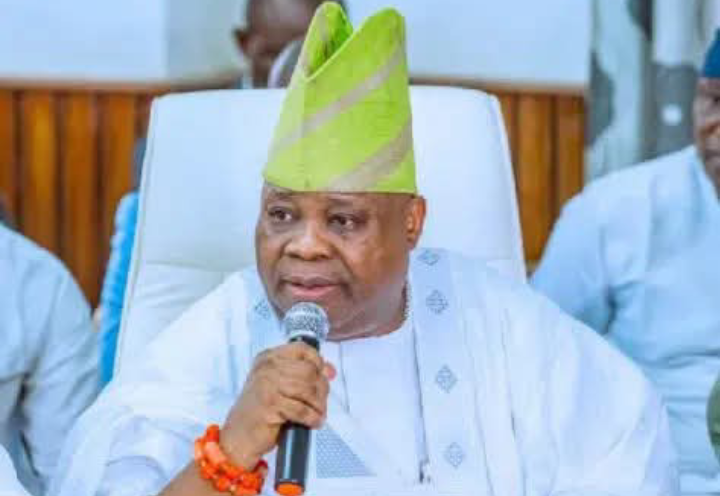
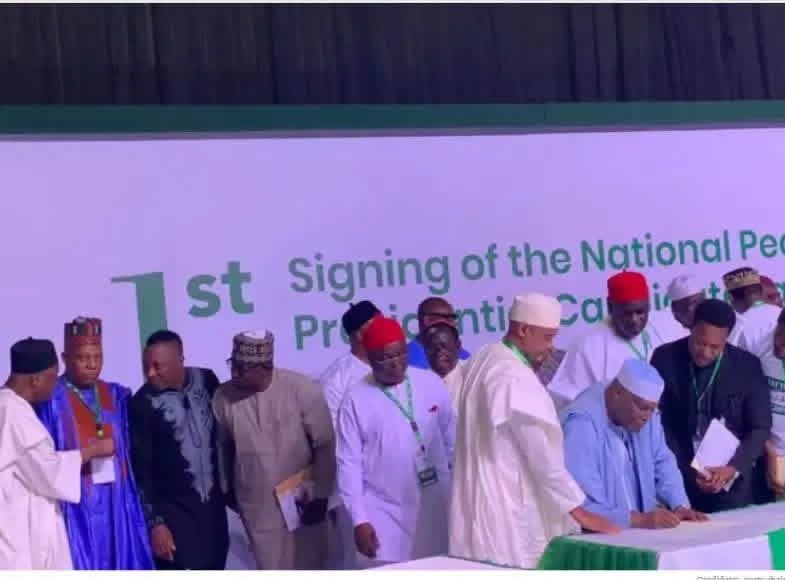
President Bola Ahmed Tinubu, Labour Party’s Peter Obi and other presidential contenders have signed the first National Peace Accord ahead of Nigeria’s 2027 general elections, committing themselves to peaceful, issue-based campaigns and rejecting violence, hate speech, misinformation and other conduct capable of undermining the electoral process.
The agreement was signed on Tuesday, August 18, 2026, in Abuja as political parties and their candidates formally entered the campaign period for the 2027 elections.
The signing represents an important early test of the political class’s commitment to conducting the next election without the violence, inflammatory rhetoric and disinformation that have repeatedly accompanied Nigeria’s electoral contests.
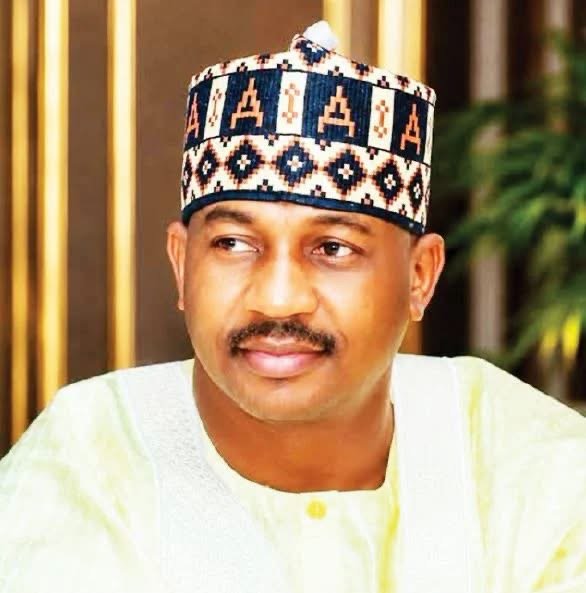
However, the ceremony was not attended by every major presidential contender. Former Vice President Atiku Abubakar, who is contesting under the African Democratic Congress (ADC), was among the prominent absentees reported by several Nigerian media organisations. The distinction is important because the initial headline circulating about the event suggested that Tinubu, Obi and Atiku had all signed the agreement, but reports from PUNCH, Premium Times, Vanguard, The Guardian and other outlets indicate that Atiku was absent. (Punch Newspapers)
The accord was facilitated by the National Peace Committee, chaired by former Head of State General Abdulsalami Abubakar, as Nigeria begins preparations for a presidential contest expected to be closely watched nationally and internationally.
Candidates Commit to Peaceful Campaigns
The peace agreement requires candidates and political parties to conduct their campaigns without resorting to violence, personal attacks, hate speech, misinformation and other forms of rhetoric capable of inflaming tensions.
The emphasis on issue-based campaigning is particularly significant in a country where political competition has frequently been shaped by ethnicity, religion, regional identity and personality-driven politics.
The National Peace Committee has previously played a similar role in Nigerian elections, seeking commitments from political actors to respect democratic principles and pursue peaceful methods of resolving electoral disputes.
The 2027 accord comes against the backdrop of concerns over the increasing use of social media to spread false information, manipulate public opinion and intensify political divisions.
The committee and other stakeholders therefore face the challenge of ensuring that the commitments made at the signing ceremony extend beyond the formal event and influence the behaviour of candidates, political parties, campaign organisations and supporters throughout the election cycle.
Tinubu Warns Against Politics of Division
President Tinubu used the occasion to caution political actors against turning the 2027 election into a contest driven by ethnic or religious divisions.
According to reports from the ceremony, the President stressed that elections should not be treated as a do-or-die affair and urged candidates to place the interests of Nigeria above personal political ambitions. (Independent Newspaper Nigeria)
The President’s position reflects one of the central concerns surrounding Nigeria’s elections: the potential for political competition to deepen existing social divisions.
Nigeria is a highly diverse federation with hundreds of ethnic groups, numerous religious communities and significant regional differences. Political campaigns that exploit these identities can generate tensions extending beyond election day.
An issue-based campaign, by contrast, allows voters to compare candidates based on policies, records, programmes and proposed solutions to national challenges.
For the 2027 election, issues such as economic growth, inflation, employment, insecurity, infrastructure, education, healthcare, energy and institutional reform are expected to feature prominently in the political debate.
Obi Calls on Voters to Punish Violators
Peter Obi, one of the leading opposition figures in the 2027 presidential contest, also signed the accord and called for compliance with its provisions.
Reports from the ceremony indicated that Obi urged Nigerians to hold politicians accountable for violating the commitments contained in the agreement.
Premium Times reported that Obi called on voters to reject politicians who breach the peace agreement, while another presidential candidate, Omoyele Sowore, questioned whether the accord would be effective without meaningful sanctions for violations. (Premium Times Nigeria)
Obi’s position places responsibility not only on candidates and political parties but also on voters, who ultimately have the power to reward or reject political behaviour at the ballot box.
The effectiveness of such an approach, however, will depend partly on the ability of electoral and law-enforcement institutions to document violations and respond appropriately.
Sowore Raises Questions Over Effectiveness
Omoyele Sowore of the African Action Congress also participated in the signing but expressed reservations about the practical impact of peace accords.
According to Premium Times, Sowore described the agreement as potentially ceremonial and called for sanctions against candidates who violate its provisions. (Premium Times Nigeria)
His position highlights a recurring concern about political agreements in Nigeria: whether commitments signed publicly by candidates are accompanied by credible enforcement mechanisms.
A peace accord can establish standards of behaviour, but its success ultimately depends on whether political parties, candidates and their supporters face consequences for breaching those standards.
This makes monitoring particularly important as campaigns intensify.
Atiku’s Absence Raises Questions
The absence of Atiku Abubakar from the signing ceremony has attracted attention because of his status as one of the leading opposition contenders.
Atiku is contesting the 2027 presidential election under the ADC, following a major realignment of opposition forces ahead of the election.
Several reports confirmed that he did not attend the Abuja ceremony. P.M. News reported that Atiku was absent, while Tribune also reported that both Atiku and the ADC were absent from the event. (PM News Nigeria)
The absence does not by itself establish opposition to peaceful campaigning, and it would be inappropriate to interpret non-attendance as a rejection of the principles contained in the accord without a formal statement from Atiku or his campaign explaining his position.
The development nonetheless illustrates the political complexity surrounding the 2027 contest, particularly as opposition parties attempt to challenge the incumbent administration while managing their own alliances and strategic interests.
Campaign Season Begins Amid Heightened Political Competition
The signing comes as Nigeria’s political parties and candidates enter a more active phase of the 2027 election cycle.
President Tinubu is seeking another term in office, while opposition figures including Atiku and Obi are positioning themselves as alternatives to the ruling All Progressives Congress.
The political landscape has changed considerably since the 2023 presidential election, when Tinubu, Atiku and Obi emerged as the leading contenders and the election was decided amid intense competition.
The 2027 race is expected to be shaped not only by the personalities of the candidates but also by economic performance, security, party structures, alliances and the ability of opposition forces to consolidate their support.
The Associated Press reported that the 2027 presidential campaign has begun amid economic pressures, security concerns and a fragmented opposition landscape. (AP News)
Against this background, the National Peace Accord provides a framework intended to reduce the risk that political competition will escalate into violence.
Hate Speech and Misinformation Remain Major Concerns
One of the most significant challenges facing the 2027 campaign is the spread of misinformation and inflammatory content online.
Nigeria has witnessed an increasing reliance on social media as a campaign and mobilisation tool. While digital platforms have expanded political participation, they have also created opportunities for fabricated stories, manipulated images, misleading videos and inflammatory messages to circulate rapidly.
The National Peace Committee has therefore placed emphasis on responsible political communication.
The challenge for political parties will be to ensure that their supporters and campaign networks adhere to the same standards expected of presidential candidates.
A candidate may personally avoid inflammatory language while supporters or unofficial campaign channels spread material designed to provoke opponents or manipulate voters.
This makes political party discipline and public accountability critical components of the peace process.
Why Issue-Based Campaigns Matter
The call for issue-based campaigns is especially relevant to Nigeria’s democratic development.
Political campaigns should provide voters with sufficient information to evaluate competing visions for the country. Instead of focusing primarily on personality, ethnicity or religious identity, candidates should be challenged to explain how they intend to address Nigeria’s most pressing problems.
The economy will likely remain one of the most important issues.
Voters are expected to demand explanations of how candidates would address living costs, unemployment, investment, productivity and public revenue.
Security will also remain central, given persistent insurgency, banditry, communal violence and other threats in different parts of the country.
Education, healthcare, electricity, infrastructure and institutional accountability are similarly likely to influence voter decisions.
An effective issue-based campaign would allow Nigerians to scrutinise competing policy proposals and assess the feasibility of promises before casting their ballots.
Peace Must Extend Beyond Campaign Speeches
The signing of the accord is an important symbolic step, but the real test will come when political competition becomes more intense.
Nigeria’s previous elections demonstrate that political agreements can lose significance when parties and supporters perceive the stakes as existential.
The National Peace Committee will therefore need to monitor compliance and publicly respond to serious violations.
Security agencies, electoral authorities, civil society organisations and the media also have important roles to play.
The media, in particular, must distinguish between legitimate political criticism and inflammatory content, verify claims before publication and provide voters with accurate information about candidates and their policies.
Political parties should similarly take responsibility for the behaviour of their officials, campaign teams and supporters.
Wengglobal Perspective
The signing of the 2027 National Peace Accord offers Nigeria’s political class an opportunity to demonstrate that electoral competition can be fierce without becoming destructive.
President Tinubu, Peter Obi and several other presidential contenders have publicly committed themselves to peaceful and issue-based campaigns. Atiku Abubakar’s absence, however, means that the political significance of the accord will require continued attention, particularly if the opposition candidate later clarifies his position.
The agreement should not be viewed as an end in itself.
Its value will ultimately be measured by the conduct of candidates and parties during the campaign, the response to violations and the ability of institutions to protect voters from violence, intimidation and disinformation.
For Nigerian voters, the most important outcome should be a campaign in which competing candidates are judged primarily on competence, character, records and policy proposals.
The 2027 election will test not only the political fortunes of individual candidates but also the resilience of Nigeria’s democratic institutions.
If the commitments made in Abuja are respected, the peace accord could contribute to a more mature electoral contest in which political disagreements are settled through debate and the ballot rather than intimidation or violence.
But if violations go unchecked, the accord risks becoming another ceremonial document with little practical impact.
The responsibility therefore rests with all political actors to transform their signatures into conduct—and with Nigerian institutions and voters to demand accountability when those commitments are breached.
Sources:
- Vanguard News — 2027: Tinubu, Obi, Atiku, others sign peace accord
- PUNCH — Presidential candidates sign 2027 Peace Accord
- Premium Times — Tinubu, Obi, Sowore and others sign peace accord
- The Guardian Nigeria — Opposition candidates question effectiveness of peace accord
- P.M. News — Atiku absent as Tinubu, Obi and others sign accord
- Tribune Online — Tinubu, Obi and others sign accord as Atiku and ADC are absent
- Associated Press — Nigeria’s 2027 presidential campaign and opposition landscape