Reported Simon Daniel Yusuph l journalist at wengglobal
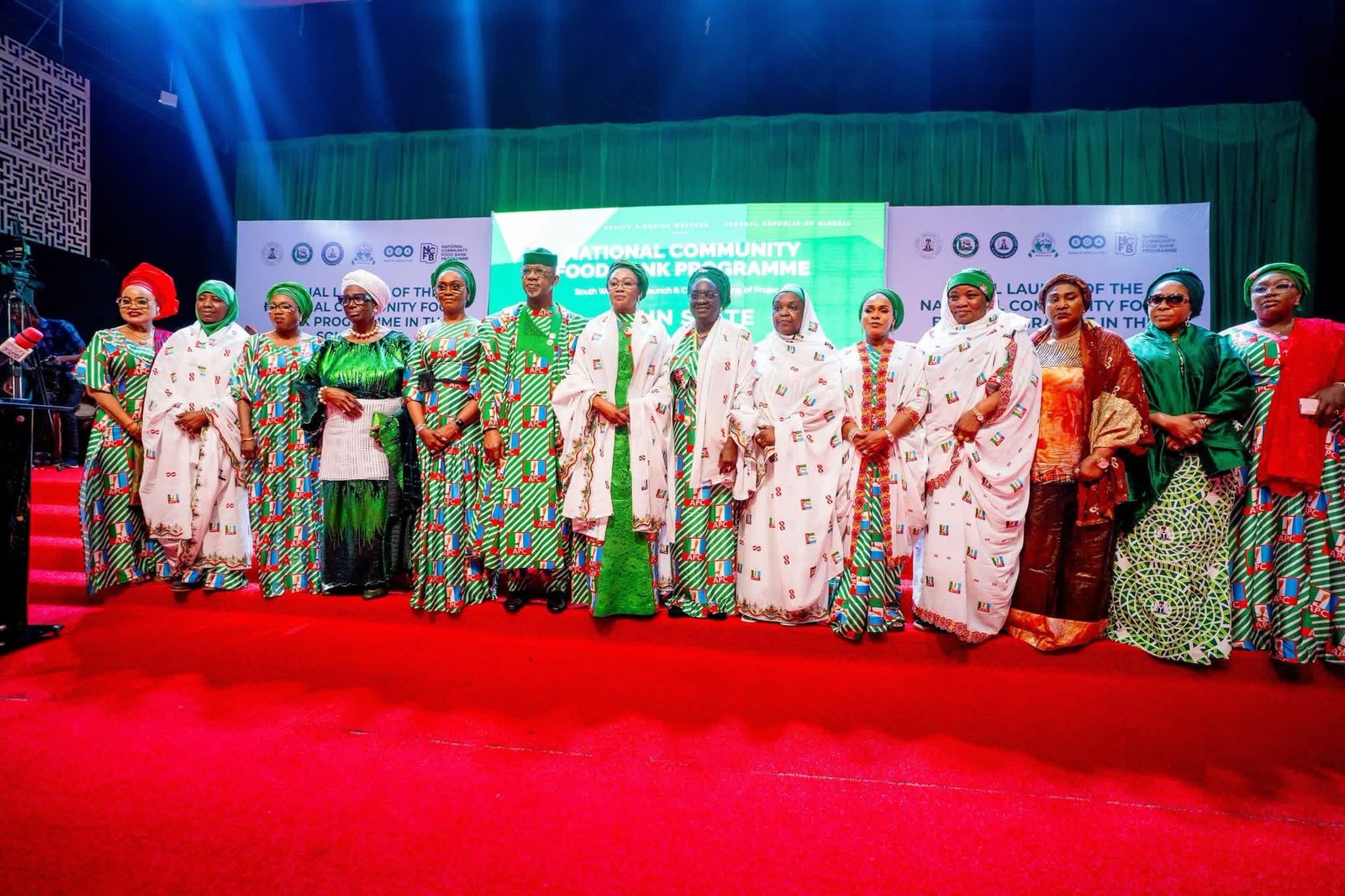
Nigeria’s First Lady, Senator Oluremi Tinubu, has taken the National Community Food Bank Programme into the South-West region, with Ogun State serving as a key launch point in the Federal Government-backed effort to improve nutrition among vulnerable children, pregnant women and nursing mothers.
The intervention, implemented under the Renewed Hope Initiative (RHI), is designed to provide regular access to nutritious food and nutritional support for households facing severe food insecurity and malnutrition.
The South-West rollout represents another stage in the expansion of the National Community Food Bank Programme, which was formally inaugurated in Abuja in February 2026 before subsequent zonal launches began across the country.
The programme is intended to move beyond emergency food distribution by linking nutrition assistance with primary healthcare. Under the model, food banks are established close to Primary Healthcare Centres (PHCs), allowing vulnerable beneficiaries to receive nutritional support alongside medical assessment and treatment.
The initiative comes against the backdrop of persistent concerns about child malnutrition and food insecurity in Nigeria, particularly among children in vulnerable households and women whose nutritional needs increase during pregnancy and breastfeeding.
Food Banks Designed to Link Nutrition With Healthcare
The First Lady has consistently stressed that the food bank programme should not be treated simply as a food distribution scheme.
During a June 2026 meeting with wives of state governors, Tinubu said the programme was being expanded across Nigeria’s six geopolitical zones and that food banks would be located close to primary healthcare facilities.
She explained that children diagnosed with malnutrition could receive nutritional supplements while pregnant and lactating women would also be provided with food items through the programme. (Punch Newspapers)
The model is significant because malnutrition often requires more than simply increasing food intake. Health professionals need to identify children at risk, assess their nutritional condition and determine the appropriate intervention.
By positioning food banks near healthcare facilities, the government hopes to create a system in which vulnerable families can receive both nutritional assistance and medical attention without having to navigate separate systems.
The Federal Ministry of Health and Social Welfare has previously explained that beneficiaries identified through healthcare facilities would be enrolled into the programme and supported with nutritious food until their condition improves. (The Guardian Nigeria)
Ogun Becomes Part of a Wider South-West Strategy
The Ogun rollout places the state within a broader regional strategy aimed at strengthening the nutrition safety net across the South-West.
Ogun is one of Nigeria’s most industrialised states and has a large population spread across urban, semi-urban and rural communities. Despite its economic profile, vulnerable households within the state continue to face challenges associated with food affordability, maternal nutrition and access to healthcare.
The deployment of food banks therefore has implications beyond food distribution. If effectively implemented, the programme could provide an additional mechanism for identifying households experiencing nutritional hardship and connecting them with existing health and social-support services.
The South-West expansion also follows earlier zonal deployments.
The National Community Food Bank Programme was launched in the North-East in April 2026, with Borno State serving as the venue for the regional rollout. The Federal Ministry of Information and National Orientation said the initiative was designed to provide nutritious food to children under six, pregnant and lactating women and vulnerable households. (Ministry of Information)
The programme was subsequently extended to the North-West, where it was launched in Jigawa State in June. Premium Times reported that the North-West intervention targets vulnerable children under six as well as pregnant and lactating mothers across the region’s seven states. (Premium Times Nigeria)
The successive launches indicate an effort to establish the programme as a nationwide nutrition intervention rather than a single-location relief initiative.
Why Child Malnutrition Remains a Major Concern
Nigeria faces a substantial child nutrition challenge, with poverty, food insecurity, inadequate dietary diversity, poor access to healthcare and other socioeconomic factors contributing to malnutrition.
Children under five are particularly vulnerable because inadequate nutrition during the early years can affect physical growth, cognitive development and long-term health outcomes.
Pregnancy and breastfeeding also place increased nutritional demands on women. Poor maternal nutrition can affect both the mother’s health and the wellbeing of her child.
This makes the targeting of children, pregnant women and nursing mothers a significant component of the food bank programme.
The First Lady has repeatedly urged state governments and the wives of governors to identify vulnerable children and ensure that they receive appropriate support.
At a June meeting with governors’ wives, she declared that Nigerian children should not be allowed to go hungry and asked state-level stakeholders to take responsibility for identifying malnourished children. (Punch Newspapers)
The message reflects the programme’s stated focus on prevention and early intervention rather than waiting until malnutrition becomes severe.
Programme Built Around Primary Healthcare Centres
A defining feature of the National Community Food Bank Programme is its proposed connection to primary healthcare.
Primary Healthcare Centres are often the first formal point of contact between vulnerable families and the health system, particularly in rural and low-income communities.
Using such facilities as entry points for the food bank programme could make it easier for health workers to identify children and mothers who require assistance.
The programme’s implementation framework has envisaged using designated primary healthcare centres across Nigeria’s local government areas. Arise News reported during the North-West launch that health workers would identify vulnerable beneficiaries, record confirmed cases and provide nutritional support until medical professionals determine that beneficiaries had recovered. (Arise News)
Such an approach could also make monitoring easier if beneficiaries are properly registered and their nutritional status tracked over time.
However, the effectiveness of the system will depend on the capacity of the primary healthcare facilities themselves. Where health centres lack personnel, medicines, equipment or reliable funding, simply locating a food bank nearby may not automatically guarantee comprehensive care.
Funding and Partnerships
The National Community Food Bank Programme is supported by a combination of government, private-sector and philanthropic contributions.
Punch reported that the programme had secured more than N66 billion in pledges when the national initiative and its Board of Trustees were launched in Abuja in April 2026. Contributions included commitments from the Aliko Dangote Foundation, NNPC Limited, the Federal Government through the Social Action Fund and other donors. (Punch Newspapers)
The First Lady has also identified the Bank of Agriculture, the Federal Ministry of Health and Social Welfare, the National Population Commission and private-sector partners as stakeholders supporting the programme. (Punch Newspapers)
The involvement of the Bank of Agriculture is particularly relevant because the food bank model is expected to rely substantially on locally sourced agricultural products.
This could create a link between nutrition support and local food production, potentially benefiting farmers and strengthening domestic food supply chains.
The approach also reflects a wider policy argument that food insecurity should be addressed not only through imports or short-term relief but through stronger domestic production, distribution and social-protection systems.
From Food Relief to Long-Term Nutrition Policy
For the programme to deliver lasting results, however, the food bank initiative will need to operate as part of a broader national nutrition strategy.
Food assistance can help households cope with immediate shortages, but long-term improvements in child nutrition require access to clean water, sanitation, healthcare, maternal education, diverse diets and sustainable household incomes.
Economic conditions also matter.
Where families cannot consistently afford nutritious food, nutritional vulnerability may persist even when temporary food support is available.
This means the South-West rollout should ideally complement existing state and federal interventions in agriculture, healthcare, poverty reduction and social protection.
Ogun State’s existing healthcare infrastructure could provide a foundation for such integration, but the actual impact will depend on how effectively the programme reaches rural communities and other vulnerable populations.
Accountability Will Be Critical
As the food bank network expands, transparent beneficiary identification and distribution will be essential.
The programme involves substantial financial commitments, food procurement and potentially large numbers of beneficiaries. Authorities will therefore need mechanisms to prevent diversion, duplication, political interference and exclusion of eligible households.
Clear eligibility criteria should be communicated to communities, while distribution records should be maintained and independently monitored.
Health workers should also have a clear process for determining when a child or mother has recovered sufficiently to leave the programme, while households requiring longer-term support should be connected to other social and health services.
The establishment of a Board of Trustees at the national level provides an institutional framework for oversight, but transparency will ultimately depend on regular reporting, monitoring and public accountability.
The Role of Ogun State and Other South-West Governments
The success of the South-West rollout will not rest entirely on the Office of the First Lady or federal agencies.
State governments will have an important role in providing facilities, supporting health workers, identifying vulnerable communities and coordinating with local government authorities.
At the June meeting with governors’ wives, Tinubu specifically encouraged them to take ownership of the initiative and establish additional food banks within their states. (Punch Newspapers)
That emphasis on state-level ownership is important because local authorities are better positioned to understand the specific nutrition challenges facing individual communities.
A child facing food insecurity in a rural farming settlement may require a different intervention from an urban household affected by unemployment and high food prices.
The programme will therefore need sufficient flexibility to respond to local conditions while maintaining national standards.
Broader National Significance
The South-West food bank rollout is part of a larger effort by the Federal Government to address food insecurity through coordinated social and health interventions.
The National Community Food Bank Programme was inaugurated nationally in Abuja in April, with the initiative seeking to reach vulnerable households across Nigeria. The Guardian reported that the North-East launch targeted children aged zero to six, pregnant women and nursing mothers, with food support connected to healthcare services. (The Guardian Nigeria)
The programme’s expansion across geopolitical zones signals an attempt to build a national safety net around some of the country’s most nutritionally vulnerable groups.
For the initiative to succeed, however, the central measure should not simply be the number of food banks launched or the quantity of food distributed.
The more meaningful indicators will be reductions in child wasting and stunting, improved maternal nutrition, increased access to healthcare and evidence that vulnerable families are becoming less dependent on emergency food assistance.
Wengglobal Perspective
The launch of the National Community Food Bank Programme in the South-West, with Ogun State playing a role in the regional rollout, represents an important intervention at a time when food affordability and child nutrition remain major concerns for Nigerian households.
The initiative’s decision to link food banks with primary healthcare centres is particularly significant because it recognises that malnutrition is both a food and health challenge.
Its success, however, will depend on implementation.
The government and its partners must ensure that eligible children, pregnant women and nursing mothers are identified fairly, receive appropriate food and nutritional support, and remain connected to healthcare professionals.
Transparency will also be essential given the scale of financial and material commitments behind the programme.
For Ogun State and the wider South-West, the immediate priority should be ensuring that the programme reaches vulnerable communities rather than remaining concentrated around major urban centres.
The long-term objective should be bigger than distributing food. It should be to build a sustainable system in which children have adequate nutrition from their earliest years, mothers receive appropriate support during pregnancy and breastfeeding, and families can increasingly afford nutritious food without depending on emergency interventions.
The National Community Food Bank Programme offers a potentially important platform for achieving those objectives. But its ultimate success will be judged by outcomes—healthier children, better-nourished mothers and a measurable reduction in the number of Nigerian households unable to meet basic nutritional needs.
For Wengglobal, the South-West rollout is therefore best understood not simply as another government programme launch, but as part of a wider test of Nigeria’s capacity to combine food security, healthcare and social protection into a coordinated response to malnutrition.
Sources:
- PUNCH Newspapers — Reported the First Lady’s expansion of the National Food Bank Programme and its planned connection to primary healthcare centres. (Punch Newspapers)
- The Guardian Nigeria — Reported on the national expansion of the food bank initiative and the North-East rollout targeting vulnerable children and mothers. (The Guardian Nigeria)
- Federal Ministry of Information and National Orientation — Provided details of the National Community Food Bank Programme’s North-East launch and target beneficiaries. (Ministry of Information)
- BusinessDay — Reported on the food bank’s objectives, target groups and planned connection to primary healthcare centres. (Business Day)
- Premium Times — Reported on the North-West rollout and the programme’s focus on vulnerable children, pregnant women and lactating mothers. (Premium Times Nigeria)
- Arise News — Reported on the operational model involving primary healthcare centres, beneficiary identification and continued nutritional support. (Arise News)
- Bank of Agriculture — Provides official information on its involvement in the Renewed Hope Initiative and the National Community Food Bank Programme. (boanig.com)