Reported by Weng Patrick Atokor l Journalist at Weng Global
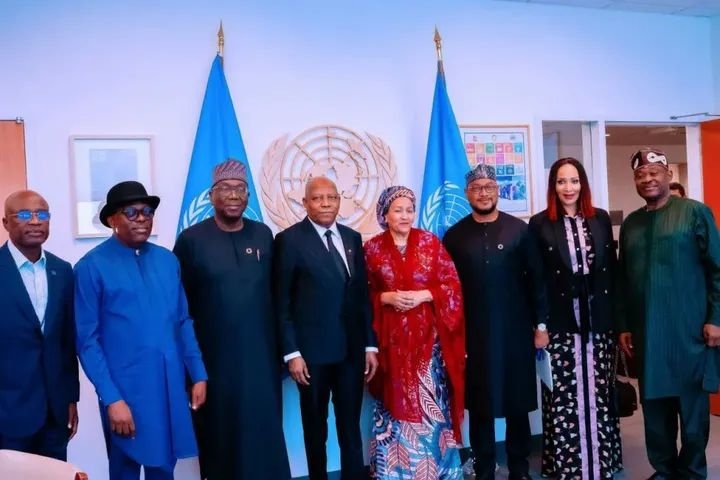
Kwara State Governor AbdulRahman AbdulRazaq has co-presented The Female Diplomat, a book documenting the contributions, experiences and achievements of 50 women who have distinguished themselves in public service and diplomacy.
The book presentation took place in New York during activities surrounding the 81st Session of the United Nations General Assembly, bringing renewed attention to the role of women in diplomacy, international affairs and public leadership.
Authored by Nigerian career diplomat and strategic communication specialist Oluwakemi Taibat Amuda, The Female Diplomat explores the experiences of women working within diplomatic environments and the challenges and opportunities associated with representing their countries on the international stage.
The publication provides a platform for highlighting women whose professional contributions often take place behind the scenes of international relations, from diplomatic negotiations and policy engagement to economic diplomacy and consular responsibilities.
A Book Focused on Women in Diplomacy
The Female Diplomat examines the professional journeys of 50 women who have made contributions to public service and international affairs.
Rather than focusing only on the ceremonial aspects of diplomacy, the book looks at the experiences involved in navigating diplomatic responsibilities, professional expectations, leadership and identity.
The publication is particularly relevant to discussions about women’s representation in institutions responsible for shaping foreign policy and international relations.
Women diplomats have increasingly occupied important positions in national foreign services and international institutions, contributing to negotiations, bilateral relations, trade promotion, development cooperation and other areas of international engagement.
Amuda’s own career provides a Nigerian perspective to the subject. She has served in Nigeria’s diplomatic missions abroad and has experience in areas including trade and investment.
AbdulRazaq’s Participation
AbdulRazaq’s involvement in the book presentation comes against the background of his administration’s emphasis on women’s participation in public leadership in Kwara State.
The governor previously appointed a significant number of women into his cabinet, while his administration has also supported measures aimed at increasing gender representation in public appointments.
His participation in the New York presentation therefore connects a state-level conversation about women’s leadership with a broader international discussion about women’s roles in diplomacy and public service.
The event also brought together Nigerian political and diplomatic figures.
Reports on the presentation identified Senate Leader Opeyemi Bamidele as Chairman of the occasion, while Foreign Affairs Minister Bianca Odumegwu-Ojukwu served as Chief Presenter.
The event was held at Nigeria House in New York as Nigerian officials and stakeholders participated in activities around the UN General Assembly.
Women and Nigeria’s Diplomatic Representation
The participation of women in diplomacy has become an increasingly important issue in international affairs.
Diplomats represent national interests abroad and work across areas including political relations, economic cooperation, security, trade, development and cultural engagement.
For women serving in diplomatic positions, these responsibilities are often combined with the broader challenges associated with achieving representation in traditionally male-dominated institutions.
Research on diplomatic appointments has documented the gradual increase in women’s representation among ambassadors and senior diplomatic officials around the world.
Recent research published in the Review of International Studies found that women accounted for 23.4 per cent of ambassadors globally in 2024, reflecting a long-term increase in women’s representation while also demonstrating that gender disparities remain.
The Nigerian experience forms part of this wider international picture.
The Diplomatic Work Beyond Public Ceremonies
Diplomacy is often associated with major international summits, official receptions and high-level meetings. However, much of the work carried out by diplomats happens away from public attention.
Diplomats engage in negotiations, maintain relationships with foreign governments, support citizens abroad, promote trade and investment, communicate national positions and contribute to international policy discussions.
For women working in these roles, their experiences can provide important insight into how diplomatic institutions operate and how professional identities develop within international environments.
The Female Diplomat seeks to document some of those experiences through the stories and contributions of the 50 women featured in the publication.
Why the Publication Matters
The presentation of the book in New York gives the publication an international setting at a time when governments and international institutions continue to discuss women’s participation in leadership and decision-making.
For Nigeria, the subject has relevance beyond diplomacy.
Women participate in public administration, politics, business, education, civil society and other areas of national development. Their representation in diplomatic and international institutions is therefore part of the wider conversation about participation in public leadership.
The book also offers a record of professional experiences that may be useful to young Nigerians interested in diplomacy, international relations and public service.
By documenting the work of women who have built careers in these areas, the publication contributes to a wider understanding of the people behind Nigeria’s engagement with the international community.
The New York Presentation
The presentation at Nigeria House coincided with the 81st Session of the United Nations General Assembly, one of the major annual gatherings for international diplomacy.
The UN General Assembly provides a platform for member states to discuss global issues, strengthen diplomatic relationships and engage on matters affecting international peace, development and cooperation.
Against this backdrop, the launch and presentation of a book centred on women in diplomacy placed gender representation within a broader international policy environment.
For the Nigerian diplomatic community, the publication also provides an opportunity to recognise the professional contributions of women who have served the country in different diplomatic capacities.
Looking Ahead
The presentation of The Female Diplomat adds to the growing body of work documenting women’s contributions to diplomacy and public service.
As Nigeria continues to participate in multilateral diplomacy and international decision-making, the experiences of its diplomats will remain an important part of understanding how the country represents its interests abroad.
The book’s focus on 50 women also provides a historical and professional record of individuals whose work has contributed to Nigeria’s presence in international affairs.
For readers interested in diplomacy, leadership and women’s participation in public service, the publication offers an opportunity to examine the profession through the experiences of women who have worked within it.
Weng Global – Stories beyond borders
Sources
- Nigerian Consulate General, New York
- Google Books — The Female Diplomat
- Newshereandthere — report on the New York presentation
- Foreign Policy Analysis — research on gender and ambassadorial appointments
- Review of International Studies — research on women’s representation in diplomatic work