Reported by Simon Daniel Yusuph l Journalist at Weng Global
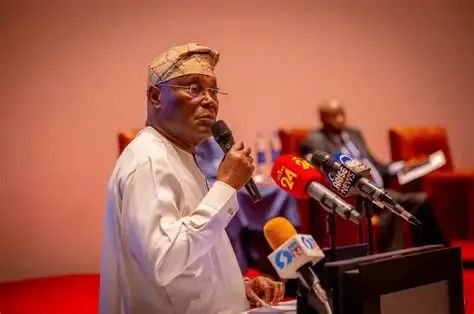
Senator Solomon Olamilekan Adeola, popularly known as Yayi and the All Progressives Congress (APC) governorship candidate in Ogun State, has promised to prioritise 24-hour electricity supply in Abeokuta if elected governor in the 2027 governorship election.
Adeola made the commitment on Wednesday, November 11, 2026, during a stakeholders’ engagement meeting in Abeokuta South Local Government Area, where he outlined proposed infrastructure and development projects for the state capital.
The senator said his proposed administration would collaborate with relevant government agencies and other stakeholders to address electricity challenges and improve access to reliable power in Abeokuta.
He also announced plans to construct additional classroom facilities at two secondary schools in the area, promising that work on the proposed projects would commence within two weeks.
The commitments form part of his broader development promises ahead of the 2027 Ogun State governorship election, as political parties and candidates increasingly engage communities over infrastructure, education, economic opportunities and public services.
Adeola Identifies Electricity as Priority for Abeokuta
Speaking during the stakeholders’ meeting, Adeola said providing uninterrupted electricity would be a priority for his proposed administration if he wins the governorship election.
He stressed that Abeokuta, as Ogun State’s capital, deserved adequate infrastructure and essential public facilities to support its development.
According to the senator, achieving reliable electricity would require collaboration with relevant agencies rather than relying solely on government promises.
Although he pledged to work towards 24-hour electricity, he did not provide a detailed implementation framework explaining how the proposed arrangement would operate, including its financing, power-generation capacity, distribution infrastructure and expected delivery timeline.
The commitment nevertheless places electricity supply at the centre of his proposed development agenda for Abeokuta.
Reliable electricity remains an important requirement for economic activities, particularly for small businesses, commercial establishments, manufacturers, educational institutions and healthcare facilities.
In many Nigerian communities, unreliable electricity has increased the cost of doing business, forcing households and businesses to depend on alternative energy sources such as petrol generators, diesel generators and solar installations.
For Abeokuta residents and business owners, the proposed commitment raises expectations about how a future administration could improve electricity access and reduce dependence on expensive alternatives.
Two Secondary Schools to Receive New Classroom Blocks
Beyond electricity, Adeola announced plans to construct a block of 12 classrooms each at Nawarudeen High School and Anglican High School, Quarry, both in Abeokuta.
He said the proposed projects would form part of efforts to address infrastructure needs within the education sector.
The senator also stated that the projects would commence within two weeks.
The proposed construction would provide additional classroom capacity for the two schools and could help address infrastructure pressures where existing facilities are inadequate.
However, the success of the initiative would depend on the quality of construction, availability of teaching personnel, maintenance arrangements and the ability of the facilities to meet the schools’ actual needs.
Education infrastructure remains an important component of human capital development because access to suitable learning environments can influence students’ participation, teaching effectiveness and overall educational outcomes.
For Ogun State, investment in secondary education is particularly important as the government seeks to improve learning opportunities and prepare young people for employment, entrepreneurship and further education.
Adeola’s proposed classroom projects therefore represent part of a wider discussion about the responsibility of government to provide functional and adequately equipped public schools.
Stakeholders to Influence Proposed Development Agenda
The engagement in Abeokuta South was designed to obtain direct contributions from community representatives and other stakeholders concerning the development priorities of the area.
Participants included Community Development Committees (CDCs), Community Development Associations (CDAs), trade unions, artisan groups, traditional community leaders and traditional rulers.
Adeola explained that the meeting was intended to ensure that the needs identified by residents would be reflected in his proposed manifesto and economic blueprint.
He maintained that a development plan would be more effective if it incorporated the concerns and recommendations of the people expected to benefit from its implementation.
The APC candidate indicated that the recommendations gathered during the engagement would become part of the working document guiding his proposed administration from its first day in office, should he win the election.
He also assured participants that the development priorities identified during the meeting would receive attention and that no community would be deliberately excluded from his proposed development programme.
The approach reflects an effort to build political support through direct engagement with local communities while identifying infrastructure and public service challenges requiring government intervention.
However, translating community recommendations into measurable development outcomes would require clear project priorities, budgetary provisions, transparent procurement and effective monitoring.
Abeokuta South Infrastructure Challenges Under Spotlight
Adeola also acknowledged the need to address wider infrastructure challenges affecting Abeokuta South.
He said improving essential facilities would help restore the area’s position as an important local government area within Ogun State.
Apart from electricity and educational infrastructure, communities across the local government area depend on functional roads, drainage systems, healthcare facilities, water supply and other public amenities.
These services are important for supporting economic activities and improving residents’ living conditions.
For traders and small business owners, improved infrastructure can reduce operating costs and make commercial activities more efficient.
Similarly, better roads and drainage facilities can improve transportation, reduce flooding risks and strengthen connections between residential communities and commercial centres.
The senator’s engagement therefore extended beyond individual project announcements to a broader discussion about the infrastructure requirements of Abeokuta South.
Nevertheless, the extent to which the proposed projects would address the area’s development challenges remains dependent on the details of the final development plan and its implementation.
Yayi Seeks Support for APC Ahead of 2027 Elections
During the meeting, Adeola also appealed to residents and political stakeholders to support the APC in the 2027 general elections.
He specifically urged participants to support President Bola Ahmed Tinubu’s re-election bid, pointing to what he described as development achievements recorded during the President’s first term.
He also called on residents of Abeokuta South to vote for APC candidates across the different elective positions in the forthcoming elections.
The appeal formed part of the political dimension of the stakeholders’ engagement, which combined discussions about community development with efforts to strengthen the party’s support ahead of the polls.
Earlier, Alhaji Ibrahim Razaq, Chairman of the Community Development Committee in Abeokuta South, expressed support for Adeola’s governorship ambition.
Razaq described the senator as an experienced politician and said he believed Adeola had the capacity to lead Ogun State.
He also commended the senator’s reported contributions to infrastructure development, particularly in rural education, school construction, road rehabilitation, drainage, solar-powered streetlights and community-based projects.
Razaq assured Adeola that the CDC leadership and its members remained committed to supporting his ambition.
The endorsement reflects the position expressed by the committee’s leadership during the meeting. It does not, however, establish the voting preferences of every resident in Abeokuta South.
How the Electricity Promise Fits into Adeola’s Wider Ogun Agenda
The latest commitment forms part of Adeola’s broader nine-pillar development agenda, known as the ITESIWAJU Agenda, which he has presented as his proposed programme for Ogun State.
The agenda covers infrastructure, tourism and culture, education and human capital development, security, healthcare, women and youth development, agriculture, job creation and industrialisation, as well as urban development.
The senator has also outlined proposals relating to transportation, local government administration, employment and economic expansion.
His previous campaign engagements have included promises to create employment opportunities, strengthen digital skills development and improve transportation connections across the state.
He has also proposed working with the Nigerian Railway Corporation to explore commuter rail services linking Abeokuta and Lagos.
These commitments suggest that infrastructure development and economic expansion are central themes of his campaign.
However, the proposed 24-hour electricity supply is particularly significant because dependable power is essential to several other sectors identified in the development agenda.
Without reliable electricity, businesses may struggle to expand, industrial activities may face higher operating costs, and public institutions may encounter difficulties delivering essential services.
Consequently, the feasibility of the electricity proposal could become an important measure through which voters assess the credibility of the candidate’s wider development promises.
Electricity Supply and the Responsibilities of State Governments
Delivering reliable electricity in Abeokuta would require more than a political commitment.
Nigeria’s electricity sector involves several institutions and responsibilities, including electricity generation, transmission, distribution and regulation.
The Electricity Act 2023 introduced a framework allowing state governments to establish and regulate electricity markets within their respective jurisdictions, subject to the provisions of the law and the required regulatory arrangements.
This creates opportunities for state governments to develop electricity solutions suited to local needs.
For Ogun State, possible approaches could involve supporting independent power generation, encouraging private-sector investment, developing electricity distribution arrangements and working with relevant electricity-sector institutions.
However, the practical delivery of uninterrupted electricity would depend on the availability of sufficient power, functional distribution infrastructure, investment, effective regulation and sustainable financing.
Adeola’s pledge to collaborate with relevant agencies therefore raises an important question about the specific electricity model his proposed administration would adopt.
Residents and businesses would need clear information about how the programme would be financed, which communities would benefit first and how the proposed supply would be maintained.
A credible electricity policy would also need measurable targets to enable residents to evaluate progress rather than relying exclusively on campaign assurances.
Why the Promise Matters to Ogun Residents
Electricity is closely connected to economic productivity and household welfare.
For small businesses in Abeokuta, dependable power could reduce expenditure on alternative energy sources and allow businesses to operate for longer periods.
Manufacturers and other industrial operators could also benefit from more predictable electricity supply, potentially improving production efficiency and investment confidence.
Healthcare facilities require reliable power to operate essential equipment, preserve medicines and provide services that may depend on uninterrupted electricity.
Schools and other educational institutions could benefit from improved lighting, digital learning facilities and access to technology.
For households, more dependable electricity could reduce the financial and practical difficulties associated with frequent power interruptions.
However, these benefits would only become meaningful if the proposed programme delivers measurable improvements across communities.
The commitment also presents an opportunity for voters to demand greater accountability from political candidates by requesting specific implementation plans, funding arrangements and realistic delivery targets.
What Happens Next?
Adeola said the development priorities identified during the Abeokuta South stakeholders’ meeting would be incorporated into his manifesto and economic blueprint.
He also promised that the proposed classroom construction projects at Nawarudeen High School and Anglican High School, Quarry, would commence within two weeks of the announcement.
The next important development will be whether the proposed projects begin within the stated period and whether further details emerge about their funding and implementation.
For the electricity pledge, attention will likely focus on the technical and financial framework that could support the proposed 24-hour supply.
Residents will also expect clarification on whether the commitment would initially cover selected parts of Abeokuta or extend across the entire state capital.
As the 2027 governorship election approaches, Adeola’s promises will form part of the wider political debate about infrastructure, education, electricity and economic development in Ogun State.
Ultimately, voters will have to assess not only the promises made by candidates but also the credibility of their plans, the resources available and their capacity to deliver measurable results.
For now, the APC candidate has placed reliable electricity and educational infrastructure among the priorities of his proposed administration, leaving residents to await more detailed explanations of how the commitments would be implemented if he is elected governor.
Weng Global – stories beyond borders
Sources
- News Agency of Nigeria (NAN) – Report on Adeola’s 24-hour electricity pledge and proposed classroom projects.
- The Sun Nigeria – Report on Adeola’s Abeokuta South stakeholders’ engagement.
- The Guardian Nigeria – Reporting on Adeola’s ITESIWAJU development agenda.
- The PUNCH – Reporting on Adeola’s 2027 governorship campaign and development promises.
- Electricity Act 2023 – Federal Republic of Nigeria.