Reported by Simon Daniel Yusuph l Journalist at Weng Global
Peter Obi, the presidential candidate of the Nigeria Democratic Congress (NDC), has pledged to unite Nigeria, strengthen national security, reduce poverty and expand employment opportunities if elected president in the 2027 general election.
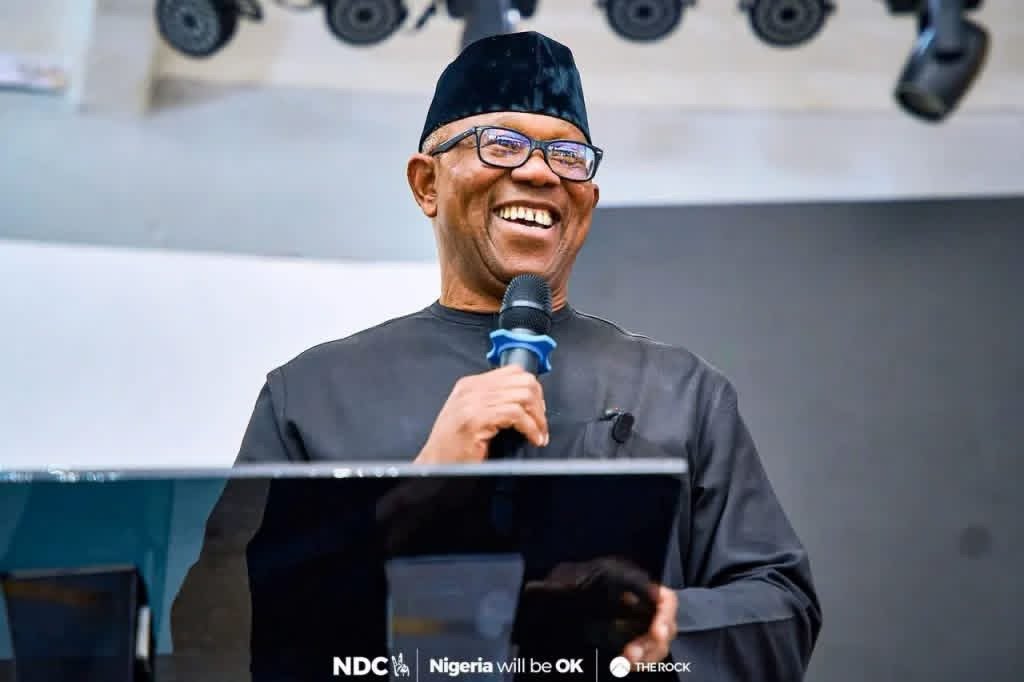
Obi made the commitments during engagements in Benue State on Wednesday, November 11, 2026, where he addressed residents and supporters at a town hall meeting in Makurdi and undertook a humanitarian visit to Yelewata community in Guma Local Government Area.
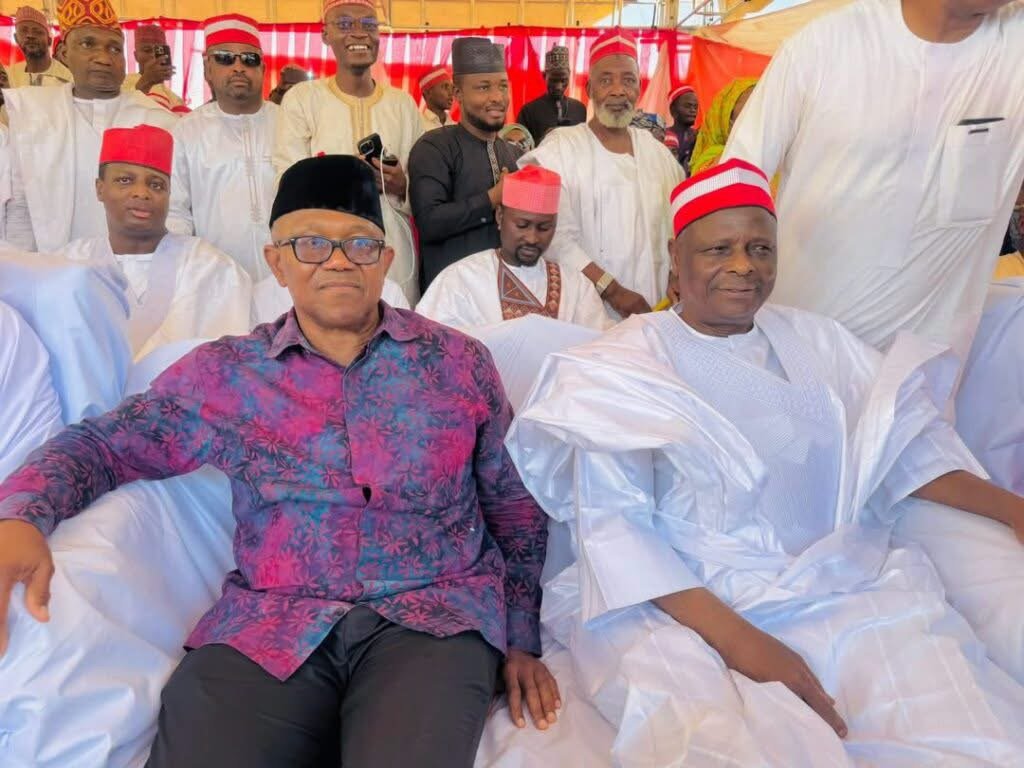
The former Anambra State governor, who was accompanied by his running mate, Rabiu Musa Kwankwaso, presented national unity, security, economic productivity and accountable leadership as central priorities of his proposed administration.
His message comes as political parties and prospective candidates intensify consultations ahead of the 2027 elections, with insecurity, unemployment, poverty and the rising cost of living remaining major concerns for Nigerians.
Obi Places National Unity at the Centre of His 2027 Agenda
Obi identified national disunity as one of the fundamental challenges affecting Nigeria’s development, arguing that divisions along ethnic and religious lines have weakened the country’s ability to address its economic and security problems.
He said his administration, if elected, would work towards building a country where citizens could identify primarily as Nigerians rather than allowing ethnic, religious or regional differences to determine their relationships and opportunities.
The NDC candidate maintained that national unity was not simply a political slogan but an important condition for addressing insecurity, strengthening public institutions and improving the country’s economic prospects.
Nigeria’s diversity remains one of its defining characteristics. However, political tensions, communal conflicts, religious disagreements and competition over resources have periodically strained relationships among communities.
Obi’s proposal places national cohesion within the broader discussion about governance, security and economic recovery.
The challenge for any administration would be translating such commitments into policies that promote equal treatment, strengthen institutions and ensure that citizens across the country’s regions feel represented in national decision-making.
Security and Protection of Lives
Security was another major issue highlighted by the presidential candidate during his Benue visit.
Obi promised to strengthen Nigeria’s security architecture and ensure that citizens could move freely, conduct lawful businesses, attend school and pursue their livelihoods without fear of kidnapping, attacks or other violent crimes.
He argued that insecurity had become a major obstacle to economic activity, particularly in communities where farmers and business owners could no longer operate normally because of threats to their safety.
The candidate also pledged a tougher response to kidnappers and other criminal groups, insisting that government must demonstrate the capacity and determination to protect citizens.
His comments reflect persistent concerns about violent attacks, abductions and displacement in different parts of Nigeria.
Insecurity has affected farming communities, commercial activities, educational institutions and the movement of people and goods. In several affected areas, residents have been forced to abandon their homes and sources of livelihood.
For states such as Benue, where communities have experienced repeated violence, the security question has direct implications for agriculture, food production, local trade and the ability of displaced families to return home.
Obi also promised to prioritise the safe return of internally displaced persons to their communities, arguing that Nigerians should not be left indefinitely in displacement camps because government has failed to protect their homes.
However, the success of any proposed security strategy would depend on its implementation, including intelligence gathering, effective policing, military coordination, justice for victims and measures to prevent renewed attacks.
Job Creation and a Production-Based Economy
On the economy, Obi pledged to create employment opportunities, particularly for young Nigerians, and reduce the number of citizens struggling to find decent work.
He described youth unemployment as unacceptable and promised to develop an economic environment in which young people could establish businesses, secure jobs after graduation and participate meaningfully in productive activities.
The former governor also emphasised agriculture as an important source of employment and economic growth.
He argued that Nigeria must move away from an economy driven largely by consumption towards one that produces more goods and services locally.
According to the position he outlined, expanding domestic production would create opportunities for farmers, manufacturers, entrepreneurs and other businesses while helping to reduce poverty.
Obi also promised to improve access to funding for small businesses and young entrepreneurs, recognising that limited access to affordable credit remains a major obstacle to business expansion.
Small and medium-sized enterprises play an important role in Nigeria’s economy, providing employment and supporting commercial activities across different sectors.
However, many businesses face difficulties such as high operating costs, limited access to finance, unreliable infrastructure and weak purchasing power among consumers.
A production-focused economic strategy would therefore require more than political commitments. It would involve improving electricity supply, transport infrastructure, access to credit, agricultural support, skills development and the wider business environment.
Obi’s employment pledge will likely be assessed by voters against the practical details of how his proposed administration intends to finance job-creation programmes, support private-sector investment and ensure that new opportunities reach different regions and social groups.
Education and Healthcare Commitments
The NDC candidate also identified education and healthcare as important areas requiring stronger government investment.
On education, Obi expressed concern about the number of Nigerian children who remain outside the formal school system and promised to improve access to quality public education.
He proposed increasing investment in classrooms, teachers and the general learning environment to ensure that more children could attend school and acquire the skills required for future employment.
Education remains closely connected to Nigeria’s long-term economic prospects. Poor access to schooling and inadequate learning conditions can limit employment opportunities, deepen inequality and weaken the country’s ability to develop a skilled workforce.
Obi also pledged to strengthen healthcare services, particularly primary healthcare centres, which serve as the first point of contact for many people in rural and underserved communities.
He argued that improving primary healthcare would help reduce preventable deaths and make essential medical services more accessible.
The country’s healthcare system continues to face challenges involving infrastructure, staffing, funding, equipment and access to affordable treatment.
For many low-income households, the cost of medical care can place significant pressure on family finances. Strengthening primary healthcare would therefore be important in improving early diagnosis, maternal and child health services, immunisation and the treatment of common illnesses.
The candidate’s proposals would require clear funding arrangements, effective supervision and sustained investment to produce measurable improvements.
Obi Promises Greater Accountability in Public Finance
Obi also pledged to strengthen the fight against corruption and ensure that public funds are used for the benefit of citizens.
He argued that government resources should be directed towards essential services and development priorities rather than diverted for private interests.
The candidate’s position places public accountability at the centre of his proposed governance approach.
Nigeria has repeatedly faced concerns over public-sector corruption, procurement practices, inefficient spending and the management of government resources.
Improving accountability would require transparent public procurement, effective auditing, independent oversight institutions and consistent enforcement of anti-corruption laws.
It would also require government to make information about public spending and major projects accessible to citizens.
For voters, the important question will be how any administration intends to translate promises of transparency into measurable improvements in public services and the management of national resources.
Humanitarian Visit to Yelewata
Obi’s Benue engagement also included a humanitarian visit to Yelewata, a community in Guma Local Government Area that suffered a deadly attack in June 2025.
The visit was intended to express sympathy with families affected by the violence and pay tribute to those who lost their lives.
The attack left communities traumatised, with families mourning relatives and residents facing the consequences of insecurity and displacement.
Obi’s visit brought renewed attention to the continuing difficulties confronting communities affected by violence in Benue State.
The humanitarian engagement also took place against the background of previous disagreements surrounding attempts by the NDC presidential candidate to visit affected communities in the state.
Before the November 11 visit, the NDC governorship candidate in Benue, Terhemba Shija, had accused the state government of planning to frustrate Obi’s movement to Yelewata.
The Benue State Government rejected the allegation.
Commissioner for Information and Orientation Solomon Iorpev described the accusation as false and politically motivated, maintaining that the state had no intention of preventing Obi from visiting.
The government also cautioned political actors against turning the suffering of victims of the Yelewata attack into a political campaign issue.
The disagreement highlighted the sensitivity surrounding humanitarian visits to communities affected by violence, particularly when such engagements take place during preparations for an election.
While political leaders have a legitimate role in drawing attention to the needs of affected communities, the welfare and dignity of victims must remain central to such visits.
The 2027 Election and Voter Responsibility
Obi also urged Nigerians to take an active role in protecting their votes during the 2027 general election.
He called on voters not to leave polling units immediately after casting their ballots, encouraging them to monitor the counting and recording of results.
He maintained that citizens should ensure their votes are properly counted and transmitted in accordance with the electoral process.
His remarks reflect continuing public interest in electoral transparency and the credibility of Nigeria’s elections.
The protection of votes is an important part of democratic participation. However, electoral integrity also depends on the responsibilities of the Independent National Electoral Commission, political parties, security agencies, election observers and other institutions involved in the process.
Voters’ participation must therefore be accompanied by effective election administration, transparent procedures and respect for the law.
What Obi’s Promises Mean for Nigerian Voters
Obi’s latest commitments place several major national issues at the centre of his 2027 presidential campaign message.
National unity, insecurity, unemployment, poverty, education, healthcare and corruption are concerns that cut across Nigeria’s political and regional divisions.
For residents of violence-affected communities, the promise of improved security and the safe return of displaced families will be particularly important.
For young people, the prospect of employment, access to business funding and better educational opportunities may influence how they assess the candidate’s proposals.
Businesses and farmers will also be interested in whether a production-based economic strategy can address the practical challenges affecting investment, agricultural activity and local manufacturing.
Nevertheless, campaign promises are not the same as implemented government policies. Voters will need to examine the details of the proposals, including funding sources, timelines, institutional arrangements and measurable targets.
The 2027 election will provide Nigerians with an opportunity to compare the programmes and records of competing candidates before deciding who should lead the country.
For Obi and the NDC, the task will be to demonstrate how the commitments outlined during town hall meetings can be translated into a workable national programme.
The central test will be whether the proposed policies can deliver improved security, more employment opportunities, stronger public institutions and better living conditions for ordinary Nigerians.
As preparations for the election continue, the country’s political debate is expected to focus increasingly on how candidates intend to address the challenges affecting citizens across the federation.
Weng Global – stories beyond borders
Sources
- The Sun Nigeria
- Premium Times
- The Punch
- Vanguard
- Nigeria Television Authority (NTA)
- The Cable