Reported by Simon Daniel Yusuph l Journalist at Weng Global
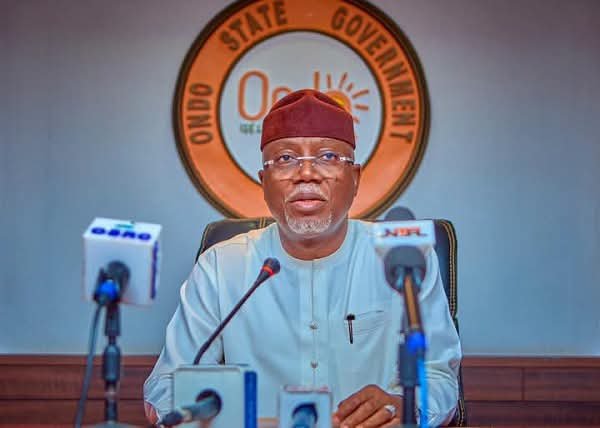
Edo State Governor, Monday Okpebholo, has commended teachers across the state for their dedication, sacrifices and commitment to educating children, as Nigeria joins the rest of the world in marking World Teachers’ Day on October 5, 2026.
In a message marking the occasion, Okpebholo described teachers as central to the development of society and assured educators in Edo that his administration would continue to prioritise their welfare, working conditions and professional support.
The governor’s message comes as World Teachers’ Day reaches its 60th anniversary milestone of the 1966 International Labour Organization (ILO) and UNESCO Recommendation concerning the Status of Teachers, placing renewed attention on the rights, professional standing and working conditions of educators worldwide.
Okpebholo praises teachers’ commitment
Okpebholo said teachers perform a role that extends beyond classroom instruction, describing them as important contributors to the development of the values, skills and character of future generations.
According to the governor, the dedication of teachers remains particularly important because the quality of an education system is closely connected to the people responsible for delivering instruction and supporting pupils through their formative years.
He thanked public school teachers in Edo for continuing to serve despite the challenges associated with the profession and said their welfare remained a concern for his administration.
The governor said the state government would continue taking steps aimed at improving teachers’ working conditions and strengthening the broader education system.
He also emphasised the relationship between teacher motivation and educational quality, arguing that investment in schools must be accompanied by investment in the teachers who work in them.
Edo government highlights teacher recruitment
A significant part of the governor’s message was his administration’s emphasis on addressing teacher shortages in public schools.
Okpebholo said his administration had absorbed 5,000 contract teachers into the state civil service, a move intended to provide greater job security for the affected educators.
He also said 6,000 teachers had been recruited to help address staffing shortages across public schools.
The figures reflect a broader education-sector intervention by the Edo government since Okpebholo assumed office.
Earlier reporting by Channels Television confirmed that more than 5,000 contract teachers were formally absorbed into the state’s Ministry of Education in October 2025, with appointment letters presented to the teachers at the Government House.
The development followed years during which some teachers worked under contractual arrangements. The 2025 exercise was presented by the state government as part of efforts to improve the status and welfare of educators.
Other reports have also documented the government’s recruitment of thousands of teachers to address manpower shortages in the state’s public education system. The Guardian reported in January 2026 that the administration had employed more than 6,000 teachers within its first year, alongside investments in school construction and tertiary education.
From teacher welfare to classroom capacity
The focus on teacher recruitment is significant because the availability of school infrastructure alone does not guarantee effective education.
Schools require qualified teachers to deliver lessons, assess pupils, provide guidance and maintain the continuity of learning.
The issue has previously attracted attention from education stakeholders in Edo.
During the 2025 World Teachers’ Day activities, the state chapter of the Nigerian Union of Teachers raised concerns about shortages of teachers in public schools, particularly in rural communities. Reports at the time indicated that the shortage had placed additional pressure on the available teaching workforce.
Against that background, the recruitment and regularisation of teachers represent an important component of efforts to strengthen the state’s education system.
However, the long-term effect of such measures will depend not only on the number of teachers employed but also on their deployment, professional development, remuneration, working conditions and the quality of learning taking place in classrooms.
Education reforms extend beyond recruitment
Teacher recruitment is only one element of the education agenda being pursued by the Edo government.
Reports in early 2026 said the administration had constructed more than 100 schools and employed more than 6,000 teachers during its first year, while also increasing financial support to tertiary institutions.
The state’s education authorities have also previously reported investments in teacher training and the development of technical education.
During the 2025 World Teachers’ Day period, Edo’s Commissioner for Education, Paddy Iyamu, said more than 6,000 teachers had received training in digital skills, including areas such as robotics and artificial intelligence.
These measures point to a broader question facing education systems in Nigeria: how to ensure that increased access to teachers and schools translates into improved learning outcomes.
Recruitment can reduce pressure on overstretched classrooms, while infrastructure can provide safer and more conducive learning environments. But sustained improvements also require effective teaching, adequate learning materials, professional development and mechanisms for monitoring educational outcomes.
World Teachers’ Day takes on wider significance
The governor’s message coincides with a global conversation about the future of the teaching profession.
UNESCO says World Teachers’ Day is observed every October 5 and commemorates the adoption of the 1966 ILO/UNESCO Recommendation concerning the Status of Teachers. The recommendation established international benchmarks concerning teachers’ rights and responsibilities, recruitment, employment, preparation and working conditions.
The 2026 observance is particularly significant because it marks 60 years since the adoption of the recommendation.
UNESCO has chosen the theme “Standing with teachers: 60 years of protecting the profession, advancing its status and shaping our futures.”
The theme reflects growing concern about the pressures facing teachers, including workload, remuneration, professional recognition, technological change, climate-related challenges, inclusion, migration and displacement.
The global observance therefore goes beyond celebrating teachers. It also provides an opportunity for governments and education stakeholders to examine whether teachers have the resources, professional support and working conditions required to perform their roles effectively.
Why teacher welfare matters to Edo
For Edo State, the question of teacher welfare is closely connected to the state’s long-term human-capital development.
Teachers are responsible for helping children acquire foundational literacy, numeracy, scientific knowledge and other skills that influence their future opportunities.
In urban centres such as Benin City, schools may have access to facilities and personnel that are less readily available in some rural communities. Ensuring that qualified teachers are distributed across the state therefore remains an important part of addressing educational inequality.
Okpebholo said his administration’s priority was to ensure that children have access to qualified teachers regardless of whether they live in Benin City or rural communities.
That objective, if effectively implemented, could have implications beyond the immediate education sector.
Better-supported teachers can contribute to stronger classroom delivery, while adequate staffing can reduce pressure on individual educators and improve the ability of schools to provide consistent instruction.
But the effectiveness of the government’s policies will ultimately need to be assessed through measurable outcomes, including teacher retention, pupil performance, attendance, infrastructure quality and access to education across communities.
Reactions and the continuing challenge
The governor’s World Teachers’ Day message represents official recognition of the contribution teachers make to Edo’s development.
Previous reactions from education stakeholders have similarly highlighted the importance of combining school infrastructure with adequate staffing.
During the 2025 World Teachers’ Day celebrations, Edo’s NUT leadership welcomed some government interventions but also raised concerns about teacher shortages, particularly in rural areas.
The concerns underline the fact that education reform is an ongoing process rather than a single government programme.
Recruiting thousands of teachers can address an immediate manpower gap, but maintaining standards requires continued investment in teacher training, supervision, salaries, professional progression and suitable classroom environments.
The same applies to school construction. New or renovated buildings must be properly maintained and supplied with the personnel and resources required for effective teaching and learning.
What happens next
The immediate challenge for the Edo government is to sustain its education interventions while ensuring that commitments to teachers translate into practical improvements across schools.
This includes maintaining adequate staffing levels, supporting professional development and ensuring that teachers are deployed where they are most needed.
The state will also need to monitor whether investments in schools and teacher recruitment produce measurable improvements in educational outcomes.
For teachers, World Teachers’ Day provides an opportunity not only for recognition but also for continued attention to the conditions under which they work.
Globally, UNESCO’s 2026 observance is calling for stronger recognition and support for teachers as the profession faces new pressures from technology, changing social conditions and evolving educational needs.
For Edo, the central test will be whether policies designed to improve teacher welfare and increase staffing can produce classrooms in which both teachers and pupils are adequately supported.
Why the development matters
Okpebholo’s message places teachers at the centre of Edo’s education agenda at a time when the state is pursuing wider reforms in school infrastructure and staffing.
The governor’s recognition of teachers’ sacrifices is significant, but the more consequential issue is whether such recognition is matched by sustained policies that improve working conditions and educational outcomes.
The state’s reported recruitment and regularisation of thousands of teachers represent substantial interventions. Their long-term value, however, will depend on implementation, accountability and the ability of the education system to translate additional manpower into better learning for children.
For parents and pupils, the ultimate measure of the reforms will not simply be how many teachers are employed or how many schools are constructed.
It will be whether children receive better teaching, whether classrooms are adequately staffed, whether rural communities receive equitable attention and whether pupils leave school with the knowledge and skills required to build productive futures.
As Edo joins the global celebration of World Teachers’ Day, that remains the wider challenge: recognising teachers today while building an education system capable of supporting them and the generations they teach.
Weng Global – stories beyond borders
Sources
- Edo State Government
- UNESCO
- The Nigerian Observer
- Channels Television
- The Guardian Nigeria
- Punch
- Nigerian Union of Teachers