Reported by Simon Daniel Yusuph l Journalist at Weng Global
The Supreme Court’s decision to restore key provisions of Nigeria’s Electoral Act 2026 has created fresh uncertainty for some candidates preparing for the 2027 elections, with the Independent National Electoral Commission (INEC) still reviewing the certified judgment before determining how the ruling will be applied.
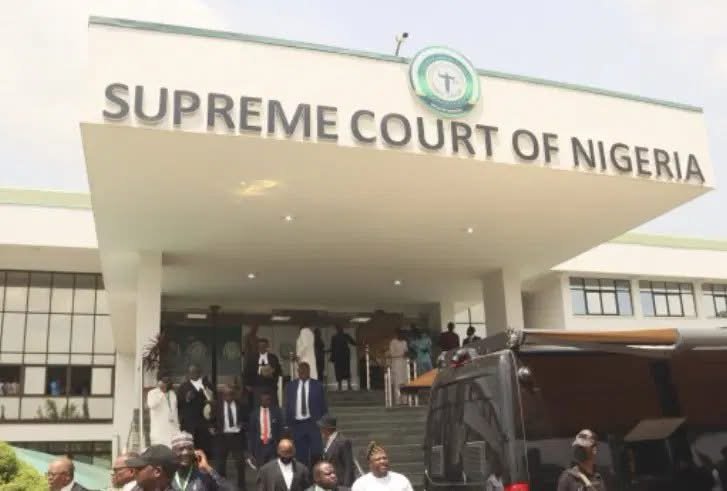
The seven-member Supreme Court panel, led by Justice Adamu Jauro, on September 24, 2026, allowed INEC’s appeal and restored Sections 77(5), 77(6), 77(7) and 84(2) of the Electoral Act 2026. The provisions concern political party membership registers and the procedures parties must follow when nominating candidates.
While the judgment did not name or automatically disqualify individual candidates, its restoration of the disputed provisions has raised questions over nominations conducted during a period when the legal status of those provisions was being contested.
INEC has said it will examine the Certified True Copy of the judgment before deciding on its implementation, leaving affected candidates and political parties waiting for clearer guidance.
What the Supreme Court Decided
The dispute originated with the Zenith Labour Party, which challenged parts of the Electoral Act 2026 at the Federal High Court in Abuja.
The party argued that the disputed provisions were inconsistent with constitutional provisions governing political parties and amounted to interference in parties’ internal affairs.
The Federal High Court dismissed the challenge on May 5, 2026.
ZLP subsequently appealed to the Abuja Division of the Court of Appeal.
On July 16, the Court of Appeal partly upheld the appeal and declared Sections 77(5), 77(6), 77(7) and 84(2) unconstitutional and void.
The decision created a legal problem for INEC because the provisions were connected to the Commission’s requirements for political party membership registers and candidate nomination procedures ahead of the 2027 elections.
INEC appealed to the Supreme Court, asking the apex court to restore the Federal High Court decision.
The Supreme Court ultimately agreed with the electoral commission and set aside the Court of Appeal judgment.
The apex court also awarded N2 million in costs against ZLP.
In related cases involving the Social Democratic Party and Youth Party, the Supreme Court also ruled in favour of INEC. The Youth Party’s appeal was struck out after the court upheld an objection that it had been filed one day outside the stipulated period.
What the Restored Provisions Mean
The provisions now back in force have potentially important consequences for political parties.
Section 77(5) provides that only members whose names appear on a party’s membership register submitted to INEC within the required period can participate in the relevant primary, congress or convention.
Section 77(6) requires parties to use the membership register submitted to the electoral commission for those exercises.
Section 77(7) provides consequences for a party that fails to submit its membership register as required, including restrictions on its ability to field candidates.
Section 84(2) deals with the methods through which political parties nominate candidates, including direct primaries or consensus.
The Supreme Court’s restoration means these statutory requirements cannot simply be disregarded because they were previously struck down by the Court of Appeal.
That is the source of the present uncertainty.
The question now is not whether the provisions exist. The Supreme Court has settled that issue.
The more complicated question is how the restored provisions apply to political parties and candidates whose nomination processes took place amid the earlier court ruling.
Why Candidates Are Concerned
The judgment does not itself declare individual candidates ineligible.
That distinction is important.
A number of political figures have emerged as candidates for the 2027 elections, and some have been identified in media reports as potentially affected by questions surrounding party membership, primaries or nomination procedures.
But the Supreme Court did not issue a blanket order removing those candidates from the ballot.
Instead, the ruling restored statutory requirements that could become relevant if a particular party’s nomination process is challenged.
The Cable, for example, identified candidates including Donald Duke, Kingsley Chinda and Ovie Omo-Agege as among those whose nominations could face questions depending on the circumstances surrounding their emergence. The report also stressed that the Supreme Court judgment itself did not name or disqualify the candidates.
That distinction should remain at the centre of reporting on the issue.
It would be inaccurate to state that the Supreme Court has already disqualified the affected candidates.
The more accurate position is that the judgment has created a legal framework under which some nominations could face further scrutiny or challenge.
INEC’s Position Adds to the Uncertainty
INEC’s response has become a significant part of the developing story.
The Commission’s Deputy Director of Voter Education and Publicity, Wilfred Ifogah, told Leadership that INEC would review the Certified True Copy of the Supreme Court judgment before determining how to implement it.
That means the electoral body has not publicly provided a final, candidate-by-candidate interpretation of the ruling.
For candidates whose political futures could depend on the interpretation, the waiting period is consequential.
Political parties are also watching the Commission’s next steps because candidate nomination is a structured electoral process involving deadlines, documentation, party primaries and the eventual publication of candidate lists.
INEC itself has previously emphasised the importance of coordinated electoral timelines.
In June, INEC Chairman Professor Joash Amupitan said court decisions affecting the Commission’s timetable could create uncertainty because electoral activities such as membership-register submission, party primaries, candidate uploads, ballot-paper production and other preparations are interconnected.
The present dispute therefore comes at a sensitive point in the preparation for the 2027 election.
The Timing Problem
The controversy is partly a consequence of the sequence of court decisions.
The disputed provisions were initially valid under the Electoral Act.
The Court of Appeal later struck them down in July.
INEC challenged that decision at the Supreme Court.
The Supreme Court subsequently restored the provisions in September.
During that period, political parties were already conducting their political activities and selecting candidates.
This creates a difficult legal and administrative question: where a party conducted an exercise while the legal position was unsettled, how should the restored provisions now be applied?
The answer cannot safely be assumed on the basis of headlines or political statements.
It depends on the precise language of the Supreme Court judgment, the circumstances of the individual party and the applicable provisions of the Electoral Act.
The recently released Certified True Copy of the judgment provides additional detail on the court’s reasoning. The Supreme Court held that INEC’s guidelines and timetable were aimed at strengthening transparency and internal democracy in party primaries and upheld the relevant statutory framework.
The Membership Register Question
One of the most important areas is the membership register.
The restored provisions place significant importance on the register submitted to INEC before party primaries, congresses and conventions.
Under the framework, the register is not merely an administrative document.
It can determine who is eligible to participate in the process.
This creates potential consequences where questions arise over whether a candidate or delegate was properly captured in the relevant register.
It also places greater responsibility on political parties to maintain accurate records and comply with the statutory timetable.
The Supreme Court’s decision therefore strengthens INEC’s legal basis for enforcing the register requirements.
However, whether a particular candidate is affected remains a matter requiring examination of the facts surrounding that candidate’s nomination.
Parties Reject Automatic Disqualification Fears
Political parties have moved to reassure their candidates and supporters.
The Peoples Democratic Party, Allied Peoples Movement and Labour Party told Punch that they complied with the relevant provisions of the Electoral Act during their membership-registration and primary processes.
The parties nevertheless said they were still awaiting or reviewing the Certified True Copy of the Supreme Court judgment to understand its full implications.
The Nigeria Democratic Congress also rejected suggestions that the judgment automatically endangered the candidacies of Peter Obi, Rabiu Kwankwaso and Ovie Omo-Agege.
These responses illustrate the political sensitivity of the ruling.
Parties have an interest in protecting the nominations of candidates who have already emerged, while rival political actors may see opportunities to challenge nominations they consider unlawful.
The difference between those positions will likely be tested through documentation, legal challenges and INEC’s implementation decisions.
The Chinda Question
One of the cases already attracting attention involves Kingsley Chinda, the APC governorship candidate in Rivers State.
The Association of Legislative Drafting and Advocacy Practitioners has asked INEC to disqualify Chinda, linking its request to the Supreme Court’s restoration of the disputed Electoral Act provisions. The group also asked for discussions involving INEC, the APC and Chinda over a pending legal dispute.
That request should not be confused with a decision by INEC or the Supreme Court.
It is an application or demand from a third party.
As of the latest reporting, there is no basis for presenting Chinda as disqualified by the Supreme Court judgment itself.
The case demonstrates, however, how the ruling could generate additional legal challenges involving individual candidates.
Other Candidates Under Scrutiny
Chinda is not the only politician whose candidacy has attracted attention following the ruling.
Reports have also mentioned figures including former Inspector-General of Police Mohammed Abubakar Adamu, who is seeking the Nasarawa governorship on the platform of the Social Democratic Party, and former Minister of Communications and Digital Economy Isa Ali Pantami, who emerged as the PDP governorship candidate in Gombe State.
Some candidates have insisted that their nominations remain valid and that the Supreme Court ruling does not automatically affect them.
The legal position, however, must ultimately be determined by the relevant facts and applicable law rather than by political declarations.
This is particularly important because the Supreme Court judgment concerns the statutory framework governing political parties and nominations generally, rather than a list of individually disqualified candidates.
The Defection and Substitution Debate
Another issue likely to receive attention is the relationship between the restored provisions and politicians who changed parties after participating in earlier political activities.
The Supreme Court’s ruling has prompted legal debate about whether the restored provisions could affect candidates whose political movements, party membership or nomination histories raise questions under the law.
However, legal commentators have cautioned against assuming that every politician who changed parties is automatically disqualified.
The specific circumstances matter.
Questions may include when a politician became a member of a party, whether the person appeared on the relevant membership register, whether the individual participated in another party’s primary, how the candidate was subsequently nominated and whether the relevant statutory requirements were satisfied.
Each case therefore requires separate examination.
Nigeria’s 2027 Election Calendar
The timing of the dispute is significant because the 2027 general election is approaching.
INEC’s published timetable currently schedules the presidential and National Assembly election for January 16, 2027, while the governorship and State House of Assembly elections are scheduled for February 6, 2027.
The Commission must therefore balance legal compliance with the practical demands of election preparation.
Candidate lists cannot remain uncertain indefinitely.
Ballot papers have to be prepared.
Election materials have to be produced.
Political parties need clarity about their nominees.
Voters need to know who will appear on the ballot.
The longer legal uncertainty persists around individual nominations, the greater the administrative pressure on INEC.
At the same time, the Commission must ensure that its decisions comply with the Supreme Court’s interpretation of the law.
Why It Matters
The dispute is larger than the fate of individual candidates.
It raises questions about the relationship between Nigeria’s electoral laws, political parties and the constitutional independence of party organisations.
The Court of Appeal had previously taken the view that some of the statutory provisions improperly interfered with constitutional protections concerning political parties.
The Supreme Court has now rejected that interpretation in relation to the disputed provisions and upheld the National Assembly’s authority to legislate in the area.
The ruling therefore strengthens the statutory role of the Electoral Act in regulating aspects of internal party democracy.
For INEC, it provides stronger legal backing for enforcing the relevant membership-register and nomination requirements.
For political parties, it reinforces the importance of complying with statutory procedures.
For candidates, it means that nomination cannot be viewed solely as an internal party matter where the law imposes specific requirements.
For voters, it underscores the importance of knowing which candidates are legally recognised and properly nominated before election day.
What Happens Next
The immediate next step is for INEC to complete its review of the Certified True Copy of the Supreme Court judgment and communicate how the Commission intends to apply the ruling.
Political parties are also expected to examine their nomination records and assess whether their procedures complied with the restored provisions.
Candidates who believe their nominations could be challenged may seek legal advice or pursue appropriate judicial remedies.
Rival candidates, political parties and interest groups may also bring challenges where they believe the law was not followed.
Such cases would need to be determined through the appropriate legal channels.
INEC’s candidate lists and subsequent court decisions will therefore be important indicators of how the Supreme Court ruling translates into electoral practice.
Conclusion
The Supreme Court has settled one important question: Sections 77(5), 77(6), 77(7) and 84(2) of the Electoral Act 2026 remain valid.
But the judgment has not automatically settled every question surrounding candidates who emerged during the period when those provisions were being litigated.
That is why uncertainty remains.
INEC must now determine how the judgment affects the administration of the 2027 electoral process, while political parties and candidates wait to see whether their individual circumstances require further scrutiny.
The distinction between legal uncertainty and actual disqualification is crucial.
At present, the available evidence supports saying that some nominations may face legal questions. It does not support declaring all potentially affected candidates disqualified.
As Nigeria moves closer to the 2027 elections, the credibility of the process will depend partly on how transparently INEC applies the Supreme Court’s decision.
Candidates need clarity.
Political parties need certainty.
Voters need reliable information.
And the electoral commission must ensure that whatever decision it ultimately takes is grounded in the judgment, the Electoral Act and the Constitution rather than political pressure.
The Supreme Court has provided the legal direction.
The next test is whether INEC can turn that direction into a clear, consistent and transparent electoral process.
Weng Global – stories beyond borders
Sources
- Supreme Court of Nigeria — Judgment in the INEC and Zenith Labour Party electoral dispute.
- Independent National Electoral Commission (INEC) — 2027 Election Timetable and official statements.
- Premium Times — Report on the Supreme Court’s restoration of Electoral Act provisions.
- TheCable — Analysis of candidates potentially affected by the ruling.
- Punch — Reports on political parties’ responses to the judgment.
- Leadership — Report on INEC’s review of the Certified True Copy of the judgment.
- Vanguard — Reporting on the ruling and its implications for opposition candidates.
- ThisDay — Reporting on the Supreme Court’s interpretation of INEC’s guidelines and timetable.