Reported by Weng Patrick Atokor l Journalist at Weng Global
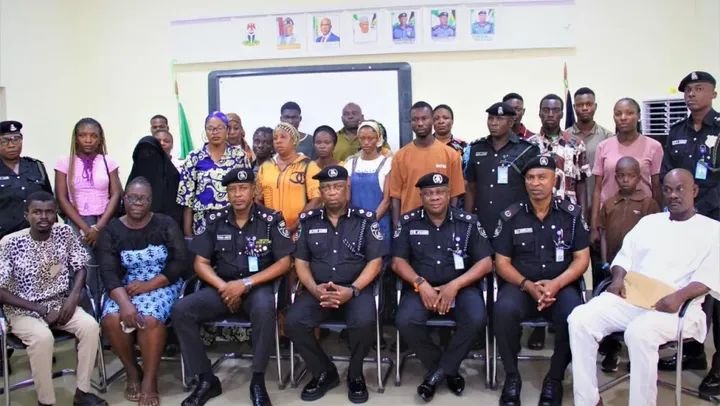
The Ogun State Police Command has presented cheques worth ₦30.55 million to families of police officers who died in the course of service, as part of the Nigeria Police Force’s efforts to provide financial support to the dependants of fallen personnel.
The payment, valued at ₦30,552,851, was presented by the Ogun State Commissioner of Police, CP Bode Ojajuni, on behalf of the Inspector-General of Police, IGP Olatunji Disu.
The presentation formed part of activities marking the 2026 National Police Week and was directed at families of officers who lost their lives while serving the nation.
Police Honour Fallen Officers
The Ogun Command said the insurance payments were intended not only to provide financial assistance to bereaved families but also to recognise the sacrifices made by police officers who died while performing their duties.
The Commissioner said the gesture demonstrated the Nigeria Police Force’s continued commitment to the welfare of its personnel and the families they leave behind.
According to the command, the financial benefits cannot replace the lives lost, but they can provide practical assistance to families facing the economic consequences of losing a breadwinner or family member.
The payments were made under the welfare and insurance arrangements established for police personnel, including the Group Life Assurance framework.
The scheme is designed to provide benefits to eligible beneficiaries when police officers die in service, helping to offer financial relief to their next of kin.
Support for Families of Deceased Officers
The welfare of families of police officers who die in active service has remained an important issue within the Nigeria Police Force.
Police officers operate in an environment where exposure to armed criminals, road accidents, violent attacks and other operational hazards can result in serious injury or death.
For families left behind, the death of an officer can create immediate financial difficulties, particularly where the deceased was responsible for household income, children’s education or other essential expenses.
The insurance payments therefore provide a measure of financial support at a particularly difficult period.
The Ogun presentation is part of a broader pattern of insurance and welfare payments being made by the Nigeria Police Force to families of deceased officers across the country.
In March 2026, the Force announced the disbursement of more than ₦2.4 billion in insurance benefits to 1,075 families of deceased officers, according to Punch.
The nationwide programme demonstrates the scale of the financial obligations associated with supporting families of police personnel who die while serving.
Group Life Assurance Scheme
The Nigeria Police Force has previously used the Group Life Assurance scheme to provide compensation to families of officers who die in the line of duty.
In July 2023, the Police Force announced the distribution of insurance benefits totalling ₦535.62 million to 68 families of deceased officers and personnel who suffered permanent disabilities under the Group Life Assurance 2022/2023 policy year.
The scheme is therefore not a new initiative, but part of an established welfare structure intended to protect police personnel and their families against some of the financial consequences associated with death or serious injury in service.
At the state level, similar payments have continued in 2026. In Oyo State, for example, the police command presented insurance cheques totalling ₦37,889,857.87 to families of 48 officers who died while in service.
This distinction is important because the ₦37.9 million figure appears to correspond to the Oyo State payment, rather than the Ogun payment.
Why the Payment Matters
The financial support has significance beyond the individual cheque presentations.
Police officers are among the public servants routinely exposed to security risks while carrying out responsibilities that include protecting lives and property, preventing crime and responding to emergencies.
When an officer dies in service, the consequences extend beyond the Force to spouses, children, parents and other dependants.
Providing insurance benefits can help affected families meet immediate expenses and, where managed carefully, support longer-term needs such as education, housing and household welfare.
The payments also reinforce the principle that the families of officers who die in service should not be abandoned after their relatives make the ultimate sacrifice.
However, insurance compensation should be viewed as part of a wider welfare responsibility rather than a replacement for comprehensive support.
Timely payment of entitlements, access to pension benefits, educational assistance for children and continued engagement with bereaved families can all contribute to reducing the hardship associated with the loss of a police officer.
Broader Police Welfare Efforts
The Ogun payment comes amid renewed attention to welfare within the Nigeria Police Force.
The Force has continued to announce financial interventions for families of deceased personnel in different states.
For example, Punch reported that the Ogun Command had earlier disbursed more than ₦30.5 million to families of fallen officers in connection with the 2026 National Police Week activities.
The wider national insurance programme also indicates that the issue of personnel welfare remains a significant component of police administration.
For a force whose officers routinely work under dangerous conditions, welfare policies can influence both personnel morale and the confidence of serving officers that their families will receive support if they die in service.
What Happens Next
The immediate priority for the beneficiaries is to receive and utilise the insurance benefits according to their family needs.
The Nigeria Police Force is expected to continue processing eligible claims under its insurance and welfare arrangements for officers who die or suffer serious injuries in the course of service.
The Ogun development also highlights the importance of ensuring that legitimate insurance claims are processed efficiently and that families of fallen officers receive their entitlements without unnecessary delays.
For the beneficiaries, the money cannot compensate for the loss of their relatives. But timely financial assistance can help cushion some of the economic hardship that follows such losses.
The Ogun State Police Command’s presentation therefore represents both a welfare intervention and an acknowledgement of the sacrifices made by officers who died while serving the public.
Weng Global – Stories beyond borders
Sources
- Tribune Online — Police present N30.5m to families of fallen officers in Ogun
- Punch Newspapers — Police welfare reports on payments to families of fallen officers
- The Guardian Nigeria — IGP flags off distribution of insurance benefits to families of deceased officers
- Tribune Online — Oyo Police present N37.9m insurance cheques to families of 48 fallen officers