Reported by Weng Patrick Atokor l Journalist at Weng Global
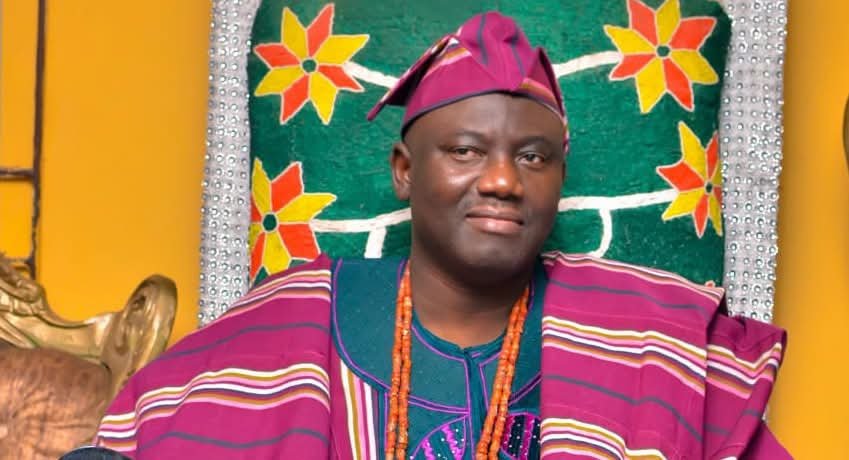
The Alaafin of Oyo, Oba Akeem Owoade, has called on government to strengthen funding for education, stressing that access to quality learning should extend to every child, including pupils living with disabilities.
The monarch made the call during a meeting with members of the Governing Council of the Federal College of Education (Special), Oyo, led by its Chairperson, Ambassador Nihinlola Akanbi, at his private residence in Oyo town on Thursday.
His position, contained in a statement issued on Friday by his Director of Media and Publicity, Bode Durojaiye, places particular attention on the role of government investment in creating a more inclusive education system.
Education as a Right
According to the Alaafin, education should be regarded by government as a basic human right and as a foundation for building a more just and equal society.
He argued that achieving equal learning opportunities requires adequate funding, particularly for institutions and programmes serving pupils and students with disabilities.
The argument is significant because access to education is not only about the number of schools available. It also involves whether institutions have the teachers, facilities, learning materials and specialised support required by students with different educational needs.
For learners with disabilities, the quality and availability of such support can have a direct bearing on their ability to participate meaningfully in education.
Focus on Federal College of Education (Special), Oyo
The meeting brought the Alaafin together with representatives of the Federal College of Education (Special), Oyo, an institution with a longstanding focus on training teachers and supporting special education in Nigeria.
The college was established on October 5, 1977, originally as the Federal Advanced Teachers’ College (Special). Its specialised role has made it an important institution within Nigeria’s education system.
The institution’s work is particularly relevant to inclusive education because teachers require specialised knowledge and skills to effectively support students with disabilities.
The Alaafin expressed satisfaction with the management of the college and urged its governing council and other stakeholders to remain committed to the institution’s development.
He also assured the council of his willingness to support efforts aimed at advancing the college.
“The only thing I will charge you for is performance,” the monarch said, according to the statement.
He added that the college had structures and human resources that could support university-level development but would require political backing and royal support.
Why Inclusive Education Matters
The Alaafin’s intervention draws attention to a wider question facing education systems in Nigeria: whether funding and educational planning adequately account for learners who require additional support.
Inclusive education involves creating learning environments in which students with disabilities can access education alongside other learners, with appropriate adjustments and support where necessary.
That can include specialised teaching methods, accessible facilities, trained teachers, assistive learning resources and appropriate assessment systems.
Without those provisions, formal access to a classroom does not necessarily translate into equal educational opportunity.
This makes funding for specialised teacher education particularly important. Institutions such as the Federal College of Education (Special), Oyo, have a role in preparing educators who can work with learners with diverse needs.
The Wider Education Funding Question
The Alaafin’s comments also fit into a broader national conversation about the resources required to improve Nigeria’s education sector.
Education funding affects several areas simultaneously, including infrastructure, teacher development, learning materials, research, technology and student support.
For special education, the funding requirements can be more specific because institutions may need specialised equipment and facilities in addition to conventional educational resources.
The issue therefore extends beyond increasing budgetary allocations in general. It also involves determining where resources are directed and whether spending reaches institutions and programmes serving learners who may otherwise face greater barriers to education.
Alaafin’s Growing Education Focus
The Alaafin has previously been associated with discussions around education and knowledge.
In July 2026, The Guardian reported that Oba Owoade, alongside academics, called for greater recognition of indigenous knowledge systems and their integration into mainstream scholarship during the inauguration of the Alaafin Institute of Yoruba Studies at Emmanuel Alayande University of Education, Oyo.
That earlier intervention focused on the relationship between African intellectual heritage and education, while his latest comments centre more directly on funding and equal access to learning.
Together, the issues highlight different dimensions of education: what is taught, whose knowledge is recognised, who has access to education and whether institutions have sufficient resources to deliver it.
The Institution at the Centre of the Discussion
The Federal College of Education (Special), Oyo, occupies a distinctive place in Nigeria’s education landscape because of its specialisation.
The institution’s history dates back to 1977, and its primary purpose has been connected to teacher education for special-needs learners.
Its specialised function also means that its development has implications beyond the college itself. Teachers trained there can potentially influence educational outcomes for students with disabilities across different parts of Nigeria.
The institution has also featured in discussions about higher institutional development.
In 2025, a Federal Government press release concerning proposed institutional upgrades listed the Federal University of Education (Special), Oyo, among institutions considered by a Senate committee on tertiary institutions and the Tertiary Education Trust Fund.
What the Call Means for Government
The Alaafin’s appeal is ultimately a call for greater attention to the resources required to make education accessible to a wider section of society.
For government, the issue involves more than announcing support for education. Sustainable progress requires funding, implementation, institutional oversight and measurable outcomes.
For specialised education institutions, those requirements can include investment in teacher training, accessible infrastructure, specialised equipment and programmes designed around the needs of students with disabilities.
For parents and learners, the practical measure of such policies is whether students can obtain quality education regardless of their circumstances.
A Broader Question for Nigeria
Nigeria’s education debate frequently focuses on school enrolment, infrastructure and teacher availability. The discussion around special education adds another important dimension: whether the education system is equipped to serve every learner effectively.
The Alaafin’s intervention therefore brings the question of educational equality into sharper focus.
A system may expand access to schools while still leaving some learners behind if facilities, teaching methods and trained personnel are not adapted to their needs.
The challenge is consequently not simply to increase access but to make that access meaningful.
What Happens Next
The immediate next step will depend on the actions of government and education authorities, as well as the continued engagement of the college’s governing council and other stakeholders.
The Alaafin has indicated his willingness to support initiatives aimed at advancing the Federal College of Education (Special), Oyo.
For the institution, the broader issues include continued development, institutional capacity and the possibility of further progress towards university status.
For government, the debate raises a continuing question about how education resources can be distributed in ways that improve access and outcomes, including for learners with disabilities.
The central issue is therefore not simply how much Nigeria spends on education, but whether available resources are sufficient and effectively directed to ensure that every learner has a genuine opportunity to learn.
Why This Matters
The Alaafin’s call places inclusive education within a wider national discussion about educational funding and equality.
For Weng Global, the significance of the development lies not only in the monarch’s statement but in the underlying issue: education funding determines the capacity of institutions to provide opportunities to learners who may otherwise face structural barriers.
As Nigeria continues to consider the future of its education system, specialised institutions such as the Federal College of Education (Special), Oyo, remain important to the conversation about how inclusion can move from policy language to practical educational opportunities.
Weng Global – Stories beyond borders
Sources
- The PUNCH — report on the Alaafin of Oyo’s call for increased education funding and his meeting with the Federal College of Education (Special), Oyo.
- NewsclickNG — additional report on the monarch’s appeal for resources for education programmes supporting learners with disabilities.
- The Guardian — report on the Alaafin’s earlier call for greater recognition of indigenous knowledge in African scholarship.
- Office of the Surveyor-General of the Federation — official 2025 press release referencing the proposed Federal University of Education (Special), Oyo.