Reported by Simon Daniel Yusuph l Journalist at Weng Global
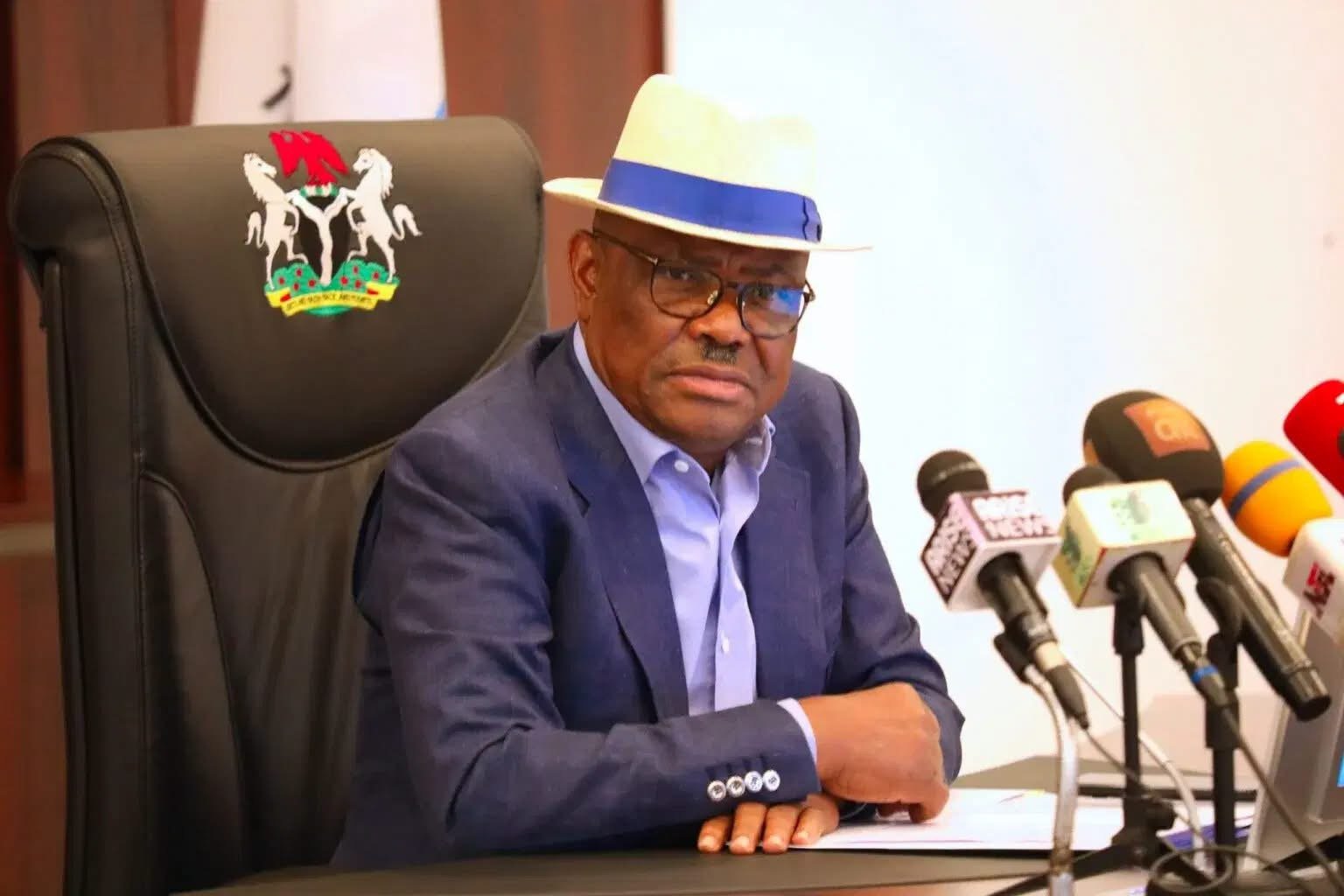
Minister of the Federal Capital Territory (FCT), Nyesom Wike, has disclosed details of a strategy he said the five-member G5 governors’ group used during the 2023 presidential election to limit Atiku Abubakar’s support in the South-South, as political parties and candidates prepare for the 2027 election.
Wike said the G5 governors viewed Atiku, then the Peoples Democratic Party (PDP) presidential candidate, as a major political threat in the region because of the PDP’s traditional strength there.
According to him, the group decided that allowing Peter Obi, who contested the 2023 election on the Labour Party platform, to attract votes in parts of the South-South would reduce the support available to Atiku.
Wike made the disclosure during an appearance on TVC’s Journalists’ Hangout, where he also discussed the prospects of Atiku and Obi ahead of the 2027 presidential election. His account was reported by TheCable, Punch and The Guardian.
Wike Explains the G5 Calculation
Wike said the G5 governors recognised the PDP’s strength in the South-South and concluded that Atiku stood to benefit from that traditional support.
He said the group therefore adopted a strategy that allowed Obi to attract votes that might otherwise have gone to Atiku.
The G5 consisted of Wike, then governor of Rivers State, Seyi Makinde of Oyo State, Samuel Ortom of Benue State, Ifeanyi Ugwuanyi of Enugu State and Okezie Ikpeazu of Abia State.
The governors had refused to support Atiku’s 2023 presidential campaign amid their dispute with the PDP leadership over the party’s internal power-sharing arrangements and the leadership of the party.
Wike’s latest account provides his explanation of how the internal PDP dispute affected the wider presidential contest.
TheCable reported that Wike specifically cited the South-South and said the G5’s objective was to prevent Atiku from taking advantage of the PDP’s traditional strength in the region.
Obi Benefited From the Division
The 2023 presidential election produced a three-way contest between Bola Tinubu of the All Progressives Congress (APC), Atiku of the PDP and Obi of the Labour Party.
Tinubu eventually won the election, while Atiku finished second and Obi third.
Obi nevertheless recorded strong performances in the South-East and made significant gains in parts of the South-South.
Wike’s comments suggest that the G5 governors’ decision was partly intended to weaken Atiku’s regional advantage, although the electoral outcome was influenced by several factors beyond the actions of the five governors.
The Guardian reported that Wike also said the group did not allow Obi to defeat him in Rivers State because he believed such an outcome would have sent a political signal he did not want.
The comments offer an account from one of the central figures in the G5 dispute, rather than an independent assessment of the full range of factors that shaped the 2023 result.
Wike Questions Obi’s 2027 Position
Wike also argued that the political conditions that helped Obi gain substantial support in 2023 have changed.
He pointed specifically to the controversy surrounding the APC’s Muslim-Muslim presidential ticket, which he said contributed to support for Obi during the previous election.
Wike argued that the issue would not have the same effect in 2027.
He also questioned whether Obi could reproduce his 2023 performance under the current political circumstances.
According to The Guardian, Wike said Obi should not expect the same level of support in 2027 and suggested that the former Anambra governor should consider a future presidential contest beyond the next election.
Those are Wike’s political assessments and do not establish how voters will behave in 2027.
Atiku and Obi Remain Central to Opposition Politics
The 2027 contest has already developed into a major political competition involving President Bola Tinubu, Atiku and Obi, alongside other presidential candidates and emerging political alliances.
Atiku is seeking the presidency on the platform of the African Democratic Congress (ADC), while Obi is contesting under the Nigeria Democratic Congress (NDC).
The opposition landscape has also been marked by discussions about whether leading political figures can agree on a common candidate to challenge the APC.
The Guardian reported in August that Atiku, Obi and other opposition figures had been involved in consultations around a possible common political platform. However, subsequent developments have shown continued disagreements over leadership, candidacy and the direction of the opposition.
By September, Obi had ruled out stepping down from the presidential race, while Rabiu Kwankwaso publicly called on Atiku to withdraw, demonstrating the continuing difficulty of reaching a unified opposition arrangement.
Wike’s Position on Tinubu
Wike, who was appointed FCT minister by President Bola Tinubu in 2023, has remained publicly supportive of the President.
His political position has created an unusual relationship between him and the PDP, the party under which he served as Rivers governor, as well as with other political actors preparing for 2027.
In his recent comments, Wike argued that the opposition remains divided and questioned whether Atiku and Obi could create a sufficiently broad political coalition.
He has also described the political circumstances of 2027 as different from those of 2023.
The Guardian reported that Wike believes the opposition is more fragmented than it was before the 2023 election.
However, the political landscape remains fluid, with opposition consultations and competing alliances continuing ahead of the election.
Rainbow Coalition Adds Another Dimension
Wike’s role in the 2027 political contest has also been linked to his proposed “Rainbow Coalition”, an alliance involving political actors from different backgrounds.
The initiative has generated disagreement within the APC, with some APC governors distancing themselves from arrangements they believe could weaken the party or affect President Tinubu’s re-election effort.
The Progressive Governors’ Forum has said its members would not support political arrangements capable of undermining the President’s re-election or weakening APC candidates.
Wike, however, has maintained that his support for Tinubu is firm while presenting the coalition as a broader political arrangement.
The development illustrates the increasingly complex political calculations surrounding the 2027 election, where party structures, individual political networks and possible alliances are developing alongside formal party campaigns.
What Wike’s Disclosure Means for 2027
Wike’s account of the 2023 election provides insight into how intra-party disputes can influence presidential contests beyond formal party structures.
The G5 dispute showed that disagreements among influential party figures can affect campaign support and voting patterns in different regions.
His latest comments also place greater attention on the South-South, where political alliances and regional voting patterns could again become important in the 2027 contest.
However, the circumstances of 2027 are not identical to those of 2023.
The candidates, political parties, alliances, economic conditions and campaign issues have changed. The opposition has also undergone significant restructuring, including the emergence of new platforms and efforts to form broader alliances.
Consequently, Wike’s description of the G5 strategy should be understood as an account of the 2023 political calculations rather than evidence of what voters will do in 2027.
Opposition Unity Remains a Key Issue
One of the major questions ahead of 2027 is whether opposition politicians can overcome their differences and coordinate their campaigns.
Atiku and Obi have both remained major figures in the opposition space, but efforts to establish a single presidential candidate have encountered disagreements.
The Guardian reported earlier in September that opposition groups had begun discussions around a single candidate, while other factions and political actors continued to maintain separate positions.
The situation means that the eventual structure of the opposition could depend on negotiations among parties, presidential candidates and influential political leaders.
At the same time, the APC is dealing with its own internal political calculations as different interests position themselves ahead of the presidential election.
What Happens Next
The 2027 political contest is expected to become more defined as parties finalise their structures, campaigns and alliances.
For Atiku and Obi, the question of whether their campaigns can attract support across regional and political boundaries will remain central to their strategies.
For Wike, his continued support for Tinubu and his efforts to build political networks outside traditional party alignments are likely to remain significant aspects of his political activity.
No political strategy can determine the eventual voting behaviour of Nigerians in advance. The outcome will depend on the candidates, campaigns, alliances, issues and voters’ decisions when the election is held.
Wike’s latest comments nevertheless provide another insight into the political calculations that shaped the 2023 election and the strategies being discussed as Nigeria approaches the 2027 presidential contest.
Weng Global – stories beyond borders
Sources
- The Guardian Nigeria — reporting on Wike’s comments about Peter Obi, Atiku Abubakar and the G5 strategy.
- TheCable — reporting on Wike’s account of the G5 governors’ strategy during the 2023 election.
- Punch — reporting on Wike’s disclosure concerning the G5 and the South-South vote.
- The Guardian Nigeria — reporting on opposition consultations and the political landscape ahead of the 2027 election.