Reported by Simon Daniel Yusuph l Journalist at Weng Global
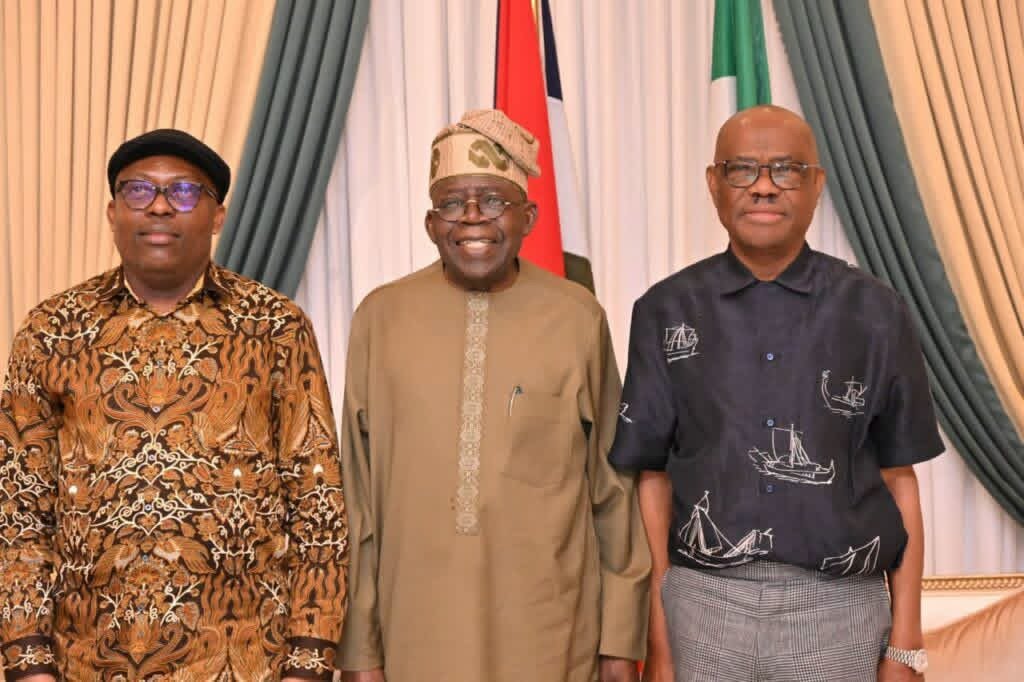
President Bola Ahmed Tinubu has commended the Minister of the Federal Capital Territory (FCT), Nyesom Wike, for his contributions to infrastructure development, while praising Rivers State Governor Siminalayi Fubara for embracing peace and reconciliation following the prolonged political disagreement that divided the state’s leadership.
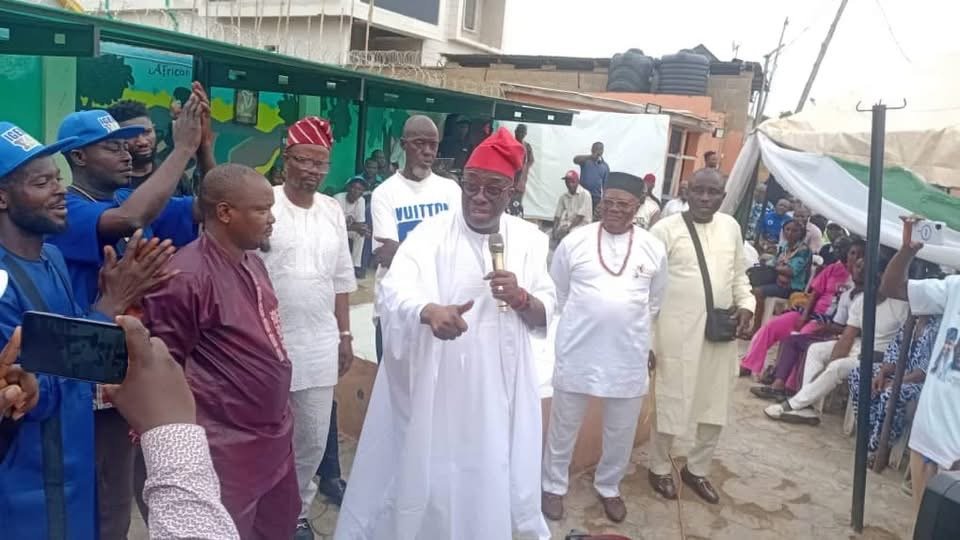
The President made the remarks during his visit to Rivers State on Saturday, November 7, 2026, where political leaders and supporters gathered at the Adokiye Amiesimaka Stadium in Port Harcourt for a rally organised by the Rainbow Coalition in support of his 2027 re-election ambition.
Tinubu’s commendation came amid renewed political cooperation between Wike and Fubara, whose disagreement had generated significant tension within Rivers State and affected relationships among political officeholders, lawmakers and supporters.
The reconciliation has become a major feature of the state’s political landscape ahead of the 2027 general elections, with both leaders now working within the same political arrangement to mobilise support for Tinubu.
The President’s remarks also placed renewed attention on the importance of political dialogue and cooperation in a state that experienced a prolonged governance crisis following disagreements between the governor and members of the Rivers State House of Assembly.
Tinubu Recognises Wike’s Role in Infrastructure Development
Wike, a former governor of Rivers State, has remained an influential political figure in the state since leaving office in 2023. His current position as FCT minister has also placed him at the centre of the Tinubu administration’s infrastructure and political activities.
Tinubu’s recognition of Wike’s infrastructure contributions reflects the Federal Government’s emphasis on ongoing development projects and the minister’s role in implementing major infrastructure initiatives in Abuja.
Since assuming office as FCT minister, Wike has frequently highlighted road construction, urban renewal and other infrastructure projects as important parts of his administration’s activities in the capital territory.
Infrastructure development has remained a prominent issue in discussions about the FCT, particularly as Abuja continues to experience population growth and increasing demand for roads, public facilities and other essential services.
Wike’s political influence in Rivers State has also remained significant. Before becoming FCT minister, he served as governor from 2015 to 2023 and played a central role in the political process that produced Fubara as his successor.
The relationship between the two men, however, deteriorated after Fubara assumed office, resulting in a political crisis that divided the state’s political structure.
Their eventual reconciliation has now brought the two leaders into a renewed working relationship, with Wike coordinating political activities under the Rainbow Coalition in Rivers State.
Fubara Praised for Choosing Reconciliation
Tinubu’s commendation of Fubara for embracing peace comes against the background of the political disagreement that disrupted relations between the Rivers State executive and legislature.
The dispute between Fubara and Wike escalated into a wider political crisis involving lawmakers, political supporters and competing groups within the state.
The disagreement also affected the relationship between the executive and legislative arms of government, raising concerns about governance, political stability and the ability of state institutions to function effectively.
In March 2025, Tinubu declared a state of emergency in Rivers State following the escalating political crisis. The action involved the suspension of the governor, deputy governor and members of the state legislature for the emergency period.
The emergency arrangement lasted six months and ended in September 2025, when democratic governance was restored and Fubara returned to office.
Following the restoration of government, Fubara publicly acknowledged the role played by Tinubu in facilitating reconciliation among the political stakeholders.
In a statewide broadcast on September 19, 2025, the governor said he and Wike, alongside members of the Rivers State House of Assembly, had agreed to put their differences behind them and embrace peace in the interest of the state.
The governor’s declaration represented an important moment in efforts to restore political stability, although subsequent developments showed that maintaining cooperation among the different political groups would require continued engagement.
Tinubu’s latest commendation of Fubara therefore highlights the political importance attached to the reconciliation and the renewed relationship between the governor and his predecessor.
Rainbow Coalition Brings Political Groups Together
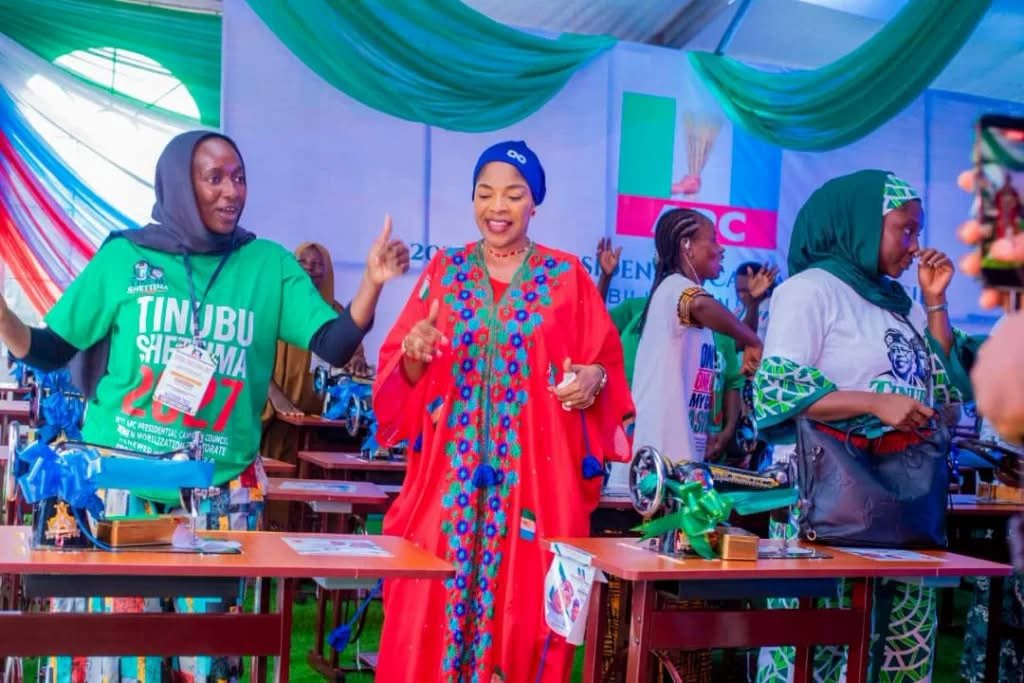
The Rainbow Coalition has emerged as a major political platform for coordinating support for Tinubu and other candidates ahead of the 2027 elections in Rivers State.
The arrangement brings together political actors and supporters from different political backgrounds, including members of the All Progressives Congress (APC) and the Peoples Democratic Party (PDP).
Wike has played a leading role in coordinating the coalition, while Fubara has publicly aligned himself with the political arrangement.
The coalition’s activities have included meetings with political supporters, consultations with grassroots leaders and mobilisation efforts ahead of Tinubu’s visit to the state.
On October 19, 2026, Wike met with supporters of Fubara and youth leaders in Port Harcourt, urging them to put previous disagreements behind them and support Tinubu’s second-term ambition.
During the meeting, the minister argued that stronger political cooperation with the Federal Government could improve Rivers State’s access to federal appointments, infrastructure development and national political influence.
He also encouraged grassroots political leaders to work towards reconciliation among supporters who had previously belonged to opposing camps.
The engagement was part of broader efforts to extend the reconciliation beyond the two political leaders and secure cooperation among their respective supporters.
The Voice of Nigeria and The PUNCH reported on the minister’s mobilisation efforts and the developing political alliance.
Fubara Pledges Three Million Votes for Tinubu
At the November 7 rally in Port Harcourt, Fubara publicly pledged to work towards delivering at least three million votes for Tinubu in the 2027 general elections.
The governor attributed the political arrangement to Wike’s leadership and guidance, acknowledging the FCT minister’s influence in bringing the different political groups together.
His pledge represented a significant political declaration from a governor whose relationship with Wike had previously been marked by a prolonged dispute.
Fubara also confirmed the Rainbow Coalition’s cross-party character, describing the political arrangement as a coming together of APC and PDP members.
The pledge is expected to feature prominently in political discussions ahead of the 2027 elections, particularly because Rivers State remains an important electoral state in the South-South region.
However, the governor’s commitment is a political target rather than an established electoral outcome. The actual number of votes Tinubu receives in Rivers State will depend on voter participation, electoral competition and the final results declared by the Independent National Electoral Commission.
The President’s visit and the public display of cooperation between the governor and Wike are therefore significant to the coalition’s mobilisation strategy.
Background to the Rivers Political Crisis
The political disagreement between Wike and Fubara became one of Nigeria’s most prominent state-level political crises after the governor assumed office in May 2023.
Wike had served as governor for eight years before Fubara succeeded him. Their relationship subsequently deteriorated, leading to divisions within the state’s political leadership.
The crisis extended to the Rivers State House of Assembly, where lawmakers became divided into opposing groups over the political dispute.
The disagreement generated concerns about the functioning of government institutions, the state’s political stability and the possible consequences for development.
The situation escalated in late 2023, when tensions between the executive and legislative arms intensified. The crisis also involved disputes over the control of political structures and the direction of the state government.
Tinubu intervened at different stages, eventually declaring a state of emergency in March 2025.
The emergency arrangement ended in September 2025, allowing the suspended democratic institutions to resume their responsibilities.
Although the return to constitutional governance did not automatically resolve every political disagreement, subsequent meetings and reconciliation efforts helped create the conditions for renewed cooperation.
The latest political alignment between Wike and Fubara suggests that both camps have chosen to prioritise a common political objective ahead of the next general elections.
Why the Reconciliation Matters to Rivers State
Rivers State occupies an important position in Nigeria’s economy because of its role in the oil and gas industry, maritime activities, commerce and wider Niger Delta economy.
Political stability is therefore important not only for the state government but also for businesses, investors, public institutions and residents whose livelihoods depend on effective governance.
Prolonged political disagreements can affect government coordination, legislative activities and the implementation of public policies.
When political leaders are divided, government attention and resources can become concentrated on political disputes rather than public priorities.
The reconciliation between Wike and Fubara could create a more favourable environment for political cooperation and institutional engagement if it is sustained beyond campaign activities.
However, political unity among leading figures should not be treated as a substitute for accountability, transparent governance or effective public service delivery.
Residents of Rivers State will continue to assess their leaders based on practical outcomes, including infrastructure, education, healthcare, employment opportunities, security and the responsible management of public resources.
The return of cooperation also raises questions about how the interests of different political groups will be accommodated within the Rainbow Coalition.
A durable political settlement will require more than public appearances and campaign commitments. It will depend on whether the parties can maintain mutual respect, resolve disagreements through dialogue and allow government institutions to operate according to their constitutional responsibilities.
Political Implications Ahead of the 2027 Elections
Tinubu’s visit to Rivers State comes as political parties and alliances intensify preparations for the 2027 general elections.
The President is seeking another term in office, while political stakeholders across the country are working to consolidate their support bases.
For the ruling APC, the cooperation between Wike and Fubara could strengthen its political position in Rivers State, particularly by bringing together supporters who were previously divided.
The Rainbow Coalition’s cross-party structure also demonstrates the importance of political alliances in Nigeria’s electoral environment.
However, the presence of members from different political parties within a coalition does not remove the need for clear political organisation, candidate selection and respect for electoral laws.
The 2027 elections will ultimately be decided by voters through the constitutional electoral process.
Political leaders can mobilise supporters and make electoral promises, but citizens retain the right to decide which candidates and parties they want to support.
The Independent National Electoral Commission will also remain responsible for conducting the elections and announcing the results in accordance with the law.
What Happens Next?
The immediate political focus in Rivers State is likely to remain on consolidating the Rainbow Coalition and sustaining the reconciliation between Wike, Fubara and their respective supporters.
The coalition will also face the task of translating its public declarations into an organised political structure capable of mobilising voters across the state’s local government areas.
For the Rivers State government, the challenge will be to ensure that political cooperation supports the effective delivery of public services and does not distract from its constitutional responsibilities.
The Federal Government’s infrastructure commitments in the Niger Delta will also remain an important issue for residents, who will expect projects and public investments to produce measurable benefits.
As the 2027 elections approach, the relationship between Wike and Fubara will remain an important factor in Rivers State politics.
Tinubu’s commendation of both leaders signals the importance his administration attaches to their cooperation. Whether the reconciliation produces lasting political stability and tangible development will depend on the actions of the leaders and institutions involved.
For the people of Rivers State, the most important measure of the renewed political understanding will be whether it leads to improved governance, stronger institutions, economic opportunities and lasting peace.
Weng Global – stories beyond borders
Sources
- Channels Television
- The PUNCH
- TheCable
- Voice of Nigeria
- Rivers State Government
- Politics Nigeria