Reported by Simon Daniel Yusuph l Journalist at Weng Global
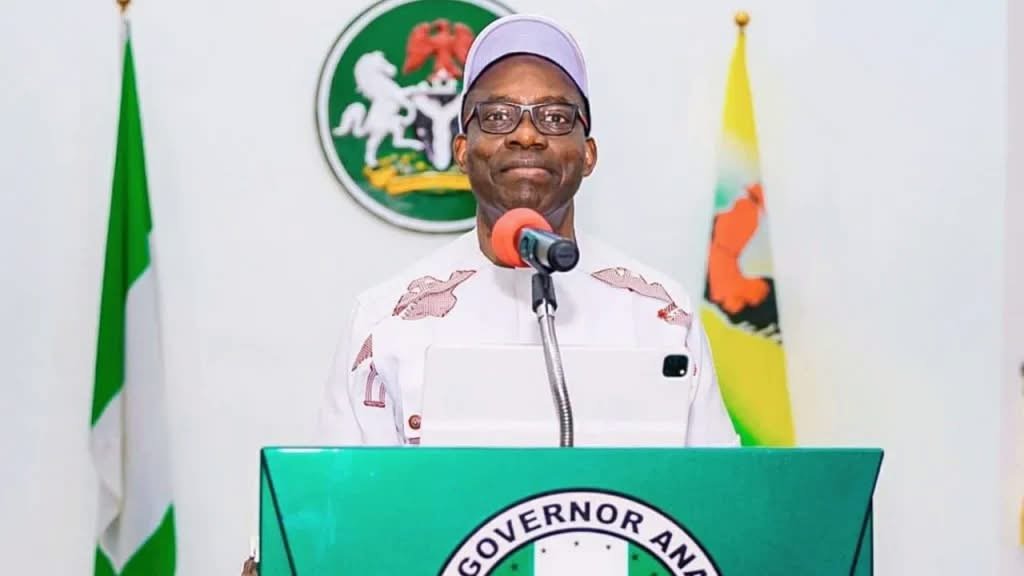
Rivers State Governor, Siminalayi Fubara, has pledged to mobilise at least three million votes for President Bola Ahmed Tinubu in the 2027 general elections, declaring his support for the political alliance operating under the Rainbow Coalition in Rivers State.
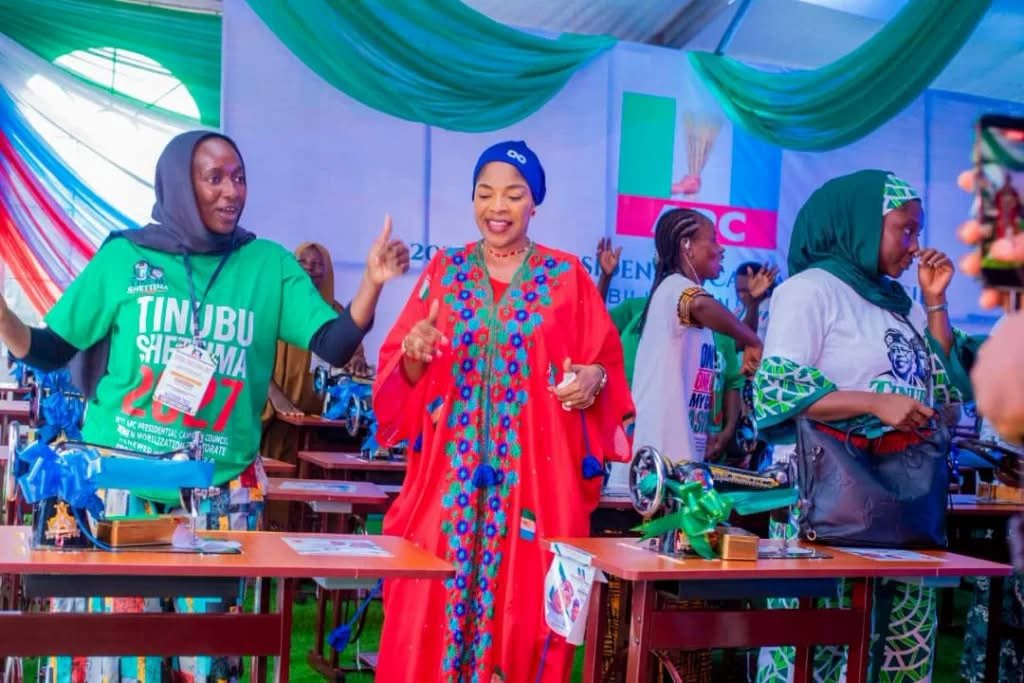
Fubara made the commitment on Saturday, November 7, 2026, during the All Progressives Congress (APC) presidential campaign rally in Port Harcourt, Rivers State, where he assured the President that the state would deliver substantial electoral support for his second-term ambition.
The governor’s declaration represents another significant development in Rivers State’s evolving political landscape, particularly following the reconciliation between him and his predecessor, Nyesom Wike, who currently serves as Minister of the Federal Capital Territory (FCT).
Addressing the gathering, Fubara expressed confidence in the political direction of the state, insisting that Rivers was prepared to work collectively towards securing victory for Tinubu in the forthcoming presidential election.
He declared that the state would deliver three million votes for the President, emphasising that political divisions that previously characterised Rivers politics had given way to a new arrangement involving political leaders and supporters across party lines.
According to reports of his remarks published by Daily Post, the governor said: “Rivers will give you three million votes. We will stand by you. We will work for you. We will deliver for you.”
Fubara also maintained that Rivers State had made its political decision and was prepared to demonstrate its commitment through the ballot box.
He argued that Tinubu had shown considerable support for Rivers State and that the people would reciprocate through their votes in 2027.
The governor further urged political supporters to begin grassroots mobilisation across their respective wards and polling units, stressing that achieving the promised electoral target would require active participation rather than relying on public declarations alone.
His appeal suggests that the political coalition intends to move beyond high-profile endorsements and establish a coordinated mobilisation structure capable of influencing voting patterns across the state.
Fubara’s Three Million Vote Target and the Political Significance
The promise of three million votes represents an ambitious electoral target for the Tinubu campaign in Rivers State.
By publicly committing to mobilise such a number, Fubara has placed Rivers State at the centre of the emerging political calculations ahead of the 2027 presidential election.
However, the pledge remains a political commitment rather than a guaranteed electoral outcome. The actual number of votes the President receives will ultimately depend on voter participation, political competition, campaign effectiveness and the decisions of eligible voters on election day.
The declaration also raises important questions about the ability of the Rainbow Coalition to translate its political influence into measurable electoral support.
Rivers State occupies an important position in Nigeria’s South-South geopolitical zone and has historically been a significant centre of political competition.
Its electoral influence extends beyond the governorship and legislative contests, particularly because political alignments in the state can contribute to broader calculations concerning presidential elections.
Fubara’s commitment therefore carries implications for both the APC’s national electoral strategy and the political balance within the South-South region.
Rainbow Coalition Brings APC and PDP Supporters Together
At the centre of Fubara’s latest declaration is the Rainbow Coalition, a political arrangement bringing together influential political actors from different parties, including the APC and the Peoples Democratic Party (PDP).
The coalition is associated with Nyesom Wike, whose political influence in Rivers State has remained significant since his tenure as governor between 2015 and 2023.
The alliance seeks to unite political supporters and stakeholders across party affiliations behind Tinubu’s second-term ambition and candidates adopted by the coalition for various elective positions in Rivers State.
Although the APC and PDP remain separate political parties nationally, the Rainbow Coalition represents an arrangement in which politicians and supporters associated with both parties are working towards common electoral objectives in Rivers State.
The development illustrates the increasingly complex nature of political alliances ahead of the 2027 general elections, where individual political interests and regional calculations may influence cooperation across traditional party boundaries.
The Rivers arrangement has also attracted attention because it involves political figures who previously operated on opposing sides of a prolonged disagreement that significantly affected the state’s political administration.
The coalition’s ability to maintain unity among its different political interests could therefore become an important factor in determining its electoral strength.
Fubara and Wike’s Reconciliation Reshapes Rivers Politics
Fubara’s pledge to Tinubu comes against the background of the political disagreement between the governor and Wike, which developed into one of the most consequential political crises in Rivers State in recent years.
The disagreement, which emerged after Fubara succeeded Wike as governor in 2023, involved disputes over political leadership, control of party structures and influence over the state’s political administration.
The conflict affected the Rivers State House of Assembly and contributed to a prolonged period of political uncertainty.
The dispute also attracted national attention, particularly following the involvement of federal political authorities in efforts to address the situation.
President Tinubu subsequently intervened in the crisis, with political developments culminating in a period of emergency administration in Rivers State in 2025.
Following the return to normal democratic administration, political negotiations and reconciliation efforts continued among the major actors.
Fubara’s subsequent rapprochement with Wike has now produced a different political arrangement, with both men operating within the Rainbow Coalition’s broader strategy ahead of the 2027 elections.
On October 27, 2026, the Rivers State Government announced that Fubara and Wike had reaffirmed their commitment to working together under the coalition.
During the unveiling of the coalition’s preferred candidates at Yakubu Gowon Stadium in Port Harcourt, Fubara described the gathering as a reunion with his political family.
He also acknowledged Wike’s role in his emergence as governor and called on supporters to put previous disagreements behind them.
The governor further recognised Wike’s leadership of the political arrangement, indicating a substantial shift in the relationship between the two influential Rivers politicians.
The October gathering provided an important indication that their reconciliation was being translated into a coordinated political structure rather than remaining a symbolic declaration of peace.
Coalition Extends Beyond the Presidential Election
Although the Rainbow Coalition’s support for Tinubu is a major part of its political agenda, its ambitions also extend to the 2027 governorship and legislative elections in Rivers State.
According to the Rivers State Government’s October 31 announcement, the coalition unveiled its preferred candidates for different elective positions during a ceremony in Port Harcourt.
The announcement identified Kingsley Ogundu Chinda as the coalition’s adopted governorship candidate and Major Jack as his deputy governorship candidate.
The governor also presented flags to candidates representing different political interests within the coalition.
Speaking at the event, Chinda expressed confidence in the coalition’s electoral prospects and pledged to pursue an inclusive administration if elected.
He also commended the political leaders involved in the arrangement for working towards reconciliation.
Wike, who is regarded as the coalition’s political leader, urged Rivers residents to support Tinubu and the candidates endorsed by the alliance.
The coalition’s structure is particularly significant because it seeks to coordinate political support across several party platforms.
The October 27 unveiling attracted representatives associated with the APC, PDP, Labour Party, Action Alliance, All Progressives Grand Alliance and other political groups.
This broader political arrangement suggests that the coalition is seeking to consolidate support beyond the traditional membership of the APC.
However, the practical effectiveness of such an alliance will depend on how successfully its different political interests are managed, particularly during candidate selection, campaign activities and the distribution of political responsibilities.
Tinubu’s Political Interest in Rivers State
Tinubu’s re-election ambition has become an important issue in political discussions across Nigeria as parties and political groups begin positioning themselves ahead of the 2027 elections.
For the President, securing substantial support in Rivers State could strengthen the APC’s political standing in the South-South region.
The state has considerable political significance because of its population, economic importance and position within the Niger Delta.
Rivers is also strategically important to Nigeria’s petroleum industry, making its political leadership and electoral developments relevant to wider national discussions about governance, economic development and resource management.
Fubara’s pledge therefore provides the Tinubu campaign with a high-profile endorsement from a sitting governor in a strategically important state.
Nevertheless, electoral support cannot be determined solely by agreements among political leaders.
Voters retain the constitutional authority to decide which candidates they support, irrespective of endorsements or political arrangements.
The ability of the Rainbow Coalition to secure broad public acceptance will consequently be tested by its engagement with communities, political supporters and ordinary residents across Rivers State.
What the Three Million Vote Promise Means for Rivers Voters
Beyond the political implications, Fubara’s commitment raises questions about the issues that will shape the decisions of Rivers voters in 2027.
The state continues to face important development priorities, including infrastructure, employment, environmental protection, security, healthcare, education and the management of resources from its strategic position in Nigeria’s petroleum economy.
These issues are likely to remain important considerations as political parties and alliances seek public support.
For many residents, electoral endorsements will need to be accompanied by convincing explanations of how political leadership will address their everyday concerns.
The Tinubu administration will also face scrutiny over its national economic policies, the cost of living, employment opportunities, infrastructure development and the wider effects of its reforms.
Consequently, the Rainbow Coalition’s campaign strategy will have to address not only political loyalty but also the expectations and concerns of voters.
Fubara’s appeal for grassroots mobilisation indicates that the coalition understands the importance of local political structures in achieving its electoral objectives.
However, the effectiveness of that strategy will depend on whether supporters can translate political enthusiasm into sustained engagement with eligible voters.
Electoral Credibility and the Role of INEC
As political mobilisation increases ahead of the 2027 general elections, the role of the Independent National Electoral Commission (INEC) will remain central to ensuring that the electoral process reflects the freely expressed choices of Nigerians.
Political parties and coalitions are entitled to mobilise support and campaign for their preferred candidates within the provisions of the law.
At the same time, electoral competition must respect democratic principles, including freedom of association, political participation and the right of citizens to make independent choices.
The three-million-vote pledge should therefore be understood as a campaign target whose achievement will be determined by the electorate and the final results declared through the constitutionally recognised electoral process.
For Weng Global, the distinction between political promises and verified electoral outcomes remains essential to responsible reporting.
What Happens Next?
Following Fubara’s declaration, attention will turn to how the Rainbow Coalition organises its campaign activities across Rivers State.
The governor’s instruction to supporters to return to their wards and polling units suggests that grassroots mobilisation will form an important part of the coalition’s strategy.
Political observers will also be watching how effectively Fubara and Wike maintain their reconciliation, particularly as the 2027 elections approach and competing political interests become more pronounced.
The coalition will need to coordinate its supporters, communicate its political objectives and maintain cooperation among members drawn from different parties.
The APC and opposition parties will also continue positioning themselves for the presidential, governorship and legislative contests.
Ultimately, whether Rivers State delivers the three million votes promised by Fubara will be determined by the choices of voters when Nigerians go to the polls.
For now, the governor’s declaration represents a significant political commitment and another indication of the changing alliances shaping Rivers State ahead of the 2027 general elections.
The development reinforces the growing influence of the Rainbow Coalition in the state’s political calculations while placing Fubara’s leadership and the alliance’s grassroots mobilisation capacity under closer public scrutiny.
WENG GLOBAL — Stories beyond borders
Sources
- Rivers State Government – Official announcement on Fubara and Wike’s Rainbow Coalition and the unveiling of adopted candidates, October 31, 2026.
- Daily Post Nigeria – Report on Fubara’s three-million-vote pledge for Tinubu, November 7, 2026.
- New Telegraph – Report on Fubara’s commitment at the APC presidential campaign rally, November 7, 2026.
- Premium Times – Report on the Rainbow Coalition’s unveiling of adopted candidates, October 27, 2026.
- Channels Television – Reports on Fubara’s endorsement of the Rainbow Coalition and Tinubu’s second-term ambition.