Reported by Simon Daniel Yusuph l Journalist at Weng Global
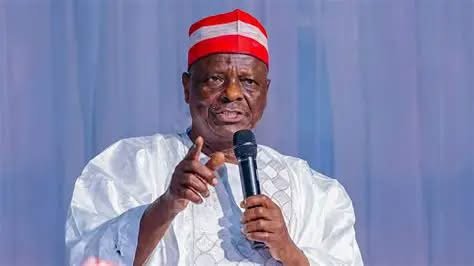
Rabiu Kwankwaso, the vice-presidential candidate of the Nigeria Democratic Congress (NDC), says a government led by Peter Obi would introduce a new form of fuel subsidy by investing in domestic refineries and strengthening local petroleum production.
Kwankwaso’s position places fuel pricing and domestic refining at the centre of the NDC’s economic argument ahead of Nigeria’s 2027 presidential election.
The former Kano State governor said the proposed approach would differ from the subsidy arrangement that previously operated in Nigeria, with greater emphasis on supporting local refining rather than relying on imported petroleum products.
A different approach to fuel subsidy
Kwankwaso described the proposed policy as a subsidy in a “different form”, linking it to investment in refineries and the development of Nigeria’s domestic petroleum industry.
The proposal comes amid an ongoing national debate over the consequences of the Federal Government’s decision to remove petrol subsidy in 2023 and the subsequent shift towards market-based pricing.
Under the NDC’s position, the objective would be to use government intervention to strengthen domestic refining capacity and reduce the cost pressures associated with petroleum imports.
The approach would therefore represent a departure from a system centred primarily on subsidising the final price of imported petrol.
The proposal also reflects a broader argument among opposition politicians that Nigeria’s status as a major crude oil producer should translate into greater domestic availability of refined petroleum products.
Nigeria’s subsidy debate
Fuel subsidy has remained one of the most politically and economically sensitive issues in Nigeria since President Bola Tinubu announced its removal in May 2023.
The policy ended a system under which government absorbed part of the difference between the market-related cost of petrol and the price paid by consumers.
Its removal reduced a major government expenditure but also contributed to higher petrol prices and increased transportation and living costs.
The policy has since generated competing arguments over whether Nigeria should maintain deregulation, introduce targeted assistance or develop alternative forms of support for local petroleum production.
The debate has intensified ahead of the 2027 election, with opposition politicians putting forward different proposals for dealing with fuel prices and the cost of living.
Obi’s earlier position on refineries
The emphasis on domestic refining is consistent with Peter Obi’s previously stated position that Nigeria should increase production and use the country’s oil resources to support domestic economic activity.
In earlier comments, Obi argued that Nigeria could use resources associated with subsidy reform to support productive sectors, including refinery investment.
His position has also focused on increasing domestic refining and ensuring that crude oil produced in Nigeria contributes more directly to domestic energy supply.
The NDC’s current position therefore combines the political argument over fuel affordability with a longer-term proposal to strengthen Nigeria’s refining capacity.
Domestic refining at the centre of the proposal
Nigeria’s petroleum sector has undergone significant changes in recent years, particularly with the expansion of domestic refining capacity.
The emergence of large-scale private refining has altered the structure of the downstream petroleum market, while government-owned refineries have also been undergoing rehabilitation efforts.
The Federal Government has continued to argue that a competitive, market-driven petroleum sector is necessary to attract investment into refining and other parts of the oil industry.
Minister of State for Petroleum Resources (Oil), Heineken Lokpobiri, said in August 2026 that Nigeria needed to significantly expand its refining capacity and petroleum infrastructure to become a major supplier of refined products within Africa.
The government has also maintained that deregulation is intended to create an environment in which investors can commit capital to refining, storage, transportation and other petroleum infrastructure.
How the NDC proposal differs
The distinction between the NDC proposal and the former subsidy system lies primarily in where government support would be directed.
Rather than simply reducing the pump price through a broad subsidy mechanism, Kwankwaso’s description points towards government intervention in the production side of the petroleum value chain.
Such an approach could involve support for domestic refineries, crude supply arrangements or other mechanisms intended to reduce production costs and ultimately moderate prices for consumers.
However, the precise structure, cost and legal framework of the proposed NDC policy would need to be clearly defined before its potential fiscal implications can be assessed.
Questions would include how the programme would be financed, which refineries would qualify, how the benefits would reach consumers and what safeguards would prevent diversion or abuse.
Political debate over subsidy returns
The NDC proposal comes as other political figures have also renewed discussion about government intervention in the petroleum market.
Former Vice President Atiku Abubakar, the African Democratic Congress presidential candidate, has proposed a production-focused subsidy model that would provide qualifying Nigerian refineries with crude at preferential prices under conditions designed to ensure domestic supply.
The proposal differs from the traditional import-based subsidy model by linking government support to local refining and domestic consumption.
The debate has drawn criticism from supporters of the current market-based system, who have questioned the fiscal and legal implications of restoring any form of subsidy.
The ruling All Progressives Congress has also demanded greater clarification from proponents of subsidy restoration over the cost and financing of proposed programmes.
These competing positions show that the political argument is increasingly moving beyond the simple question of whether subsidy should exist to the more specific question of what form government intervention should take.
What Nigerians will need to know
For consumers, the central issue is whether any proposed intervention would translate into lower and more stable petrol prices without creating a new financial burden for government.
A production-based subsidy could potentially target the cost of producing refined petroleum products rather than subsidising imported petrol. However, its effectiveness would depend on the design of the programme, the efficiency of participating refineries, crude availability, transportation costs and the government’s ability to monitor the system.
There would also be questions about whether government support would be temporary or permanent and whether it would eventually be replaced by a fully competitive domestic refining market.
These details have not been fully established in Kwankwaso’s reported remarks.
The wider economic significance
The fuel subsidy debate is closely connected to Nigeria’s broader economic challenges.
Petrol prices influence transportation, logistics, agriculture, manufacturing and household expenditure. Changes in fuel prices can therefore affect the cost of moving people and goods across the country.
For businesses, energy costs are also an important component of operating expenses. Any policy that reduces petroleum costs could have wider implications for production and distribution, although the fiscal cost of such intervention would also need to be considered.
For government, the challenge is to balance consumer relief with fiscal sustainability while creating conditions that encourage long-term investment in domestic energy production.
The NDC’s proposal seeks to address these issues through greater emphasis on domestic refining and government-supported production.
What happens next
Kwankwaso’s comments are part of the wider policy debate surrounding the 2027 presidential election.
For the proposal to become a fully assessable economic policy, the NDC would need to provide further details on the proposed subsidy mechanism, its estimated cost, funding source, eligibility criteria for refineries and safeguards against abuse.
The party would also need to explain how the proposed system would operate alongside Nigeria’s existing petroleum-sector regulatory framework and market structure.
As the election approaches, fuel pricing, domestic refining and the management of Nigeria’s oil resources are likely to remain important areas of debate among political parties and voters.
For now, Kwankwaso’s position indicates that an Obi-led NDC government would consider government intervention in the petroleum sector, but through a model centred more heavily on domestic refining rather than a return to the previous import-based subsidy system.
Weng Global – stories beyond borders
Sources
- Daily Trust
- Vanguard
- Channels Television
- Punch Newspapers
- Nigeria Democratic Congress/NDC public statements
- Federal Government petroleum-sector statements