Reported by Simon Daniel Yusuph l Journalist at Weng Global
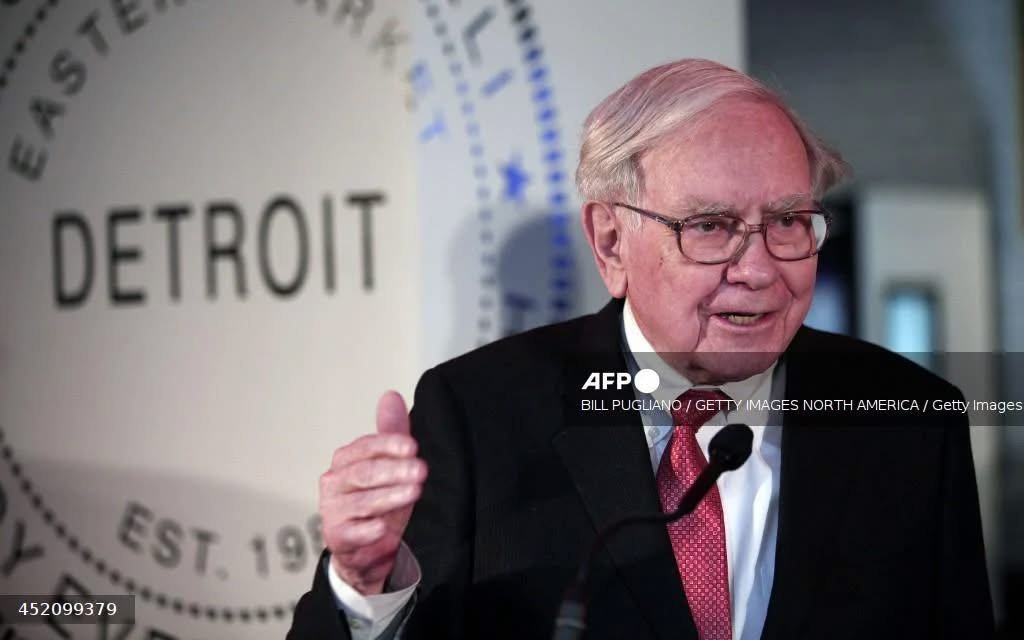
Warren Buffett has stepped down as chairman of Berkshire Hathaway after more than five decades in the role, formally handing the board leadership of the US-based conglomerate to his son, Howard G. Buffett.
Berkshire Hathaway announced the leadership change on Friday, September 18, 2026, naming the 96-year-old Buffett chairman emeritus with immediate effect. He will remain a member of the company’s board of directors and continue providing advice and perspective to the business.
Howard Buffett, who has served as a Berkshire Hathaway director since 1993, was elected the company’s new chairman under the board’s long-standing succession plan. Susan L. Decker will continue serving as lead independent director.
The transition marks the end of Warren Buffett’s 56-year tenure as Berkshire Hathaway chairman, a period during which he transformed the company from a struggling textile manufacturer into one of the world’s most closely followed business conglomerates.
Buffett’s long association with Berkshire Hathaway
Warren Buffett became closely associated with Berkshire Hathaway after acquiring control of the company and eventually reshaping its business model around insurance, investments and a diverse collection of operating companies.
Berkshire’s official records show that Buffett has served as chairman since 1970. He had previously been the company’s chief executive officer until Greg Abel assumed the CEO position on January 1, 2026.
The chairman and CEO positions therefore began separating earlier this year, with Abel taking responsibility for the company’s executive management while Buffett remained chairman.
Friday’s announcement completes another major stage of that succession process.
Reuters reported that Buffett first announced his intention to step away from Berkshire’s leadership in May 2025, setting the stage for a gradual transition rather than an abrupt change.
Howard Buffett becomes chairman
Howard G. Buffett has been a member of Berkshire Hathaway’s board since 1993 and has extensive experience outside the conglomerate.
According to Berkshire Hathaway, he has served since 1999 as chairman and chief executive officer of the Howard G. Buffett Foundation, which focuses on issues including global food security and conflict mitigation.
He has also served on the boards of several public and private companies, including Archer Daniels Midland, ConAgra Foods and The Coca-Cola Company.
Berkshire said Howard Buffett’s experience and longstanding relationship with the company were factors in the succession plan.
The company also emphasised that the transition is intended to preserve the culture and values established during Warren Buffett’s leadership.
Greg Abel, Berkshire’s chief executive officer, said in the company’s announcement that the culture Warren Buffett built would remain central to the company and that Howard Buffett would be responsible for safeguarding it.
Buffett remains involved
Although Warren Buffett is leaving the chairman’s position, Berkshire Hathaway said his relationship with the company is not ending.
As chairman emeritus, Buffett will remain a director and continue offering his judgement and perspective to the board.
That means the leadership transition does not represent a complete departure from Berkshire Hathaway.
Instead, the company has created a structure in which Greg Abel leads the company’s executive operations, Howard Buffett chairs the board and Warren Buffett remains involved as a director and adviser.
Reuters reported that Buffett expressed confidence in Berkshire’s future and said the timing was right to complete the transition.
From textile company to global conglomerate
Buffett’s significance to Berkshire Hathaway is closely connected to the scale of the transformation he led.
The company originally had its roots in the US textile industry. Under Buffett’s leadership, Berkshire gradually shifted away from textiles and developed into a diversified holding company with businesses spanning insurance, energy, rail transportation, manufacturing, retail and services.
Today, Berkshire owns or has interests in a wide range of businesses, including GEICO, BNSF Railway, Berkshire Hathaway Energy and numerous manufacturing, consumer and service companies.
The company’s official business portfolio describes operations across insurance and reinsurance, utilities and energy, freight rail transportation, manufacturing, services and retail.
The transformation also made Berkshire Hathaway a major investment vehicle whose annual shareholder meetings became an important event for investors around the world.
Greg Abel’s role in the transition
The latest leadership change follows the first stage of the succession plan, which saw Greg Abel become Berkshire Hathaway’s CEO at the beginning of 2026.
Abel had previously served as Berkshire’s vice chairman for non-insurance operations and had long been identified as Buffett’s successor for the CEO role.
His appointment separated day-to-day executive management from the chairman’s responsibilities.
At Berkshire’s 2026 annual meeting, Abel led discussions about the company’s operations for the first time as CEO, while Buffett remained chairman and attended the meeting. The Associated Press reported that the meeting represented an important change in Berkshire’s leadership structure after Buffett had dominated the event for decades.
Friday’s announcement now gives Abel an executive leadership structure alongside Howard Buffett’s role as chairman of the board.
Berkshire remains a major global business
The leadership transition comes as Berkshire Hathaway remains one of the world’s largest corporate groups.
Reuters reported that the company has a market value of around $1.1 trillion, placing it among the world’s largest publicly traded companies.
The company’s financial position has also attracted considerable attention during the transition.
Reuters reported that Berkshire’s quarterly operating profit recently increased 16 per cent to $12.98 billion, while net income more than doubled to $25.67 billion, although the net figure included changes in the value of investments.
Berkshire has also recently deployed part of its substantial cash reserves into investments, including a major position in Alphabet, the parent company of Google.
These developments show that the company is continuing to make significant capital-allocation decisions even as its historic leadership structure changes.
What Buffett’s departure means for Berkshire
The significance of Warren Buffett’s departure from the chairmanship extends beyond a change in corporate titles.
For decades, Buffett was closely identified with Berkshire Hathaway’s culture, investment approach and decentralised management structure.
His emphasis on long-term investment, conservative capital allocation and giving subsidiary managers considerable independence became closely associated with the company’s identity.
The succession therefore involves both leadership appointments and the question of how those principles will be maintained under a new generation of executives.
Berkshire’s announcement indicates that continuity is a central objective.
The company said Howard Buffett’s role would involve protecting the culture and values established by his father, while Abel continues to lead the company’s operations.
A new chapter for the Buffett era
The change also represents a significant moment in the history of one of the world’s most recognisable investment companies.
Warren Buffett has remained at the centre of Berkshire Hathaway for generations of investors. His annual letters to shareholders and public appearances became important sources of information for investors studying the company’s approach to business and capital allocation.
His decision to become chairman emeritus does not end that influence immediately.
He will remain a shareholder, director and adviser, according to Berkshire Hathaway.
However, the formal transfer of the chairmanship marks a clear institutional shift.
Howard Buffett now becomes responsible for chairing the board, while Greg Abel continues as CEO and executive leader.
What happens next?
The immediate focus will be on how the new leadership structure operates in practice.
Howard Buffett will chair Berkshire Hathaway’s board, while Abel will continue managing the company’s businesses and strategic decisions as CEO.
Warren Buffett will remain involved as a director and chairman emeritus.
Berkshire Hathaway has presented the transition as part of its established succession plan rather than an unexpected leadership change.
For shareholders and the wider investment community, the coming period will provide an opportunity to observe how Berkshire maintains its established culture while operating under leadership that is no longer formally headed by Warren Buffett.
The company has made clear that Buffett’s departure from the chairmanship does not represent a complete break.
Instead, September 18, 2026, marks the beginning of a new phase in Berkshire Hathaway’s history, with three distinct roles now shaping the company’s leadership: Warren Buffett as chairman emeritus and director, Howard Buffett as chairman of the board, and Greg Abel as chief executive officer.
Weng Global — Stories beyond borders
Sources
- Berkshire Hathaway Inc. — Official announcement on Warren Buffett becoming chairman emeritus and Howard G. Buffett becoming chairman, September 18, 2026
- Reuters — Report on Warren Buffett stepping down as Berkshire Hathaway chairman, September 18, 2026
- Associated Press — Report on Warren Buffett’s departure from the Berkshire Hathaway chairmanship
- Berkshire Hathaway — 2025 Annual Report
- Berkshire Hathaway — 2025 Form 10-K and corporate leadership records