Reported Simon Daniel Yusuph l journalist at wengglobal
Vietnam has pledged to engage constructively with the United States over concerns about the transshipment of goods through its territory, signalling an effort by Hanoi to protect one of its most important economic relationships while responding to growing scrutiny from Washington over tariff evasion and the origin of imported products.
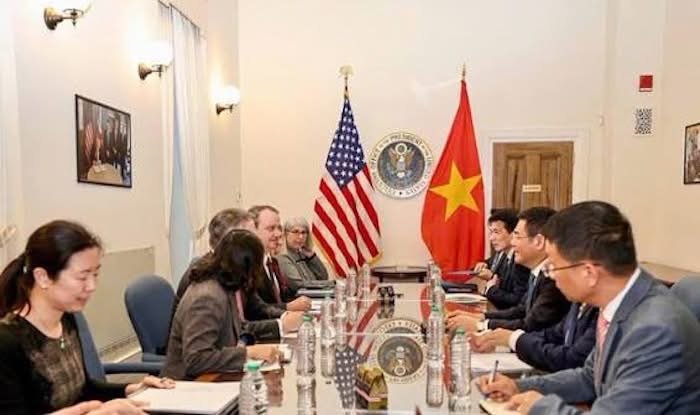
Vietnamese Foreign Ministry spokesperson Pham Thu Hang said on Thursday that Hanoi would continue dialogue with Washington on the issue within the framework of the two countries’ Comprehensive Strategic Partnership.
The statement followed a recent US assessment that the practice of illegal transshipment—where goods are routed through third countries to disguise their actual country of origin and avoid tariffs—could be costing Washington billions of dollars in lost tariff revenue.
Hang said Vietnam was prepared to cooperate with the United States to address legitimate concerns and strengthen a transparent, stable and mutually beneficial trade and investment environment.
The development comes at a sensitive moment in Vietnam-US economic relations, with the two countries seeking to deepen commercial ties while Washington increases scrutiny of global supply chains and customs practices.
Vietnam seeks dialogue rather than confrontation
The Vietnamese position reflects Hanoi’s broader approach to managing trade disagreements with Washington through negotiation and institutional cooperation.
Reuters reported on Thursday that Vietnam had committed to addressing US concerns over transshipment constructively, citing the Vietnamese Foreign Ministry. The statement comes after a US report estimated that the country loses between $19 billion and $26 billion annually in tariff revenue because goods are allegedly being rerouted through third countries to evade US duties. (Reuters)
Vietnam has not accepted the implication that its territory is being systematically used to circumvent US trade measures, but officials have repeatedly indicated their willingness to strengthen customs enforcement and cooperate with American authorities.
The approach is significant because Vietnam has become a major manufacturing and export hub in Asia, particularly for electronics, footwear, textiles, machinery and other manufactured goods.
Its expanding role in global supply chains has also made the country increasingly important to American businesses seeking alternatives to China-based production.
What is goods transshipment?
Transshipment itself is not necessarily illegal.
Companies routinely move goods through multiple countries as part of legitimate international supply chains. The concern arises when goods are deliberately rerouted or minimally processed in a third country and then falsely declared as originating there to avoid tariffs, quotas or other trade restrictions.
For Washington, such practices undermine the effectiveness of tariff policies and can disadvantage American manufacturers competing against imported products.
A recent White House report estimated that more than 40 countries may be involved in facilitating tariff-evasion schemes, with China identified as the primary source of many of the goods allegedly being rerouted.
The Associated Press reported that the US government estimated annual revenue losses from transshipment at between $19 billion and $26 billion, while the value of potentially transshipped goods could be substantially higher. (AP News)
The issue has become increasingly important under President Donald Trump’s trade policies, which rely heavily on tariffs as a tool for protecting American industries and addressing trade imbalances.
US pressure extends beyond Vietnam
Vietnam’s latest pledge should therefore be viewed within a much wider US effort to tighten enforcement of trade rules.
Washington has increasingly focused on the origin of imported products and the possibility that companies could exploit differences in tariff rates between countries.
The United States has also moved toward greater use of data analytics and artificial intelligence to identify suspicious trade flows.
The Wall Street Journal reported that the White House has accused Chinese exporters of rerouting goods through third countries to avoid US tariffs and has proposed tougher approaches to determining country of origin. (The Wall Street Journal)
The Financial Times has similarly reported on the Trump administration’s campaign against customs fraud, noting that detecting mislabelled goods across complex international supply chains presents significant enforcement challenges. (Financial Times)
For Vietnam, the challenge is to demonstrate that its growing export sector is operating transparently while avoiding measures that could unnecessarily disrupt legitimate trade.
Vietnam and US already cooperating on enforcement
The latest diplomatic statement is not the first indication that Hanoi and Washington are working together on transshipment concerns.
In late July, Vietnamese Customs and US Customs and Border Protection held a joint workshop in Hanoi focused on investigating illegal transshipment and trade fraud.
According to Vietnam’s Trade Portal, the workshop ran from July 27 to 31 and brought together Vietnamese Customs, US Customs and Border Protection and the US Department of State’s International Narcotics and Law Enforcement Affairs programme. (Vietnam Trade Portal)
The initiative was designed to improve cooperation in investigating practices that conceal the true origin of goods and allow businesses to circumvent trade regulations.
Reuters also reported in July that Vietnam and the United States had stepped up cooperation against illegal transshipment and trade fraud through a joint workshop in Hanoi. (Reuters)
The cooperation suggests that both governments are attempting to address the issue through technical engagement rather than allowing it to become a broader diplomatic dispute.
Stakes are high for Vietnam’s export economy
The stakes for Vietnam are considerable.
The country has spent years positioning itself as a major manufacturing destination for multinational companies and an important link in global supply chains.
As companies have diversified production away from China, Vietnam has attracted significant investment in sectors ranging from electronics and footwear to machinery and consumer goods.
The United States is among Vietnam’s most important export markets.
Any significant deterioration in the bilateral trade relationship could therefore have consequences for Vietnamese manufacturers, exporters, workers and foreign investors.
Vietnam’s Ministry of Industry and Trade has repeatedly emphasised the importance of maintaining a stable and predictable trade relationship with the United States.
During a July visit to the US, Vietnamese Minister of Industry and Trade Le Manh Hung met with American government officials and business groups and stressed the importance of establishing a stable, predictable and mutually beneficial framework for bilateral trade. (moit.gov.vn)
He also held discussions with US footwear industry representatives, who described Vietnam as an important source of footwear supplies for American brands and retailers. (moit.gov.vn)
The discussions demonstrate the extent to which American businesses also have an interest in preserving stable trade links with Vietnam.
Broader trade negotiations remain important
The transshipment dispute is unfolding alongside broader negotiations between Vietnam and the United States over a reciprocal trade framework.
Both countries have been working toward an agreement intended to provide a more predictable structure for bilateral commerce.
Vietnamese officials have repeatedly called for negotiations to be conducted in a constructive manner while protecting the legitimate interests of both countries.
The Vietnamese Ministry of Industry and Trade has said Hanoi is seeking a stable, transparent and predictable framework for economic and trade cooperation with Washington. (moit.gov.vn)
A joint framework published by Vietnam’s Ministry of Industry and Trade also provides for cooperation in addressing trade barriers and other concerns affecting bilateral commerce. (moit.gov.vn)
The success of these negotiations could have significant implications for businesses operating across both economies.
Trade relationship has grown strategically
The Vietnam-US relationship has undergone a major transformation over the past several decades.
The two countries established diplomatic relations in 1995 and have gradually expanded cooperation in trade, investment, technology, education and security.
In 2023, the relationship was elevated to a Comprehensive Strategic Partnership, placing economic and trade cooperation among its central pillars.
The two governments have described economic ties as an important foundation of the broader bilateral relationship and have pledged to promote market access, investment and cooperation in areas including technology and innovation. (The American Presidency Project)
Vietnamese officials continue to describe the United States as a partner of leading importance.
In June 2026, Foreign Minister Le Hoai Trung said Vietnam was taking active steps to promote balanced, sustainable and mutually beneficial economic and trade relations with Washington.
He acknowledged US concerns over trade-related issues while expressing Hanoi’s willingness to expand trade, improve market access and strengthen law enforcement. (mofa.gov.vn)
That diplomatic posture has become increasingly important as Washington intensifies scrutiny of international trade practices.
Washington’s wider trade enforcement agenda
The transshipment issue is also part of a larger US campaign to address what the Trump administration considers unfair trade practices.
Washington has increased its use of tariffs, investigations and customs enforcement to pressure trading partners and protect American industries.
In July, the US Trade Representative announced the final determination of a Section 301 investigation covering 60 economies over concerns related to forced-labour practices and enforcement. The action included additional tariff measures under the applicable framework. (moit.gov.vn)
Separately, the USTR opened a Section 301 investigation into Vietnam’s intellectual-property protection and enforcement practices in May 2026.
The investigation followed the US designation of Vietnam as a priority foreign country in the 2026 Special 301 Report, with Washington arguing that persistent intellectual-property concerns could restrict US commerce. (United States Trade Representative)
These developments demonstrate that the transshipment question is not an isolated issue.
Vietnam faces a broader challenge of maintaining access to the US market while responding to American concerns over intellectual property, market access, customs enforcement and supply-chain transparency.
Balancing enforcement with legitimate trade
For Vietnam, the immediate task will be to strengthen customs controls without undermining legitimate businesses.
Tighter enforcement could help reassure American authorities and reduce the risk of punitive trade measures.
However, excessive compliance costs or delays could affect manufacturers and exporters that depend on efficient supply chains.
The same challenge faces US authorities.
While Washington wants to prevent tariff evasion, aggressive enforcement could inadvertently increase costs for American importers and consumers if legitimate Vietnamese products face additional scrutiny or delays.
This makes cooperation between customs authorities particularly important.
Better information sharing, origin verification, digital customs systems and joint investigations could help both countries distinguish genuine Vietnamese production from goods improperly routed through Vietnam.
A test of Vietnam-US economic diplomacy
Vietnam’s decision to emphasise constructive engagement indicates that Hanoi understands the strategic importance of preserving its relationship with Washington.
For the United States, Vietnam represents both a significant trading partner and an increasingly important component of global supply-chain diversification.
For Vietnam, access to the American market provides substantial opportunities for exporters, manufacturers and investors.
The transshipment controversy therefore presents a challenge, but it also offers an opportunity for both countries to strengthen trade enforcement mechanisms.
If Hanoi can demonstrate credible action against fraudulent trade practices while protecting legitimate commerce, it could help reduce tensions and reinforce confidence among American policymakers and businesses.
For Washington, working with Vietnamese authorities rather than relying exclusively on punitive measures could provide a more effective way of tackling illicit transshipment while preserving a commercially important partnership.
What lies ahead
The immediate focus will likely remain on technical cooperation between customs and trade officials as the two countries continue broader negotiations.
Vietnam has made clear that it wants the relationship to remain stable, predictable and mutually beneficial.
The United States, meanwhile, is seeking stronger assurances that its tariff regime cannot be undermined through third-country supply chains.
The success of the engagement will depend largely on whether both sides can establish effective mechanisms for tracing goods, verifying country of origin and prosecuting deliberate customs fraud without disrupting legitimate commercial activity.
For Wengglobal, the development is significant because it illustrates the increasingly complex nature of global trade in an era of tariffs, supply-chain diversification and heightened scrutiny of international commerce.
Vietnam’s pledge to work constructively with the United States may help prevent the transshipment dispute from developing into a wider trade confrontation.
But with Washington placing greater emphasis on customs enforcement and tariff compliance, Vietnamese exporters and international manufacturers operating in the country will face increasing pressure to demonstrate transparency throughout their supply chains.
The broader objective for both governments remains clear: protect legitimate commerce, curb trade fraud and preserve a bilateral economic relationship that has become increasingly important to businesses and consumers in both countries.
Sources
- Reuters — Report on Vietnam’s pledge to address US concerns over goods transshipment constructively. (Reuters)
- Reuters — Report on Vietnam-US cooperation against illegal transshipment and trade fraud. (Reuters)
- Associated Press (AP) — Coverage of US concerns over tariff revenue losses linked to transshipment. (AP News)
- The Wall Street Journal — Reporting on the White House’s allegations concerning tariff avoidance through third countries. (The Wall Street Journal)
- Financial Times — Analysis of the Trump administration’s customs enforcement strategy and challenges surrounding trade fraud. (Financial Times)
- Vietnam Ministry of Industry and Trade — Official account of Vietnam-US economic and trade discussions. (moit.gov.vn)
- Vietnam Trade Portal — Report on Vietnam Customs-US Customs cooperation on illegal transshipment investigations. (Vietnam Trade Portal)
- US Trade Representative (USTR) — Official information on the US Section 301 investigation involving Vietnam. (United States Trade Representative)
T