Reported Simon Daniel Yusuph l journalist at wengglobal
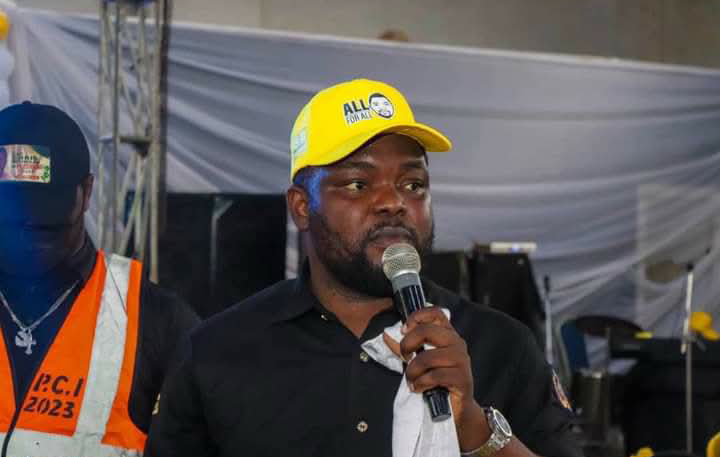
The political temperature surrounding the 2026 Osun State governorship election has taken another turn after Pelumi Olajengbesi, spokesperson for the Imole Campaign Council backing Governor Ademola Adeleke’s re-election, withdrew remarks he had previously made concerning Edo State Governor Monday Okpebholo.
The development comes against the backdrop of an increasingly competitive Osun governorship contest, in which political alliances, statements by influential figures and interventions by governors from outside the state have become significant features of the campaign.
Olajengbesi’s decision to withdraw the remarks signals an attempt to de-escalate the disagreement involving the Edo governor, who had publicly expressed support for the All Progressives Congress (APC) candidate in the Osun election, Bola Oyebamiji.
The controversy highlights the increasingly national character of the Osun contest, with political actors from different states becoming involved in the campaign as parties and candidates mobilise support ahead of the poll.
Governor Okpebholo had earlier appealed to Edo indigenes resident in Osun State to support Oyebamiji, the APC candidate, during the August 15 governorship election. The intervention was reported by The PUNCH as part of the wider mobilisation by APC leaders and supporters ahead of the election. (Punch Newspapers)
Political disagreement intensifies ahead of Osun poll
The disagreement between Olajengbesi and Okpebholo must be viewed against the backdrop of the highly competitive political environment that preceded the Osun election.
Olajengbesi, a lawyer and prominent member of Adeleke’s campaign organisation, had been one of the most vocal defenders of the governor throughout the election campaign.
As spokesperson for the Imole Campaign Council, he repeatedly responded to criticisms from the APC and its candidate, defending Adeleke’s record and urging voters to reject what the campaign described as attempts to undermine the incumbent.
In July, for example, Olajengbesi accused the APC of failing the people of Osun during its previous period in government and argued that the party was attempting to campaign on issues it had failed to address while in power. TheCable reported the statement as part of the increasingly aggressive exchange between the two major political camps. (TheCable)
He also criticised the APC campaign over alleged intimidation and political violence, while calling on security agencies to provide a safe environment for the electoral process.
The Guardian reported that the Imole Campaign Council, through Olajengbesi, had warned that alleged violence and threats would not secure victory for the APC and urged the opposition to focus on issues affecting Osun residents. (The Guardian Nigeria)
Okpebholo’s role in the Osun campaign
Although Okpebholo is the governor of Edo State, his intervention in the Osun election was not entirely unexpected.
Nigeria’s political parties frequently rely on prominent governors and national figures to mobilise support outside their home states, particularly when elections are closely contested.
Okpebholo’s appeal to Edo indigenes living in Osun was therefore part of the broader APC strategy to consolidate support for Oyebamiji.
The Edo governor’s involvement, however, also added another dimension to the already heated political exchanges surrounding the election.
The Osun governorship contest featured Governor Ademola Adeleke of the Accord Party seeking re-election against APC candidate Bola Oyebamiji, alongside candidates from other political parties.
With the election scheduled for August 15, the competing camps intensified their messaging, with both sides seeking to portray themselves as better positioned to protect the interests of Osun residents.
Olajengbesi had become a central voice in Adeleke’s campaign
Olajengbesi’s prominence during the campaign was evident from his frequent public statements on behalf of the Adeleke campaign council.
He criticised the APC over its campaign strategy, defended the governor against allegations and repeatedly called for what he described as a credible and peaceful electoral process.
In May, he accused the APC of abandoning issue-based campaigning and turning instead to what he described as propaganda and intimidation. TheCable reported his comments, which came after APC members had reportedly submitted petitions concerning him to government agencies. (TheCable)
By July, his campaign activities had expanded to include responses to statements by Oyebamiji and other opposition figures.
The PUNCH also reported that Olajengbesi was involved in the campaign’s response to security concerns ahead of the election, including allegations of arrests of Adeleke supporters. He claimed that more than 86 supporters had been arrested, while the campaign called for their release. (Punch Newspapers)
The campaign council subsequently petitioned the National Human Rights Commission over what it described as politically motivated arrests and alleged abuse of police powers. The Guardian reported the petition on August 3, noting that the council called for security agencies to remain neutral before, during and after the election. (The Guardian Nigeria)
These episodes demonstrate the extent to which Olajengbesi had become one of the most visible public voices in Adeleke’s re-election campaign.
Retraction comes amid broader calls for political restraint
The decision to withdraw the remarks against Okpebholo is significant because political rhetoric can influence the tone of an election, particularly when it involves senior public officials.
The Osun election had already generated intense political exchanges involving allegations of intimidation, violence and the use of political influence.
Both major camps repeatedly accused the other of conduct capable of undermining a peaceful contest, although such allegations were often contested.
The PUNCH reported that Adeleke’s campaign council had warned against political violence and called on security agencies to ensure a free, fair and credible election. (Punch Newspapers)
The campaign also criticised APC candidate Oyebamiji over his absence from a peace accord event, according to reporting carried by The PUNCH. Such disagreements underscored the importance of public restraint among political actors as the election approached. (Punch Newspapers)
Against this backdrop, the withdrawal of Olajengbesi’s remarks can be interpreted as an effort to draw a line under a political disagreement and prevent the issue from overshadowing the broader campaign.
Osun election attracted wider political attention
The involvement of Okpebholo illustrates how the Osun governorship election extended beyond the state’s immediate political actors.
The election attracted considerable attention because of Adeleke’s bid for a second term and the APC’s attempt to reclaim control of the state.
The APC’s campaign was led by Oyebamiji, a former Osun Commissioner for Finance, while Adeleke sought to defend his administration’s record and retain the governorship.
The campaign was marked by competing narratives about infrastructure, workers’ welfare, economic management, governance and development.
Adeleke’s campaign repeatedly highlighted projects and social intervention programmes undertaken by his administration, while the APC questioned aspects of the governor’s performance and sought to present Oyebamiji as an experienced alternative.
The political contest also generated disagreements over the role of federal institutions, security agencies and prominent political figures.
Olajengbesi’s previous comments reflected this increasingly confrontational political environment, while his subsequent withdrawal demonstrates how campaign rhetoric can create disputes extending beyond the immediate electoral contest.
Political rhetoric and responsibility
For Wengglobal, the development underscores a broader issue in Nigeria’s electoral politics: the responsibility of political actors to balance robust campaigning with respect for democratic institutions and fellow public officials.
Political competition is an essential part of democracy, but campaign statements involving governors, candidates and other influential figures can have consequences beyond partisan exchanges.
The role of campaign spokespersons is particularly important because their statements are often interpreted as reflecting the position of the candidates or organisations they represent.
Retractions and clarifications can therefore help prevent disagreements from escalating, especially during elections where tensions are already high.
Olajengbesi’s withdrawal of his remarks against Okpebholo consequently carries significance beyond the immediate dispute. It offers an opportunity for the competing political camps to refocus attention on policy, governance and the interests of voters rather than personal exchanges.
Focus shifts back to governance and voter choice
The central issue in any election remains the decision of voters.
For Osun residents, the most consequential questions concern the performance of the incumbent administration, the credibility and programmes of opposition candidates, economic opportunities, infrastructure, security, education, healthcare and the general quality of governance.
The political exchanges involving Olajengbesi and Okpebholo form only one part of a much wider contest.
Throughout the campaign, Olajengbesi maintained that Adeleke’s administration had earned the confidence of voters through its development programmes. The APC, however, presented a different assessment and argued for a change in leadership.
Such competing narratives are normal in democratic elections, but their credibility ultimately depends on voters’ assessment of facts and performance.
The withdrawal of the remarks against Okpebholo now provides both sides with an opportunity to lower the temperature of the political conversation.
As Nigeria continues to strengthen its democratic institutions, responsible political communication remains essential. Campaigns should provide voters with information that enables informed choices while avoiding rhetoric that could deepen political divisions or encourage hostility.
The episode also reinforces the importance of political leaders and campaign spokespersons exercising restraint, particularly when disagreements involve sitting governors and other holders of public office.
For the Osun electorate, the focus should ultimately remain on the ballot, the integrity of the electoral process and the competing visions presented by the candidates.
The withdrawal by Olajengbesi may therefore close one chapter in the political exchanges surrounding the election, but the broader contest over governance, political credibility and the future direction of Osun State remains a matter for voters to determine.
Sources
- The PUNCH — Coverage of Governor Monday Okpebholo’s appeal to Edo indigenes in Osun to support APC candidate Bola Oyebamiji. (Punch Newspapers)
- The Guardian Nigeria — Reporting on the Imole Campaign Council’s statements and political concerns ahead of the Osun election. (The Guardian Nigeria)
- TheCable — Coverage of Pelumi Olajengbesi’s statements on the APC campaign and political developments in Osun. (TheCable)
- The PUNCH — Reporting on the Adeleke campaign’s security concerns and allegations of arrests ahead of the election. (Punch Newspapers)