Reported by Weng Patrick Atokor l Journalist at Weng Global
U.S. and African business, government, investment and development finance leaders have discussed ways to strengthen investment partnerships between the two regions at a leadership dinner held on the sidelines of the 81st United Nations General Assembly in New York.
The annual U.S.-Africa Leadership Dinner, convened by Cavista Holdings in partnership with the Corporate Council on Africa, brought together stakeholders involved in investment, finance and economic development under the theme “Catalyzing U.S.-Africa Investment.”
The event was held on Monday, September 21, during the UN General Assembly’s high-level week. The 81st session of the General Assembly opened on September 8, while its General Debate began on September 22.
The discussions focused on how investment interest in Africa can be translated into practical projects and businesses, with infrastructure, energy, agriculture, manufacturing, technology and critical minerals identified among the sectors attracting attention.
Investment discussions focus on Africa
According to Cavista Holdings, the dinner brought together leaders from government, business, private capital, finance and development institutions from the United States and Africa.
Two major conversations examined the investment environment and the partnerships required to move capital into African markets.
The first discussion featured Niyi John Olajide, Chairman of Cavista Holdings and Chair of the Corporate Council on Africa, alongside John Jovanovic, President and Chairman of the Export-Import Bank of the United States (EXIM).
The second featured Olajide and Sameh Shenouda, Executive Director and Chief Investment Officer of the Africa Finance Corporation (AFC). Tom Sheehy, Principal at Quinella Global and Senior Advisor at KRL International, moderated the session.
The conversations examined the opportunities available to investors in Africa as well as some of the practical challenges involved in converting investment interest into projects that can operate and grow sustainably.
Olajide said the discussion centred not only on the availability of capital but also on the importance of trusted local partnerships and knowledge of African markets.
“We need long-term capital, but investors also need trusted local partners who understand the market, the operating environment and the realities of execution,” Olajide said, according to reporting by Vanguard.
He also highlighted the potential for U.S. businesses to contribute capital, technology and expertise while African businesses bring local knowledge, resources, talent and access to expanding markets.
Leaders from Africa and the United States attend
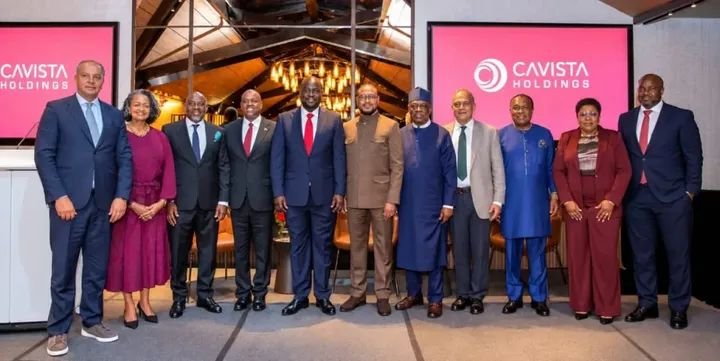
The gathering attracted several prominent African and U.S. stakeholders.
Those reported to have attended included former Botswana President Mokgweetsi Masisi, Nigeria’s Minister of Education Maruf Tunji Alausa, the Emir of Kano Muhammadu Sanusi II, Zamfara State Governor Dauda Lawal and former Ekiti State Governor and former Minister of Mines and Steel Development Kayode Fayemi.
Other participants included representatives of the Export-Import Bank of the United States and the Africa Finance Corporation.
Their presence placed the investment discussions within a broader conversation involving government policymakers, private investors and development finance institutions.
The event was held during a period when international leaders were gathering in New York for UNGA 81 to discuss global economic, political and development challenges.
The United Nations says the 2026 high-level week is focused on global cooperation, sustainable development and collective action, with the General Debate taking place from September 22 to 28.
From investment interest to actual projects
A central issue raised during the dinner was the gap that can exist between investor interest and actual investment.
Africa has significant opportunities in sectors such as agriculture, energy, infrastructure, technology and manufacturing, but attracting capital does not automatically guarantee that projects will be implemented successfully.
The discussions at the Cavista gathering therefore emphasised local partnerships, market knowledge, operational capacity and long-term engagement.
Cavista said the event was intended to create connections capable of moving conversations towards commercial partnerships and investment opportunities.
The company said its approach involves combining long-term capital with local resources, local talent, governance and international expertise.
This emphasis reflects a broader issue for African economies: attracting investment is only one part of achieving sustainable economic development. The quality of projects financed, their ability to create productive capacity and jobs, and their long-term economic impact are also important considerations.
The role of development finance
The participation of the U.S. Export-Import Bank and Africa Finance Corporation brought development finance into the discussion.
EXIM is the official export-credit agency of the United States, while the Africa Finance Corporation is a pan-African development finance institution focused on infrastructure and industrial development.
Their involvement highlights the role that development finance institutions can play in supporting projects that may require substantial capital and longer investment horizons.
For African businesses, partnerships with international finance institutions can potentially provide access to capital, technical expertise and international networks.
For U.S. and other international investors, partnerships with organisations and businesses that understand local markets can help provide knowledge about operating conditions, regulatory environments and commercial opportunities.
The Cavista discussion therefore placed emphasis on partnerships rather than capital alone.
Africa’s investment opportunity
The focus on sectors such as agriculture, manufacturing, infrastructure, technology and critical minerals reflects the diversity of investment opportunities across the continent.
Africa’s economies differ significantly from one country to another, meaning that investment conditions, regulations, infrastructure needs and market opportunities vary across individual markets.
This makes local knowledge particularly relevant for investors assessing projects.
The dinner’s discussions also reflect an increasing emphasis on moving beyond broad descriptions of Africa’s economic potential towards identifying specific projects, businesses and partnerships capable of producing measurable results.
Cavista said its broader objective is to deepen commercial relationships between African businesses and international partners and help move discussions from investment interest towards execution.
Nigeria’s presence in the discussions
Nigeria featured prominently among the African participants at the gathering, with government officials and business leaders attending the event.
The country’s large population, substantial consumer market, natural resources and diverse economic sectors make it an important part of discussions around investment in Africa.
Cavista has previously highlighted its investments and business activities in Nigeria, including agriculture, food processing, hospitality and technology.
The company’s previous UNGA activities have also focused on connecting international investors with Nigerian opportunities. In 2025, Cavista Holdings partnered with the Corporate Council on Africa and the Nigeria Governors’ Forum for a dinner in New York that focused specifically on Nigeria as an investment destination.
The 2026 gathering expanded the conversation to the wider U.S.-Africa investment relationship.
Why the discussions matter
The significance of the meeting extends beyond the dinner itself.
For African economies seeking greater levels of private investment, the ability to establish reliable relationships with international investors and financial institutions can influence how projects are developed and financed.
For international investors, working with credible local partners can provide access to market knowledge and operational experience.
However, investment discussions alone do not constitute confirmed investment commitments.
The event’s reported focus was on strengthening relationships and exploring opportunities rather than announcing a specific investment package or binding transaction.
That distinction is important because discussions, expressions of interest and completed investments represent different stages of the investment process.
What happens next
The next stage will depend on whether relationships and discussions generated during the UNGA gathering lead to specific projects, financing arrangements and commercial agreements.
Cavista has said its focus is on attracting long-term investment and building businesses at greater scale with local and international partners.
The broader U.S.-Africa investment conversation is also likely to continue through government, private-sector and development-finance engagements beyond UNGA week.
As the 81st UN General Assembly continues, investment and economic development remain part of a wider international discussion about how countries can strengthen cooperation and accelerate sustainable development.
For African countries, the key issue will be whether increased international interest can translate into productive investments, stronger businesses, infrastructure, jobs, technology transfer and broader economic opportunities.
The Cavista dinner provided another platform for that conversation, bringing U.S. and African stakeholders together around the practical question of how investment can move from interest to implementation.
Weng Global – Stories beyond borders
Sources
- United Nations — General Assembly High-level Week 2026 and official UNGA 81 schedule.
- Cavista Holdings — official company communication on the 2026 U.S.-Africa Leadership Dinner.
- John Olajide — statement on the Cavista Holdings U.S.-Africa Leadership Dinner.
- Vanguard — report on the Cavista U.S.-Africa Leadership Dinner and investment discussions.
- The Sun Nigeria — report on the U.S.-Africa investment gathering.